ENSO/USDT Quick Start: How to Seize New Opportunities in the ENSO Trading Pair

Beginner
Quick Reads
Last Updated 2026-03-28 00:44:51
Reading Time: 1m
This article offers a clear introduction for newcomers to the key opportunities and risks associated with the ENSO/USDT trading pair. It covers the ENSO project's background, the latest listing updates, and practical steps for trading the ENSO/USDT pair on the exchange, providing users with the information needed to begin trading effectively.

Project Overview: What Is ENSO?


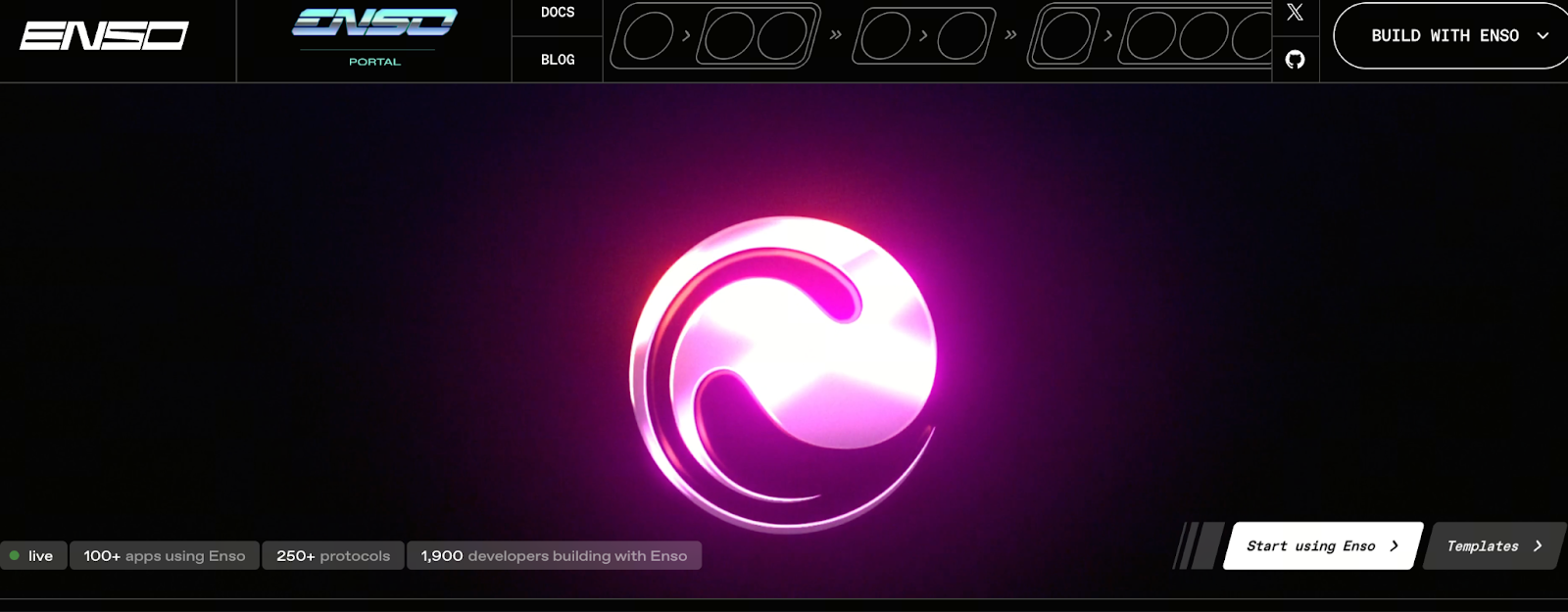
Image source: https://www.enso.build/

ENSO (token symbol ENSO) is an infrastructure project aimed at streamlining blockchain development and facilitating multi-chain interoperability. ENSO officially provides a “Blockchain Shortcut” that unifies smart contract and data interactions across different chains, enabling developers to integrate once and then write, read, and call across multiple blockchains. ENSO previously held a $5 million community funding round. About 4% of the total token supply was offered to the public. ENSO, backed by strong technical and investment expertise, serves as a solid case study for newcomers interested in infrastructure tokens.

ENSO/USDT Listing and Exchange Activity

As of November 6, 2025 (UTC), ENSO currently trades at approximately $1.07 and has recently been in a downward trend. Be sure to manage your risk appropriately. Trade ENSO/USDT here: https://www.gate.com/trade/ENSO_USDT

ENSO: Technical Highlights and Ecosystem Value

ENSO’s core features include:

  • Single integration for cross-chain smart contract calls, boosting development efficiency.
  • Enables developers to quickly deploy applications to multiple blockchains, positioning ENSO as an infrastructure service.

These capabilities position ENSO as a strong contender in the “cross-chain + infrastructure” segment. However, adoption and ecosystem growth typically take time for projects in this category.

Key Metrics for New Investors Considering ENSO/USDT

If you’re new to ENSO/USDT, review these metrics before participating:

  • Circulating supply: ENSO reports a total supply of 100 million tokens.
  • Tokenomics: Approximately 4% was made available through the community round.
  • Exchange listings and trading pair availability: ENSO’s presence on multiple leading exchanges signals strong market acceptance.
  • Project adoption and ecosystem growth: While the technical highlights are significant, actual usage, on-chain activity, and partnerships drive long-term value.
  • Risk factors: The unlock schedules, inflation, and selling pressure—for example, ENSO announced an annual inflation rate of around 8% early in the year, which is gradually decreasing.

Understanding these metrics helps you avoid blindly following market hype.

How to Buy ENSO/USDT on an Exchange

If you’re a beginner, follow this standard procedure:

  • Register for an exchange account (such as Gate.com) and complete KYC verification.
  • Deposit USDT to your account, which typically supports ERC20, TRC20, and other channels; be sure to compare fees.
  • Search for “ENSO/USDT” in the trading pairs list and access the trading interface.
  • Set your buy price or use a market order. Choose your desired quantity.
  • After purchasing, store your tokens in a secure wallet, such as a hardware wallet or a reputable software wallet, instead of leaving them on the exchange long-term.
  • Monitor announcements, project updates, and unlock plans regularly.

Risk Warnings and Trading Recommendations

  • High volatility: Newly listed tokens often experience significant price swings, which can lead to quick profits or losses.
  • Unlocking and selling pressure: Large token unlocks may drive prices down. Keep an eye on ENSO’s inflation and unlocking mechanisms.
  • Project development risk: Infrastructure projects need time to prove themselves. Slow user growth or weak partnerships may limit expansion.
  • Position management and stop-loss: New investors should avoid allocating excessive capital at once. Manage your position size and set stop-loss and take-profit strategies.

Overall: Consider this a learning experience with emerging infrastructure tokens. Invest prudently and avoid making hasty investment decisions.

Author: Max
Disclaimer
* The information is not intended to be and does not constitute financial advice or any other recommendation of any sort offered or endorsed by Gate.
* This article may not be reproduced, transmitted or copied without referencing Gate. Contravention is an infringement of Copyright Act and may be subject to legal action.

Related Articles

AI-Native Settlement Layers: How United Stables Is Building the Next Financial Rail
Beginner

AI-Native Settlement Layers: How United Stables Is Building the Next Financial Rail

Stablecoins were originally designed as dollar substitutes within exchanges, primarily used for asset pricing and trade settlement. As on-chain financial ecosystems have matured, their role has expanded beyond simple payments to include collateral assets, cross-chain liquidity mediums, and unified settlement units. In particular, as AI systems and automated agents begin to participate directly in economic activity, demand has risen sharply for programmable value units capable of instant settlement. This shift is pushing stablecoins toward the role of foundational financial infrastructure.
2026-03-25 03:16:17
The ve(3,3) Flywheel Explained: How AERO Tokenomics Powers Aerodrome’s DeFi Economy
Beginner

The ve(3,3) Flywheel Explained: How AERO Tokenomics Powers Aerodrome’s DeFi Economy

In the competition for DeFi liquidity, high-inflation mining alone is no longer enough to build lasting advantages. Aerodrome applies the ve(3,3) economic model to redesign token emissions, voting mechanisms, and revenue distribution, creating a liquidity flywheel centered on governance and cash flow. This article examines AERO tokenomics, the veAERO locking mechanism, and protocol revenue models to explain how Aerodrome builds a sustainable DeFi economic system.
2026-03-25 06:41:58
Aerodrome Tokenomics: How ve(3,3) Powers Base's Most Profitable DEX
Beginner

Aerodrome Tokenomics: How ve(3,3) Powers Base's Most Profitable DEX

AERO is the native token of Aerodrome Finance, a core decentralized exchange and liquidity protocol in the Base ecosystem. It is primarily used for liquidity incentives and ecosystem operations. veAERO is a governance NFT that users receive by locking AERO, representing both voting power and the right to share protocol revenue. Through a dual track structure of AERO as a utility token and veAERO as a governance credential, Aerodrome separates liquidity usage value from long term governance power, allowing participants to act as liquidity providers, governance decision makers, and revenue sharers within the same system.
2026-03-25 06:40:31
DePIN Identity Network and Real World Applications: How Humanity Protocol Brings on-chain Identity Into the Physical World
Beginner

DePIN Identity Network and Real World Applications: How Humanity Protocol Brings on-chain Identity Into the Physical World

Most Web3 identity systems remain confined to on-chain environments and struggle to achieve meaningful adoption in real world settings. Through a DePIN architecture and physical verification hardware, Humanity Protocol aims to bring decentralized identity into access control systems, hospitality, public services, and offline events, allowing on-chain identity to function not just as a digital credential, but as foundational infrastructure for real world access.
2026-03-25 07:40:53
How is the price of PAXG determined? Pegging mechanism, trading depth, and influencing factors
Beginner

How is the price of PAXG determined? Pegging mechanism, trading depth, and influencing factors

PAXG (Pax Gold) is a tokenized asset backed by physical gold reserves, launched by fintech firm Paxos and issued as an ERC-20 token on the Ethereum blockchain. The core concept is to digitally represent real-world gold assets, allowing investors to hold and trade gold via the blockchain network. Because each PAXG token corresponds to a specific quantity of physical gold, its price is theoretically expected to closely track the global gold market.
2026-03-24 19:11:40
Aster vs Hyperliquid: Which Perp DEX Will Prevail?
Beginner

Aster vs Hyperliquid: Which Perp DEX Will Prevail?

Aster and Hyperliquid are the two representative protocols of the "purpose-built L1 path" within the current decentralized perpetual exchange (Perp DEX) sector. As a pioneer in the field, Hyperliquid has built a deep liquidity moat through its highly mature order book architecture and strong community consensus. Conversely, Aster, as a rising challenger, seeks to leapfrog the competition in high-performance trading through more aggressive multi-chain aggregation logic, private transaction modules, and an underlying execution environment optimized for 2026 market demands.
2026-03-24 11:58:33