What is KAIO (KAIO)? A comprehensive guide to its RWA tokenization protocol and institutional-grade DeFi infrastructure

Last Updated 2026-05-06 09:01:49
Reading Time: 2m
KAIO is a protocol that tokenizes traditional financial Assets—such as fund shares—and integrates them into the blockchain. Leveraging Smart Contracts and a compliance engine, it enables institutional-grade Assets to be issued, circulated, and managed within DeFi. As the RWA sector continues to evolve, KAIO is emerging as essential infrastructure bridging traditional capital markets and on-chain finance.

As institutional capital increasingly flows into the crypto market, the need to connect traditional assets with on-chain finance is rapidly rising. RWA (Real World Assets) has emerged as a major development focus in the blockchain industry, and KAIO is an institutional-grade tokenization infrastructure built for this purpose.

As blockchain evolves from a value transfer tool to core financial infrastructure, KAIO empowers traditional assets with on-chain composability, cross-chain liquidity, and 24/7 trading capabilities, delivering more stable sources of return and a broader asset structure to DeFi.

Definition and Development Background of KAIO

Real World Assets (RWA) refer to off-chain financial or physical assets such as bonds, funds, real estate, or credit products. Historically, these assets have relied on centralized financial systems for issuance and management, resulting in limited transparency and liquidity.

Definition and Development Background of KAIO

KAIO operates as RWA tokenization infrastructure. By leveraging blockchain technology, it converts traditional assets into on-chain tokens, allowing them to circulate and be utilized in decentralized environments.

KAIO’s development reflects broader industry trends: institutional investors are seeking crypto market exposure for returns, while DeFi requires more stable, low-volatility assets as a foundation. The introduction of RWA is the key path bridging these needs.

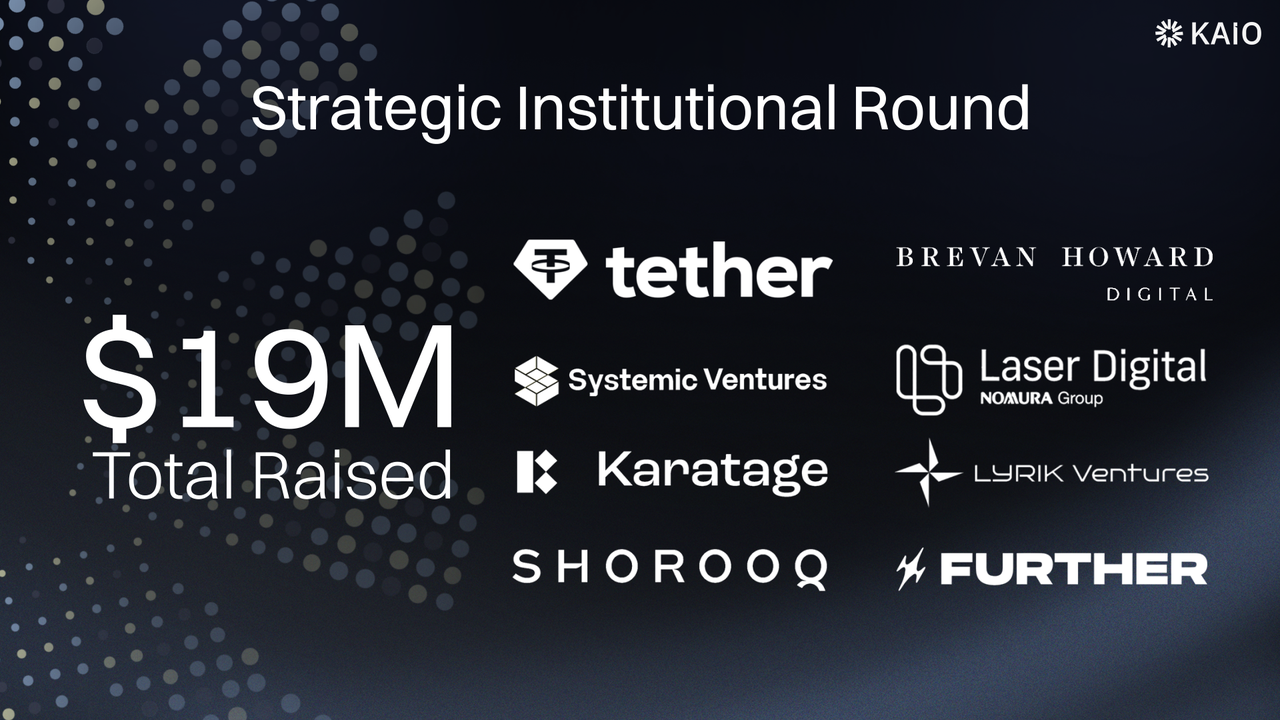
On the fundraising front, KAIO completed a $8 million strategic funding round in April 2026, led by Tether and joined by a range of crypto and institutional investors, bringing its total funding to $19 million. Participating investors include Systemic Ventures, Further Ventures and Laser Digital as copy investors, and Brevan Howard Digital.

Definition and Development Background of KAIO

How Does KAIO Work?

KAIO’s core mechanism is mapping the full lifecycle of traditional financial assets onto blockchain systems, enabling digital circulation while maintaining regulatory compliance.

First, asset issuers (such as fund managers) tokenize fund shares through the KAIO platform. This process involves asset custody, valuation, and legal structuring.

Second, investors must complete compliance checks before participating, including identity verification and jurisdictional restrictions. This ensures asset circulation aligns with regulatory requirements.

Once assets are on-chain, investors can subscribe and redeem, with all processes executed automatically via Smart Contracts. Net Asset Value (NAV) is updated regularly and synchronized on-chain.

This approach gives traditional assets crypto-like trading properties while retaining their original financial characteristics.

KAIO Technical Architecture

KAIO features a modular architecture designed to meet complex financial asset management needs. Its core structure consists of an application layer and an infrastructure layer.

At the application layer, KAIO provides institutional interfaces such as Gateway and API, allowing traditional financial institutions to access blockchain systems without deep technical integration.

At the infrastructure layer, KAIO relies on Smart Contracts for asset issuance, trading, and settlement, and employs a multi-chain architecture for cross-chain interoperability. This enables assets to move across different blockchains, enhancing liquidity.

KAIO also incorporates a compliance module to manage and restrict investor behavior, ensuring on-chain assets remain in line with real-world legal frameworks.

KAIO Core Products and Asset Types

KAIO primarily supports the tokenization of traditional financial products into on-chain assets, with fund tokenization as its core format.

Common asset types include:

  • Money Market Funds
  • Private Credit
  • Hedge Funds

These assets are typically issued by reputable institutions and tokenized through KAIO, making them eligible for holding, trading, or use as DeFi collateral.

Through this process, KAIO brings high-quality assets from traditional finance into the on-chain ecosystem, offering users more stable sources of return.

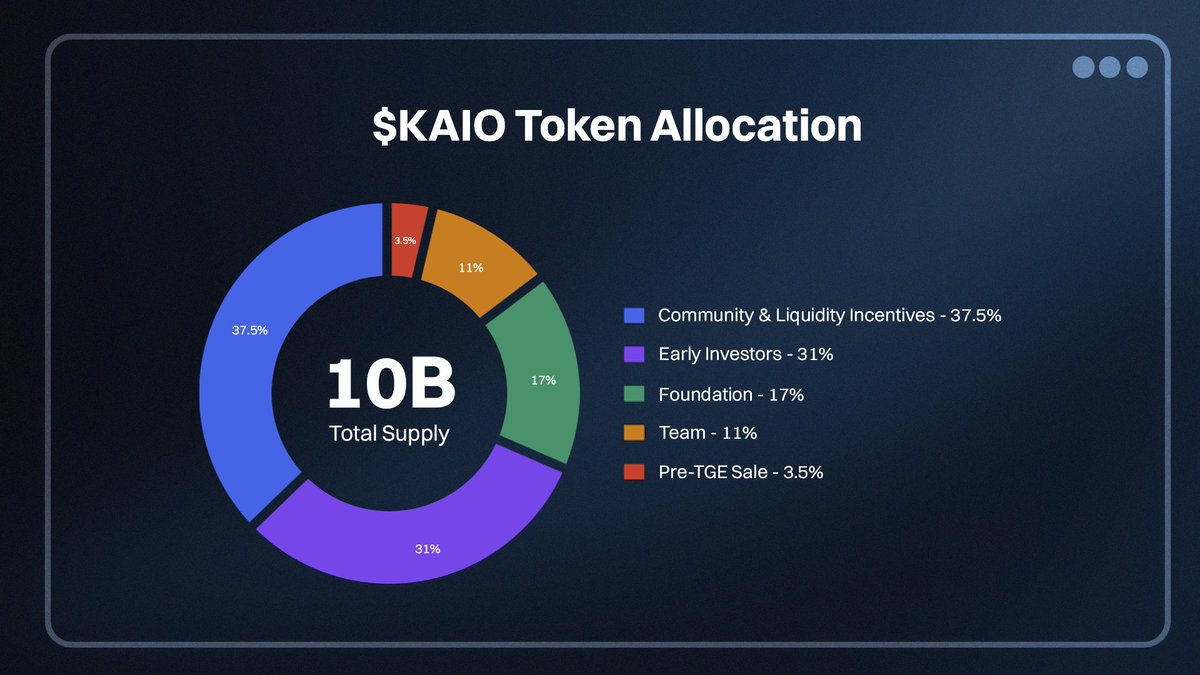
KAIO Tokenomics: Total Supply and Distribution KAIO Tokenomics: Total Supply and Distribution

KAIO DeFi Use Cases

The RWA assets introduced by KAIO unlock new possibilities for DeFi.

First, these assets can serve as collateral in lending protocols, improving system stability.

Second, RWA assets generally offer relatively stable returns, providing a source of yield and reducing the high volatility risks common in DeFi.

Additionally, with KAIO’s cross-chain architecture, these assets can circulate across various ecosystems, further boosting overall liquidity.

Together, these features make KAIO a vital bridge between traditional finance and DeFi.

KAIO Advantages and Limitations

KAIO’s strengths lie in its institutional-grade design and robust compliance capabilities.

Through integrated compliance mechanisms, KAIO attracts participation from traditional financial institutions and reduces regulatory risks. Its supported asset types are primarily low-volatility financial products, providing DeFi with a more stable foundation.

However, this model also has limitations.

Due to compliance requirements, KAIO’s entry threshold is relatively high and not all users can participate. Its operations depend on real-world legal and regulatory systems, which in turn limit its degree of decentralization.

KAIO vs Ondo vs Centrifuge: RWA Protocol Differences

Within the RWA sector, protocols such as KAIO, Ondo, and Centrifuge differ in positioning and implementation.

KAIO focuses on institutional-grade assets and compliance frameworks, emphasizing deep integration with the traditional financial system. In contrast, other protocols are oriented toward DeFi-native assets or open lending structures.

As a result, KAIO is well-suited for institutional participation and high-quality asset onboarding, while other protocols excel in openness and flexibility.

Dimension KAIO Ondo Centrifuge
Target Users Institutional Hybrid DeFi Native
Compliance Strong Medium Weak
Asset Types Funds Government Bonds Invoices/Loans
Structure AppChain Protocol Pool Model

Summary

As a critical bridge between traditional finance and blockchain, KAIO brings Real World Assets into the DeFi ecosystem through RWA tokenization.

Its core value lies in delivering high-quality assets to on-chain markets while maintaining compliance, thereby enhancing DeFi’s stability and scalability.

With institutional capital continuing to enter the crypto market, protocols like KAIO are poised to play an increasingly pivotal role in the future of finance.

FAQ

Is KAIO a blockchain or a protocol?

KAIO is fundamentally an RWA tokenization protocol, not a standalone blockchain network.

What assets does KAIO support?

Primarily traditional financial assets such as money market funds, private credit, and hedge funds.

Is KAIO open to retail users?

KAIO is institution-focused, and some assets may be available only to qualified investors.

How is KAIO different from traditional funds?

KAIO tokenizes fund shares, enabling them to circulate on blockchain with greater transparency and liquidity.

Is KAIO fully decentralized?

KAIO incorporates compliance mechanisms, so it operates in a “semi-decentralized” model.

Author: Jayne
Disclaimer
* The information is not intended to be and does not constitute financial advice or any other recommendation of any sort offered or endorsed by Gate.
* This article may not be reproduced, transmitted or copied without referencing Gate. Contravention is an infringement of Copyright Act and may be subject to legal action.

Related Articles

In-depth Explanation of Yala: Building a Modular DeFi Yield Aggregator with $YU Stablecoin as a Medium
Beginner

In-depth Explanation of Yala: Building a Modular DeFi Yield Aggregator with $YU Stablecoin as a Medium

Yala inherits the security and decentralization of Bitcoin while using a modular protocol framework with the $YU stablecoin as a medium of exchange and store of value. It seamlessly connects Bitcoin with major ecosystems, allowing Bitcoin holders to earn yield from various DeFi protocols.
2026-03-24 11:55:44
Sui: How are users leveraging its speed, security, & scalability?
Intermediate

Sui: How are users leveraging its speed, security, & scalability?

Sui is a PoS L1 blockchain with a novel architecture whose object-centric model enables parallelization of transactions through verifier level scaling. In this research paper the unique features of the Sui blockchain will be introduced, the economic prospects of SUI tokens will be presented, and it will be explained how investors can learn about which dApps are driving the use of the chain through the Sui application campaign.
2026-04-07 01:11:45
Dive into Hyperliquid
Intermediate

Dive into Hyperliquid

Hyperliquid's vision is to develop an on-chain open financial system. At the core of this ecosystem is Hyperliquid L1, where every interaction, whether an order, cancellation, or settlement, is executed on-chain. Hyperliquid excels in product and marketing and has no external investors. With the launch of its second season points program, more and more people are becoming enthusiastic about on-chain trading. Hyperliquid has expanded from a trading product to building its own ecosystem.
2026-04-07 00:06:09
What Is a Yield Aggregator?
Beginner

What Is a Yield Aggregator?

Yield Aggregators are protocols that automate the process of yield farming which allows crypto investors to earn passive income via smart contracts.
2026-04-09 06:13:50
What is Stablecoin?
Beginner

What is Stablecoin?

A stablecoin is a cryptocurrency with a stable price, which is often pegged to a legal tender in the real world. Take USDT, currently the most commonly used stablecoin, for example, USDT is pegged to the US dollar, with 1 USDT = 1 USD.
2026-04-09 10:16:21
Arweave: Capturing Market Opportunity with AO Computer
Beginner

Arweave: Capturing Market Opportunity with AO Computer

Decentralised storage, exemplified by peer-to-peer networks, creates a global, trustless, and immutable hard drive. Arweave, a leader in this space, offers cost-efficient solutions ensuring permanence, immutability, and censorship resistance, essential for the growing needs of NFTs and dApps.
2026-04-07 02:30:19