In recent years, the focus of Web3 infrastructure development has shifted from competing on underlying layer-1 performance to innovating user experience and account systems. Driven by the ERC-4337 standard, Account Abstraction has become a major direction for the Ethereum ecosystem. Traditional wallets rely on recovery phrases, require native gas tokens, and involve complex interaction flows. Account abstraction, through programmable accounts and transaction abstraction mechanisms, is reshaping how users interact on-chain. Against this backdrop, BICO's economic model not only impacts the Biconomy protocol itself but also serves as a key gauge for tracking the growth of the account abstraction sector.
From an industry evolution standpoint, BICO represents more than just a token design pattern — it marks an upgrade in the value distribution mechanism for Web3 infrastructure. As Smart Accounts, AI agents, on-chain automation services, and multi-chain applications continue to develop, tokens are taking on functions like resource coordination, network incentives, and protocol value accrual. Whether BICO's economic system can create a virtuous cycle of user growth, developer expansion, and protocol revenue will be critical to the long-term competitiveness of Biconomy.
BICO Token Core Functions and Uses
BICO is the core asset in the Biconomy ecosystem and a key economic medium for protocol operations.
Unlike many tokens limited to governance, BICO is designed as an infrastructure token, covering network operations, governance voting, ecosystem incentives, and value capture.
Currently, BICO serves the following primary functions:
Protocol Governance
BICO holders can vote on key Biconomy ecosystem decisions, such as protocol upgrades, fee structure adjustments, incentive plans, and ecosystem fund allocation.
As account abstraction infrastructure matures, governance becomes increasingly important. Community involvement in network parameters and development roadmaps will directly shape the protocol's future competitiveness.
Network Incentives
BICO rewards Relayers, Bundlers, and other infrastructure nodes.
These nodes help users bundle transactions, pay gas fees, execute cross-chain operations, and maintain the transaction execution environment, forming a critical part of the account abstraction ecosystem.
Ecosystem Building
Developers, partner projects, and ecosystem contributors can earn BICO as incentives.
This mechanism encourages more applications to integrate Biconomy's Smart Account and Gas Abstraction services, fueling ecosystem expansion.
Value Capture
As protocol transaction volume grows, a portion of protocol revenue becomes linked to the BICO economic system, tying token value to network usage.
This distinguishes infrastructure token models from traditional governance tokens.
BICO Token Distribution and Release Mechanism
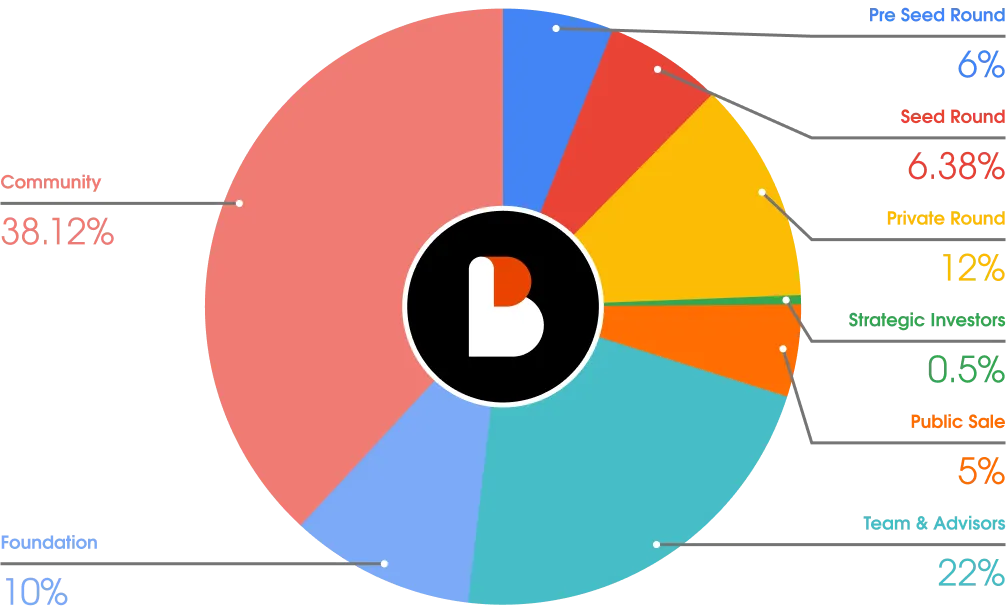
BICO has a fixed total supply, designed primarily for long-term ecosystem development.
The distribution structure allocates tokens as follows:
- Community and ecosystem incentives
- Team and advisors
- Private investors
- Foundation reserves
- Liquidity and market promotion
- Network development fund
Ecosystem incentives typically receive a large share, reflecting Biconomy's focus on developer growth. For infrastructure projects, long-term value depends not on short-term circulating supply but on actual application-layer adoption.
Team and early investor tokens are unlocked in phases. This approach aims to avoid sudden market sell-offs and align team interests with the protocol's long-term development.
However, markets closely watch future unlock schedules. Large token unlocks entering circulation can affect short-term prices, so investors monitor unlock timelines and circulating supply changes.
BICO's Role in the Governance System
As DeFi and infrastructure protocols move toward community governance, BICO's importance in governance is rising. BICO holders can participate in multiple governance areas, including:
- Protocol fee parameter adjustments
- Ecosystem incentive plan formulation
- Network node reward rules
- Treasury usage proposals
- Protocol upgrades and feature expansions
This governance model positions BICO not as a mere voting tool but as a rights certificate for participating in the protocol's long-term development. As Smart Account users grow, the governance structure may further decentralize, with the community taking on more protocol responsibilities, making governance a cornerstone of the Biconomy network.
How BICO Incentivizes Developers and Infrastructure Nodes
The account abstraction ecosystem depends on more than users. Developers, Bundlers, Relayers, Paymasters, and other participants form the network's foundation. To sustain growth, Biconomy has built a multi-layered incentive system.
Developers can receive BICO through ecological grant programs. Projects adopting Biconomy's Smart Account, Gas Abstraction, or MEE services are eligible for development subsidies and ecosystem rewards.
Infrastructure nodes handle transaction processing, gas sponsorship, and execution verification. BICO serves as an operating incentive, enabling nodes to continue network maintenance.
This creates a positive cycle: user growth → more transactions → higher protocol revenue → greater node income → enhanced network capability → further user growth, forming a virtuous circle for the entire ecosystem.
How BICO Achieves Protocol Value Capture
This is a key question for many infrastructure projects: if a token cannot derive value from protocol growth, long-term sustainability becomes difficult. Biconomy's approach binds token value to network usage.
As the following metrics grow — Smart Account creation count, Gas Abstraction usage frequency, cross-chain transaction volume, Supertransaction execution volume, and AI Agent automated trading demand — protocol revenue is expected to increase.
Ecosystem development may also drive: a larger developer community, broader on-chain application integration, higher demand for protocol services, and enhanced value of network governance rights.
Thus, BICO's value capture logic is not based on a single use case but on the overall growth of the account abstraction ecosystem.
Main Factors Influencing BICO Token Value
Several key factors affect BICO's long-term value:
Account Abstraction Industry Growth
If ERC-4337 and Smart Accounts see widespread adoption, Biconomy's addressable market will expand accordingly.
Ecosystem Adoption Rate
Developer willingness to integrate Biconomy's infrastructure directly impacts protocol transaction volume and revenue growth.
Competitive Landscape
Projects like Safe, ZeroDev, Alchemy Account Kit, and others are actively developing account abstraction solutions. Intensified competition means Biconomy must continuously innovate technologically.
In addition, the broader market environment, crypto asset cycles, and Ethereum ecosystem developments will influence BICO's market performance.
What Risks to Watch When Investing in BICO
While account abstraction is widely seen as a major Web3 development direction, BICO carries certain risks:
- Technical risk: Smart Accounts involve complex smart contract logic; vulnerabilities could affect user asset security.
- Ecosystem competition risk: More projects entering the AA track intensify market competition for Biconomy.
- Adoption risk: If developer growth lags or user acceptance of account abstraction falls short, protocol growth may suffer.
- Token unlocks, market volatility, and macroeconomic changes can also impact BICO's price. Monitoring BICO requires not just analyzing the token itself but also tracking the broader Account Abstraction ecosystem trends.
Long-Term Development Potential of the BICO Ecosystem
Over the long term, account abstraction is becoming a key direction for improving the Web3 user experience. More wallets now support Smart Accounts, and more applications aim to abstract away gas, recovery phrases, and complex transaction flows. This shift means future users may interact with blockchain without understanding underlying wallet structures, simply completing actions as they would with internet apps.
Under this trend, Biconomy's Smart Account, Gas Abstraction, MEE, and Supertransaction offerings have the potential to become foundational Web3 services. As AI agents enter the on-chain world, programmable accounts will grow even more critical. Future use cases — automatic payments, on-chain asset management, AI-driven trade execution — may all rely on account abstraction infrastructure.
BICO's long-term value will increasingly depend on the scale and actual adoption of this ecosystem.
Summary
BICO is the core token of the Biconomy account abstraction ecosystem. Its value extends beyond governance and incentives, closely tied to the growth of Smart Accounts, Gas Abstraction, on-chain automated trading, and multi-chain applications. As Account Abstraction evolves from infrastructure innovation to mainstream adoption, BICO's economic model is transforming from a conventional functional token into a critical value carrier connecting users, developers, and the protocol network. For market participants tracking Web3 infrastructure development, BICO also serves as a key window into the growth of the account abstraction track.