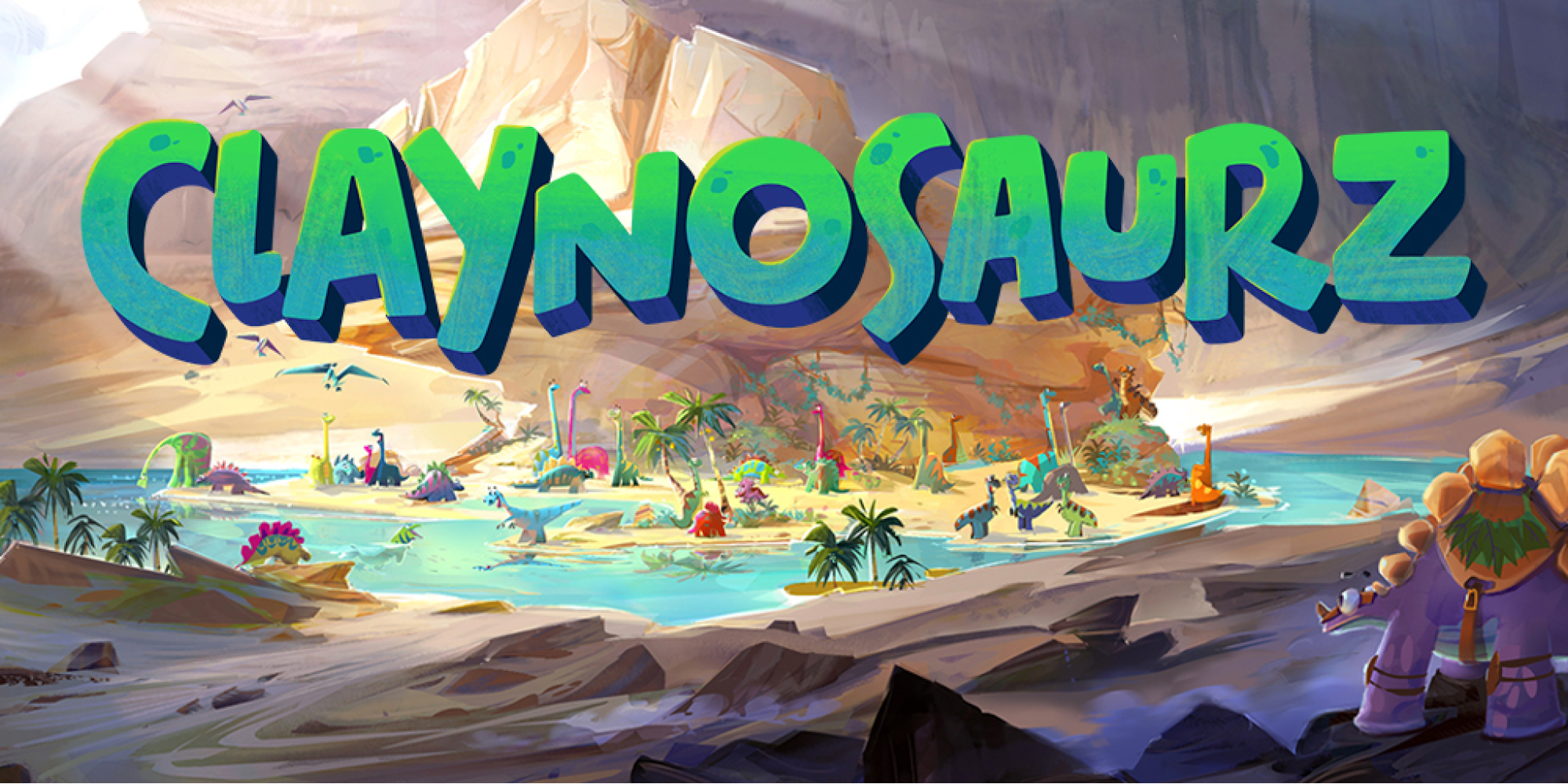
The Genesis and Call of Saga series from Claynosaurz continue to reside on Solana. The project later expanded to Sui with the launch of Popkins. However, the team has defined this as an “expansion, not a migration,” so the original Solana collectibles have not been moved or replaced.
From a user’s perspective, the Claynosaurz NFT process works as follows: the project issues on-chain assets with unique identities, metadata provides character details, wallets verify asset ownership, NFT marketplaces facilitate transactions, and Solana is responsible for signature verification, execution, and recording final results. Each step involves the blockchain, wallet, metadata storage, and marketplace platform—ownership and information are not stored solely in a single image or website.
Why Claynosaurz NFT Chose Solana
Claynosaurz selected Solana mainly for its high transaction throughput and low on-chain costs. According to the official collectibles page, Solana provides the infrastructure for each Clayno’s uniqueness and verifiable ownership, while supporting frequent transfers and interactions among collectors.
Minting, transferring, listing, and sales of NFTs all require on-chain transactions. Lower base fees reduce operational costs for users managing their collections, especially for digital collectibles with many independent assets, frequent transfers, and community activity. Solana’s official resources show network fees consist of a base fee and an optional priority fee, with the total depending on transaction signatures and computational resource requirements.
Choosing Solana does not mean every Claynosaurz product will always run on the same network. The team has expanded new products such as Popkins to Sui, but Genesis and Call of Saga remain on Solana, resulting in a multi-chain structure organized by collectible series.
How Claynosaurz NFT Records On-Chain Ownership
Claynosaurz NFT ownership is tracked via Solana account states and wallet addresses. Each collectible has a distinct on-chain identity. When sent to a wallet, the Solana ledger shows that wallet as controlling the asset; when a transaction or transfer occurs, the new state is written to the blockchain once confirmed.
A wallet address is not a user’s real name, but a blockchain account controlled by a set of keys. Whoever holds the private key or signature authority can authorize NFT transfers. Technically, “owning a Claynosaurz NFT” means controlling the wallet that holds the asset—not just possessing a character image.
Solana transactions include signatures, account data, and instructions. After the user confirms the transaction in the wallet, validators check the signature and account state before executing the NFT transfer. Only after successful confirmation will the marketplace and wallet reflect the updated ownership.
| Operation Step |
Main Record Content |
Function |
| NFT On-Chain Asset |
Unique asset identity and accounts |
Identifies each Claynosaurz collectible |
| Wallet Address |
Current asset controller |
Indicates ownership and signature rights |
| Metadata Account |
Name, series, and data link |
Connects asset to character info |
| Off-Chain Media |
Images, animations, or other media |
Provides display content |
| Solana Transaction |
Signature, transfer instructions, results |
Updates asset ownership |
| NFT Marketplace |
Maker, offer, and transaction UI |
Enables asset discovery and trading |
It’s important to distinguish on-chain ownership from visual content. Solana records asset and control rights, while images and detailed attributes are typically stored in external files referenced by metadata. NFTs do not store full animation files directly in the wallet.
Claynosaurz NFT metadata bridges on-chain assets and human-readable character data, including collectible names, image URLs, and attribute fields. Metaplex’s official documentation describes Token Metadata as a core component of Solana’s NFT infrastructure, providing data for wallets, apps, and marketplaces.
A typical NFT data structure has both on-chain and off-chain parts. On-chain accounts store asset identity, ownership, and metadata links. The linked JSON file holds image locations, descriptions, and attribute arrays. Wallets read these fields to display species, color, clothing, or other visual features.
Metadata attributes help marketplaces filter and display collectibles, but attributes alone do not guarantee rarity or economic value. Rarity depends on the distribution of attributes across the series; there is no official, permanent value formula published for Claynosaurz.
| Data Type |
Common Content |
Directly Determines Ownership |
| On-Chain Asset Identity |
NFT address or asset account |
No, but used for identification |
| Wallet Holdings |
Wallet currently controlling the asset |
Yes |
| Collection Verification |
Official series |
No, but aids authenticity |
| Name & Description |
Character name and introduction |
No |
| Image or Media URL |
Displayed in wallet and marketplace |
No |
| Attribute Array |
Species, color, clothing, accessories |
No |
| Creator or Royalty |
Creator info and fee parameters |
No |
Collection verification is especially important. Metaplex’s collection mechanism allows a single NFT to be included in a verified series, so wallets and marketplaces can determine if it belongs to the official collection—not just by name or image.
How Claynosaurz NFT Appears in Wallets
Claynosaurz NFTs are displayed in wallets based on the wallet’s ability to identify NFTs under a user’s address and read their metadata. The wallet queries assets controlled by the address, then uses metadata (name, image link, attributes) to generate collectible cards. Sorting, thumbnails, and attribute displays may differ between wallets.
The wallet interface shows a combination of on-chain data and external media. If images don’t load, it doesn’t necessarily mean the NFT is lost; it may be due to metadata services, image hosting, RPC nodes, or wallet caching. To verify ownership, check the wallet address and asset records in a blockchain explorer.
Users should also confirm that their wallet is connected to the correct network and address. Genesis and Call of Saga are on Solana, while Popkins is on Sui. Even if a wallet supports multiple networks, these collectibles may appear separately in different accounts or network tabs.
How to Trade Claynosaurz on NFT Marketplaces
To trade Claynosaurz NFTs, connect a Solana-compatible wallet, locate the verified official collection, and use the marketplace’s buy, maker, or offer features. When a transaction is made, the wallet prompts the user to sign, and Solana updates the ownership of the NFT and payment asset.
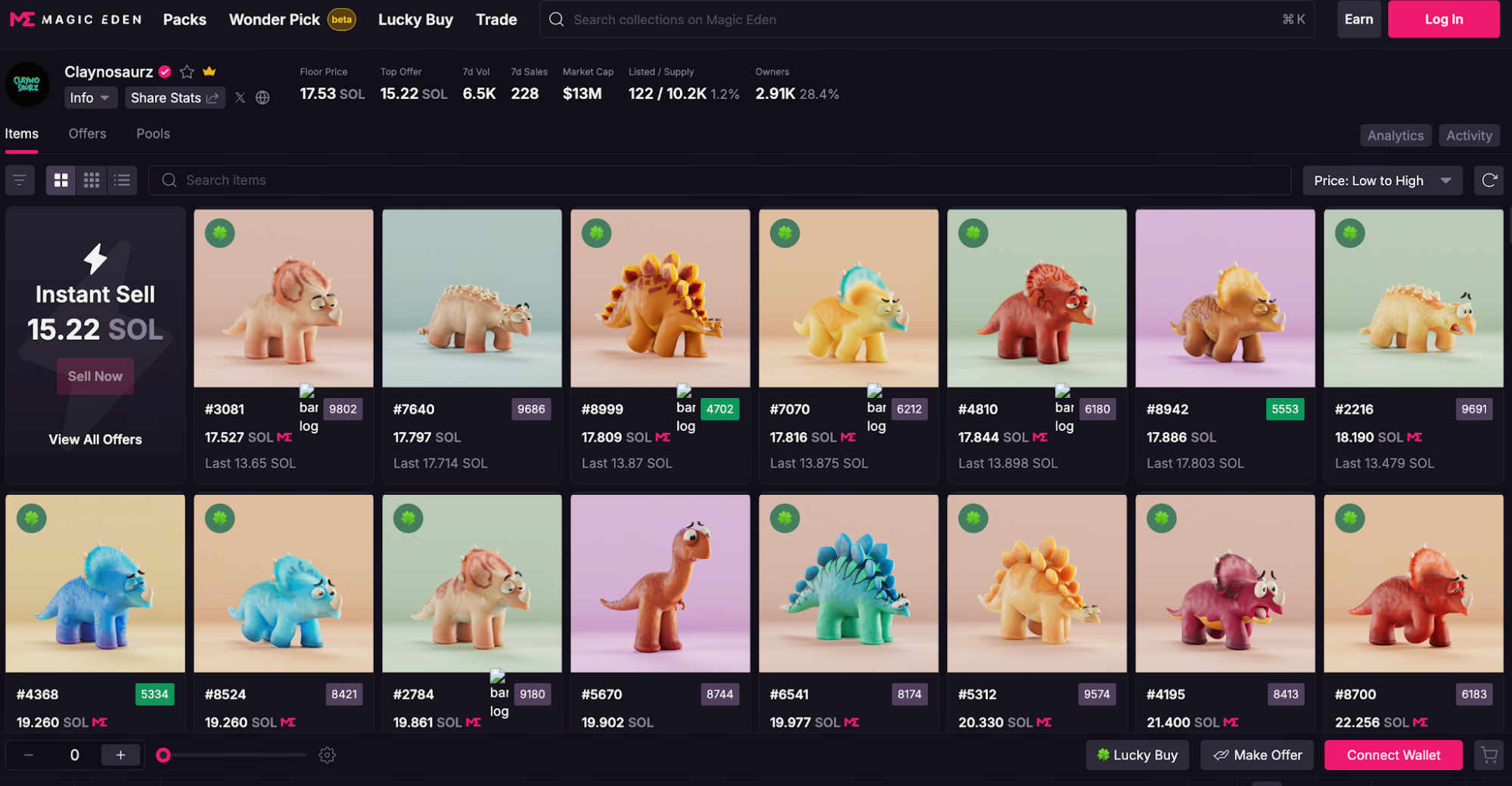
Before buying, verify the collection name, verification badge, asset address, attributes, and transaction history. Counterfeit collections may copy names and images but cannot replicate the official collection’s on-chain verification, so visual similarity alone is unreliable.
A typical transaction flow:
- Connect your Solana wallet and ensure you have enough payment assets and SOL for network fees.
- Find the official Claynosaurz series through the official portal or marketplace verification.
- Review the NFT’s attributes, seller’s offer, transaction history, and marketplace fees.
- Confirm and sign the transaction in your wallet, then wait for Solana confirmation.
- After completion, verify the asset in your wallet, marketplace portfolio, or blockchain explorer.
Different marketplaces may use direct listings, buyer offers, or aggregation models. The marketplace UI helps both parties discover prices and build trades, but the actual NFT transfer must be signed by the user and executed on Solana.
How Royalties and Secondary Market Trading Work
Secondary market trading of Claynosaurz NFTs involves the original holder transferring the collectible to a buyer and receiving payment. The transaction amount, marketplace fee, and creator royalty are separate; users should review the fee breakdown on the transaction confirmation page before signing.
In Solana’s NFT ecosystem, metadata can record creator and royalty parameters, but whether royalties are enforced depends on the NFT standard, marketplace contract, and transaction path. Earlier Token Metadata NFTs typically require the marketplace to enforce royalties, while the newer Metaplex Core standard offers stronger royalty enforcement. The presence of a royalty field in metadata does not guarantee universal enforcement across platforms.
Currently, Claynosaurz’s official collectibles page does not disclose a single, permanent royalty rate for all series and marketplaces. In practice, rely on the specific NFT’s on-chain data, the marketplace’s rules, and the order confirmation page—do not assume one platform’s fee applies to the entire project.
| Comparison |
Direct On-Chain Transfer |
NFT Marketplace Transaction |
| Wallet Signature |
Required |
Required |
| Public Maker Orders |
Usually not present |
Usually present |
| Automatic Matching |
No |
Possible |
| Marketplace Fee |
Usually not included |
May be included |
| Creator Royalty |
Depends on program |
Depends on marketplace/NFT |
| Price History |
Not directly provided |
Usually provided |
| Collection Verify |
Manual check needed |
Most marketplaces display |
| Main Purpose |
Asset transfer |
Public trading/price discovery |
Both direct transfers and marketplace sales change NFT on-chain ownership, but the economic implications differ. Direct transfers only move assets, while marketplace trades involve offers, payments, platform fees, and potential royalties.
Solana Network Fees and Transaction Confirmation
Purchasing, selling, authorizing, and transferring Claynosaurz NFTs requires Solana network fees. The current fee structure includes a base fee per signature and an optional priority fee to improve transaction scheduling and inclusion in blocks.
Network fees are separate from NFT prices, marketplace fees, and royalties. Even if a transaction fails, the base fee may still be charged if processed by the network. Always confirm your SOL balance, transaction instructions, and recipient address in your wallet before signing.
Solana transactions may show processed, confirmed, or finalized status. If the wallet or marketplace does not refresh immediately, this does not necessarily mean failure; check transaction status using the signature. If a transaction expires, the signature becomes invalid, or the account balance is insufficient, you may need to resubmit. Solana’s confirmation guide notes that recent block hashes have a limited lifetime; after expiration, the original signature cannot be used.
Key items to check include transaction type, payment asset, NFT address, recipient, and authorization scope in the wallet prompt. Phishing sites may trick users into signing transfers of multiple assets or granting extra permissions, so do not rely solely on “Buy” or “Claim” buttons to determine the true transaction content.
Summary
Claynosaurz NFTs establish verifiable ownership through Solana on-chain assets, wallet addresses, and transaction records, while metadata provides character images and attributes to wallets and marketplaces. Genesis and Call of Saga remain on Solana, allowing users to hold them in compatible wallets and trade them on supported NFT marketplaces.
The Claynosaurz trading process involves not only NFT prices but also Solana network fees, marketplace fees, and royalties. Users must verify the official collection, wallet signature, and transaction status, and distinguish on-chain ownership, external media, and marketplace display information to fully understand each step.
FAQ
Which Blockchain Does Claynosaurz NFT Run On?
Claynosaurz Genesis and Call of Saga NFTs run on Solana; Popkins is issued on Sui. The official position is that multi-chain expansion will not migrate or replace the original Solana collectibles.
Are Claynosaurz NFT Images Stored Directly on Solana?
Claynosaurz NFT ownership and asset identity are recorded on-chain, while character images and attributes are usually linked to external files via metadata for wallet and marketplace display.
How Do I Confirm the Authenticity of Claynosaurz NFTs in My Wallet?
Verify the NFT’s on-chain collection, asset address, and official marketplace entry. Do not rely solely on collectible names, dinosaur images, or similar project branding for authenticity.
Do I Need SOL to Trade Claynosaurz NFTs?
Trading Claynosaurz NFTs requires a small amount of SOL for network fees. Even if other assets are used for pricing, ensure your wallet has enough SOL for signing and on-chain execution.
Is a Royalty Paid on Every Claynosaurz NFT Transaction?
Whether royalties are paid depends on the asset standard, marketplace rules, and transaction path. A royalty parameter in metadata does not guarantee universal enforcement across all platforms.
How Long Does It Take to Confirm a Claynosaurz NFT Transaction?
Solana transactions are typically confirmed quickly, but actual times depend on network scheduling, priority fees, and wallet services. Refer to the confirmed or finalized status shown by the transaction signature.