How to Use Contract Trading? A Practical, Beginner-Friendly Guide to Gate’s Core Futures Tools

Beginner
Quick Reads
Last Updated 2026-03-27 02:49:58
Reading Time: 1m
This article explores the core functionalities of contract trading, taking Gate Exchange as a case study. It provides a comprehensive breakdown of essential tools, including order placement methods, position modes, take-profit and stop-loss mechanisms, and funding rates. Designed for newcomers, the guide aims to bridge the gap from confusion to confident usage, ensuring users can engage in contract trading securely.

What Sets Contract Trading Apart?
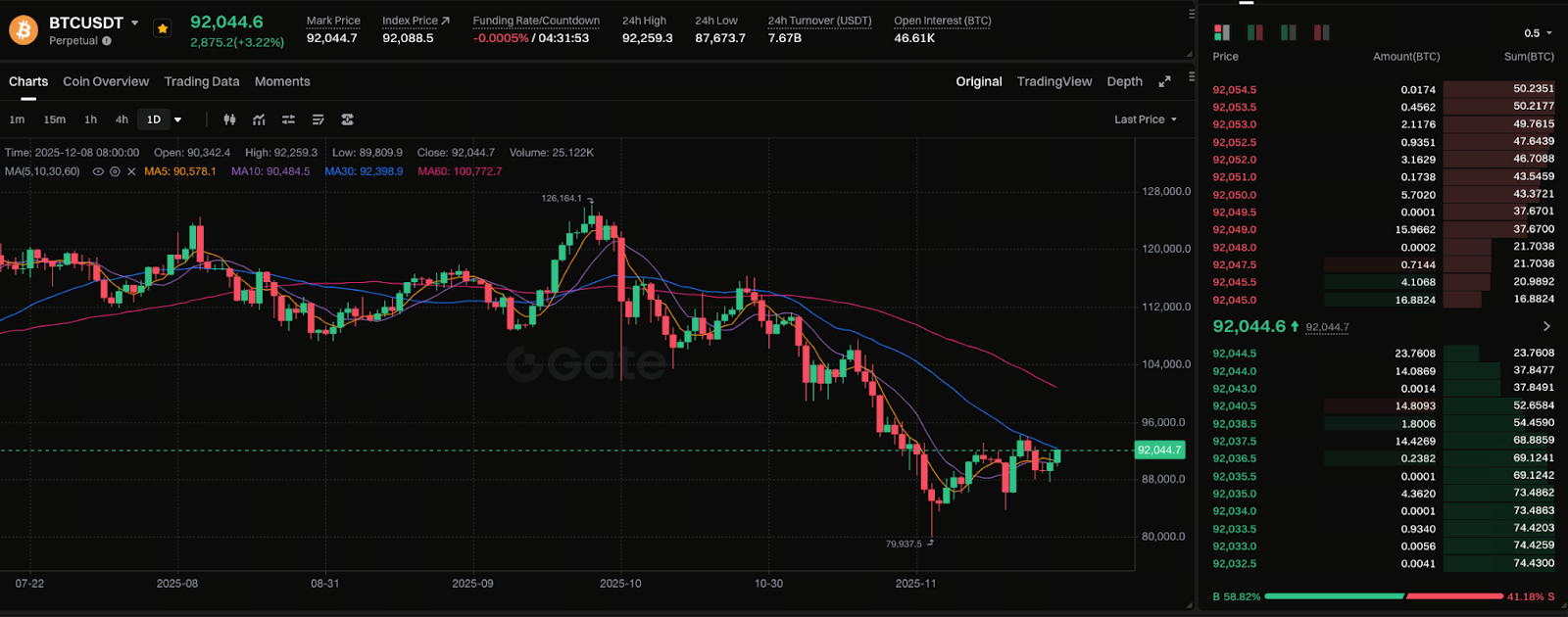

Image: https://www.gate.com/futures/USDT/BTC_USDT

The primary reason contract trading draws so many users isn’t just leverage. The real strength lies in its robust suite of professional trading tools, including:

  • Bidirectional long/short trading
  • Flexible leverage and margin control
  • Automated take-profit and stop-loss
  • Real-time position risk monitoring
  • Funding rate mechanisms to balance long and short positions

These features essentially bring futures and derivatives instruments from traditional finance into the crypto market. If you view contracts solely as “high-leverage speculation,” you’re almost guaranteed to lose out.

Deconstructing Gate’s Core Contract Trading Features

On Gate, a comprehensive contract trading system consists of several key modules:

1. Position Modes: Isolated vs. Cross Margin

  • Isolated Margin: Each position’s risk is managed independently, and the maximum loss is limited to that position’s margin. This is ideal for beginners.
  • Cross Margin: All account funds are pooled as margin, so liquidation in one position can impact your entire account. Recommended only for advanced traders.

2. Leverage Adjustment System

Gate lets you freely adjust leverage before opening a position. Leverage doesn’t equal profit; instead, it determines:

  • How close your liquidation price is to the current market price
  • How much a 1% price move impacts your P&L

Tip for beginners: Never use more than 3–5x leverage.

3. Multiple Order Types

Gate contracts support:

  • Market orders: Fast execution, suitable for chasing momentum
  • Limit orders: Cost control, ideal for planned entries
  • Stop-loss / Take-profit orders: Automated position management
  • Conditional orders: Triggered by specific criteria

Your long-term success hinges not on choosing market or limit orders, but on whether you use take-profit and stop-loss effectively.

4. Funding Rate Mechanism

This is one of the most overlooked features by beginners.

  • Excessive longs → Longs pay shorts
  • Excessive shorts → Shorts pay longs

The funding rate serves as a sentiment indicator, helping you spot when the market is overcrowded. If rates remain positive for an extended period, it signals extreme bullish sentiment—often a warning sign for a potential pullback.

Three Common Use Cases for Contract Trading

Rational users typically don’t approach contracts as a gamble, but utilize them for three main purposes:

Scenario 1: Trend Trading

In clear uptrends or downtrends, contracts help amplify returns. Best practices include:

  • Low leverage
  • Strict stop-loss discipline
  • Trading with the prevailing trend

Scenario 2: Hedging Risk

If you’re holding a large spot position, you can hedge by opening an opposing contract position:

  • Spot long + contract short
  • If the market drops, contract gains offset spot losses

This is also a common strategy among institutions and large traders.

Scenario 3: Short-Term Volatility Trading

Take advantage of Gate’s deep liquidity and matching efficiency for ultra-short-term swing trading. This approach demands strict discipline and execution and is not recommended for most beginners.

How Can Beginners Use Gate’s Features to Manage Risk?

For long-term survival, the following feature combination is best for beginners:

  • Isolated margin mode
  • Low leverage (1–3x)
  • Set a stop-loss on every order
  • Avoid full-margin and all-in trades
  • No continuous averaging down or adding to losing positions

Additionally, leverage Gate’s risk management features:

  • Liquidation price visualization
  • Position P&L percentage tracking
  • Risk margin alerts
  • Abnormal volatility notifications

All these features serve one purpose: to minimize your losses when you make mistakes in the market.

Contracts Aren’t Gambling: The Trading Logic Behind the Features

Many traders lose money on contracts not because of poor market analysis, but because they:

  • Don’t understand the features
  • Misuse leverage
  • Fail to set stop-losses
  • Trade emotionally

Long-term successful traders typically follow a few simple principles:

  • Small position sizes
  • High-probability trades
  • Repeatable strategies
  • Clear exit plans

Gate’s contract trading features are already at a professional level. The real issue isn’t a lack of features—it’s whether you know how to use them effectively.

Summary: Master the Features Before Pursuing Profits

Contract trading isn’t about “making money by being bold.” It’s a professional system that relies on:

  • Risk management
  • Mastery of trading tools
  • Strict trading discipline

As a professional trading framework.

Gate’s contract trading features already include:

  • Leverage adjustment
  • Long/short trading
  • Position modes
  • Automated take-profit and stop-loss
  • Funding rate mechanisms
  • Risk monitoring

When you can use these features skillfully to manage risk—rather than letting the features dictate your actions—contract trading becomes a powerful tool, not a trap.

Disclaimer
* The information is not intended to be and does not constitute financial advice or any other recommendation of any sort offered or endorsed by Gate.
* This article may not be reproduced, transmitted or copied without referencing Gate. Contravention is an infringement of Copyright Act and may be subject to legal action.

Related Articles

AI-Native Settlement Layers: How United Stables Is Building the Next Financial Rail
Beginner

AI-Native Settlement Layers: How United Stables Is Building the Next Financial Rail

Stablecoins were originally designed as dollar substitutes within exchanges, primarily used for asset pricing and trade settlement. As on-chain financial ecosystems have matured, their role has expanded beyond simple payments to include collateral assets, cross-chain liquidity mediums, and unified settlement units. In particular, as AI systems and automated agents begin to participate directly in economic activity, demand has risen sharply for programmable value units capable of instant settlement. This shift is pushing stablecoins toward the role of foundational financial infrastructure.
2026-03-25 03:16:17
The ve(3,3) Flywheel Explained: How AERO Tokenomics Powers Aerodrome’s DeFi Economy
Beginner

The ve(3,3) Flywheel Explained: How AERO Tokenomics Powers Aerodrome’s DeFi Economy

In the competition for DeFi liquidity, high-inflation mining alone is no longer enough to build lasting advantages. Aerodrome applies the ve(3,3) economic model to redesign token emissions, voting mechanisms, and revenue distribution, creating a liquidity flywheel centered on governance and cash flow. This article examines AERO tokenomics, the veAERO locking mechanism, and protocol revenue models to explain how Aerodrome builds a sustainable DeFi economic system.
2026-03-25 06:41:58
How Does PAXG Work? In-Depth Overview of the Physical Gold Tokenization Mechanism
Beginner

How Does PAXG Work? In-Depth Overview of the Physical Gold Tokenization Mechanism

PAXG (Pax Gold) is a tokenized asset backed by physical gold, issued by the fintech company Paxos and traded on the Ethereum blockchain as an ERC-20 token. The core concept is to tokenize physical gold on-chain, with each PAXG token representing ownership of a certain amount of gold. This structure enables investors to hold and trade gold in the form of a digital asset.
2026-03-24 19:12:51
Aerodrome Tokenomics: How ve(3,3) Powers Base's Most Profitable DEX
Beginner

Aerodrome Tokenomics: How ve(3,3) Powers Base's Most Profitable DEX

AERO is the native token of Aerodrome Finance, a core decentralized exchange and liquidity protocol in the Base ecosystem. It is primarily used for liquidity incentives and ecosystem operations. veAERO is a governance NFT that users receive by locking AERO, representing both voting power and the right to share protocol revenue. Through a dual track structure of AERO as a utility token and veAERO as a governance credential, Aerodrome separates liquidity usage value from long term governance power, allowing participants to act as liquidity providers, governance decision makers, and revenue sharers within the same system.
2026-03-25 06:40:31
How is the price of PAXG determined? Pegging mechanism, trading depth, and influencing factors
Beginner

How is the price of PAXG determined? Pegging mechanism, trading depth, and influencing factors

PAXG (Pax Gold) is a tokenized asset backed by physical gold reserves, launched by fintech firm Paxos and issued as an ERC-20 token on the Ethereum blockchain. The core concept is to digitally represent real-world gold assets, allowing investors to hold and trade gold via the blockchain network. Because each PAXG token corresponds to a specific quantity of physical gold, its price is theoretically expected to closely track the global gold market.
2026-03-24 19:11:40
Hybrid Collateral Stablecoins: Inside United Stables' Stability and Yield Architecture
Beginner

Hybrid Collateral Stablecoins: Inside United Stables' Stability and Yield Architecture

In the early stages of the crypto market, traditional stablecoins mainly relied on single-reserve or single-collateral models. Their primary focus was price stability and payment convenience, which allowed them to become foundational tools for on-chain trading and capital flows. As the market has entered a more mature financial phase, however, this structure has begun to reveal limitations, including high concentration risk and the difficulty of balancing liquidity with yield. These constraints have driven the evolution toward multi-layer collateral and portfolio-based designs, such as the dual-layer hybrid collateral architecture proposed by United Stables, which seeks to redefine the underlying logic of stable assets.
2026-03-25 03:17:39





