
1. Background: What Are Plasma and XPL?
For those new to crypto, Plasma (token: XPL) is an innovative blockchain project designed as a “stablecoin infrastructure chain.” Its core purpose is to deliver ultra-efficient, near-zero-fee, and instant liquidity channels for stablecoins—including USDT, USDC, and other stable assets.
In this architecture, XPL plays a pivotal role in network governance, incentive distribution, collateral management, and ecosystem development. Because stablecoins function as the “medium of exchange” in the digital asset sphere, any infrastructure offering performance or cost advantages can rapidly attract liquidity.
2. Major Breakthrough: The Significance of $7 Billion in Stablecoin Supply
Industry sources reveal that Plasma’s on-chain stablecoin supply exceeded $7 billion in just two days.
This surge is remarkable. For a new blockchain network, attracting multi-billion-dollar stablecoin inflows in two trading days reflects extraordinary market and investor confidence in its model and vision.
This milestone indicates several key factors:
- Trust and speed—Quick fund transitions from other chains to Plasma, indicating minimal friction and acceptable trust requirements.
- Cost advantage—Plasma touts near-zero transaction fees for transfers of stablecoins like USDT, a highly competitive feature compared to other chains.
- Ecosystem expansion—Multiple stablecoin platforms are launching new products on Plasma, including USDe and sUSDe.
3. Key Drivers Analysis
Understanding why capital has flowed into Plasma so swiftly involves several dimensions:
- Lowering transaction fees—On legacy blockchains like Ethereum or Tron, stablecoin transfers often incur significant fees. Plasma’s near-zero fees appeal to frequent transfer, payment, and settlement users or institutions.
- Chain compatibility and ecosystem integration—Plasma’s EVM compatibility means DeFi protocols and tools can migrate or integrate easily. Numerous protocols have reportedly expressed integration interest.
- Market expectations and FOMO—During early launch, media and social platforms ramp up coverage, and liquidity inflows create a momentum effect that draws additional capital.
- Strategic incentives—The team may have implemented early liquidity rewards, staking benefits, or other mechanisms to encourage capital inflows.
4. Potential Effects on XPL Price and Ecosystem
On Price
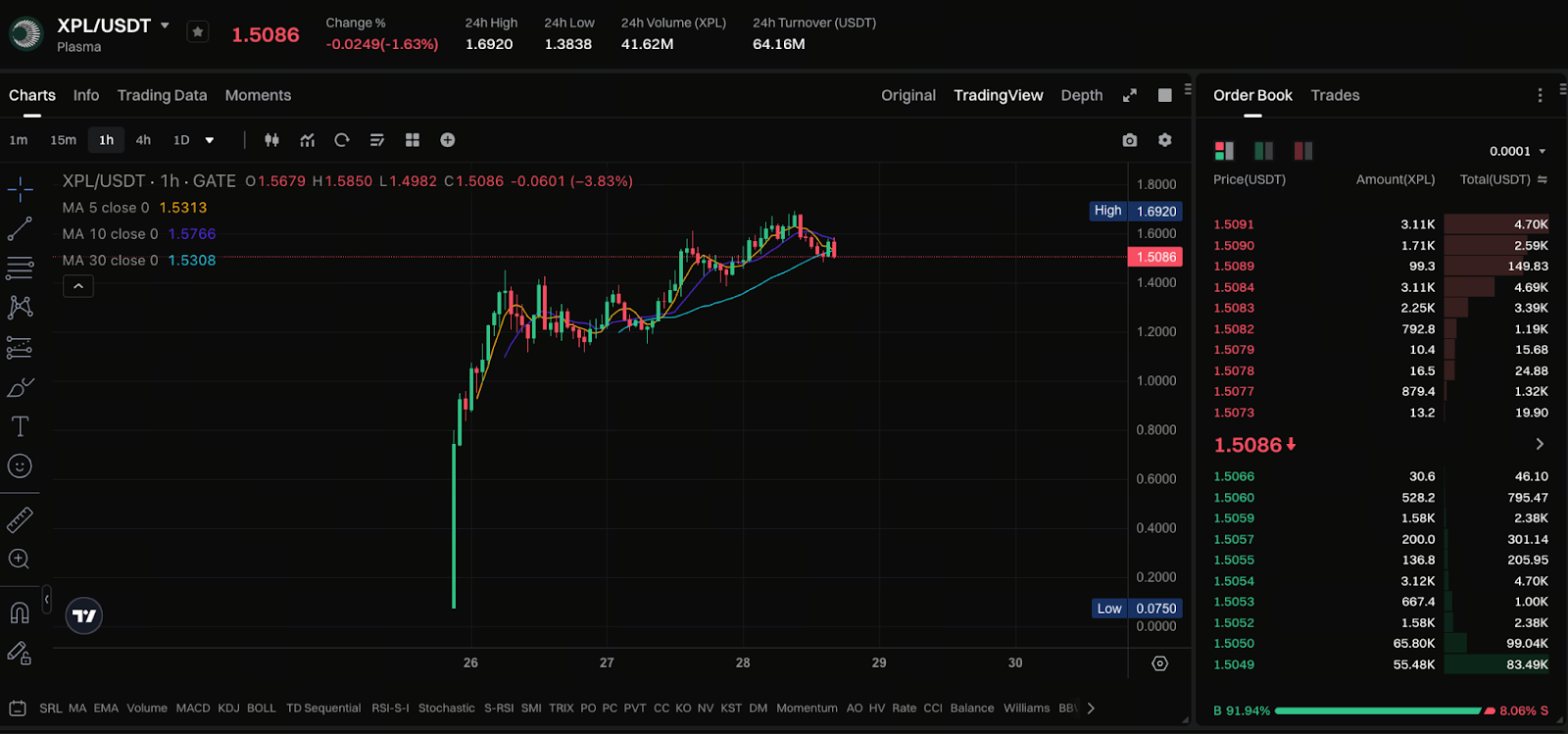
Source: https://www.gate.com/trade/XPL_USDT
XPL surged nearly 20% in the past 24 hours. Robust capital inflow and ecosystem momentum may continue to fuel short-term price gains.
However, new chain launches often experience high volatility and are susceptible to rapid pullbacks. Short-term speculators or arbitrage seekers could exit quickly, leading to swift reversals.
On Ecosystem Growth
The increase in stablecoin supply locks more capital on Plasma, forming the liquidity foundation for DeFi applications such as lending platforms, AMMs, synthetic asset protocols, cross-chain bridges, and others.
The team plans to use XPL tokens to incentivize users, DeFi protocols, and infrastructure builders, driving decentralization and ecosystem self-sufficiency.
In the future, Plasma may integrate with fiat payment gateways and real-world payment solutions (such as Stripe or PayPal), expanding its reach at the intersection of traditional finance and crypto.
5. Risk Warning and Outlook
Risk Warning
- Liquidity concentration risk: Current capital may cluster in a handful of large wallets or early-stage participants. Large-scale redemptions could trigger sharp price swings.
- Technical and security risk: New blockchains typically face smart contract vulnerabilities, node attacks, and cross-chain bridge risks in their early stages.
- Regulatory risk: Stablecoins and crypto infrastructure face diverse global regulatory scrutiny, with the potential for future policy changes.
- Redemption and bubble risk: Initial flows may reflect short-term speculation rather than sustainable usage. Without long-term users or genuine ecosystem utility, a correction could follow.
Outlook
If Plasma delivers on its promise of low fees, high performance, compatibility, and decentralization—and effectively attracts stablecoin issuers, DeFi projects, and partnerships with traditional financial/payment entities—it could become a leading stablecoin infrastructure layer, optimizing liquidity for the global crypto economy.
However, this growth also entails risks. The critical success factors are: a sustainable ecosystem business model, resilient and secure technical architecture, and active community and developer engagement.
6. Summary
In just two days, stablecoin supply on the Plasma (XPL) chain broke through $7 billion—an exceptional feat for an emerging blockchain ecosystem. This signals robust market demand for cost-effective, high-throughput stablecoin infrastructure and highlights XPL’s rapid growth.
For beginners, such news provides a valuable opportunity for learning: understanding the factors driving capital flows to specific chains and identifying associated risks and opportunities. If you are interested in Plasma or XPL, monitor its progress in DeFi protocols, security measures, ecosystem partnerships, and regulatory developments.







