HOOD and COIN are both listed on the US stock market, both serve retail users, and both have exposure to crypto, making them frequently grouped for analysis. To compare them effectively, start by clearly defining their business models, then assess revenue streams and regulatory context—avoid substituting a price cycle narrative for a structural comparison.
From a Gate Stocks perspective, HOOD and COIN are distinct tickers; always verify the full company name during your search. For step-by-step instructions, refer to How to Buy HOOD on Gate. Coinbase also offers dedicated guides and comparison articles such as COIN vs HOOD.
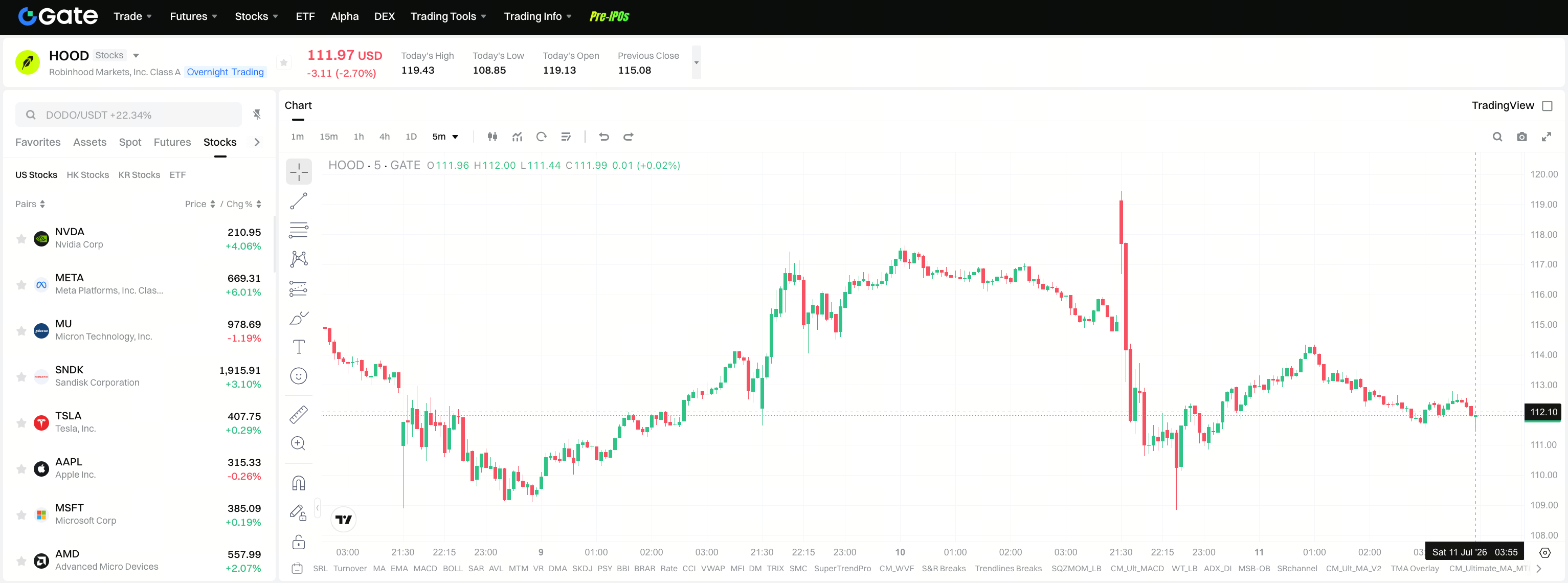
What Is Robinhood (HOOD)?
Robinhood Markets (HOOD) operates as a retail multi-asset brokerage and fintech platform under the ticker HOOD. The platform offers access to US equities and ETFs, options, futures, event contracts, as well as crypto trading and subscription services via Robinhood Gold. For a comprehensive breakdown of its revenue structure, see HOOD Stock Business Model.
The core framework for HOOD is "brokerage plus multi-asset gateway": crypto is one component of its product suite, not the primary business driver. For on-chain expansion, see HOOD Crypto and Robinhood Chain.
What Is Coinbase (COIN)?
Coinbase Global, Inc. is positioned as a compliance-driven digital asset trading platform, trading under the ticker COIN. Its business spans retail and institutional crypto trading, custody and Prime, subscription services like Coinbase One, and participation in stablecoin and the Base on-chain ecosystem. Revenue is primarily concentrated in crypto trading fees and subscription/service charges.
COIN’s business starts with "crypto trading and custody infrastructure": retail brokerage for equities and options is not its core narrative. When comparing with HOOD, recognize that while both overlap in crypto, they differ significantly in traditional securities brokerage depth.
At-a-Glance: Key Differences Between HOOD and COIN
| Dimension |
HOOD (Robinhood) |
COIN (Coinbase) |
| Company Focus |
Multi-asset retail brokerage |
Digital asset trading platform |
| Asset Focus |
US equities, options, some crypto |
Primarily crypto |
| Main Revenue |
Transactional income, net interest, Gold |
Trading fees, subscriptions, and services |
| Institutional Business |
Primarily retail-oriented |
Greater emphasis on custody and Prime |
| On-chain Narrative |
Robinhood Chain / tokenization |
Base, USDC ecosystem, etc. |
| Regulatory Focus |
Dual: brokerage + crypto |
Primarily crypto trading and custody |
This table serves as a structural comparison and does not imply any ranking of strengths or weaknesses. Disclosure standards and segment reporting granularity may vary between the two companies; always reference their respective 10-Ks or investor materials for accurate comparisons.
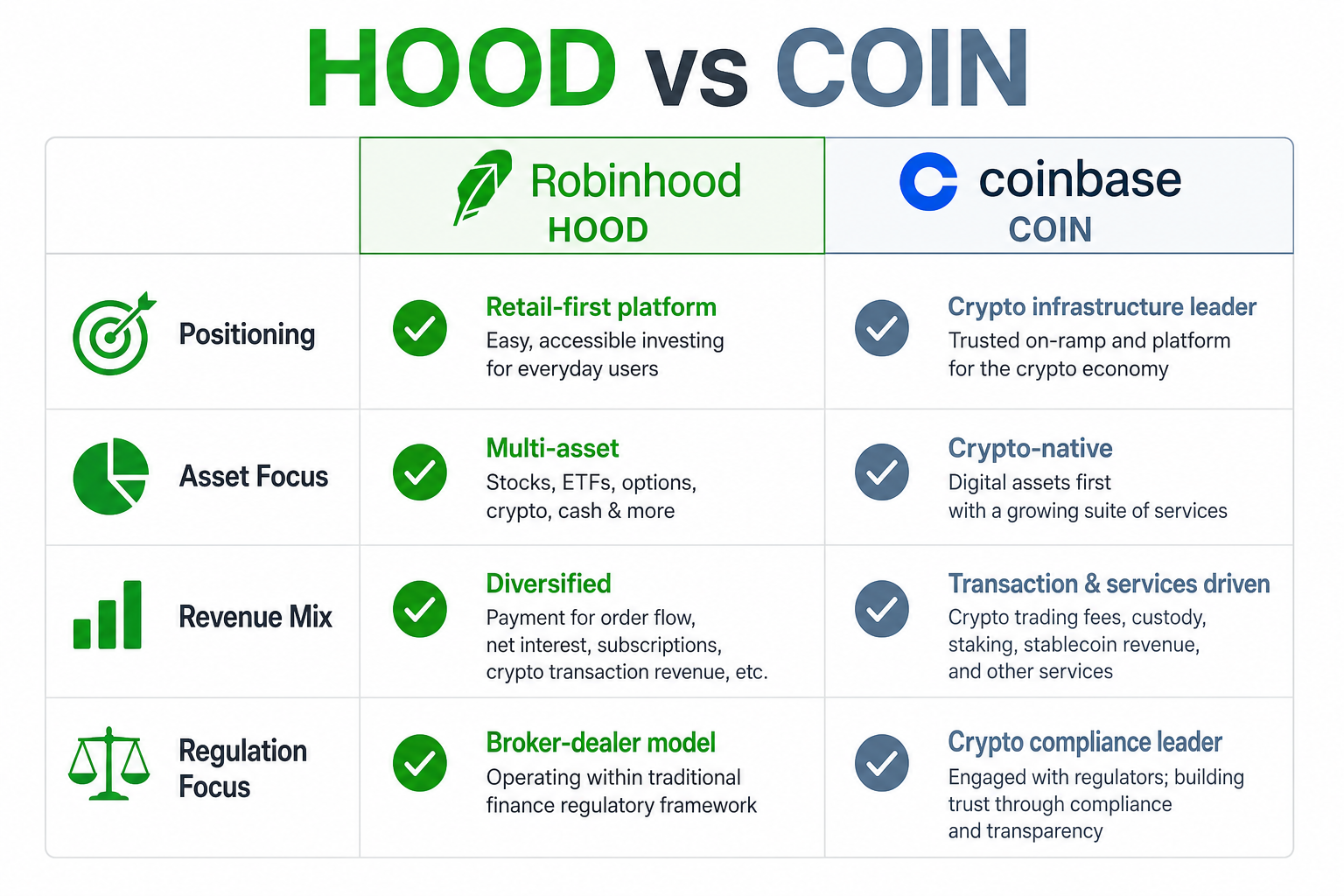 Figure 1. HOOD vs COIN comparison matrix: four core differences in positioning, asset focus, main revenue, and regulatory emphasis.
How Do User Profiles and Product Experiences Differ?
HOOD’s user base is typically described as broad retail traders, entering through equities and options, and then expanding into crypto and subscriptions. COIN’s users are more likely crypto-native or institutional clients, starting with digital asset trading and custody.
Product-wise, HOOD highlights a mobile-first, multi-account, multi-asset experience; COIN focuses on trading depth, Advanced Trade, institutional tools, and on-chain ecosystem integration. The overlap is in retail crypto trading, but this does not equate to identical business models.
How Do Regulatory Exposures Differ?
HOOD is subject to both brokerage regulatory frameworks (e.g., SEC, FINRA) and crypto-specific oversight, with order routing practices like PFOF frequently discussed on the brokerage side. COIN’s regulatory focus is on whether digital assets are securities, exchange registration, state-level money transmission licenses, and custody obligations. For more details, see HOOD Regulation and Compliance.
These regulatory differences mean that the same crypto news can affect the two companies in different ways: for COIN, it may impact core operations, while for HOOD, it might only affect a portion of its revenue structure. When evaluating risk factors, first determine whether the news affects brokerage execution rules, crypto listing policies, or public company disclosure requirements, and then map to the relevant company.
How to Use a Standardized Checklist for Comparative Analysis
When comparing the two, use a fixed set of questions to cut through narrative noise: Is the primary business brokerage or crypto platform? What are the top three revenue drivers? How granular is crypto-related revenue disclosure? What is the split between institutional custody and retail trading? Is the on-chain ecosystem more like Base/USDC or Robinhood Chain/tokenization? Which regulatory risks are prioritized in disclosures?
Complete the table with these answers and differences will be clear, without the need for price comparisons. This checklist is also useful for Gate Stocks ticker selection: always verify ticker and full company name before choosing which business summary to review, to avoid confusing HOOD steps with COIN, or vice versa.
How Do Revenue Cycle Sensitivities Differ?
HOOD’s revenue is sensitive to retail trading activity and interest rates: transactional revenue tracks equity, options, and crypto trading; net interest depends on cash balances and rates; Gold subscriptions are relatively stable. COIN’s revenue is even more sensitive to crypto market activity and asset price cycles—subscription and service fees offer some diversification, but overall, revenue is highly tied to digital asset trading.
Thus, in the same macro environment, the key drivers for each company may diverge. For example, interest rate changes affect HOOD’s net interest, but not COIN’s custody and trading fees; a crypto trading rebound impacts COIN’s core business more than a single segment in HOOD’s multi-asset portfolio.
What Are the Limitations of Comparison?
Limitation 1: Revenue line items and classifications are not fully comparable. Limitation 2: International expansion and acquisitions can shift crypto exposure. Limitation 3: On-chain ecosystems (Chain/Base) are at different stages of maturity, making direct metric comparisons difficult. Limitation 4: Comparative articles offer only a structural overview and cannot substitute for reviewing current financial statements and disclosures.
Therefore, HOOD vs COIN is best used as a classification tool: determine whether your analysis is about brokerage or crypto platform revenue, then select the appropriate framework. Using the comparison table as a buy/sell ranking tool exceeds the scope of informational content.
Summary
HOOD and COIN are both US-listed fintech companies with crypto exposure, but HOOD is primarily a multi-asset retail broker, while COIN is focused on digital asset trading and custody. Their main revenue streams, user profiles, regulatory priorities, and sensitivity to market cycles diverge accordingly. When using the comparison table, prioritize "structural differences over price narratives," and always validate with official company disclosures.
FAQ
What are the differences between Robinhood and Coinbase?
Robinhood (HOOD) is a multi-asset retail brokerage, while Coinbase (COIN) is primarily a crypto trading and custody platform. Both offer retail crypto access, but differ significantly in traditional securities brokerage depth and revenue structure.
Which is more reliant on crypto, HOOD or COIN?
By business model, COIN is more reliant on crypto trading and custody; for HOOD, crypto is just one part of a broader multi-asset offering, which also includes equities, options, and net interest. Specific proportions are detailed in each company’s financial reports.
Why are HOOD and COIN often compared?
Because both are US-listed, serve retail users, and are involved in crypto, they’re frequently grouped as fintech or crypto-related stocks in market discussions. This is for analytical convenience and does not mean their business models are the same.
Are regulatory risks the same for both?
No. HOOD faces both brokerage regulations (including PFOF topics) and crypto compliance; COIN’s focus is on digital asset trading, custody, and related registration and licensing.
How can you avoid buying the wrong ticker on Gate?
Search for HOOD and COIN separately, confirm the full company names—Robinhood Markets, Inc. and Coinbase Global, Inc.—and verify NASDAQ market information before placing an order. Don’t rely solely on the "crypto-related" label.