Dalam sistem DeFi multichain dan modular, aset menghadapi tiga tantangan utama: likuiditas yang terfragmentasi, jalur keuntungan yang terputus, dan operasi cross-chain yang kompleks. Ketika pengguna menyetor aset ke protokol, aset tersebut umumnya terbatas pada satu ekosistem, sehingga efisiensi modal menurun dan peluang menghasilkan keuntungan menjadi terbatas.
StakeStone menjadi terobosan karena menggabungkan "keuntungan staking" dan "likuiditas cross-chain" dalam satu lapisan terpadu. Dengan demikian, aset utama seperti ETH dan BTC dapat bergerak bebas di berbagai chain dan aplikasi, sembari tetap menghasilkan keuntungan dasar. Untuk pengguna dan protokol yang mengejar efisiensi modal lebih tinggi, StakeStone menyediakan infrastruktur sebagai "asset middleware".
Berbeda dengan staking single-chain tradisional, StakeStone memanfaatkan mekanisme cross-chain dan kolaborasi multi-protokol, sehingga aset dapat berpindah secara dinamis ke berbagai sumber keuntungan dan meningkatkan efisiensi modal secara keseluruhan.
Ikhtisar Proses Operasional StakeStone
StakeStone berfungsi sebagai sistem aliran modal yang utuh, dimulai dari penyetoran aset, alokasi strategi keuntungan, hingga distribusi keuntungan.
Ketika pengguna menyetor ETH atau aset liquid staked ke protokol, aset akan masuk ke pool terpadu dan menghasilkan sertifikat ekuitas (seperti STONE). Protokol kemudian mengalokasikan aset ini ke berbagai sumber keuntungan sesuai strategi, termasuk staking dasar dan mekanisme restaking. Sebagian dana juga dapat dialokasikan ke jaringan blockchain lain untuk mengejar hasil yang lebih optimal.
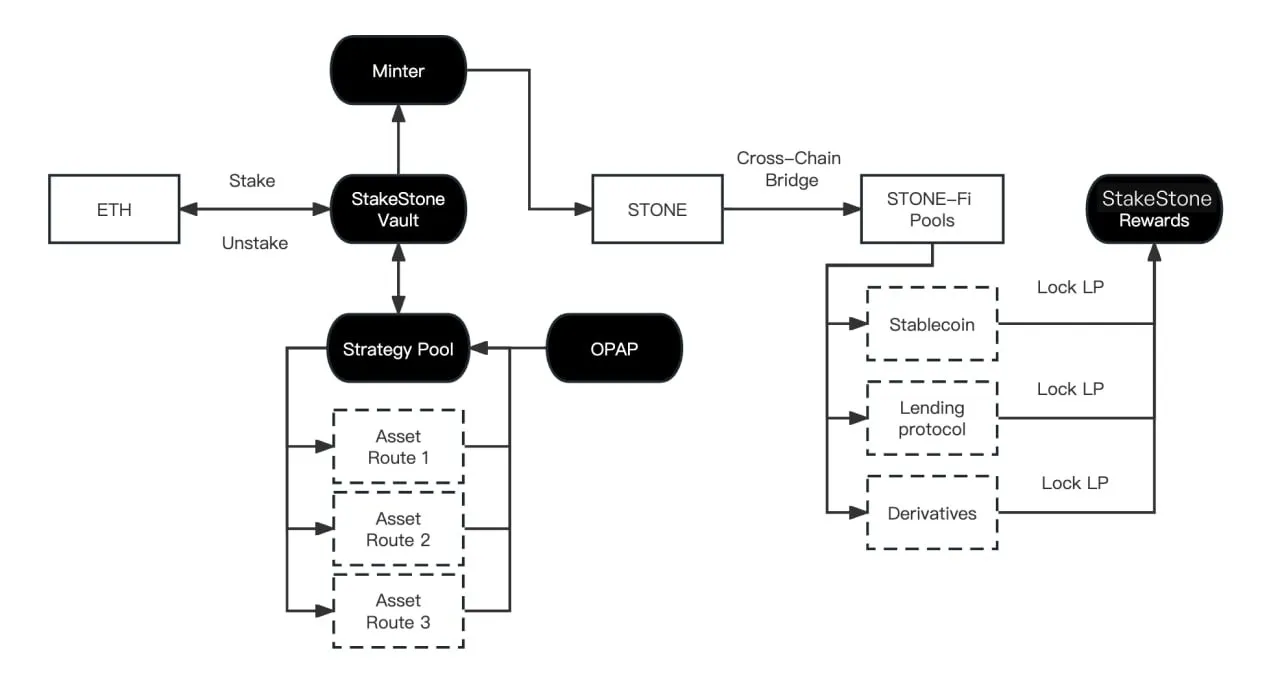
Prosesnya dapat dirangkum sebagai berikut: pengguna menyetor aset → sertifikat yield dihasilkan → alokasi strategis → generasi keuntungan multi-sumber → penjadwalan cross-chain → akumulasi dan distribusi keuntungan.
Dari sudut pandang pengguna, StakeStone berperan sebagai asset middleware. Saat pengguna menyetor ETH, BTC, atau aset serupa, protokol mengonversinya menjadi aset on-chain yang tetap dapat beredar dan berpartisipasi dalam portofolio DeFi, bukan hanya terkunci dalam satu kontrak. Pendekatan ini menjaga potensi keuntungan sekaligus memperluas pemanfaatan aset.
Fitur Utama Mekanisme Operasional StakeStone
Ciri utama StakeStone adalah pendekatan terpadu terhadap "keuntungan" dan "likuiditas". Banyak solusi staking tradisional memang memberikan hasil namun membatasi fleksibilitas aset. StakeStone memungkinkan pengguna memperoleh keuntungan tanpa mengorbankan ketersediaan aset.
Fitur penting lainnya adalah desain non-custodial. Aset pengguna tidak dikelola oleh pihak terpusat secara tertutup; alokasi dan distribusi dilakukan melalui mekanisme on-chain dan strategy pool, sehingga transparansi dan verifikasi sesuai standar DeFi tetap terjaga.
StakeStone juga secara native mendukung cross-chain. Likuiditas cross-chain menjadi kapabilitas inti, bukan sekadar tambahan. Setelah aset masuk ke protokol, aset tidak hanya menghasilkan keuntungan, tetapi juga berpotensi menciptakan nilai di berbagai chain dan aplikasi.
Optimalisasi Strategi Keuntungan di Ekosistem Kompleks
StakeStone tidak hanya mencari keuntungan statis dari satu sumber. Protokol memanfaatkan strategy pool untuk mengalokasikan aset secara dinamis ke berbagai jalur keuntungan. Aset dasar dapat didistribusikan ke berbagai strategi seperti staking, manajemen likuiditas, atau sumber lain yang paling sesuai dengan kondisi pasar terkini.
Desain ini bukan sekadar mengejar APY tertinggi, melainkan menyeimbangkan antara keuntungan dan risiko. Dalam pasar nyata, imbal hasil tinggi sering diiringi risiko lebih besar. StakeStone menargetkan keuntungan berkelanjutan, bukan hanya lonjakan sesaat.
Bagi pengguna, artinya protokol secara aktif mengoptimalkan pemanfaatan aset dasar berdasarkan kondisi on-chain, dinamika pasar, dan parameter tata kelola. Aset dikelola dan dialokasikan ulang secara aktif oleh protokol, bukan hanya disimpan secara pasif.
Mekanisme Penjadwalan Keuntungan Cross-Chain StakeStone
Mekanisme penjadwalan cross-chain StakeStone mengelola potensi keuntungan dan kebutuhan likuiditas aset secara bersamaan. Bukan sekadar memindahkan aset antar-chain, mekanisme ini memastikan aset tetap menghasilkan yield dan bersifat composable selama proses cross-chain.
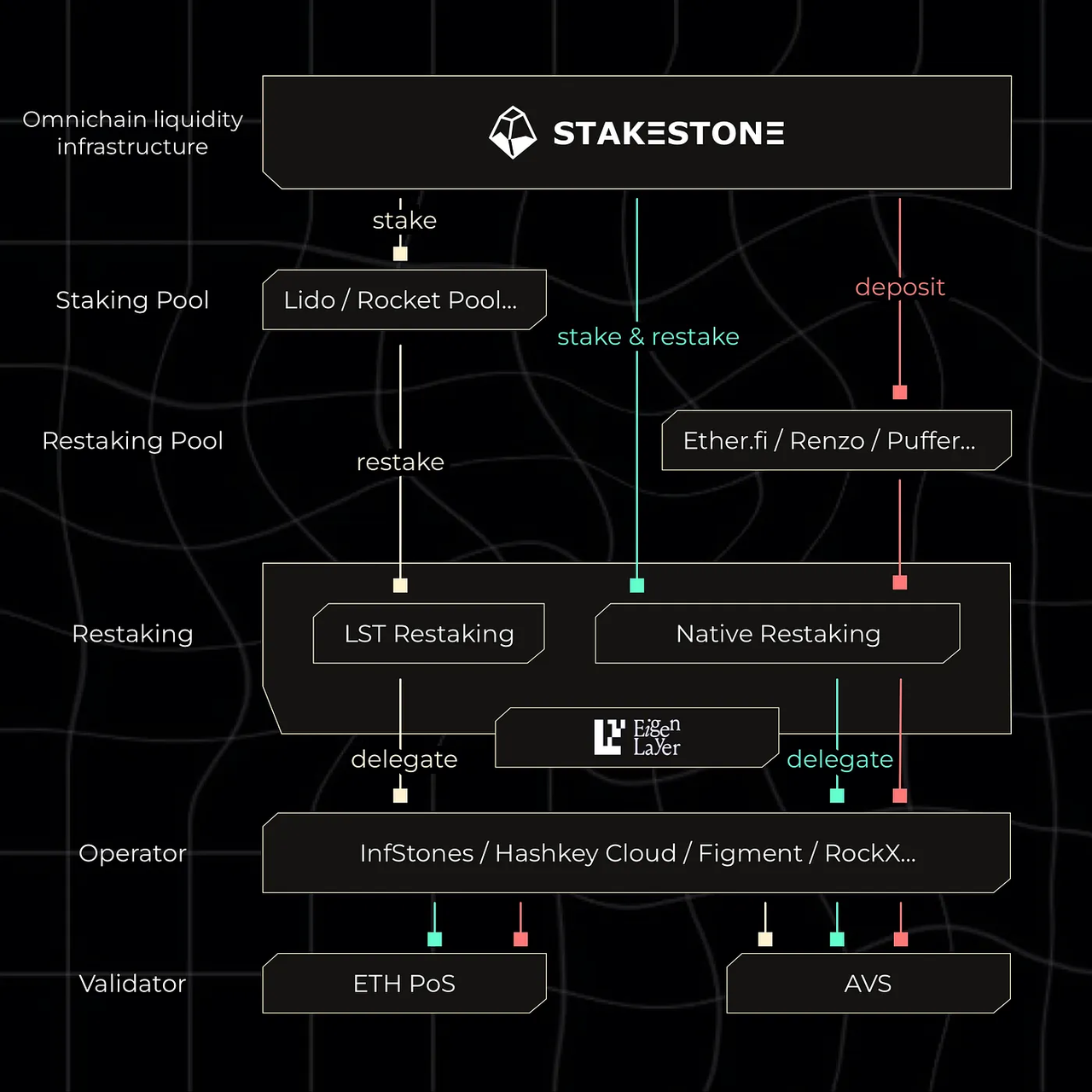
Dalam ekosistem multichain, peluang DeFi tidak terdistribusi merata di semua chain. Ada chain dengan likuiditas lebih aktif, ada yang menawarkan strategi keuntungan lebih kaya, dan ada yang cocok untuk penyimpanan nilai jangka panjang. StakeStone menggunakan penjadwalan omnichain untuk menempatkan aset di lokasi paling optimal sesuai ekosistem saat ini dan terus menciptakan nilai bagi pengguna.
Keunggulan desain ini jelas: pengguna tidak perlu mengorbankan keuntungan demi transfer cross-chain atau kehilangan fleksibilitas demi yield yang lebih tinggi. Protokol mengatur penjadwalan di backend, sementara pengguna cukup memegang aset on-chain yang relevan.
Bagaimana Keuntungan StakeStone Didistribusikan ke Pengguna?
Keuntungan StakeStone berasal dari beberapa lapisan. Fondasinya adalah yield dari aset dasar, seperti keuntungan staking. Sumber tambahan berasal dari alokasi protokol dalam strategy pool dan nilai ekstra dari interaksi ekosistem, insentif, atau ekspansi protokol.
Keuntungan tidak dibayarkan sebagai "dividen tunai" sederhana, melainkan tercermin dalam aset on-chain atau sertifikat ekuitas yang dimiliki pengguna. Semakin lama aset dipegang, semakin besar keuntungan yang terakumulasi—direalisasikan melalui apresiasi nilai aset, aturan swap, atau mekanisme internal protokol.
Metode distribusi ini selaras dengan logika aset on-chain DeFi: keuntungan terikat pada nilai aset, bukan didistribusikan terpisah. Pengguna dapat terus memperoleh keuntungan tanpa perlu intervensi rutin.
Ringkasan
StakeStone mengintegrasikan penyetoran aset, alokasi strategi keuntungan, dan penjadwalan cross-chain ke dalam sistem otomatis, sehingga pengguna dapat berpartisipasi dalam keuntungan terdiversifikasi tanpa operasi yang rumit. Keunggulan utamanya adalah peningkatan efisiensi modal melalui struktur yield berlapis dan kapabilitas cross-chain, sekaligus mencerminkan keuntungan kepada pengguna lewat sertifikat aset.
Model ini menunjukkan evolusi sistem yield blockchain dari staking satu sumber menjadi portofolio multi-strategi.
FAQ
Apakah proses operasional StakeStone membutuhkan tindakan manual dari pengguna?
Pada umumnya tidak. Sebagian besar strategi StakeStone dijalankan otomatis oleh protokol.
Apa saja sumber keuntungan StakeStone?
Keuntungan StakeStone terutama berasal dari yield staking dasar dan restaking.
Apakah StakeStone melibatkan operasi cross-chain?
Ya. Optimalisasi yield-nya mengandalkan mekanisme penjadwalan cross-chain.
Bagaimana pengguna menerima keuntungan?
Keuntungan biasanya direalisasikan melalui pertumbuhan nilai aset.
Apa perbedaan StakeStone dengan staking tradisional?
StakeStone menggunakan mekanisme multi-strategi dan cross-chain, sedangkan staking tradisional umumnya hanya mengandalkan keuntungan dari satu chain saja.