The importance of Core DAO use cases lies in the fact that the traditional Bitcoin network places greater emphasis on asset security and store-of-value functions, but lacks complex smart contracts and on-chain financial structures. Core DAO aims to combine Bitcoin security with the on-chain application ecosystem through EVM compatibility and Satoshi Plus consensus.
Core DAO’s ecosystem structure includes BTCFi, DeFi protocols, EVM applications, BTC staking, and the developer ecosystem. Together, these modules form Core DAO’s on-chain application system.
What Are the Use Cases of Core DAO
Core DAO’s use cases are essentially built on the combination of Bitcoin security resources and EVM smart contract capabilities.
Structurally, Core DAO is not merely a traditional Layer 1 public blockchain. It places greater emphasis on connecting Bitcoin assets, BTC holders, and the on-chain financial ecosystem.
Core DAO’s application system mainly includes:
-
BTCFi
-
DeFi
-
EVM applications
-
BTC staking
Core DAO’s ecosystem process begins with developers deploying EVM applications. BTC holders and on-chain users then enter the Core network.
Next, the Core network processes validation and on-chain interactions through Satoshi Plus consensus. Finally, BTC and the smart contract ecosystem form an on-chain coordination structure.
This mechanism means Core DAO’s core value is not only to provide a public chain execution environment, but also to expand Bitcoin’s use across on-chain finance.
How Core Supports BTCFi Applications
Core DAO’s BTCFi use cases are mainly designed to expand Bitcoin’s role in on-chain finance.
The traditional Bitcoin network usually lacks complex smart contracts, so BTC has difficulty participating directly in DeFi protocols and on-chain yield systems. Core DAO aims to address this through its EVM environment and BTC staking structure.
Core DAO’s BTCFi process begins when BTC holders enter protocols related to the Core network. They can then participate in the network security system through non-custodial staking.
Next, the Core network combines BTC participation with on-chain application interactions. Finally, BTC enters yield, validation, or on-chain financial scenarios.
The table below shows the main BTCFi scenarios in Core DAO:
| Application Direction |
Main Function |
Ecosystem Significance |
| BTC staking |
Participates in network security |
Expands Bitcoin use |
| BTCFi protocols |
Supports on-chain yield |
Improves BTC liquidity |
| BTC asset coordination |
Connects with smart contracts |
Expands on-chain scenarios |
| Bitcoin security participation |
Supports the consensus mechanism |
Strengthens network coordination |
Core DAO’s BTCFi focus is to help Bitcoin move beyond a store-of-value role and participate in on-chain financial interactions.
This structure means Bitcoin holders can participate in the smart contract ecosystem while maintaining control over their assets.
How Core Supports EVM Smart Contracts
Core DAO is EVM-compatible, which means the Core network can directly support Solidity contracts and Ethereum development tools.
The importance of EVM compatibility lies in lowering migration costs for developers. Some Ethereum applications can be deployed directly to the Core network without redesigning their smart contract architecture.
The smart contract process on Core DAO begins when developers deploy Solidity contracts. Core nodes then execute EVM instructions and state updates.
Next, validators confirm transaction results and block states. Finally, smart contracts continue running on the Core network.
Core DAO’s EVM structure also allows wallets, explorers, and development frameworks to connect to the Core network. As a result, Core can build a developer ecosystem more quickly.
Unlike traditional non-EVM Bitcoin scaling solutions, Core DAO places greater emphasis on development tool compatibility and smart contract scalability.
How the Core Ecosystem Serves DeFi Protocols
Core DAO’s DeFi use cases mainly support on-chain asset interactions, yield protocols, and smart contract-based financial applications.
DeFi protocols generally need a stable execution environment and on-chain asset liquidity. Core DAO aims to support on-chain financial protocols through Bitcoin’s security structure and an EVM environment.
Core DAO’s DeFi process begins with developers deploying on-chain protocols. Users then enter the Core network through wallets.
Next, users interact with smart contracts on-chain. Finally, DeFi protocols process asset management, yield calculations, or liquidity logic.
Core DAO’s DeFi scenarios typically include:
-
On-chain lending
-
Liquidity protocols
-
DEX trading
-
Yield protocols
Core DAO’s ecosystem focus is to combine Bitcoin assets with DeFi protocols rather than serving only traditional EVM users.
This mechanism means BTC can gradually enter the on-chain financial coordination system.
How Non-Custodial BTC Staking Expands Bitcoin Use Cases
Non-custodial BTC staking is an important application structure within Core DAO. It allows BTC holders to participate in network security and on-chain incentives.
When BTC traditionally participates in on-chain yield systems, it often requires cross-chain custody or third-party asset conversion. Core DAO aims to reduce asset control risks through a non-custodial structure.
The non-custodial BTC staking process begins when BTC holders participate in staking through time locks. The Core network then records participation behavior on the Bitcoin network.
Next, Core DAO maps BTC participation results to the validation system. Finally, BTC holders can receive network rewards or ecosystem participation weight.
The core idea of this mechanism is that BTC holders do not need to fully give up control of their assets.
Unlike traditional custodial bridge models, Core DAO places greater emphasis on Bitcoin-native participation logic.
How Core DAO Connects Developers and Users
Core DAO’s developer ecosystem is mainly built through EVM compatibility and Bitcoin-related application scenarios.
Developers need a smart contract execution environment, while Bitcoin users are more focused on asset security and on-chain yield. Core DAO aims to serve both types of ecosystem participants.
Core DAO’s ecosystem connection process begins with developers deploying applications. Wallets and infrastructure tools then connect to the Core network.
Next, users enter on-chain interactions through BTCFi or DeFi protocols. Finally, developers and users form an on-chain application ecosystem.
Core DAO’s developer support focuses on:
This structure means Ethereum developers can more easily enter Bitcoin-related on-chain scenarios.
What Are the Limitations of Core Use Cases
The main limitations of Core DAO’s use cases involve ecosystem scale, developer competition, and the efficiency of Bitcoin coordination.
The Bitcoin network itself does not natively support complex smart contracts, so Core DAO needs additional structures to connect Bitcoin with the EVM ecosystem.
The limitations of Core DAO applications begin with competition among developer ecosystems. More Bitcoin scaling solutions are then likely to emerge in the BTCFi sector.
Next, users and liquidity will compete across different public chains. Ultimately, ecosystem scale will affect Core DAO’s long-term network effects.
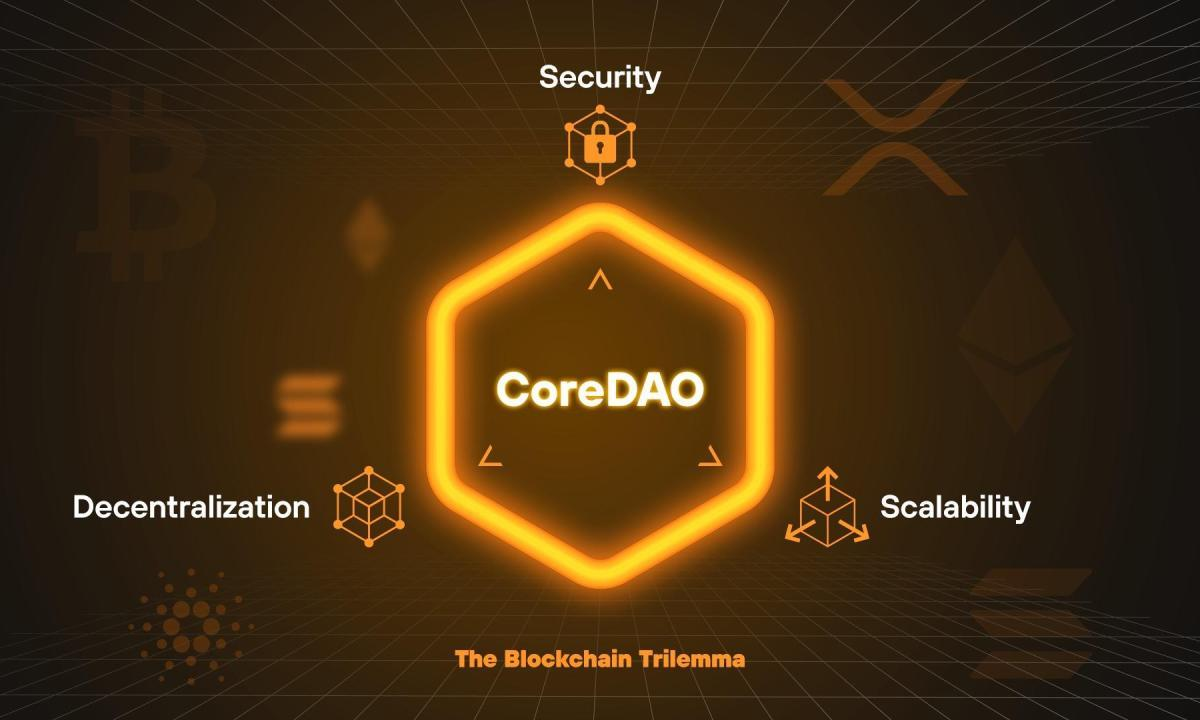
Core DAO also needs to balance Bitcoin security with smart contract scalability. Some high-performance public chains emphasize throughput, while the Bitcoin ecosystem generally places greater emphasis on security and decentralization.
This limitation means Core DAO must continue coordinating among performance, compatibility, and Bitcoin-native attributes.
Conclusion
Core DAO’s main use cases center on BTCFi, DeFi, EVM smart contracts, and non-custodial BTC staking.
Core DAO aims to combine Bitcoin security with on-chain financial applications through Satoshi Plus consensus and an EVM environment.
Core DAO’s ecosystem positioning is closer to a connection layer between Bitcoin and the smart contract ecosystem, rather than merely a traditional Layer 1 public blockchain.
FAQs
What Are the Main Use Cases of Core DAO?
Core DAO’s main use cases include BTCFi, DeFi, EVM smart contracts, BTC staking, and Bitcoin on-chain financial applications.
How Does Core DAO Support BTCFi?
Core DAO uses an EVM environment and a non-custodial BTC staking structure to allow Bitcoin assets to participate in on-chain finance and network security.
Can Core DAO Run Ethereum Smart Contracts?
Core DAO is EVM-compatible, so Solidity contracts and some Ethereum development tools can run directly on the Core network.
What Is the Purpose of Non-Custodial BTC Staking?
Non-custodial BTC staking allows BTC holders to participate in Core network security and on-chain incentives while maintaining control over their assets.
How Is Core DAO Different from Traditional EVM Public Chains?
Core DAO places greater emphasis on Bitcoin security and BTCFi scenarios, while traditional EVM public chains usually focus more on general smart contracts and on-chain application ecosystems.