Users search for HOOLI to understand how My Pet Hooligan builds its in-game economy and the functional differences between HOOLI and KARRAT. Blockchain games need tokens to sustain user engagement and asset liquidity, so HOOLI directly shapes the economic structure of My Pet Hooligan.
HOOLI's mechanism typically involves game rewards, NFT asset trading, entertainment ecosystem interactions, and a dual-token division of labor. My Pet Hooligan connects player behavior, on-chain assets, and entertainment content through HOOLI to create a more complete game economy.
What Role Does HOOLI Play in My Pet Hooligan?
HOOLI's core role is to maintain asset circulation and user interaction within the My Pet Hooligan ecosystem. HOOLI is a game ecosystem token, not a network governance token.
My Pet Hooligan uses HOOLI to link player actions to the game economy. For instance, when players complete tasks, join entertainment activities, or interact with assets, HOOLI may be earned or spent.
Structurally, HOOLI's functions include:
- Game Rewards
- Asset Circulation
- Entertainment Interaction
- User Incentives
HOOLI is designed to create a self-sustaining game economy. If the ecosystem maintains stable user activity, HOOLI's circulation demand tends to be more predictable.
How Do Players Earn and Spend HOOLI?
Players earn HOOLI through in-game actions and ecosystem participation. My Pet Hooligan uses game activities and user engagement as the entry points for token circulation.
First, players can earn HOOLI by completing tasks, competing in multiplayer modes, or joining community events. Then, certain NFT interactions and gameplay loops may also generate HOOLI rewards.
Next, HOOLI flows back into the in-game economy. Players can use HOOLI to buy game assets, participate in entertainment features, or unlock new content.
| Player Behavior |
HOOLI Role |
| Complete tasks |
Earn rewards |
| Compete in events |
Acquire tokens |
| Buy assets |
Spend HOOLI |
| Community engagement |
Ecosystem circulation |
This cycle helps My Pet Hooligan build a lasting in-game economy, not one tied only to one-off NFT sales.
How Does HOOLI Enable In-Game Asset Trading?
HOOLI acts as a medium of exchange for in-game asset trades, linking NFTs to the game economy. Blockchain games need tokens to support asset movement; otherwise, NFTs struggle to maintain a trading market.
My Pet Hooligan's NFT assets include characters, items, and entertainment collectibles. Some on-chain asset transactions may require HOOLI for payment or settlement.
Unlike traditional game marketplaces, My Pet Hooligan records NFT assets on-chain. Players have clear digital ownership, and HOOLI keeps these assets moving between users.
This means HOOLI is more than a reward token. Its key role is to serve as the trading medium inside My Pet Hooligan's economy.
How Does HOOLI Connect to My Pet Hooligan's Entertainment Ecosystem?
HOOLI's design extends beyond the game itself. As My Pet Hooligan expands into animation, AI-powered characters, and entertainment content, HOOLI may also power entertainment interactions.
AI entertainment ecosystems require long-term user engagement. My Pet Hooligan uses game characters, community events, and content to boost interaction, with HOOLI bridging these experiences.
The ecosystem connection logic is:
| Module |
HOOLI Role |
| Game System |
User rewards |
| NFT Assets |
Trading medium |
| Community |
Activity incentives |
| Entertainment |
User participation |
This structure enables My Pet Hooligan to build a cross-media entertainment economy rather than a single-game system.
How Are HOOLI and KARRAT Different?
HOOLI and KARRAT have distinct roles. HOOLI powers the game economy, while KARRAT focuses on infrastructure and network governance.
KARRAT handles Studio Chain Gas and ecosystem governance, making it an entertainment infrastructure token. HOOLI operates at the user and game layer.
This dual-token model lets My Pet Hooligan separate ecosystem needs. Single-token blockchain games often run into economic model issues when one token tries to do everything.
| Token |
Primary Role |
| KARRAT |
Infrastructure & Governance |
| HOOLI |
Game Economy & Interaction |
Unlike traditional one-token models, My Pet Hooligan uses KARRAT for the network layer and HOOLI for the game layer, reducing conflict between different requirements.
How Is HOOLI's Token Circulation Designed?
Official tokenomics shows HOOLI has a fixed supply of 10 billion tokens. Allocation focuses on community rewards, liquidity, and entertainment ecosystem growth.
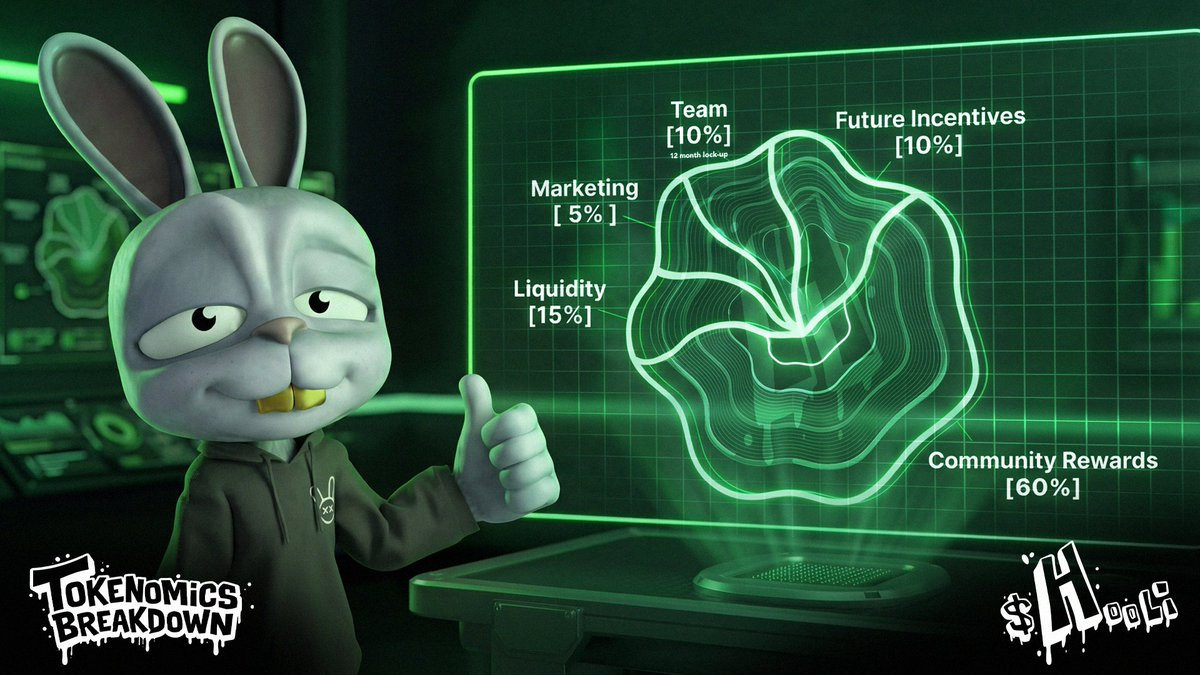
The public allocation breakdown is:
| Allocation |
Percentage |
Purpose |
| Community Rewards |
60% |
Game rewards & community incentives |
| Liquidity |
15% |
Market liquidity support |
| Team |
10% |
Long-term team incentives |
| Future Incentives |
10% |
Future ecosystem expansion |
| Marketing |
5% |
Marketing & brand operations |
The Team allocation has a 12-month lock-up. This reduces sell pressure from concentrated early unlocks and supports long-term ecosystem stability.
Structurally, HOOLI's model is community-driven. With 60% for Community Rewards, My Pet Hooligan prioritizes user engagement, gameplay participation, and long-term entertainment expansion.
First, HOOLI enters circulation through game rewards. Then, players may spend HOOLI on NFTs or entertainment features. Finally, some HOOLI flows back into the ecosystem, creating a continuous game economy cycle.
Why Does the Game Need a Dual-Token Structure?
A dual-token structure separates network layer and game layer needs. Single-token blockchain games force one token to handle governance, gas fees, rewards, and trading.
My Pet Hooligan uses KARRAT for Studio Chain infrastructure and HOOLI for the in-game economy. This reduces the risk of single-token inflation.
Structurally, this dual model also improves economic flexibility. Infrastructure and game layers have different requirements, so token models should differ.
In short, HOOLI focuses on user activity, while KARRAT handles network operations and ecosystem governance.
What Are the Limits of the HOOLI Token Model?
Game token models depend on user activity. HOOLI's value relies on My Pet Hooligan's ecosystem staying active.
Content update speed directly affects HOOLI demand. If user engagement drops, HOOLI circulation may slow.
NFT market volatility also impacts HOOLI's economy. Some blockchain games rely too much on NFT trading revenue and suffer during market downturns.
My Pet Hooligan also needs to sustain content production. AI characters, animations, and multiplayer games have high operational costs, so HOOLI's stability ties directly to content operation capability.
Summary
HOOLI is the core utility token in the My Pet Hooligan ecosystem, handling user rewards, asset circulation, and entertainment interaction. HOOLI and KARRAT split game layer and infrastructure functions, forming a dual-token economy.
My Pet Hooligan drives HOOLI circulation through game quests, NFT trades, and entertainment interactions. Unlike traditional blockchain game tokens, HOOLI emphasizes long-term user participation in a cross-media entertainment ecosystem.
FAQ
What is HOOLI?
HOOLI is a utility token in the My Pet Hooligan game ecosystem, used for game rewards, NFT asset trading, and entertainment interaction.
What's the difference between HOOLI and KARRAT?
HOOLI powers the My Pet Hooligan game economy. KARRAT handles Studio Chain network infrastructure and governance functions.
What is HOOLI's total supply?
According to official sources, HOOLI has a fixed total supply of 10 billion tokens.
How can players get HOOLI?
Players can earn HOOLI by completing game tasks, competing in events, engaging with the community, and participating in entertainment activities.
Why does HOOLI need a dual-token model?
My Pet Hooligan uses two tokens to separate infrastructure and game economy needs, reducing complexity in a single-token model.
Does HOOLI affect NFT asset trading?
Yes, HOOLI may be used for NFT asset trades and ecosystem interactions in My Pet Hooligan, so it directly impacts in-game asset liquidity.