عندما يبحث المستخدمون عن فائدة رمز NXT، فإن تركيزهم ينصب غالبًا على معرفة ما إذا كان مجرد أداة دفع داخل NEXST، أم أنه يؤدي أيضًا دورًا في تفاعل المستخدمين ضمن سيناريوهات مثل وكيل AI، البث المباشر VR LIVE، تذاكر RWA، وتفاعل المعجبين. بالنسبة للمهتمين بنموذج الترفيه Web3 الخاص بمنصة NEXST، يُعتبر NXT الأصل المحوري الذي يربط وظائف المنصة بسلوك المستخدمين.
عادةً ما تتناول الأسئلة حول NXT دوره الأساسي، وفائدته على المنصة، وأرصدة التخزين، وتطبيقات الترفيه، وآليات الحوافز، وتداول الرمز.
ما هو NXT
NXT هو رمز الخدمة الأصلي لنظام NEXST الترفيهي، صُمم لدعم تبادل القيمة، ومشاركة المستخدمين، وحوافز النظام البيئي. يعمل كأصل على السلسلة يربط الترفيه المدعوم بالذكاء الاصطناعي وتطبيقات Web3 واقتصاد المعجبين.
يصدر NXT على بلوكشين Solana ويعمل كبوابة للوصول إلى ميزات المنصة المتنوعة. من خلال الاحتفاظ بـ NXT، يمكن للمستخدمين الوصول إلى نظام تطبيق رموز NEXST. تدمج المنصة NXT مع التخزين، والأرصدة، ووكيل AI، والتمويل الجماعي، وحقوق التذاكر. يستخدم المستخدمون NXT أو الأرصدة ذات الصلة في وحدات الترفيه المختلفة. في النهاية، يعمل NXT كأداة تنسيق القيمة بين المستخدمين والفنانين والأنشطة على المنصة.
هذه الآلية مهمة لأن NXT ليس مجرد أصل تداول منعزل، بل جزء متكامل في إطار التفاعل الترفيهي لنظام NEXST. يربط بين هوية مستخدم Web3، وأسهم المنصة، واستهلاك الترفيه، مما يمكّن NEXST من بناء مسار مشاركة شفاف يركز على الرموز.
ما هي وظائف NXT في النظام البيئي لـ NEXST
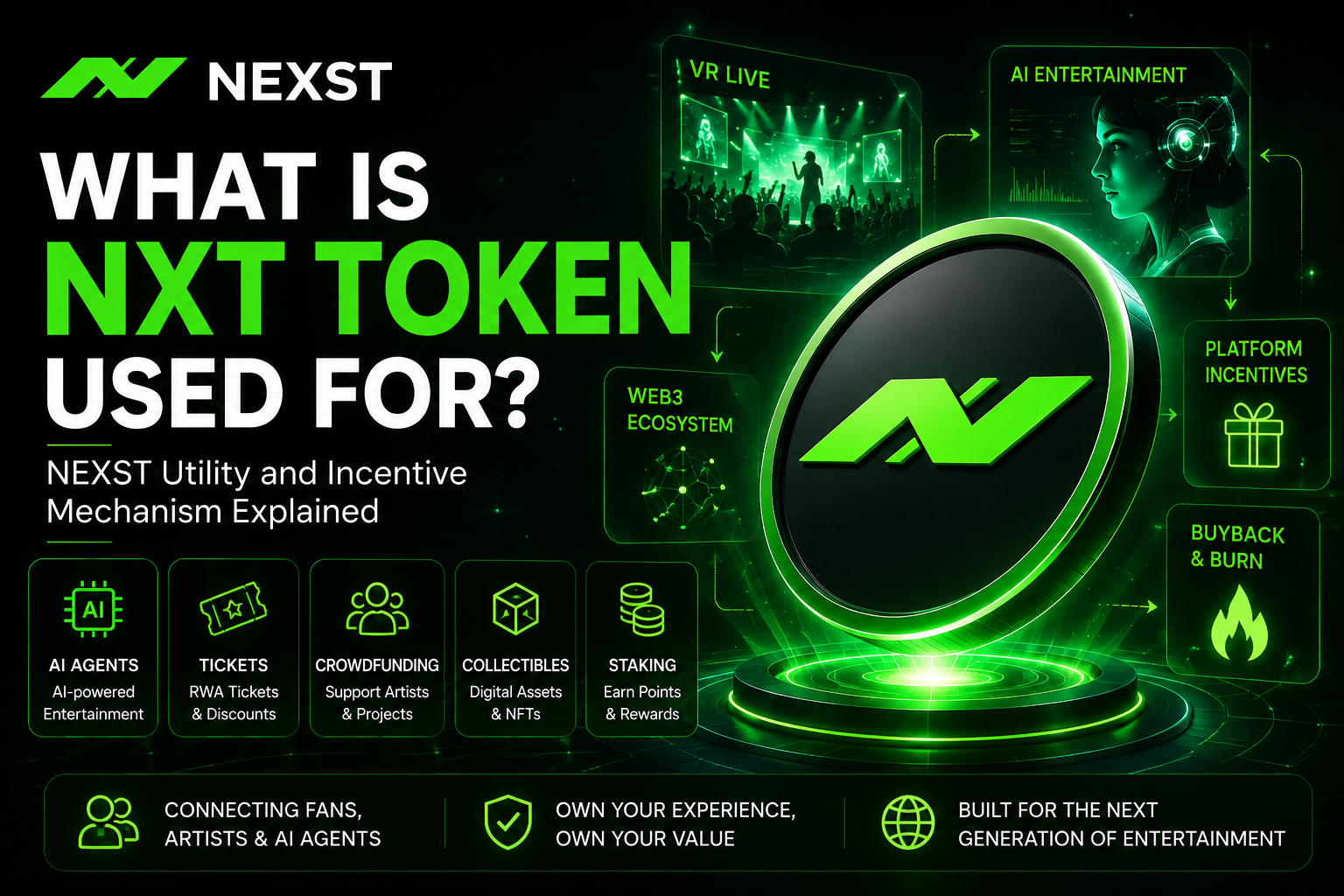
في نظام NEXST البيئي، يشكل NXT محور الوصول إلى المنصة، واكتساب الأسهم، وتفاعل المعجبين، وتنسيق الحوافز. يحول نظام الرموز والأرصدة نشاط المستخدم إلى تجارب ترفيه Web3 قابلة للتحقق والمشاركة.
يمكن للمستخدمين الاحتفاظ بـ NXT أو استخدامه للتفاعل مع ميزات المنصة. يربط النظام NXT بسيناريوهات مثل وكيل AI، وشراء التذاكر، والتمويل الجماعي، والعروض الافتراضية، والمقتنيات الرقمية. باستخدام NXT، يفتح المستخدمون مستويات مختلفة من المشاركة والأسهم. بذلك، ينشئ NXT دورة تربط بين استهلاك المحتوى، ودعم المعجبين، وحوافز المنصة.
| سيناريو الوظيفة |
إجراء المستخدم |
دور النظام |
| وكيل AI |
استخدام NXT للوصول إلى الخدمات |
يتيح التفاعل والأتمتة |
| أرصدة التخزين |
قفل NXT لكسب الأرصدة |
يتتبع وقت المشاركة والمبلغ |
| التمويل الجماعي |
استخدام NXT لدعم المشاريع |
يربط المعجبين بإبداعات الفنانين |
| أسهم التذاكر |
استخدام الأسهم لشراء التذاكر |
يقدم خصومات أو أولوية في الوصول |
| المقتنيات الرقمية |
المشاركة في الأنشطة للحصول على الأصول |
يوسع سجلات هوية المعجبين |
تتكامل ميزات NXT لتشكل حلقة مغلقة حول محتوى الترفيه ومشاركة المستخدم. تمكّن هذه البنية المستخدمين ليس فقط من استهلاك المحتوى، بل من المشاركة الفعالة في أنشطة المنصة ودعم المبدعين.
كيف يربط NXT بين الترفيه المدعوم بالذكاء الاصطناعي وتطبيقات Web3
يتمثل الدور الأساسي لـ NXT في ربط الترفيه المدعوم بالذكاء الاصطناعي وتطبيقات Web3 في توحيد وكيل AI، وتفاعل المستخدم، والأسهم على السلسلة ضمن نظام خدمة واحد. مع NXT، يمكن للمستخدمين الوصول إلى ميزات تفاعلية مدعومة بالذكاء الاصطناعي على NEXST والمشاركة في الأنشطة الترفيهية الرقمية.
من خلال الاحتفاظ بـ NXT أو استخدامه، يدخل المستخدمون وحدات الترفيه المدعومة بالذكاء الاصطناعي على المنصة. يوفر النظام، عبر وكيل AI، تفاعلات مخصصة، ومساعدة في المحتوى، وإدارة المجتمع، أو خدمات الأتمتة. تولد تفاعلات المستخدم سجلات سلوكية، واستخدام الأسهم، وروابط الأصول الرقمية. ثم تُربط هذه الأنشطة بهوية Web3، والمقتنيات الرقمية، وأسهم المنصة.
NXT ليس مجرد وسيلة دفع لخدمات الذكاء الاصطناعي، بل هو بوابة عملية لدخول المستخدمين إلى تجارب الترفيه Web3 على NEXST. يوفر وكيل AI قدرات تفاعلية، وتقوم بنية البلوكشين بتسجيل الأصول والأسهم، بينما يمكّن NXT نقل القيمة بينها.
تسمح هذه الآلية للترفيه المدعوم بالذكاء الاصطناعي على NEXST بتجاوز حدود المنصات المركزية، من خلال دمج الهوية على السلسلة، وحقوق النشاط، والأصول الرقمية.
ما هي السيناريوهات التي يمكن للمستخدمين المشاركة فيها عند الاحتفاظ بـ NXT
مع NXT، يمكن للمستخدمين الوصول إلى وكيل AI، والتمويل الجماعي، وخصومات التذاكر، وأولوية الوصول إلى المحتوى، وخصومات البضائع، والمقتنيات الرقمية على منصة NEXST. يحول NXT المستخدمين من مستهلكين سلبيين للمحتوى إلى مشاركين نشطين في النظام البيئي.
يحتفظ المستخدمون بـ NXT أو يستخدمونه لوظائف محددة على المنصة. يحدد النظام أهلية المشاركة بناءً على سلوكيات مثل مبلغ التخزين، وحالة الأرصدة، أو معايير النشاط. بعد ذلك، يحصل المستخدمون على تطبيقات ترفيهية تشمل تمويل مشاريع الفنانين، وحقوق البث المباشر VR LIVE، والتفاعلات مع الذكاء الاصطناعي، والمقتنيات الرقمية. مع مرور الوقت، تبني مشاركة المستخدم سجلات هوية وأسهم دائمة داخل النظام البيئي.
تركز حالات استخدام NXT على اقتصاد المعجبين؛ إذ يمكن للمعجبين دعم مشاريع الفنانين بالرمز أو زيادة تفاعلهم عبر التخزين والأرصدة.
يغير هذا النموذج العلاقة بين المعجبين والمنصة من مجرد شراء محتوى إلى المشاركة في صنع المحتوى، والمساهمة في الفعاليات، وامتلاك الأصول الرقمية.
كيف يؤثر NXT على نظام الحوافز والتفاعل في المنصة
يركز تأثير NXT على حوافز المنصة حول أرصدة التخزين واستبدال الأسهم. من خلال تخزين NXT، يكسب المستخدمون أرصدة بناءً على المبلغ ومدة التخزين، يمكن استبدالها بحقوق أو أنشطة محددة على المنصة.
يقوم المستخدمون بتخزين NXT، ويحسب النظام نقاط التخزين وفقًا لذلك. يمكن استخدام الأرصدة أو NXT المتبرع به للوصول إلى المحتوى المميز، أو خصومات التذاكر، أو عروض البضائع، أو تمويل الفنانين. تربط هذه الآلية المشاركة المستمرة بحقوق الترفيه.
الأساس هو هيكل مشاركة قابل للقياس—حيث لا تقتصر NEXST على استهلاك المحتوى لمرة واحدة، بل تتبع شدة الدعم عبر NXT والأرصدة.
يعزز هذا النهج التفاعل على المنصة من خلال تحسين الاحتفاظ بالمستخدمين وتوفير دعم مباشر للفنانين من المعجبين، مما يطور النظام الترفيهي من استهلاك أحادي الاتجاه إلى مشاركة مستدامة.
كيف تم تصميم آليات تداول وتوزيع NXT في النظام البيئي
تشكل آليات تداول وتوزيع NXT أساس حوافز المنصة، وإدارة العرض، واستدامة النظام البيئي على المدى الطويل. الحد الأقصى لإجمالي المعروض هو 600 مليون، مع تخصيصات لدعم تطوير المنصة، وفترات الاستحقاق، ونمو النظام البيئي.
يتم تحديد عرض وتوزيع NXT حسب المشروع. تُخصص الرموز للحوافز، وتطوير النظام البيئي، والداعمين الأوائل، والفريق. يدفع النظام حركة الرموز من خلال حالات الاستخدام، وأرصدة التخزين، وأنشطة المنصة. يتشكل التداول حسب الطلب، وجداول الاستحقاق، ومشاركة النظام البيئي.
تتميز NEXST أيضًا بآلية إعادة شراء وحرق. يمكن استخدام ما يصل إلى %20 من الإيرادات الفصلية لإعادة شراء NXT، مع حرق جزء منها—بحد أقصى %1 من المعروض المتداول في كل ربع سنة.
يربط هذا التصميم بين إيرادات المنصة، وتداول الرموز، وإدارة العرض. وتعتمد النتائج الفعلية على حجم الإيرادات، وتفاعل المستخدمين، ونمو النظام البيئي.
ما هي الفروق بين NXT وأرصدة منصات الترفيه التقليدية
الفرق الأساسي هو أن NXT رمز خدمة على السلسلة، بينما تصدر الأرصدة العادية وتدار من قبل منصات مركزية. يتيح NXT المشاركة في تطبيقات Web3 الأوسع، في حين تقتصر الأرصدة على الاستخدام الداخلي للمنصة.
تُسجل الأرصدة العادية في حسابات المنصة، ويمكن استبدالها فقط في سيناريوهات محددة، وتخضع لتغييرات القواعد بشكل أحادي. لدى المستخدمين سيطرة محدودة على هذه الأصول.
أما NXT، فيُحتفظ به في محافظ على السلسلة ويُستخدم لوكيل AI، والتمويل الجماعي، والتذاكر الرقمية، والحوافز ضمن نظام NEXST البيئي. تسجل البلوكشين حركة الرمز وبعض علاقات الأسهم، مما يجعل المشاركة أكثر شفافية وقابلة للتحقق.
يضع هذا الاختلاف NXT كأصل وظيفي في نظام ترفيه Web3، وليس مجرد رصيد ولاء تقليدي. فهو يدعم الاستهلاك، والهوية، والتفاعل، والحوافز.
الملخص
يعد NXT عنصرًا أساسيًا في نظام NEXST البيئي، حيث يعمل كبوابة للترفيه المدعوم بالذكاء الاصطناعي، وأرصدة التخزين، وتمويل المعجبين، وحقوق التذاكر، وأولوية الوصول إلى المحتوى، والمقتنيات الرقمية، وحوافز المنصة. تكمن أهميته في ربط نشاط المستخدم، ومحتوى الترفيه، وأسهم Web3، وليس مجرد كونه وسيلة دفع.
العملية: يحتفظ المستخدمون بـ NXT أو يقومون بتخزينه، ويتتبع النظام الأرصدة والمشاركة، ثم يحصل المستخدمون على سيناريوهات وكيل AI، والتمويل الجماعي، والتذاكر، والمقتنيات الرقمية—ليبنوا في النهاية مشاركة طويلة الأمد داخل المنصة. تكمن قيمة NXT في فائدته العملية ضمن النظام الترفيهي لـ NEXST.
الأسئلة الشائعة
ما هي الاستخدامات الرئيسية لرمز NXT؟
يُستخدم NXT بشكل رئيسي لوكيل AI، وأرصدة التخزين، والتمويل الجماعي، وخصومات التذاكر، وأولوية الوصول إلى المحتوى، وعروض البضائع، والمقتنيات الرقمية ضمن نظام NEXST البيئي.
على أي بلوكشين يُصدر NXT؟
NXT هو رمز خدمة أصلي يُصدر على بلوكشين Solana، ويدعم تبادل القيمة والمشاركة في النظام البيئي على منصة NEXST.
ماذا يمكنك أن تحصل عليه بعد تخزين NXT؟
يمنح تخزين NXT المستخدمين نقاط تخزين تُحدد حسب مبلغ ومدة التخزين. يمكن استبدال هذه النقاط بحقوق المنصة أو المشاركة في أنشطة محددة.
ما الفرق بين NXT وأرصدة NEXST؟
NXT هو رمز على السلسلة يسهل نقل القيمة ووظائف النظام البيئي. أما الأرصدة فهي سجلات حقوق مكتسبة من التخزين، وتُستخدم للاستبدال أو المشاركة في أنشطة المنصة.
هل لدى NXT آلية إعادة شراء وحرق؟
قد تستخدم NEXST ما يصل إلى %20 من إيراداتها الفصلية لإعادة شراء NXT وحرق جزء منه، مع حد أقصى للحرق في كل ربع سنة يبلغ %1 من المعروض المتداول.