
Futures
Access hundreds of perpetual contracts
TradFi
Gold
One platform for global traditional assets
Options
Hot
Trade European-style vanilla options
Unified Account
Maximize your capital efficiency
Demo Trading
Introduction to Futures Trading
Learn the basics of futures trading
Futures Events
Join events to earn rewards
Demo Trading
Use virtual funds to practice risk-free trading
Launch
CandyDrop
Collect candies to earn airdrops
Launchpool
Quick staking, earn potential new tokens
HODLer Airdrop
Hold GT and get massive airdrops for free
Launchpad
Be early to the next big token project
Alpha Points
Trade on-chain assets and earn airdrops
Futures Points
Earn futures points and claim airdrop rewards


More




Al-Khayyat Family Positions For Syria Reconstruction Leadership
(MENAFN- The Arabian Post)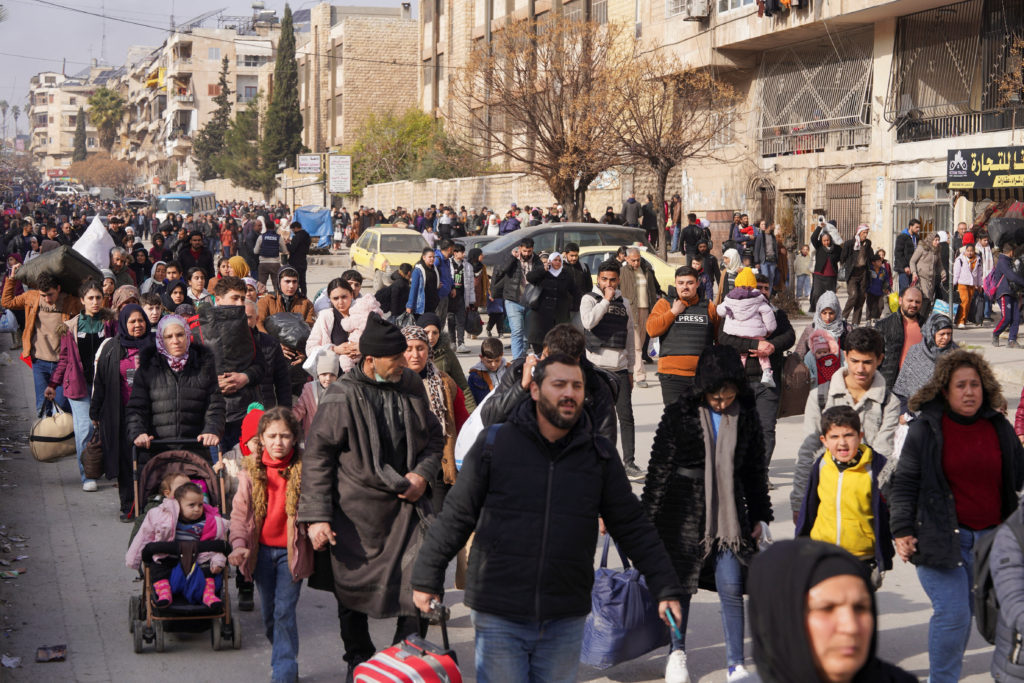
The Al-Khayyat family, a Syrian-Qatari business dynasty that rose to prominence in Doha through ventures such as Baladna dairy and Power International Holding, is accelerating its involvement in rebuilding Syria’s economy as Damascus opens up to foreign investment after years of conflict. Brothers Moutaz and Ramez Al-Khayyat, chairing sprawling conglomerates that span food, construction, energy and financial services, are spearheading a wave of deals that could shape reconstruction priorities in the war-torn country.
Qatar-based Estithmar Holding, part of the wider Power International empire controlled by the Al-Khayyat family, is preparing to take controlling stakes in two major Syrian banks - acquiring 60 per cent of Shahba Bank and about 30 per cent of Syria International Islamic Bank. These transactions would represent the first significant foreign acquisitions in Syrian banking since the regime change in late 2024 and come as the Central Bank of Syria seeks to stabilise and recapitalise a sector weakened after over a decade of conflict and sanctions.
Moutaz Al-Khayyat, who has served as chairman of Estithmar Holding after years building out Power International and Baladna, has directed the group’s diversification into sectors now central to Syria’s recovery strategy. He has underscored the potential for private capital to support energy, infrastructure and financial services, areas that will be vital if millions of displaced Syrians are to return home and economic activity is to revive.
Ramez Al-Khayyat, president and GCEO across the family’s business platforms, has pushed for cross-border ventures that go beyond traditional contracting. His roles at Estithmar and affiliate companies situate him at the nexus of commercial and geopolitical interests linking Gulf capital with Syrian reconstruction needs. Investors and government officials alike see the Al-Khayyats’ footprint as a practical bridge between Doha’s financial firepower and Damascus’s urgent development imperatives.
See also OPEC+ signals continued output restraint as oil prices firm
Beyond banking, the family’s corporate interests are embedded in multi-billion-dollar projects across Syria. Power International and its affiliates have won contracts to renew power generation infrastructure, expand and modernise Damascus International Airport, and invest in agro-industrial initiatives. Baladna, the dairy and food producer that won acclaim for airlifting thousands of cows into Qatar during the Gulf diplomatic crisis and building domestic food security, has board-approved plans for a $250 million industrial complex in Syria that includes dairy, juice processing and water treatment facilities.
This expansion aligns with broader Gulf engagement in Syria’s commercial reintegration, with Qatar emerging as a key financier alongside Saudi Arabia and the UAE. Public and private sector investments are flowing into aviation, energy, logistics and media, contributing to a renewed economic architecture under the oversight of President Ahmed al-Sharaa’s government. These moves underscore a shift in regional posture as Gulf capitals pursue strategic influence through reconstruction contracts and capital deployment.
The lifting of Western sanctions last year has been a crucial enabler of this wave of investment, removing barriers that had isolated Damascus’s economy from global capital markets. Syrian authorities have welcomed market-led initiatives that can bolster the resilience of financial institutions and jump-start sectors devastated by insecurity and economic disruption. However, the pace and scale of reforms required to attract broader foreign participation remain subject to regulatory, legal and political uncertainties.
Economists tracking post-conflict recovery emphasise that while capital inflows and high-profile deals can signal confidence, sustainable reconstruction will demand parallel progress on governance, rule of law and economic reforms. Local stakeholders, including civil society groups and returning diaspora communities, argue that rebuilding must align with transparent frameworks to ensure that commercial objectives deliver tangible benefits for ordinary Syrians.
See also Dubai pilots shared school transport to modernise daily commutes
Notice an issue? Arabian Post strives to deliver the most accurate and reliable information to its readers. If you believe you have identified an error or inconsistency in this article, please don’t hesitate to contact our editorial team at editor[at]thearabianpost[dot]com. We are committed to promptly addressing any concerns and ensuring the highest level of journalistic integrity.
MENAFN17022026000152002308ID1110750270