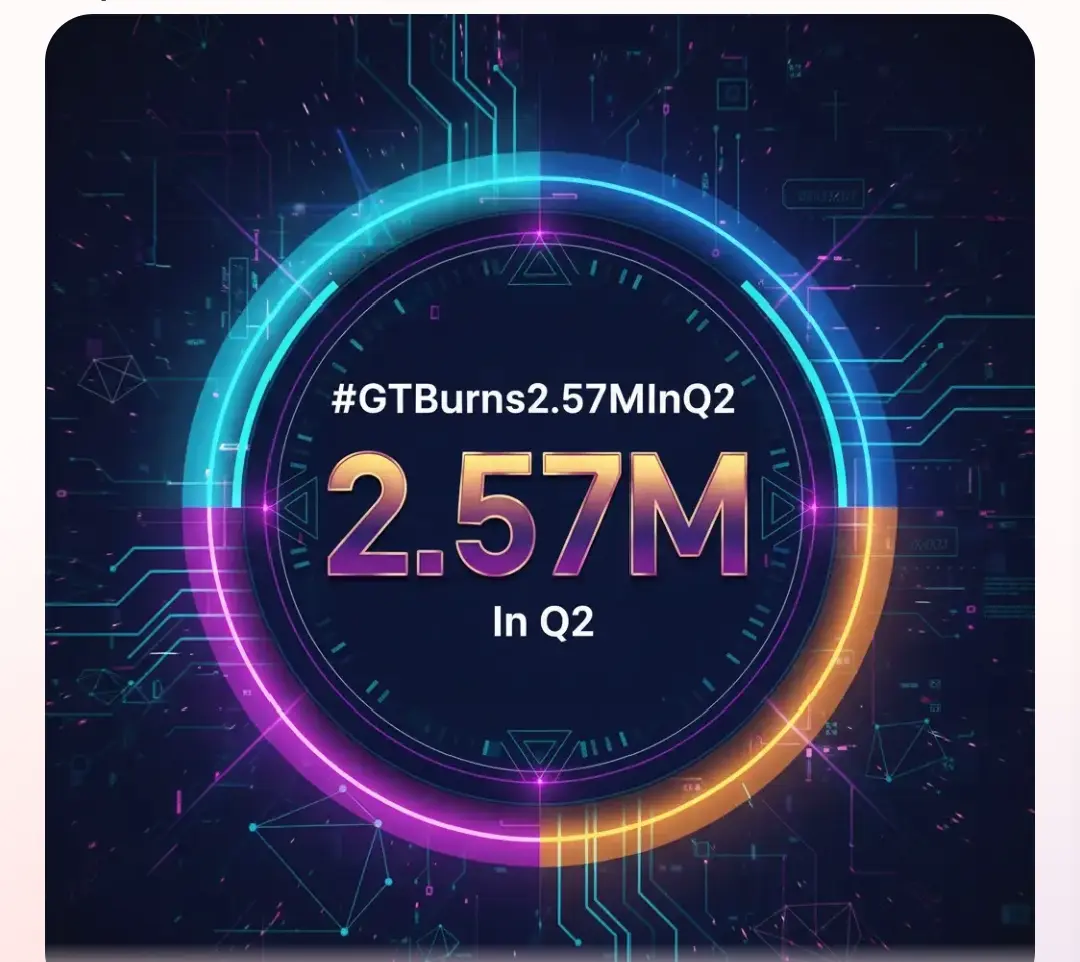

#GTBurns2.57MInQ2
Bakar GT Q2 2026: Mengapa Pengurangan Pasokan Jangka Panjang Membentuk Ulang Ekonomi GT
Bakar GT kuartal kedua 2026 menandai tonggak sejarah lainnya dalam salah satu strategi deflasi terlama di industri cryptocurrency. Selama Q2, 2,570,063 token GT dihapus secara permanen dari peredaran, mewakili nilai sekitar $17.75 juta pada saat pembakaran. Yang lebih penting, total kumulatif token yang dibakar kini telah mencapai 189,947,219 GT, artinya 63.32% dari pasokan awal 300 juta telah dihilangkan secara permanen.
Tidak seperti penguncian token sementara atau mekanisme vesting, token yang dibakar tidak dapat dipulihkan atau diperkenalkan kembali ke dalam peredaran. Setiap pembakaran kuartalan secara permanen mengurangi pasokan yang tersedia, menciptakan aset yang semakin langka dari waktu ke waktu. Konsistensi ini telah menjadi salah satu karakteristik ekonomi yang mendefinisikan GT dan membedakannya dari banyak proyek yang melakukan kampanye pembakaran sesekali tanpa kerangka kerja jangka panjang.
Apa yang membuat GT sangat menarik adalah bahwa mekanisme pembakarannya berfungsi sebagai kebijakan moneter yang dapat diprediksi, bukan sebagai acara promosi. Setiap kuartal, pasokan berkurang sesuai dengan proses yang telah ditetapkan, memungkinkan investor dan partisipan pasar untuk memasukkan kontraksi pasokan masa depan ke dalam ekspektasi jangka panjang mereka. Pasar umumnya merespons lebih efisien terhadap kebijakan yang transparan dan dapat diulang daripada pengumuman terisolasi, sehingga pendekatan sistematis GT lebih signifikan daripada pembakaran individu mana pun.
Dampak dari menghilangkan lebih dari enam puluh tiga persen dari pasokan awal melampaui aritmatika sederhana. Setiap token GT yang tersisa kini mewakili kepemilikan proporsional yang lebih besar dari ekosistem daripada saat peluncuran. Seiring pasokan yang beredar terus menurun, ekonomi kelangkaan menjadi semakin relevan, terutama jika aktivitas ekosistem terus berkembang seiring dengan program pembakaran.
Namun, kelangkaan saja tidak boleh dipandang sebagai jaminan apresiasi harga. Valuasi cryptocurrency bergantung pada banyak variabel yang bekerja bersama. Pengurangan pasokan meningkatkan satu sisi persamaan, tetapi permintaan tetap sama pentingnya. Aktivitas perdagangan, adopsi platform, utilitas, pertumbuhan pengguna, dan sentimen pasar secara keseluruhan terus menentukan apakah pasokan yang berkurang akhirnya menghasilkan valuasi yang lebih tinggi.
Perbedaan ini sangat penting karena banyak investor secara keliru berasumsi bahwa setiap pembakaran secara otomatis menciptakan tekanan harga ke atas. Sejarah di seluruh industri aset digital menunjukkan bahwa deflasi tanpa permintaan yang berkelanjutan seringkali menghasilkan hasil jangka panjang yang terbatas. Hasil terkuat terjadi ketika pasokan yang menyusut diimbangi dengan utilitas yang meluas dan partisipasi jaringan yang meningkat.
GT berusaha memperkuat hubungan ini melalui ekosistemnya yang lebih luas. Token ini mempertahankan utilitas di seluruh layanan bursa, diskon biaya, insentif platform, dan fungsi ekosistem lainnya yang mendorong penggunaan berkelanjutan daripada sekadar spekulasi pasif. Ketika pengguna secara aktif membutuhkan token untuk aktivitas platform, permintaan dapat tumbuh seiring dengan pengurangan pasokan yang berkelanjutan, memperkuat model kelangkaan.
Pertimbangan penting lainnya adalah likuiditas. Saat pasokan menyusut, likuiditas pasar yang tersedia mungkin secara bertahap menurun. Pasokan beredar yang lebih rendah dapat memperkuat pergerakan harga di kedua arah. Selama periode minat beli yang kuat, pasokan terbatas dapat mempercepat penemuan harga ke atas. Sebaliknya, selama periode kelemahan pasar, likuiditas yang lebih tipis juga dapat berkontribusi pada peningkatan volatilitas. Ini menciptakan peluang dan risiko bagi investor yang mengevaluasi posisi jangka panjang.
Dari perspektif pasar yang lebih luas, GT menempati posisi yang relatif unik. Banyak proyek cryptocurrency terus memperkenalkan token baru melalui emisi, imbalan staking, jadwal vesting, atau distribusi treasury. Mekanisme ini meningkatkan pasokan beredar seiring waktu dan sering menciptakan tekanan jual yang terus-menerus. GT mengikuti lintasan sebaliknya dengan secara konsisten mengurangi pasokan, memposisikan dirinya sebagai aset deflasi struktural dalam industri di mana inflasi tetap umum.
Meskipun demikian, investor harus tetap realistis tentang potensi tantangan. Perkembangan regulasi yang mempengaruhi token bursa, penurunan aktivitas perdagangan, adopsi platform yang berkurang, atau kondisi pasar bear yang berkepanjangan dapat melemahkan permintaan terlepas dari pembakaran yang sedang berlangsung. Selain itu, karena pembakaran kuartalan dapat diprediksi, sebagian dari dampaknya mungkin sudah tercermin dalam harga pasar sebelum setiap peristiwa terjadi.
Oleh karena itu, prospek jangka panjang bergantung pada keseimbangan tiga faktor yang saling terkait: pengurangan pasokan yang berkelanjutan, perluasan utilitas ekosistem, dan permintaan pengguna yang berkelanjutan. Jika ketiganya terus berkembang bersama, model deflasi GT dapat memperkuat valuasi jangka panjangnya dengan menciptakan premi kelangkaan yang persisten. Namun, jika utilitas atau permintaan stagnan, pembakaran saja mungkin hanya memiliki pengaruh terbatas pada kinerja harga.
Pembakaran Q2 2026 menegaskan bahwa strategi GT tidak berpusat pada berita utama jangka pendek tetapi pada transformasi struktural bertahap. Setelah menghilangkan lebih dari enam puluh tiga persen dari pasokan aslinya, token ini telah berkembang menjadi aset yang ditentukan oleh kebijakan moneter yang disiplin, deflasi yang dapat diprediksi, dan desain ekonomi jangka panjang. Apakah kelangkaan ini pada akhirnya menghasilkan apresiasi pasar yang signifikan akan bergantung tidak hanya pada pembakaran di masa depan tetapi juga pada pertumbuhan dan adopsi berkelanjutan dari ekosistem yang memberikan nilai mendasar bagi token.
#GTBurns2.57MInQ2
Bakar GT Q2 2026: Mengapa Pengurangan Pasokan Jangka Panjang Membentuk Ulang Ekonomi GT
Bakar GT kuartal kedua 2026 menandai tonggak sejarah lainnya dalam salah satu strategi deflasi terlama di industri cryptocurrency. Selama Q2, 2,570,063 token GT dihapus secara permanen dari peredaran, mewakili nilai sekitar $17.75 juta pada saat pembakaran. Yang lebih penting, total kumulatif token yang dibakar kini telah mencapai 189,947,219 GT, artinya 63.32% dari pasokan awal 300 juta telah dihilangkan secara permanen.
Tidak seperti penguncian token sementara atau mekanisme vesting, token yang dibakar tidak dapat dipulihkan atau diperkenalkan kembali ke dalam peredaran. Setiap pembakaran kuartalan secara permanen mengurangi pasokan yang tersedia, menciptakan aset yang semakin langka dari waktu ke waktu. Konsistensi ini telah menjadi salah satu karakteristik ekonomi yang mendefinisikan GT dan membedakannya dari banyak proyek yang melakukan kampanye pembakaran sesekali tanpa kerangka kerja jangka panjang.
Apa yang membuat GT sangat menarik adalah bahwa mekanisme pembakarannya berfungsi sebagai kebijakan moneter yang dapat diprediksi, bukan sebagai acara promosi. Setiap kuartal, pasokan berkurang sesuai dengan proses yang telah ditetapkan, memungkinkan investor dan partisipan pasar untuk memasukkan kontraksi pasokan masa depan ke dalam ekspektasi jangka panjang mereka. Pasar umumnya merespons lebih efisien terhadap kebijakan yang transparan dan dapat diulang daripada pengumuman terisolasi, sehingga pendekatan sistematis GT lebih signifikan daripada pembakaran individu mana pun.
Dampak dari menghilangkan lebih dari enam puluh tiga persen dari pasokan awal melampaui aritmatika sederhana. Setiap token GT yang tersisa kini mewakili kepemilikan proporsional yang lebih besar dari ekosistem daripada saat peluncuran. Seiring pasokan yang beredar terus menurun, ekonomi kelangkaan menjadi semakin relevan, terutama jika aktivitas ekosistem terus berkembang seiring dengan program pembakaran.
Namun, kelangkaan saja tidak boleh dipandang sebagai jaminan apresiasi harga. Valuasi cryptocurrency bergantung pada banyak variabel yang bekerja bersama. Pengurangan pasokan meningkatkan satu sisi persamaan, tetapi permintaan tetap sama pentingnya. Aktivitas perdagangan, adopsi platform, utilitas, pertumbuhan pengguna, dan sentimen pasar secara keseluruhan terus menentukan apakah pasokan yang berkurang akhirnya menghasilkan valuasi yang lebih tinggi.
Perbedaan ini sangat penting karena banyak investor secara keliru berasumsi bahwa setiap pembakaran secara otomatis menciptakan tekanan harga ke atas. Sejarah di seluruh industri aset digital menunjukkan bahwa deflasi tanpa permintaan yang berkelanjutan seringkali menghasilkan hasil jangka panjang yang terbatas. Hasil terkuat terjadi ketika pasokan yang menyusut diimbangi dengan utilitas yang meluas dan partisipasi jaringan yang meningkat.
GT berusaha memperkuat hubungan ini melalui ekosistemnya yang lebih luas. Token ini mempertahankan utilitas di seluruh layanan bursa, diskon biaya, insentif platform, dan fungsi ekosistem lainnya yang mendorong penggunaan berkelanjutan daripada sekadar spekulasi pasif. Ketika pengguna secara aktif membutuhkan token untuk aktivitas platform, permintaan dapat tumbuh seiring dengan pengurangan pasokan yang berkelanjutan, memperkuat model kelangkaan.
Pertimbangan penting lainnya adalah likuiditas. Saat pasokan menyusut, likuiditas pasar yang tersedia mungkin secara bertahap menurun. Pasokan beredar yang lebih rendah dapat memperkuat pergerakan harga di kedua arah. Selama periode minat beli yang kuat, pasokan terbatas dapat mempercepat penemuan harga ke atas. Sebaliknya, selama periode kelemahan pasar, likuiditas yang lebih tipis juga dapat berkontribusi pada peningkatan volatilitas. Ini menciptakan peluang dan risiko bagi investor yang mengevaluasi posisi jangka panjang.
Dari perspektif pasar yang lebih luas, GT menempati posisi yang relatif unik. Banyak proyek cryptocurrency terus memperkenalkan token baru melalui emisi, imbalan staking, jadwal vesting, atau distribusi treasury. Mekanisme ini meningkatkan pasokan beredar seiring waktu dan sering menciptakan tekanan jual yang terus-menerus. GT mengikuti lintasan sebaliknya dengan secara konsisten mengurangi pasokan, memposisikan dirinya sebagai aset deflasi struktural dalam industri di mana inflasi tetap umum.
Meskipun demikian, investor harus tetap realistis tentang potensi tantangan. Perkembangan regulasi yang mempengaruhi token bursa, penurunan aktivitas perdagangan, adopsi platform yang berkurang, atau kondisi pasar bear yang berkepanjangan dapat melemahkan permintaan terlepas dari pembakaran yang sedang berlangsung. Selain itu, karena pembakaran kuartalan dapat diprediksi, sebagian dari dampaknya mungkin sudah tercermin dalam harga pasar sebelum setiap peristiwa terjadi.
Oleh karena itu, prospek jangka panjang bergantung pada keseimbangan tiga faktor yang saling terkait: pengurangan pasokan yang berkelanjutan, perluasan utilitas ekosistem, dan permintaan pengguna yang berkelanjutan. Jika ketiganya terus berkembang bersama, model deflasi GT dapat memperkuat valuasi jangka panjangnya dengan menciptakan premi kelangkaan yang persisten. Namun, jika utilitas atau permintaan stagnan, pembakaran saja mungkin hanya memiliki pengaruh terbatas pada kinerja harga.
Pembakaran Q2 2026 menegaskan bahwa strategi GT tidak berpusat pada berita utama jangka pendek tetapi pada transformasi struktural bertahap. Setelah menghilangkan lebih dari enam puluh tiga persen dari pasokan aslinya, token ini telah berkembang menjadi aset yang ditentukan oleh kebijakan moneter yang disiplin, deflasi yang dapat diprediksi, dan desain ekonomi jangka panjang. Apakah kelangkaan ini pada akhirnya menghasilkan apresiasi pasar yang signifikan akan bergantung tidak hanya pada pembakaran di masa depan tetapi juga pada pertumbuhan dan adopsi berkelanjutan dari ekosistem yang memberikan nilai mendasar bagi token.
#GTBurns2.57MInQ2