Cuando los usuarios buscan transacciones entre cadenas en Infinex, normalmente quieren saber cómo se diferencia de los puentes cross-chain convencionales. Los swaps tradicionales entre cadenas suelen exigir que los usuarios seleccionen manualmente las redes, transfieran activos, cambien de billetera y gestionen las tarifas de Gas. Infinex simplifica estos pasos en un proceso de trading unificado.
Este tema aborda tres aspectos clave: cómo Swidge agrega liquidez, cómo Infinex coordina el trading entre cadenas y la gestión de Gas, y cómo las transacciones agregadas entre cadenas equilibran eficiencia y riesgo.
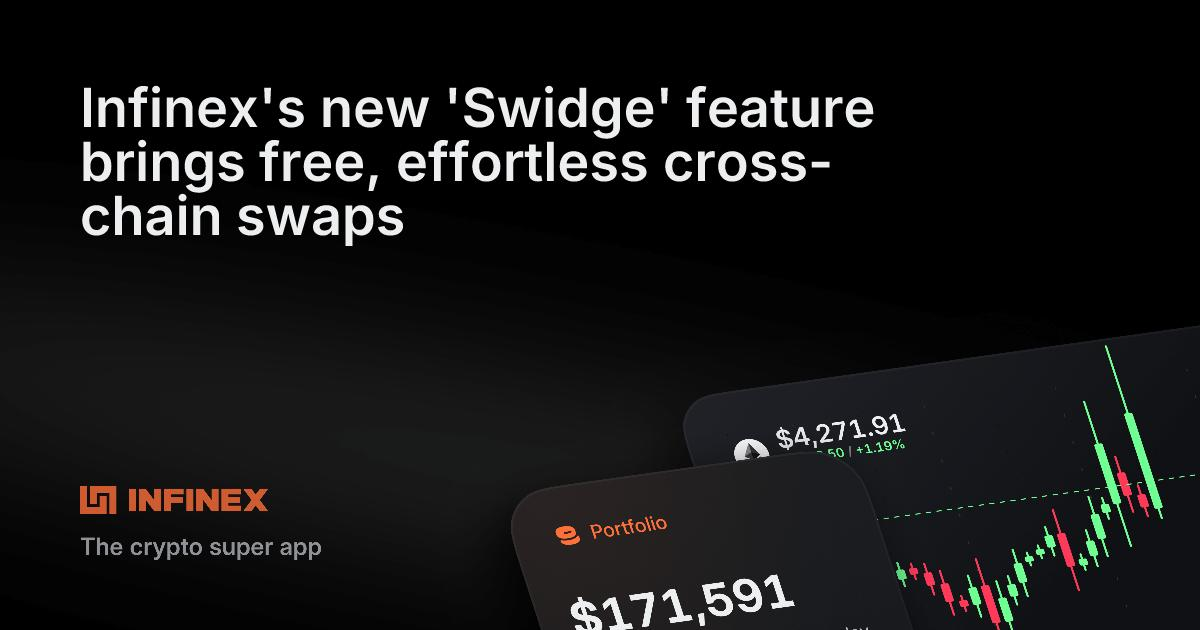
Qué es Swidge
Swidge es un módulo interno de Infinex diseñado para swaps entre cadenas y agregación de transacciones. Su función principal es unificar el trading en DEX y el puente entre cadenas en un único punto de entrada para las operaciones.
Tradicionalmente, los usuarios que desean intercambiar activos entre cadenas deben localizar un protocolo de puente y luego utilizar un DEX en la cadena de destino para completar el swap. Swidge reduce estos pasos fragmentados al integrar varias cadenas, protocolos y rutas de liquidez en segundo plano.
Para comenzar, los usuarios introducen el activo a intercambiar y el activo objetivo en Infinex. Swidge identifica el entorno on-chain relevante y las rutas de trading disponibles. El sistema selecciona la ruta más adecuada según la liquidez disponible, los costes de trading y las condiciones de ejecución. Los usuarios solo confirman la transacción en la interfaz, y el sistema gestiona toda la ejecución on-chain posterior.
Según la documentación oficial, Infinex utiliza Swidge para agregar DEX y puentes cross-chain, ofreciendo una experiencia de plataforma unificada.
Cómo Infinex agrega DEX y puentes cross-chain
La agregación de Infinex se centra en combinar dos acciones antes separadas—trading y puente entre cadenas—en un flujo de trabajo optimizado. Los usuarios ven una sola operación de swap, mientras el sistema gestiona las operaciones on-chain, las rutas de puente y la entrega de los activos objetivo.
Los DEX facilitan principalmente swaps de activos dentro de la misma red o ecosistema, mientras que los puentes cross-chain gestionan transferencias de activos entre blockchains. Infinex conecta estas infraestructuras mediante Swidge, eliminando la necesidad de acceder a múltiples protocolos.
Los usuarios seleccionan sus activos de origen y destino. El sistema determina si la transacción requiere funcionalidad cross-chain. Si el swap involucra redes distintas, Swidge considera tanto la liquidez de DEX como las rutas de puente. El sistema fusiona el swap y el puente en una experiencia de transacción on-chain sin interrupciones.
| Módulo |
Función principal |
Experiencia del usuario |
| Agregación DEX |
Busca liquidez de swap |
Recibe ofertas de trading |
| Agregación de puentes |
Transfiere activos entre cadenas |
Reduce la gestión manual de puentes |
| Emparejamiento de rutas |
Compara opciones de ejecución |
Reduce la complejidad operativa |
| Ejecución de trading |
Envía transacciones on-chain |
Completa swaps entre cadenas |
Este modelo permite a los usuarios ejecutar operaciones complejas entre cadenas sin necesidad de comprender detalles a nivel de protocolo.
Cómo los usuarios completan swaps entre cadenas con Infinex
Con Infinex, los usuarios no necesitan alternar entre múltiples herramientas. En vez de eso, seleccionan activos, confirman rutas y ejecutan operaciones en una sola interfaz.
Los usuarios acceden a la pantalla de trading de Infinex, eligen el activo a pagar, la red y el activo objetivo. Este paso depende del usuario; el sistema identifica los tipos de activos, el estado de la red y los entornos de trading disponibles.
Swidge empareja las rutas disponibles según la entrada del usuario. El sistema verifica la liquidez de DEX, el soporte de puentes, los costes de trading y las condiciones de ejecución. Los usuarios revisan las ofertas, las tarifas estimadas y los resultados de la transacción.
Tras confirmar la operación, el sistema inicia la ejecución on-chain usando la ruta seleccionada, gestionando swaps, puentes y entrega de activos objetivo. Los usuarios reciben sus activos intercambiados en la cadena o cuenta de destino.
Este flujo de trabajo reduce la barrera operativa para el trading entre cadenas. Los swaps tradicionales requieren que los usuarios gestionen el puente, esperen la llegada de activos y realicen swaps secundarios. Infinex integra todas estas acciones en una única experiencia de trading.
Cómo Infinex gestiona el Gas y la interacción entre cadenas
La complejidad entre cadenas proviene no solo de las transferencias de activos, sino también de las tarifas de Gas variables entre redes. Cada cadena tiene sus propias reglas de Gas, y los usuarios pueden necesitar activos nativos para diferentes redes.
Infinex aborda esto minimizando la frecuencia con la que los usuarios deben gestionar la complejidad del Gas, usando un proceso de trading unificado. El token INX está vinculado a un mecanismo de subsidio de Gas, cubriendo potencialmente parte o la totalidad de las tarifas de Gas para operaciones elegibles.
Los usuarios inician una solicitud de transacción entre cadenas. El sistema identifica las cadenas de origen y destino, además de los pasos necesarios de ejecución. Infinex determina los costes de transacción y la gestión del Gas según los parámetros de la plataforma. Los usuarios ven un resultado de transacción unificado, no una serie de pasos on-chain fragmentados.
La gestión del Gas no elimina todas las tarifas—simplifica la administración multicadena del Gas mediante agregación, diseño de rutas y subsidios.
Este mecanismo es fundamental porque las tarifas de Gas representan una barrera importante para los inversores minoristas que entran a ecosistemas multicadena. Simplificar las operaciones de Gas mejora la experiencia de trading entre cadenas.
Cómo funciona la agregación de rutas de Swidge
El mecanismo de agregación de rutas de Swidge busca rutas óptimas de ejecución entre varios DEX y puentes. No se conecta solo a un puente; filtra las rutas posibles en función del objetivo de la transacción.
No existe una ruta fija para los swaps entre cadenas. El mismo intercambio de activos puede ofrecer distintos métodos de puente, liquidez en DEX y costes de ejecución. Swidge evalúa estas opciones de forma integral.
Los usuarios introducen sus necesidades de trading. Swidge busca liquidez y rutas de puente disponibles. El sistema genera opciones según tarifas, deslizamiento, activos recibidos y condiciones de ejecución. Tras la confirmación del usuario, el sistema ejecuta la operación por la ruta seleccionada.
Este mecanismo aumenta la eficiencia del trading. Los usuarios no necesitan comparar varios puentes y DEX ni dividir manualmente el flujo de trabajo.
Sin embargo, la agregación no elimina el riesgo. Las diferencias en la profundidad de liquidez, la velocidad de puente y las tasas de fallo de transacción entre protocolos pueden afectar los resultados. El valor de Swidge está en simplificar el proceso y mostrar rutas complejas en una interfaz unificada.
Cómo el proceso de trading de Infinex difiere del puente tradicional
El puente tradicional se centra en “mover activos de una cadena a otra”, mientras que Infinex enfatiza la conversión completa “de activo de origen a activo objetivo”.
El puente tradicional requiere que los usuarios completen manualmente varios pasos: seleccionar un puente, conectar una billetera, pagar Gas en la cadena de origen, esperar la llegada de activos y decidir si realizar swaps adicionales. Infinex comprime estos pasos en un flujo de trabajo unificado con Swidge.
En el modelo tradicional, los usuarios seleccionan el protocolo de puente. En Infinex, los usuarios eligen el objetivo de trading. El puente tradicional exige que los usuarios gestionen activos en la cadena de destino; Infinex agrega rutas de DEX y puente automáticamente. El puente tradicional suele requerir varias confirmaciones; Infinex destaca la confirmación única seguida de ejecución automática. Los usuarios reciben el activo objetivo, no solo activos transferidos.
El objetivo central de Infinex no es reemplazar todos los protocolos de puente—los integra en el flujo de trabajo de trading entre cadenas. Para los usuarios, reduce los costes de alternancia de herramientas; para el ecosistema, mejora el acceso a la liquidez multicadena.
Qué riesgos están asociados al trading agregado entre cadenas
El trading agregado entre cadenas mejora la experiencia del usuario, pero no elimina los riesgos on-chain. Los principales riesgos provienen de contratos inteligentes, puentes, liquidez, ejecución de transacciones y dependencias de protocolos externos.
Swidge agrega varios protocolos subyacentes—y hereda sus posibles problemas. Retrasos en el puente, liquidez insuficiente en DEX o congestión de la red pueden afectar el resultado de la operación.
Los usuarios envían operaciones y confían en el sistema para emparejar rutas. La transacción pasa por diversos protocolos y módulos. Cualquier paso que implique mayor deslizamiento, retrasos o fallos de ejecución puede afectar los resultados. Los usuarios pueden enfrentar retrasos en la llegada de activos, variaciones de costes o transacciones fallidas.
La ventaja de la agregación es la conectividad multiprotocolo; su riesgo es la dependencia multiprotocolo. El trading entre cadenas requiere transparencia en el enrutamiento, divulgación de tarifas y mecanismos de confirmación.
Estos riesgos no son exclusivos de Infinex—son comunes en todo el sector de agregación cross-chain.
Resumen
Infinex utiliza Swidge para agregar DEX y puentes cross-chain, permitiendo a los usuarios completar swaps entre cadenas en una interfaz unificada. El flujo de trabajo central incluye selección de activos, emparejamiento de rutas, gestión de Gas, confirmación de transacciones y ejecución on-chain.
A diferencia del puente tradicional, Infinex se centra en el resultado completo de la transacción—no solo en la transferencia de activos. Los usuarios no necesitan usar puentes y DEX por separado; el sistema integra rutas de trading y ejecución cross-chain en segundo plano.
Sin embargo, el trading agregado entre cadenas sigue enfrentando riesgos de contratos inteligentes, protocolos de puente, liquidez y ejecución. El valor de Swidge está en reducir la complejidad operativa, pero no elimina por completo el riesgo en el trading cross-chain.
Preguntas frecuentes
Qué es Swidge?
Swidge es el módulo de transacciones dentro de Infinex que agrega DEX y puentes, ayudando a los usuarios a completar swaps entre cadenas y emparejamiento de rutas en una sola interfaz.
Cómo completa Infinex las transacciones entre cadenas?
Infinex utiliza Swidge para identificar las necesidades de trading del usuario, agregar rutas disponibles de DEX y puente, y ejecutar operaciones on-chain tras la confirmación del usuario.
Cuál es la diferencia entre Infinex y los puentes cross-chain estándar?
Los puentes estándar se centran en transferencias de activos, mientras que Infinex enfatiza los resultados de la transacción—integrando swaps, puentes y agregación de rutas.
Puede Swidge reducir los costes de trading?
Swidge ayuda a los usuarios a comparar opciones de ejecución mediante agregación de rutas, pero los costes reales dependen del Gas, el deslizamiento, las tarifas de puente y las condiciones de la red.
Qué riesgos conlleva el trading agregado entre cadenas?
Los riesgos clave incluyen vulnerabilidades de contratos inteligentes, riesgos de puentes, liquidez insuficiente, retrasos en transacciones, fluctuaciones de deslizamiento y dependencia de protocolos externos.