In traditional Web3 frameworks, users must use a Wallet to create accounts, manage Private Keys, and sign transactions. While this process ensures decentralized control, it also adds complexity, making it a significant barrier for many users entering Web3.
With the integration of AI Agents and blockchain technology, user interaction is evolving. Purr-Fect Claw, the core gateway provided by Pieverse, transforms on-chain operations into chat-based interactions, allowing users to complete transactions without needing to understand the underlying mechanisms. This approach not only lowers the entry threshold but also helps Web3 reach a much broader audience.
What Is Purr-Fect Claw?
Purr-Fect Claw is an AI Agent interaction tool within the Pieverse ecosystem, designed to convert user inputs into on-chain operations.
Its primary function is to serve as an intermediary between users and the blockchain, interpreting natural language instructions and executing the corresponding logic, thereby making complex on-chain actions more accessible and user-friendly.
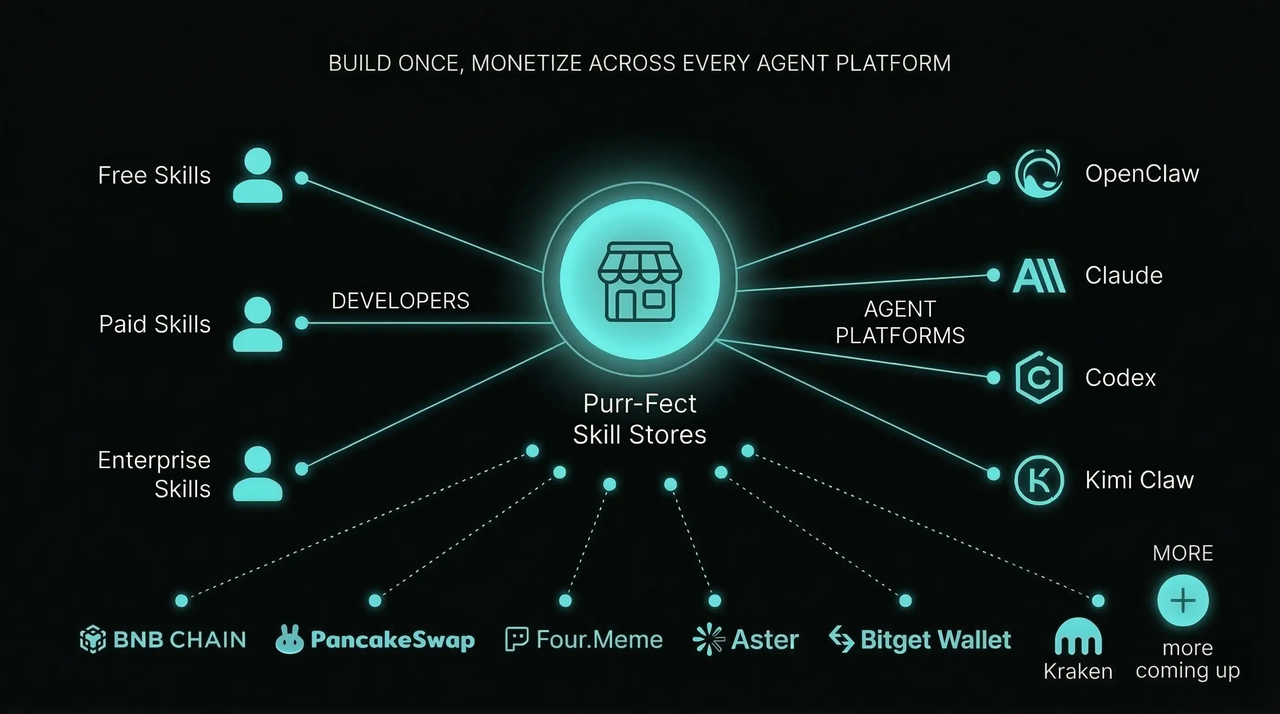
How Web2 Chat Bridges to Web3 Transactions
A key feature of Purr-Fect Claw is its chat-based interface. Users can enter commands through familiar messaging platforms, such as sending text requests or operational instructions.
Once the system receives a command, the AI Agent parses it and maps it to a specific on-chain transaction. For users, the experience is similar to interacting with a chatbot rather than using traditional blockchain tools.
This method makes Web3 operations more intuitive and significantly reduces the learning curve.
Why Purr-Fect Claw Doesn’t Require a Traditional Wallet
Traditionally, Wallets handle account management and transaction Signatures. In Purr-Fect Claw, these responsibilities are abstracted to the system level.
Users don’t need direct access to Private Keys or to manually sign transactions. Transaction Approval and execution are managed through an affiliate mechanism, streamlining the user experience.
This design enables a wallet-free Web3, fundamentally changing how users interact with blockchain networks.
Identity Abstraction and Agent Mechanism in Purr-Fect Claw
To deliver a wallet-free experience, the system employs identity abstraction, separating user identity from specific blockchain addresses.
The AI Agent acts as the executor, handling transactions based on user permissions. Identity can be managed through various methods, such as account binding or in-app identifiers.
This architecture allows users to participate in transactions without the need to directly manage on-chain accounts.
User Experience and Interaction Flow with Purr-Fect Claw
In practice, users trigger actions by entering commands—such as transferring assets or invoking Futures functions.
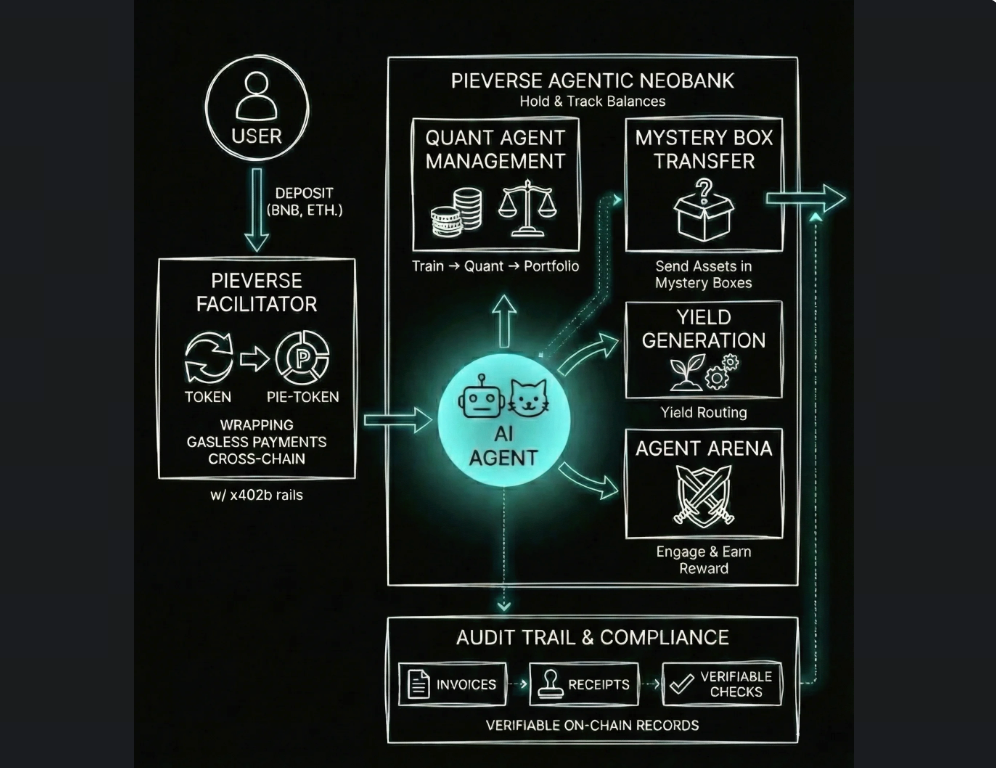
The system parses the command, executes the transaction, and manages associated fees and Signature processes. The outcome is returned to the user in a readable format, with a record generated on-chain.
This streamlined process reduces the multi-step operations inherent in traditional Web3, providing a more seamless user experience.
Security Mechanisms and Potential Challenges of Purr-Fect Claw
While the wallet-free design improves usability, it introduces new security considerations.
For example, users must rely on the system for permission management rather than having full control over their Private Keys. Additionally, the AI Agent’s execution logic needs to include robust security checks to prevent errors or misuse.
To address these concerns, systems typically implement audit mechanisms and permission controls to balance convenience with security.
How Purr-Fect Claw Differs from Traditional Web3 Interactions
Traditional Web3 requires users to actively operate a Wallet to complete transactions, whereas Purr-Fect Claw shifts this to an instruction-driven process.
This change not only transforms the way users interact but also enhances the user experience, making Web3 usage more aligned with familiar Web2 applications.
Comparing wallet-free Web3 to traditional Wallet models highlights the practical differences between the two approaches.
Summary
Purr-Fect Claw leverages AI Agents and identity abstraction to simplify complex on-chain operations into straightforward chat interactions, enabling a wallet-free Web3 experience. This model lowers the barrier to entry and provides a strong foundation for automation and large-scale adoption.
FAQs
Does Purr-Fect Claw completely eliminate the need for a Wallet?
Users do not need to operate a Wallet directly, but the underlying system still relies on an on-chain account infrastructure.
How does Purr-Fect Claw execute transactions?
The system uses the AI Agent to interpret user commands and handles Signature and transaction execution in the background.
Is the wallet-free model secure?
Security depends on the platform’s permission controls and audit mechanisms. Users must rely on the security framework provided by the platform.
What operations does Purr-Fect Claw support?
It generally supports transfers, Futures contract calls, and other on-chain interactions, depending on system implementation.
Will this approach replace traditional Wallets?
Each approach serves different use cases. The wallet-free model is better suited for low-barrier, automated scenarios.