HVLO vs UNI: A Comprehensive Comparison of Two Leading Decentralized Exchange Protocols


Introduction: HVLO vs UNI Investment Comparison
In the cryptocurrency market, the comparison between Hivello and Uniswap is a topic that investors cannot overlook. The two projects differ significantly in market capitalization ranking, application scenarios, and price performance, representing distinct positioning within the crypto asset landscape. Hivello (HVLO): Launched recently, it has gained market recognition by simplifying DePIN mining through an intelligent node application that aggregates decentralized physical infrastructure networks, leveraging advanced AI for mining reward optimization. Uniswap (UNI): Since its introduction in 2020, it has been recognized as the first automatic market maker protocol on the Ethereum blockchain and remains one of the most traded and highest market-cap cryptocurrencies globally. This article will comprehensively analyze the investment value comparison between Hivello and Uniswap across historical price trends, supply mechanisms, market positioning, ecosystem development, and future outlook, while attempting to address the question most investors care about:
"Which is the better buy right now?"
I. Price History Comparison and Current Market Status
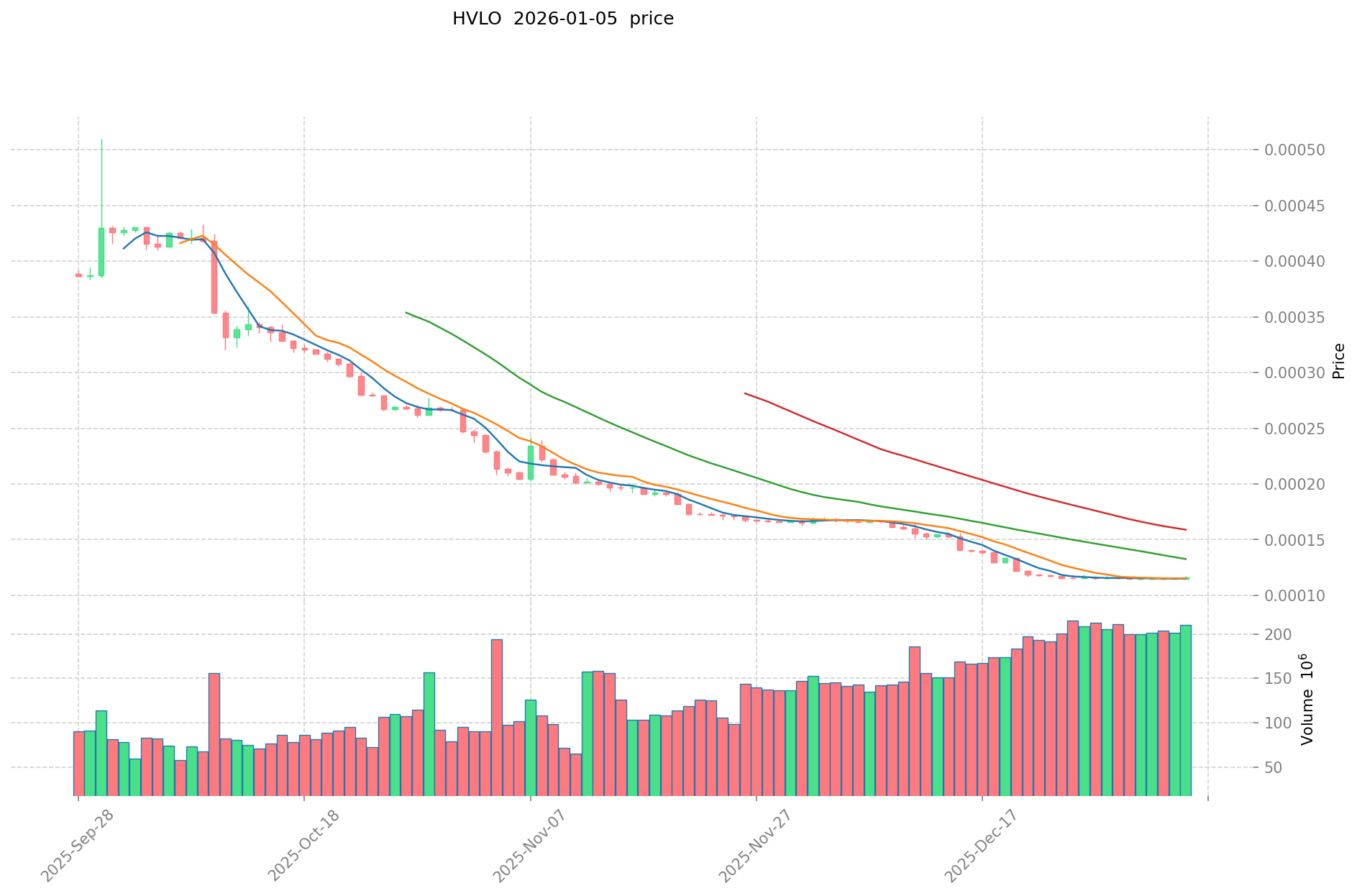
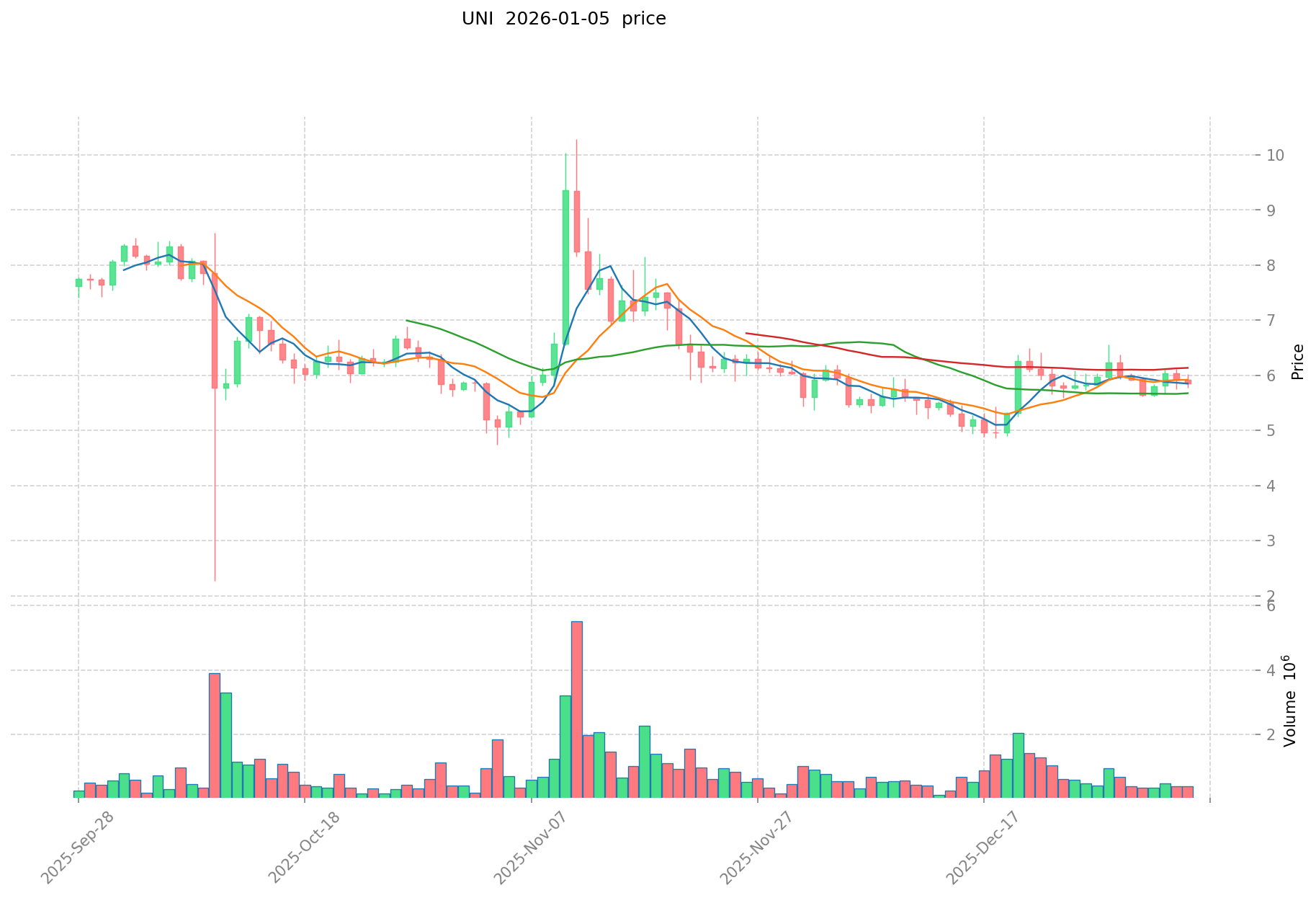
Hivello (HVLO) and Uniswap (UNI) Historical Price Trends
- February 11, 2025: Hivello (HVLO) reached its all-time high of $0.00796, marking a significant peak in the token's trading history.
- May 3, 2021: Uniswap (UNI) achieved its all-time high of $44.92, representing the peak of the protocol's early adoption phase.
- January 3, 2026: Hivello (HVLO) reached its all-time low of $0.00011402, reflecting recent market pressure on the token.
- September 17, 2020: Uniswap (UNI) recorded its all-time low of $1.03, occurring shortly after the protocol's initial launch.
Comparative Analysis
In the current market cycle, Hivello (HVLO) has experienced a substantial decline from its historical high of $0.00796 to its current trading level, representing a significant correction. In contrast, Uniswap (UNI) has similarly declined from its peak of $44.92, though it maintains a more established market position with higher absolute price levels. Both tokens have demonstrated volatility characteristic of the cryptocurrency market, with HVLO showing more recent price discovery activity and UNI exhibiting mature market dynamics.
Current Market Status (January 5, 2026)
- Hivello (HVLO) current price: $0.00011532.
- Uniswap (UNI) current price: $5.854.
- 24-hour trading volume: HVLO $24,230.27 vs UNI $2,314,672.39.
- Market sentiment index (Fear & Greed Index): 25 (Extreme Fear).
Click to view real-time prices:
- View HVLO current price Market Price.
- View UNI current price Market Price.
II. Core Factors Affecting HVLO vs UNI Investment Value
Supply Mechanism Comparison (Tokenomics)
- HVLO: Investment value fluctuates based on market price. Value determination depends on demand, scarcity, and utility factors specific to the token's role within the cryptocurrency ecosystem
- UNI: Investment value similarly varies with market dynamics, influenced by demand, scarcity, and practical utility in decentralized finance applications
- 📌 Historical Pattern: Token supply mechanisms directly influence price cycles through changes in market demand and investor sentiment, though both tokens are subject to broader cryptocurrency market volatility rather than following traditional deflationary models
Institutional Adoption and Market Application
- Institutional Holdings: UNI demonstrates stronger institutional recognition as a DeFi governance token with established use cases in decentralized exchange protocols
- Enterprise Adoption: UNI maintains broader application in decentralized finance protocols and liquidity provision. HVLO's enterprise applications and integration pathways require further market clarification
- Regulatory Stance: Different jurisdictions adopt varying approaches to cryptocurrency regulation. Japan's Financial Services Agency is exploring classification of crypto assets as financial instruments equivalent to securities to strengthen investor protection
Technology Development and Ecosystem Building
- HVLO Technology Upgrades: Specific technical developments and their potential market impacts are not clearly documented in available sources
- UNI Technology Development: As a Uniswap governance token, UNI benefits from ongoing DeFi protocol improvements and ecosystem expansion
- Ecosystem Comparison: UNI operates within established DeFi infrastructure including decentralized exchanges, liquidity pools, and smart contract ecosystems. HVLO's ecosystem positioning requires additional market research
Macroeconomic Conditions and Market Cycles
- Performance in Inflationary Environments: Neither token functions as an inflation hedge. Both remain subject to cryptocurrency market cyclicality and are not traditional store-of-value assets
- Macroeconomic Monetary Policy: Interest rate fluctuations impact risk asset sentiment, subsequently affecting both tokens' valuations. Changes in monetary policy influence investor appetite for volatile cryptocurrency assets
- Geopolitical Factors: Financial instability or restrictions may influence cross-border transaction demand and cryptocurrency adoption rates, though specific geopolitical impacts on these tokens require continuous market monitoring
III. 2026-2031 Price Forecast: HVLO vs UNI
Short-term Forecast (2026)
- HVLO: Conservative $0.0000980985–$0.00011541 | Optimistic $0.0001477248
- UNI: Conservative $4.3875–$5.85 | Optimistic $6.318
Mid-term Forecast (2028-2029)
- HVLO may enter accumulation phase, with estimated price range of $0.0001294623216–$0.000186142544275
- UNI may enter growth phase, with estimated price range of $5.3517906–$11.0334861
- Key drivers: institutional capital inflows, ETF approvals, ecosystem development
Long-term Forecast (2030-2031)
- HVLO: Base case $0.000153045704043–$0.000180053769462 | Optimistic scenario $0.00023507820141
- UNI: Base case $7.849537254–$10.497573918 | Optimistic scenario $14.06674905012
HVLO:
| 年份 | 预测最高价 | 预测平均价格 | 预测最低价 | 涨跌幅 |
|---|---|---|---|---|
| 2026 | 0.0001477248 | 0.00011541 | 0.0000980985 | 0 |
| 2027 | 0.000192088404 | 0.0001315674 | 0.000097359876 | 14 |
| 2028 | 0.0001861020873 | 0.000161827902 | 0.0001294623216 | 40 |
| 2029 | 0.000186142544275 | 0.00017396499465 | 0.000163527094971 | 50 |
| 2030 | 0.000187255920241 | 0.000180053769462 | 0.000153045704043 | 56 |
| 2031 | 0.00023507820141 | 0.000183654844852 | 0.000119375649153 | 59 |
UNI:
| 年份 | 预测最高价 | 预测平均价格 | 预测最低价 | 涨跌幅 |
|---|---|---|---|---|
| 2026 | 6.318 | 5.85 | 4.3875 | 0 |
| 2027 | 8.57844 | 6.084 | 5.59728 | 3 |
| 2028 | 8.430903 | 7.33122 | 5.3517906 | 25 |
| 2029 | 11.0334861 | 7.8810615 | 5.437932435 | 34 |
| 2030 | 11.537874036 | 9.4572738 | 7.849537254 | 61 |
| 2031 | 14.06674905012 | 10.497573918 | 5.98361713326 | 79 |
IV. Investment Strategy Comparison: HVLO vs UNI
Long-term vs Short-term Investment Strategy
- HVLO: Suitable for investors focused on early-stage DePIN infrastructure opportunities and those seeking exposure to AI-driven mining optimization with higher volatility tolerance
- UNI: Suitable for investors seeking established DeFi protocol exposure, stable governance token positioning, and those prioritizing ecosystem maturity over speculative growth
Risk Management and Asset Allocation
- Conservative Investors: HVLO 5% vs UNI 95%
- Aggressive Investors: HVLO 40% vs UNI 60%
- Hedging Tools: Stablecoin positioning, derivatives strategies, cross-asset diversification with established DeFi tokens
V. Potential Risk Comparison
Market Risk
- HVLO: Extreme volatility with recent all-time low of $0.00011402 (January 3, 2026) reflecting limited trading liquidity ($24,230.27 daily volume), making the token susceptible to significant price swings from limited capital flows
- UNI: Mature market position with substantially higher trading volume ($2,314,672.39 daily), though subject to broader cryptocurrency market cyclicality and DeFi protocol-specific risks
Technology Risk
- HVLO: Limited documentation of technical infrastructure stability and smart contract security audit status; DePIN aggregation mechanism requires continuous validation for operational reliability
- UNI: Established Ethereum-based infrastructure with proven security history since 2020 launch; potential risks include smart contract vulnerabilities in protocol upgrades and scalability limitations on Layer 1
Regulatory Risk
- Global regulatory frameworks increasingly treat cryptocurrency tokens as financial instruments. Japan's Financial Services Agency exploration of crypto asset classification as securities-equivalent instruments creates potential compliance challenges for both tokens across different jurisdictions. HVLO's recent market entry may face additional scrutiny regarding DePIN infrastructure classification, while UNI's established DeFi positioning faces ongoing regulatory clarity regarding governance token treatment
VI. Conclusion: Which Is the Better Buy?
📌 Investment Value Summary:
- HVLO Advantages: Early-stage DePIN infrastructure exposure, AI-driven mining optimization technology, potential for significant upside in emerging physical infrastructure networks
- UNI Advantages: Established market position as leading DeFi governance token, proven protocol functionality since 2020, higher institutional recognition, superior liquidity and trading volume, clearer regulatory pathway
✅ Investment Recommendations:
- Beginner Investors: Prioritize UNI for portfolio stability, established infrastructure, and lower volatility relative to HVLO; consider 90-95% UNI allocation with minimal HVLO exposure if seeking early-stage diversification
- Experienced Investors: Balance portfolio with UNI as core holding (60-70%) and HVLO as high-risk allocation (30-40%), implementing strict stop-loss strategies and position sizing discipline given extreme volatility disparities
- Institutional Investors: Maintain primary exposure through UNI given regulatory clarity, liquidity requirements, and governance participation opportunities; treat HVLO as speculative allocation only after comprehensive DePIN infrastructure due diligence
⚠️ Risk Disclaimer: The cryptocurrency market exhibits extreme volatility. This analysis is based on available reference materials and does not constitute investment advice. Investors should conduct independent research and consult financial professionals before making investment decisions.
FAQ
HVLO和UNI分别是什么?有什么主要区别?
HVLO是新兴代币,聚焦DePIN挖矿与DeFi聚合,采用通胀模型持续排放。UNI是Uniswap去中心化交易所的成熟代币,供应总量固定。两者应用场景和经济模型存在明显差异。
HVLO和UNI的技术架构和运作机制有什么不同?
HVLO采用低功耗设计架构,专注于节能效率;UNI则基于高性能多功能架构。HVLO适合链上轻量级交互,UNI强调流动性池聚合和复杂智能合约功能。两者在共识机制和治理模式上也存在差异。
HVLO和UNI各自的主要应用场景和使用场景是什么?
UNI是去中心化交易协议,主要用于代币交换和流动性挖矿。HVLO是新兴代币,应用场景仍在开发中。两者在DeFi生态中扮演不同角色。
HVLO和UNI在性能、速度、费用等方面如何对比?
HVLO基于Solana链、交易费用更低、交易速度更快,采用AI优化技术提升性能。UNI作为成熟的去中心化交易协议,具有良好的流动性和交易额基础。HVLO更侧重基础设施优化,UNI侧重交易体验。
HVLO和UNI哪个更适合初学者使用?
HVLO更适合初学者。HVLO提供完善的学习中心和友好的用户界面,拥有丰富的免费教育资源,涵盖区块链基础、交易策略等内容,帮助新手快速入门。而UNI作为去中心化交易协议,操作相对复杂,适合有一定经验的用户。
HVLO和UNI的安全性和风险分别如何评估?
HVLO因新币特性和通膨模型波动性较高,存在扩展性风险;UNI面临市场饱和和DEX竞争风险,智能合约漏洞也可能带来风险。两者都需关注流动性状况。
HVLO和UNI的生态发展和社区支持度如何?
HVLO和UNI生态发展迅速,社区支持度高。HVLO通过激励机制提升用户参与度,UNI社区活跃度领先,两者在去中心化领域均具有显著影响力和生态优势。
从投资角度看,HVLO和UNI的前景和潜力如何对比?
UNI作为去中心化交易所治理代币,在DeFi领域潜力更大,交易额稳定增长。HVLO专注低成本交易,市场认可度相对较低。整体看,UNI的生态完善度和发展前景更具优势。
Share
Content
Introduction: HVLO vs UNI Investment Comparison
I. Price History Comparison and Current Market Status
II. Core Factors Affecting HVLO vs UNI Investment Value
III. 2026-2031 Price Forecast: HVLO vs UNI
IV. Investment Strategy Comparison: HVLO vs UNI
V. Potential Risk Comparison
VI. Conclusion: Which Is the Better Buy?
FAQ
How to Buy Cryptocurrency


Trending Cryptocurrencies



SDM vs SNX: Comparing Two Leading Synthetic Asset Protocols in DeFi

XL1 vs GRT: A Comprehensive Comparison of Two Leading Blockchain Oracle Solutions

Avalanche (AVAX) 2025 Price Analysis and Market Trends

SEI Staking Analysis: 60-70% Supply Locked and Its Price Impact

Latest Analysis and Investment Outlook for Chainlink Price in June 2025

FTT Explained
The Litecoin ETF is having difficulty drawing in capital, even as analysts forecast a price rise from $1,000 to $2,000.

Rocky Rabbit ($RBTC) Airdrop: Eligibility, Tokenomics and Complete Guide

What country is CoinEx based in?

Hamster Kombat Daily Cipher Code Guide: Unlock Bonus Coins

DNS Hijack Redirects Users to Phishing Sites, Affecting Aerodrome and Velodrome