Japan’s Hawkish Policies Heat Up: Is Bitcoin at Risk of Falling Below $70K?
As major economies worldwide move toward normalizing monetary policy in 2025, the Bank of Japan’s evolving stance has emerged as a key focus for global financial markets. Japan has long maintained ultra-low or even negative interest rates, serving as a major source of global liquidity. Now, with persistent inflation and rising wages, the Bank of Japan is issuing more explicit hawkish signals.
This shift is prompting market participants to reassess how risk assets, including Bitcoin, are priced.
Macroeconomic Context for the Bank of Japan’s Policy Shift
For over a decade, Japan’s economy has faced persistent low inflation and weak growth, making accommodative monetary policy the norm. Recent data, however, show that domestic inflation remains elevated, corporate profitability has improved, and wage negotiations are yielding more positive results. These developments provide a solid foundation for policy tightening.
When the Bank of Japan adopts a hawkish tone, the impact extends well beyond Japan’s domestic market. Through exchange rates, bond yields, and global capital flows, its policy shift can indirectly affect high-risk assets such as Bitcoin.
Current Bitcoin Price Action and Market Sentiment
Bitcoin’s price has been consolidating at elevated levels, with repeated sharp pullbacks followed by rebounds. This price action signals a divided market. Some investors remain bullish for the long term, while others are cautious amid shifting macro conditions.
Historically, Bitcoin has outperformed during periods of global liquidity easing, but faces downward pressure when liquidity tightens. As a result, macroeconomic factors are playing a more prominent role in the current market environment.
How a “Hawkish Japan” Impacts the Crypto Market
The Bank of Japan’s hawkish pivot could affect the crypto market on three fronts:
First, higher yen funding costs reduce the appeal of traditional carry trades. In the past, low-cost yen was widely used to invest in high-yield or volatile assets. As funding costs rise, these positions may be unwound.
Second, global risk appetite may temporarily decline. Higher interest rates typically drive capital toward lower-risk assets, putting pressure on crypto assets.
Third, market expectations often move prices ahead of actual data. Even if the real impact is limited, sentiment shifts alone can trigger short-term volatility.
Why $70K Is a Critical Level for Bitcoin
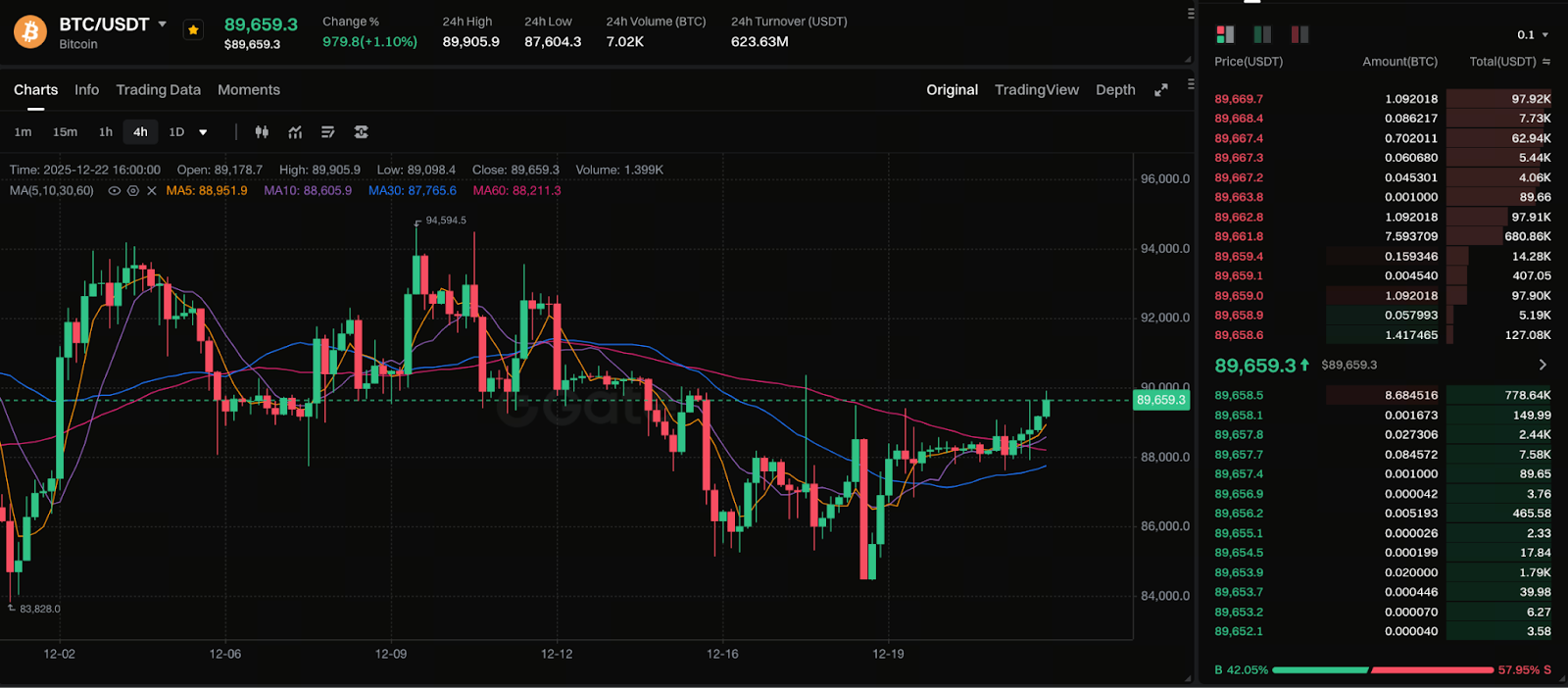
Chart: https://www.gate.com/trade/BTC_USDT
Psychologically, $70,000 is a significant round-number milestone. From a technical perspective, this zone has seen heavy trading volume. If Bitcoin decisively breaks below this level, it could trigger stop-losses or trend-following strategies, amplifying short-term volatility.
When analysts warn that Bitcoin may “dump below $70K,” they are not making a definitive prediction. Instead, they highlight that a break of this level could shift the market structure.
Potential Scenarios Amid Bull-Bear Divergence
Importantly, the market is not universally bearish. Some analysts believe the impact of Japan’s policy shift is already priced in, and that other major economies may take a more gradual approach, providing support for Bitcoin.
In this environment, Bitcoin is more likely to see wide-ranging volatility rather than a one-way decline. The ongoing battle between bulls and bears will focus on macro data and policy expectations.
Key Risk Factors for Investors
At this stage, investors should prioritize risk management over directional bets, focusing on:
- The pace of macro policy changes
- Decisive breakouts or breakdowns at key price levels
- Potential chain reactions from leveraged positions during heightened volatility
In summary, “Bitcoin will dump below $70K thanks to hawkish Japan” is a risk scenario analysis, not a certainty. Understanding this framework can help investors make more rational decisions in times of uncertainty.
Share
Content


Related Articles

2025 BTC Price Prediction: BTC Trend Forecast Based on Technical and Macroeconomic Data

Flare Crypto Explained: What Is Flare Network and Why It Matters in 2025

Pi Coin Transaction Guide: How to Transfer to Gate.com

How to Use a Crypto Whale Tracker: Top Tool Recommendation for 2025 to Follow Whale Moves

What is N2: An AI-Driven Layer 2 Solution