What Is Ransomware? Understanding Crypto-Powered Digital Extortion

Beginner
Quick Reads
Last Updated 2026-03-25 16:55:58
Reading Time: 1m
Ransomware stands as one of the most formidable cyber threats in the modern landscape, impacting individuals, businesses, and government organizations alike. This article offers a comprehensive examination of ransomware—its mechanisms, its connection to cryptocurrency, and strategies for users and enterprises to confront and mitigate digital extortion risks in the age of Web3.

What Is Ransomware?

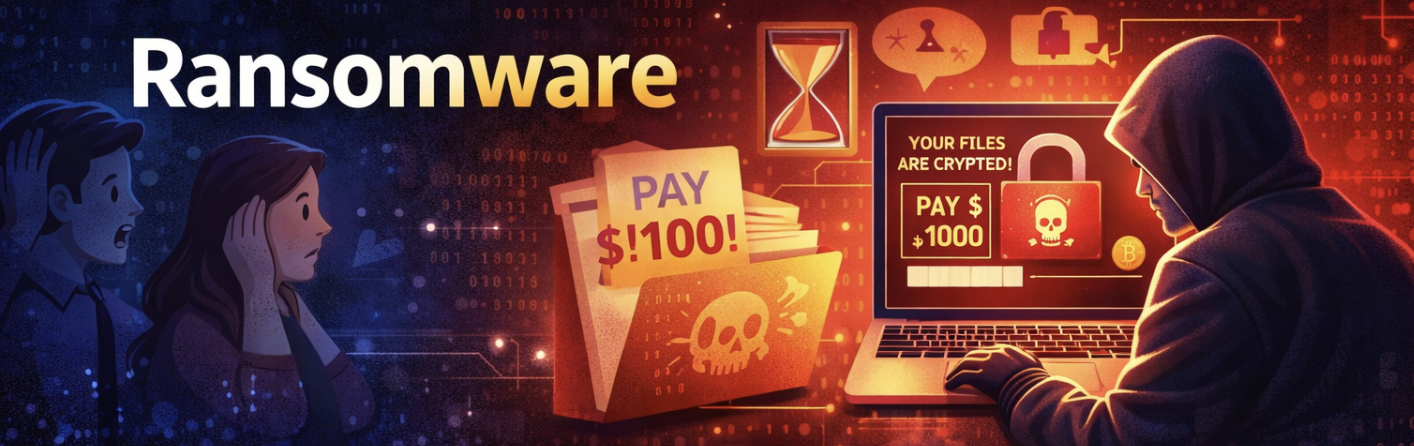
Ransomware is a highly destructive form of malware designed with a single purpose: to force victims to pay a ransom by locking, encrypting, or crippling systems and data, holding access hostage until payment is made. Once a device or an organization’s internal network is compromised, victims are typically presented with a clear ransom demand, including the payment deadline, amount, and method.

In the past decade, ransomware has evolved from basic encryption viruses targeting personal computers into highly organized and commercialized criminal tools, now exhibiting traits of a full-fledged underground industry.

Why Are Ransomware and Cryptocurrency Closely Linked?

Nearly all modern ransomware attacks demand payment in Bitcoin (BTC), Monero (XMR), or other cryptocurrencies. The reasons are straightforward:

  • Decentralization: Not reliant on banks, difficult to freeze
  • Instant cross-border transactions: Funds can be collected worldwide, no intermediaries needed
  • Anonymity or high privacy—especially with Monero
  • Irreversible transactions: Payments are nearly impossible to recover once sent

For attackers, cryptocurrencies make extortion safer, more efficient, and much harder for law enforcement to trace. As the Web3 ecosystem grows, ransomware tactics are evolving just as rapidly.

Common Ransomware Attack Methods

1. Phishing Emails

The most common attack vector involves impersonating internal company communications, banking documents, contracts, or invoices to lure users into clicking attachments or links. Once opened, malicious software executes in the background.

2. Vulnerability Exploitation and Remote Access

Unpatched operating systems, outdated servers, or unsecured remote desktops (RDP) are prime entry points for ransomware. Organizations are often discovered through automated scans rather than being specifically targeted.

3. Supply Chain Attacks

Rather than attacking organizations directly, threat actors compromise third-party services, software, or update systems, leveraging trust relationships to spread malware.

What Are the Impacts of Ransomware?

For Individuals

  • Encrypted photos, files, and wallet backups
  • Locked computers or mobile devices
  • Forced to make quick decisions about paying

For Enterprises and Institutions

  • Complete shutdown of internal systems
  • Risk of customer data leaks
  • Reputational and legal consequences
  • Potentially massive ransom and recovery costs

Hospitals, airports, government agencies, and financial institutions have all been forced to suspend services due to ransomware attacks. The consequences go beyond financial loss, affecting public safety as well.

New Trends in Modern Ransomware

Double Extortion

Attackers not only encrypt data but also steal it first, threatening to release sensitive information if payment is not made.

Ransomware-as-a-Service (RaaS)

Ransomware tools are offered as a “service” that anyone can pay to use, dramatically lowering the barrier to entry and fueling the underground economy.

Targeting Web3 and the Crypto Industry

  • Wallet management devices
  • Node servers
  • Private key backup systems

For on-chain assets, a successful ransomware attack can mean permanent asset loss.

Should You Pay the Ransom?

There is no one-size-fits-all answer.

  • Payment does not guarantee decryption
  • You may become a repeat target
  • It perpetuates the criminal ecosystem

Most cybersecurity experts and government agencies advise against paying. Instead, focus on prevention, backups, and incident response. For enterprises, building robust cybersecurity and backup strategies is far more critical than negotiating after an attack.

How to Reduce the Risk of Ransomware Attacks

  • Regularly update systems and software
  • Implement multi-layered backups (offline backups are especially important)
  • Enhance employee cybersecurity awareness
  • Restrict administrative privileges
  • Physically isolate crypto wallets and private keys

In the Web3 era, self-custody brings both freedom and responsibility.

To learn more about Web3, click to register: https://www.gate.com/

Summary

Ransomware is not just a plot from hacker movies—it’s a real threat lurking behind every connected device. While cryptocurrencies have enabled seamless value transfer, they have also been exploited by bad actors, highlighting the double-edged sword of technological progress.

Author: Allen
Disclaimer
* The information is not intended to be and does not constitute financial advice or any other recommendation of any sort offered or endorsed by Gate.
* This article may not be reproduced, transmitted or copied without referencing Gate. Contravention is an infringement of Copyright Act and may be subject to legal action.

Related Articles

What is Fartcoin? All You Need to Know About FARTCOIN
Intermediate

What is Fartcoin? All You Need to Know About FARTCOIN

Fartcoin (FARTCOIN) is a representative meme coin within the Solana ecosystem based on an AI-driven narrative. Its core concept originated from an experiment aimed at exploring the "boundaries between AI Agents and humor." More than just a digital asset with social attributes, the project deeply couples absurd humor culture with on-chain financial logic by integrating autonomous AI interaction models.
2026-04-04 22:01:19
Gold Price Forecast for the Next Five Years: 2026–2030 Trend Outlook and Investment Implications, Could It Reach $6,000?
Beginner

Gold Price Forecast for the Next Five Years: 2026–2030 Trend Outlook and Investment Implications, Could It Reach $6,000?

Analyze current gold price trends alongside authoritative five-year forecasts, integrating an evaluation of market risks and opportunities. This gives investors insight into the potential trajectory of gold prices and the main drivers expected to shape the market over the next five years.
2026-03-25 18:13:30
Aster vs Hyperliquid: Which Perp DEX Will Prevail?
Beginner

Aster vs Hyperliquid: Which Perp DEX Will Prevail?

Aster and Hyperliquid are the two representative protocols of the "purpose-built L1 path" within the current decentralized perpetual exchange (Perp DEX) sector. As a pioneer in the field, Hyperliquid has built a deep liquidity moat through its highly mature order book architecture and strong community consensus. Conversely, Aster, as a rising challenger, seeks to leapfrog the competition in high-performance trading through more aggressive multi-chain aggregation logic, private transaction modules, and an underlying execution environment optimized for 2026 market demands.
2026-03-24 11:58:33
AI-Native Settlement Layers: How United Stables Is Building the Next Financial Rail
Beginner

AI-Native Settlement Layers: How United Stables Is Building the Next Financial Rail

Stablecoins were originally designed as dollar substitutes within exchanges, primarily used for asset pricing and trade settlement. As on-chain financial ecosystems have matured, their role has expanded beyond simple payments to include collateral assets, cross-chain liquidity mediums, and unified settlement units. In particular, as AI systems and automated agents begin to participate directly in economic activity, demand has risen sharply for programmable value units capable of instant settlement. This shift is pushing stablecoins toward the role of foundational financial infrastructure.
2026-03-25 03:16:17
Aerodrome Tokenomics: How ve(3,3) Powers Base's Most Profitable DEX
Beginner

Aerodrome Tokenomics: How ve(3,3) Powers Base's Most Profitable DEX

AERO is the native token of Aerodrome Finance, a core decentralized exchange and liquidity protocol in the Base ecosystem. It is primarily used for liquidity incentives and ecosystem operations. veAERO is a governance NFT that users receive by locking AERO, representing both voting power and the right to share protocol revenue. Through a dual track structure of AERO as a utility token and veAERO as a governance credential, Aerodrome separates liquidity usage value from long term governance power, allowing participants to act as liquidity providers, governance decision makers, and revenue sharers within the same system.
2026-03-25 06:40:31
The ve(3,3) Flywheel Explained: How AERO Tokenomics Powers Aerodrome’s DeFi Economy
Beginner

The ve(3,3) Flywheel Explained: How AERO Tokenomics Powers Aerodrome’s DeFi Economy

In the competition for DeFi liquidity, high-inflation mining alone is no longer enough to build lasting advantages. Aerodrome applies the ve(3,3) economic model to redesign token emissions, voting mechanisms, and revenue distribution, creating a liquidity flywheel centered on governance and cash flow. This article examines AERO tokenomics, the veAERO locking mechanism, and protocol revenue models to explain how Aerodrome builds a sustainable DeFi economic system.
2026-03-25 06:41:58





