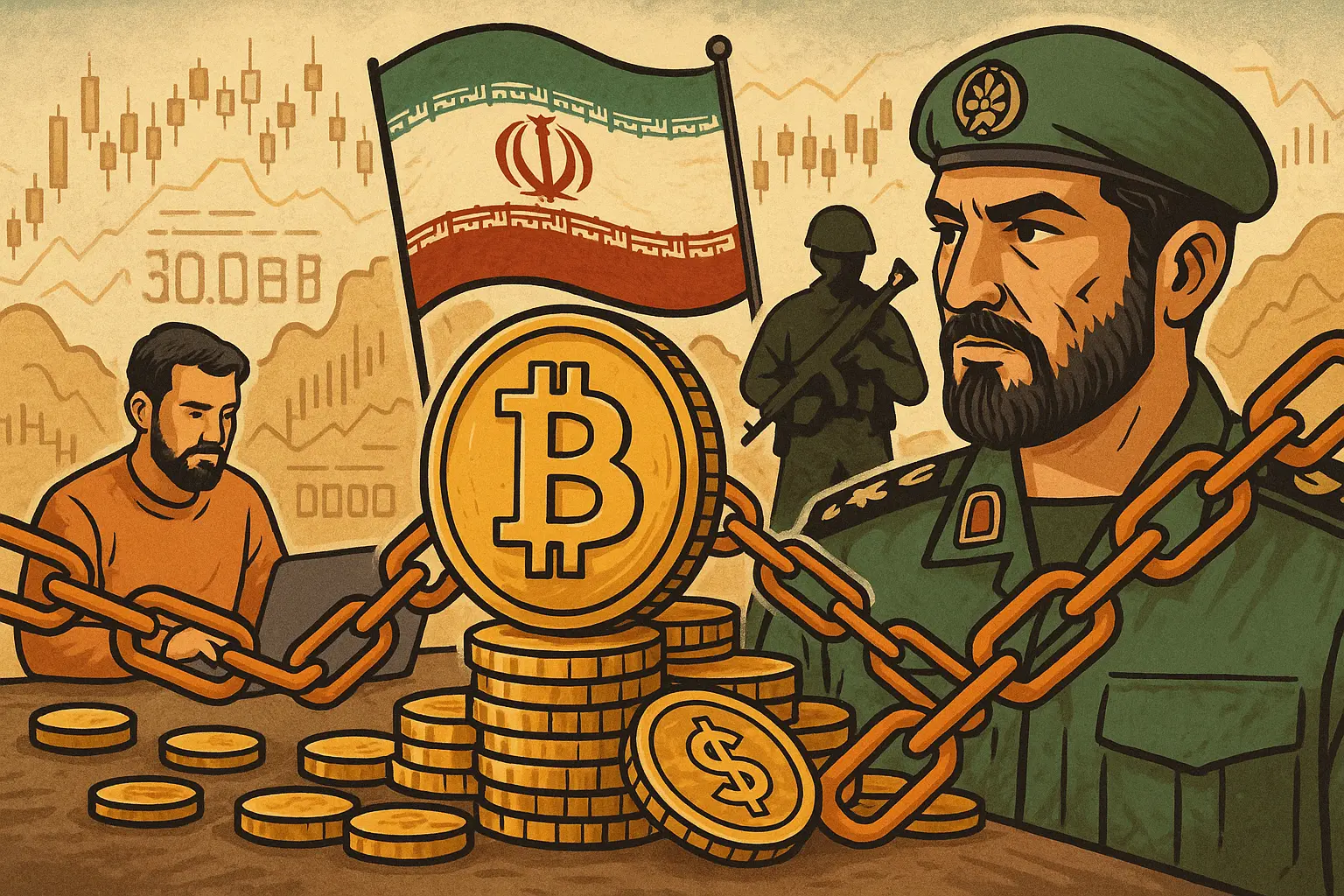
Blockchain analysis firm Chainalysis reports that in 2025, illegal cryptocurrency addresses received at least $15.4 billion in digital assets, a 162% increase from the previous year. Among these, funds associated with Iran and the Islamic Revolutionary Guard Corps (IRGC) exceeded $3 billion. Following airstrikes launched by the US-Israel coalition against Iran, on-chain data showed approximately $10.3 million in crypto rapidly flowed out from Iranian exchanges within a short period.
Iran’s On-Chain Sanctions Evasion Tactics: How IRGC Uses Cryptocurrency
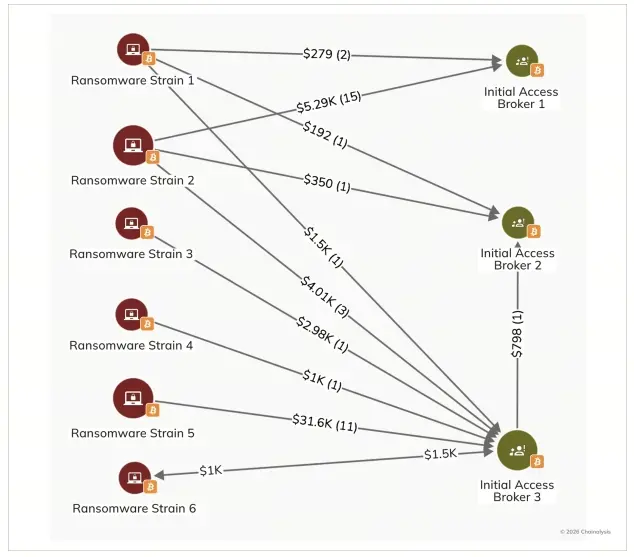
(Source: Chainalysis)
Chainalysis’s report explicitly states that despite Iran facing unprecedented internal and external pressures since the establishment of the Islamic Republic, its regime continues to incorporate cryptocurrencies into its strategic financial system. In Q4 2025, addresses linked to IRGC accounted for over half of all crypto assets received by Iranian entities, totaling more than $3 billion.
These funds are clearly described by Chainalysis as: “Funding regional militia networks such as Hezbollah in Lebanon, Hamas, and Houthi forces, as well as facilitating the flow of goods, illegal oil, and weapons—an unprecedented scale on the blockchain.” The report also notes that countries under strict sanctions like Iran have become highly skilled at obfuscating fund flows on the blockchain, significantly increasing the difficulty of enforcing traditional sanctions. Chainalysis estimates Iran’s total cryptocurrency market size in 2025 at $7.48 billion.
Global Sanctions Evasion Map: Russia, North Korea, Venezuela Expanding Simultaneously
Iran is not an isolated case. Chainalysis’s report outlines a global picture of sanctioned countries systematically using cryptocurrencies for financial circumvention:
Russia: A stablecoin called A7A5, backed by the ruble, was involved in $93.3 billion of illicit transactions within less than a year; sanctioned exchange Grinex handled $305 million in 2025, while Meer reached $4.76 billion.
North Korea: State-supported hackers stole over $2 billion in crypto in 2025, setting a record for the highest annual theft.
Venezuela: In 2025, crypto flows reached $44.6 billion, with many citizens using crypto to hedge against hyperinflation. Informal over-the-counter traders even allowed direct exchange of sanctioned Venezuelan bolívar into crypto assets.
Southeast Asia Huione Group: The sanctioned Huione Group processed over $98 billion in crypto from August 2021 to January 2025, with ongoing money laundering and fraud activities.
The report indicates that sanctioned entities accounted for approximately $104 billion of the total global illegal crypto flows in 2025, dominating the landscape.
Airstrike Ripple Effect: Immediate Market Reactions and Bitcoin Volatility
Following the US-Israel coalition’s airstrikes on Iran, on-chain data showed signs of capital flight: about $10.3 million in crypto flowed out from Iranian exchanges, with trading activity surging. Outflows in a single hour approached $2 million, indicating that Iranian investors rapidly sought to transfer assets after the conflict news.
Bitcoin’s market also experienced sharp fluctuations, with the price dropping to $63,100 after the attack news, then gradually rebounding to around $70,000. On Wednesday, it neared $74,000, and currently remains above $71,000.
Frequently Asked Questions
Q: What types of activities are included in the $15.4 billion illegal crypto amount in the Chainalysis report?
A: The $15.4 billion covers all digital assets received by illegal addresses in 2025, including sanctions evasion, terrorist financing, ransomware, hacking thefts, money laundering, and fraud. Sanctioned entities (including Iran, Russia, North Korea, etc.) account for about $104 billion, making them the largest single category.
Q: How does Iran use cryptocurrencies to evade international sanctions?
A: According to Chainalysis, Iran (especially IRGC) mainly uses blockchain address obfuscation techniques to hide fund flows, utilizes OTC channels, exchanges oil revenues for crypto, and employs proxy networks (like Hezbollah and Hamas) to disperse funds, making traditional financial sanctions tracking and enforcement significantly more difficult.
Q: What does Iran’s crypto activity mean for the global sanctions system?
A: The report reveals that the effectiveness of sanctions is being systematically eroded by the decentralization of cryptocurrencies. Countries like Iran and Russia have developed comprehensive crypto evasion ecosystems. Traditional sanctions centered on banking systems face fundamental challenges on the blockchain, requiring international regulators to develop stronger on-chain analysis and cross-border enforcement capabilities.
Disclaimer: The information on this page may come from third parties and does not represent the views or opinions of Gate. The content displayed on this page is for reference only and does not constitute any financial, investment, or legal advice. Gate does not guarantee the accuracy or completeness of the information and shall not be liable for any losses arising from the use of this information. Virtual asset investments carry high risks and are subject to significant price volatility. You may lose all of your invested principal. Please fully understand the relevant risks and make prudent decisions based on your own financial situation and risk tolerance. For details, please refer to
Disclaimer.


