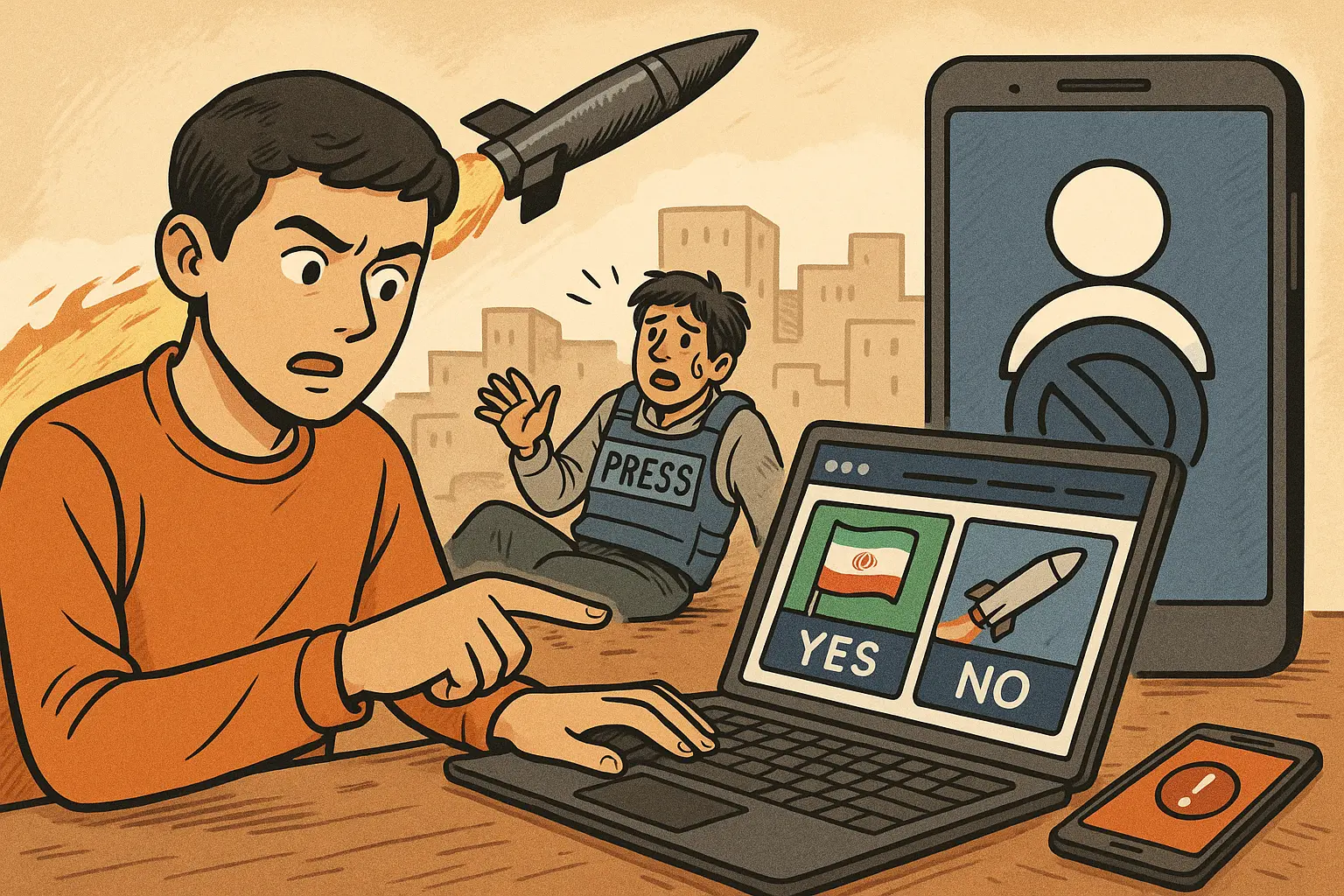
Decentralized prediction market platform Polymarket announced on Monday that it has blocked and reported multiple users to relevant authorities for issuing death threats to Israeli military reporter Emanuel Fabian, demanding he modify a news report from March 10 about Iran missile attacks outside the Israeli city of Beit Shemesh. The involved prediction market’s bets exceeded $17 million.
Event Overview: Missile Report Triggers Prediction Market Crisis
On March 10, Polymarket hosted an active market with over $17 million in bets, allowing users to wager on whether Iran would attack Israeli territory that day. The market rules clearly state that if missiles, drones, or airstrikes land within Israel, it is considered “Yes,” but “intercepted missiles or drones” do not count.
Fabian reported that a missile exploded in an open area outside Beit Shemesh, supported by video footage. However, after the report was published, he began receiving messages demanding he modify the report.
He wrote: “I received emails asking to confirm whether missiles hit Israel on March 10, to verify the prediction on Polymarket. My brief report about a missile hitting an open area has now become part of a betting war. Those betting that Iran would not attack Israel on March 10 are demanding I change the article so they can win big.”
The most serious threat came from someone claiming to be “Haim.” The individual sent multiple lengthy threats in Hebrew, telling Fabian to modify the report or face “unimaginable losses,” warning him he was in “danger,” and claiming they would invest “to eliminate you,” saying he “made a fatal mistake” and has become “an enemy willing to pay any price to make you suffer.” The person even provided specific personal information about Fabian’s parents, family, and community. Fabian has reported this to the police, who are currently investigating.
Bribery Attempts and Broader Journalistic Ethical Threats
Beyond death threats, the incident also revealed another way prediction markets threaten journalistic independence. Fabian said that before receiving threats, a colleague from another media outlet contacted him, saying an acquaintance had asked to change a report. After questioning, the colleague was told that the person had bet on the relevant market on Polymarket and promised to share part of the winnings if the report was altered.
Fabian stated: “These bettors are trying to pressure me to change the report to help them win their bets, but their attempts have failed and will never succeed. Still, I worry that if other journalists are promised a share of the winnings, their professional ethics might be compromised.”
Ultimately, the Israel Defense Forces (IDF) later confirmed that the missile explosion outside Beit Shemesh was not intercepted—meaning the market should have judged it as “Yes.” The actions of the bettors attempting to threaten and bribe the journalist not only failed but also resulted in legal consequences.
Polymarket’s Statement and Rising Regulatory Discussions
Polymarket issued a public statement on X platform condemning the harassment and threats against Fabian, stating “such behavior violates our terms of service and is strictly prohibited on our platform,” confirming that all involved accounts have been blocked and relevant information handed over to authorities.
However, this incident occurs amid increasing debates over prediction market regulation. Platforms like Polymarket and Kalshi have seen trading volumes surge over the past year, but critics and lawmakers warn that markets linked to war and political events could trigger insider trading, information manipulation, and pressure on journalists. Previously, Israeli authorities arrested two individuals for allegedly using insider information related to military actions to trade on Polymarket.
Frequently Asked Questions
How was the Iran missile market on Polymarket ultimately resolved?
As of the article’s publication, the outcome remains disputed. Bettors betting “No” claim the explosion was from intercepted missiles. However, Israel’s IDF officially confirmed that the missile explosion outside Beit Shemesh was not intercepted, which under the market rules means it should be judged as “Yes”—meaning those who bet that Iran would attack Israel on March 10 win.
Does the prediction market have mechanisms to prevent such incidents from happening again?
Currently, prediction markets mainly rely on platform terms of service enforcement and post-reporting mechanisms to handle abuse, lacking proactive real-time monitoring to identify threats and bribery. Fundamentally, when outcomes depend on media reports rather than official data, journalists can become targets of pressure from bettors. Some analysts suggest high-risk markets should use multiple independent sources to cross-verify information to reduce manipulation risks.
Will this case accelerate U.S. legislative efforts to regulate prediction markets?
Previously, U.S. lawmakers introduced bills restricting government insiders from trading on prediction markets. This incident highlights potential systemic threats to press freedom posed by prediction markets, likely fueling legislative debate. Notably, the CFTC (Commodity Futures Trading Commission) classifies prediction markets as “futures contracts,” and U.S. law explicitly restricts bets based on death or violence. This case may hasten clarifications in related laws.
Disclaimer: The information on this page may come from third parties and does not represent the views or opinions of Gate. The content displayed on this page is for reference only and does not constitute any financial, investment, or legal advice. Gate does not guarantee the accuracy or completeness of the information and shall not be liable for any losses arising from the use of this information. Virtual asset investments carry high risks and are subject to significant price volatility. You may lose all of your invested principal. Please fully understand the relevant risks and make prudent decisions based on your own financial situation and risk tolerance. For details, please refer to
Disclaimer.


