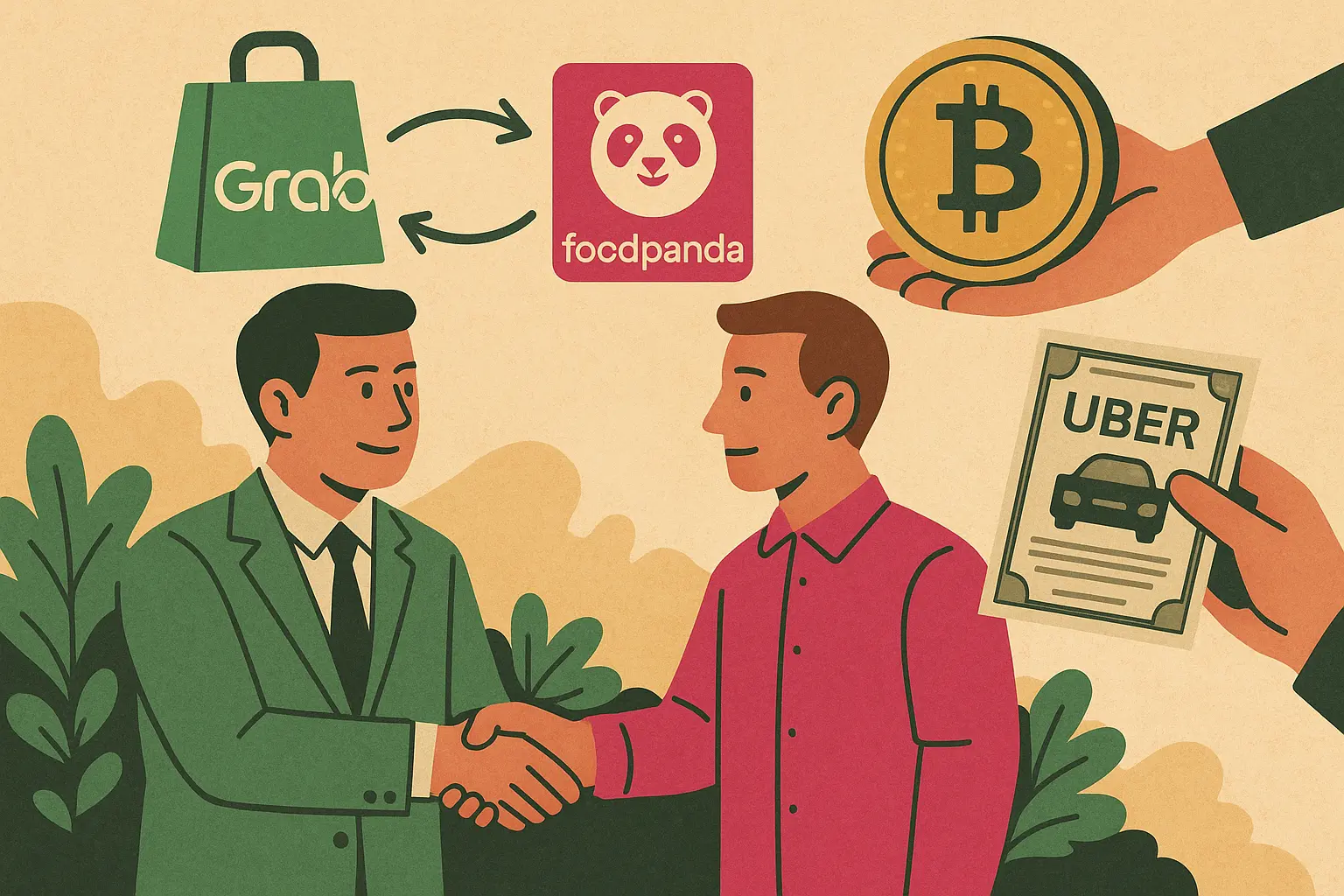
Southeast Asia super app Grab announced on March 23rd that it will acquire Foodpanda’s delivery business in Taiwan for approximately $600 million, with the transaction expected to be completed in the second half of 2026. This marks its first entry into the Taiwanese market, crossing into Taiwan from Southeast Asia for the first time, becoming its ninth global business hub. Grab’s long-term goal is to build a “stablecoin settlement layer” in Asia, and its shareholder structure includes Uber, sparking much discussion.
Grab’s Acquisition Strategy: Why Choose Taiwan
Grab CEO Anthony Tan stated that Grab’s diversified business model in Southeast Asia aligns closely with the Taiwanese market. Acquiring Foodpanda is the most effective way to accelerate entry into Taiwan. Financially, Grab reaffirmed its 2026 adjusted EBITDA forecast of $700 million to $720 million and expects this transaction to contribute at least $60 million annually starting in 2028. This acquisition is Grab’s first expansion outside Southeast Asia and is a milestone in its corporate growth story.
Grab’s Cryptocurrency Payment Layout: Deeply Involved in Web3 Before the Acquisition
Grab’s involvement in cryptocurrency predates this acquisition announcement, with accelerated progress over the past two years.
Key Milestones in Grab’s Cryptocurrency Payment Strategy
2023: Added Web3 wallet feature in the app, allowing Singapore users to store and manage digital assets.
March 2024: Launched cryptocurrency top-up feature in Singapore, enabling users to add crypto to GrabPay e-wallet.
August 2025: Grab Philippines opened up Bitcoin, Ethereum, and two other cryptocurrencies for GrabPay top-up.
September 2025: OKX enabled users to pay merchants in Singapore directly with stablecoins.
November 2025: Grab signed a memorandum of understanding with StraitsX, a licensed stablecoin issuer in Singapore.
Grab’s long-term goal is to create a “stablecoin settlement layer” in Asia, allowing merchants to accept stablecoins like XSGD and XUSD, and to achieve low-cost, real-time cross-border settlements through smart contracts.
Uber Shareholding, Chinese Capital Concerns, and Monopoly Legal Boundaries
The shareholder structure of Grab is central to the controversy over this acquisition. By the end of 2025, Uber will hold about 13.5% of Grab, making it the largest institutional shareholder; another major shareholder is China’s Didi Chuxing.
Uber previously made a direct bid to acquire Foodpanda Taiwan in 2024 but was rejected by the Fair Trade Commission due to market share concerns. Food delivery union spokesperson Su Bohao pointed out that the cross-shareholding structure between Grab and Uber raises fears that Uber is expanding into Taiwan via a roundabout route. Under the Fair Trade Act, if a merger results in a single company’s market share exceeding 50%, or the top two companies together reach two-thirds, it triggers monopoly red lines. Currently, Grab’s market share in Taiwan has not yet reached the reporting threshold, making it legally difficult for the Fair Trade Commission to block the deal directly.
Regarding the Chinese capital share, the Ministry of Economic Affairs’ Investment Commission stated that the exact proportion will be thoroughly reviewed after the application is submitted, and no formal application has been received yet.
The union also called on Grab to commit to retaining all current Foodpanda delivery workers and platform staff, and to implement the upcoming delivery law.
Frequently Asked Questions
What kind of company is Grab?
Headquartered in Singapore, Grab is one of Southeast Asia’s largest super apps, with services spanning ride-hailing, food delivery, and online payments, covering over 500 cities. In recent years, Grab has actively expanded into crypto payments, launching Web3 wallets and crypto top-up features in Singapore and the Philippines, and plans to establish stablecoin cross-border settlement infrastructure in Asia.
Does Uber’s shareholding in Grab constitute a monopoly issue in Taiwan?
Uber owns about 13.5% of Grab. Uber’s previous attempt to acquire Foodpanda Taiwan was rejected by the Fair Trade Commission. Now, Grab’s acquisition has raised concerns about “indirect monopoly.” Currently, Grab’s market share in Taiwan has not reached the reporting threshold, but the union has called for the Fair Trade Commission to conduct a comprehensive review of the impact of cross-shareholding structures on competition in Taiwan’s delivery market.
Will Foodpanda delivery workers be protected after the acquisition?
Taiwan’s delivery union has called on Grab to commit to retaining all current Foodpanda delivery workers and platform staff, and to implement the upcoming delivery law. Grab has not yet publicly made specific commitments regarding employee retention, and this issue will continue to be monitored by the union.
Disclaimer: The information on this page may come from third parties and does not represent the views or opinions of Gate. The content displayed on this page is for reference only and does not constitute any financial, investment, or legal advice. Gate does not guarantee the accuracy or completeness of the information and shall not be liable for any losses arising from the use of this information. Virtual asset investments carry high risks and are subject to significant price volatility. You may lose all of your invested principal. Please fully understand the relevant risks and make prudent decisions based on your own financial situation and risk tolerance. For details, please refer to
Disclaimer.


