
Web3 Wallet and DeFi Gateway Coixa Wallet has officially submitted a KYB (Know Your Business) certification application to Pi Network, which is currently under review by the Pi core team. Once approved, Coixa will be able to offer token listing, trading, and compliant DeFi services within the Pi ecosystem. Platforms holding Pi Network KYB certification remain few.
Structural Significance of KYB Certification in the Pi Network Ecosystem
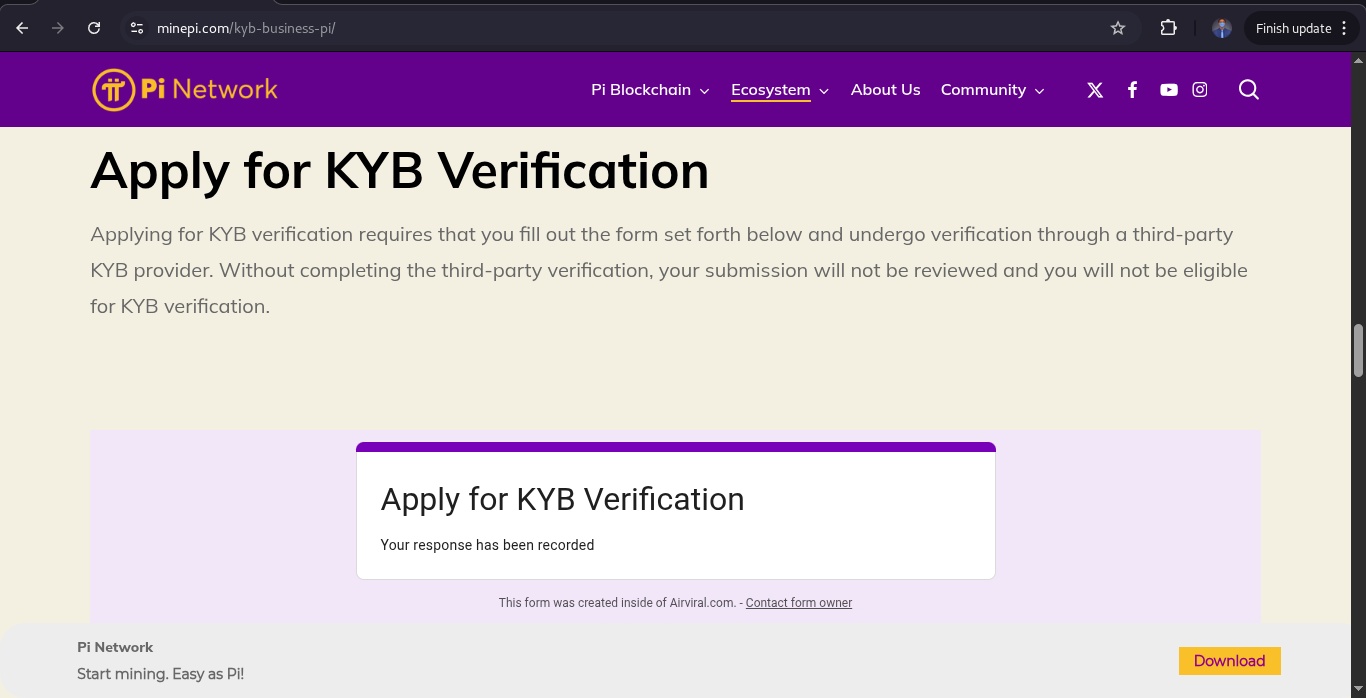 (Source: Pi Network)
KYB certification is the core mechanism for Pi Network to select compliant platforms. Certified platforms can operate officially recognized businesses on the Pi network, providing users with more trustworthy services and establishing a necessary trust framework for the entire ecosystem.
Main Features of the KYB Certification Framework in the Pi Ecosystem
Scarcity of Certification: Currently, only a few platforms have obtained Pi’s KYB certification (such as LBank, BANXA), with clear approval criteria.
Service Compliance: Platforms with KYB can offer token listing, trading, and financial services, under formal regulation by the Pi core team.
Ecosystem Expansion Significance: If Coixa is approved, it will further expand the range of compliant DeFi services available to Pi users.
Application Status: Coixa’s application is still under review, with no definite approval timeline.
Coixa is scheduled to launch by the end of 2025, offering comprehensive DeFi features including trading, staking, and dApp interactions. It has established a user base, and its application is seen as an important signal of Pi’s ecosystem moving toward formal compliance.
Pi Network’s “Product-First” Transformation and Coixa’s Strategic Positioning
Coixa’s KYB application timing aligns closely with Pi Network’s recent strategic shift. The Pi core team has set “product-first” as a principle for ecosystem development: the Pi Testnet Launchpad now requires all projects to launch functional applications before issuing tokens, ensuring long-term sustainability of the ecosystem.
For Coixa, this requirement fits well with its current capabilities—already having a functioning wallet and DeFi features, without needing to rebuild infrastructure to meet compliance standards. With over 16.2 million users migrated to the mainnet and a circulating supply reaching 9 billion PI, the demand for compliant DeFi platforms is rapidly increasing.
Official Clarification on Rumors of Billions of Pi Tokens Transferred
At the same time, another incident caused confusion within the Pi community: some users discovered billions of Pi tokens being transferred between wallets, sparking widespread speculation about network anomalies.
Pi developers clarified explicitly: these wallet activities were internal stress tests and had nothing to do with mainnet balances or actual token distribution. No tokens intended for public circulation were moved, and these activities were withdrawn after testing. This clarification effectively alleviated unnecessary market panic.
Frequently Asked Questions
What is Coixa, and why is it applying for KYB certification with Pi Network?
Coixa Wallet is a Web3 wallet and DeFi gateway launching by the end of 2025, supporting trading, staking, and dApp interactions. Applying for KYB (Know Your Business) certification is a necessary step to officially provide compliant services within the Pi ecosystem. Once approved, it can legally conduct financial activities such as token listing and trading.
What is the significance of Pi Network’s KYB certification?
Pi Network’s KYB certification is currently granted to only a few platforms, indicating they are authorized to operate within the Pi ecosystem with official recognition. This mechanism is a core tool for the Pi core team to maintain trust and compliance within the ecosystem and is an important indicator of platform reliability.
Is the news about billions of Pi tokens being transferred true?
No. Pi developers confirmed that the wallet activities were internal stress tests, not linked to mainnet balances or any public token distribution. No substantial token movements occurred, and these activities were withdrawn after testing.
Disclaimer: The information on this page may come from third parties and does not represent the views or opinions of Gate. The content displayed on this page is for reference only and does not constitute any financial, investment, or legal advice. Gate does not guarantee the accuracy or completeness of the information and shall not be liable for any losses arising from the use of this information. Virtual asset investments carry high risks and are subject to significant price volatility. You may lose all of your invested principal. Please fully understand the relevant risks and make prudent decisions based on your own financial situation and risk tolerance. For details, please refer to
Disclaimer.


