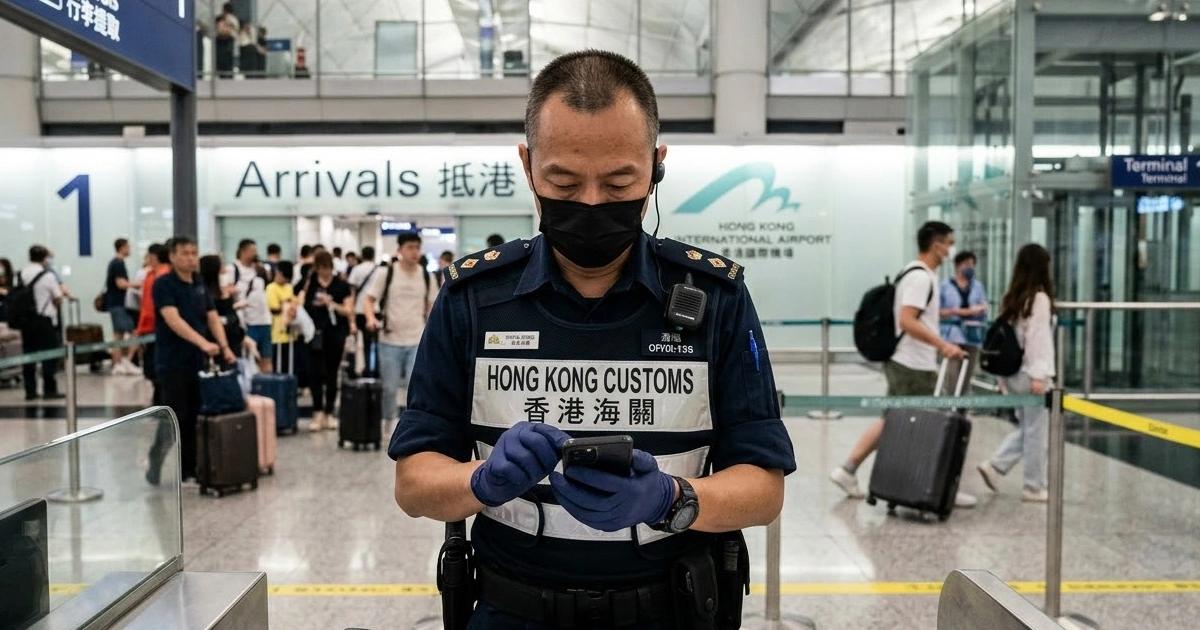
Hong Kong Amends National Security Law, Authorizing Police to Forcefully Obtain Phone Passwords; Refusal Could Lead to Up to 1 Year in Jail and a HKD 100,000 Fine. The Mainland Affairs Council Warns of Increased Risks When Visiting Hong Kong, Urges Citizens to Exercise Caution and Avoid Legal Violations.
Important Notice for Entry into Hong Kong: New Regulations Under the National Security Law Allow Electronic Device Searches
On March 23, the Hong Kong government announced amendments to the Implementation Details of Section 43 of the Hong Kong National Security Law, adding supplementary provisions regarding electronic devices, which took effect immediately. The new regulations authorize police to request individuals suspected of endangering national security to provide passwords for their phones or computers, and refusal to comply cannot be justified by confidentiality obligations or other restrictions.
Failure to cooperate with police in decrypting devices may result in a fine of up to HKD 100,000 and imprisonment for 1 year; providing false information or statements can lead to a HKD 500,000 fine and 3 years in prison.
Mainland Affairs Council Warns of Rising Risks When Visiting Hong Kong
According to United News Network, in response to these new regulations, the Mainland Affairs Council issued a written statement saying, “The new rules essentially tighten restrictions, further limiting freedoms and human rights in Hong Kong, and increasing risks for tourism, business, and exchanges, which could harm Hong Kong’s international reputation.”
The council advises citizens to carefully consider before traveling to Hong Kong. If travel is necessary, review the relevant alerts and precautions on the council’s official website, and register on the Mainland-Hong Kong-Macau Travel Dynamic Registration System to ensure safety.
Mainland Affairs Council Publishes List of Behaviors Suspected of Endangering National Security
To prevent accidental legal violations, the Mainland Affairs Council has listed behaviors suspected of endangering national security in Hong Kong for Taiwanese travelers’ reference.
Actual cases that have led to criminal risk include, but are not limited to:
- Anonymous online posts mourning June 4th
- Shouting slogans calling for justice for June 4th in public
- Receiving funds to support overseas Hong Kong residents
- Replacing the Chinese national anthem with a specific song in athlete videos
- Wearing clothing with slogans like “Reclaim Hong Kong, Revolution of Our Times”
- Possessing or importing Yangcun picture books
- Carrying flowers, candles, or mobile flashlights to mourn June 4th in public
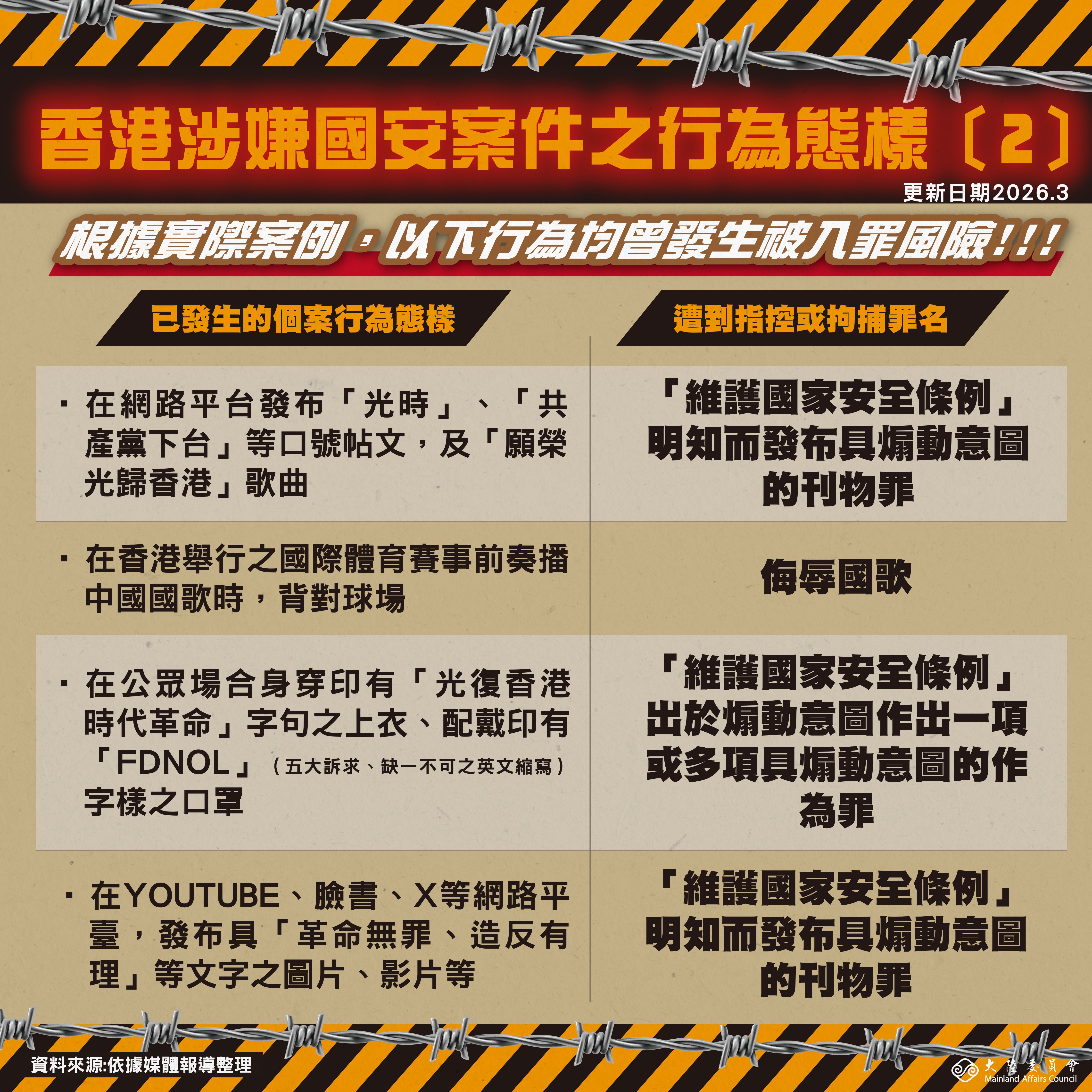
Image source: Mainland Affairs Council list of behaviors suspected of endangering national security in Hong Kong (partial image)
All these behaviors could lead to charges or detention. For the full list of behaviors suspected of endangering national security in Hong Kong, click here.
National Security Law Covers Broad Areas and Allows Seizure of Items
The Hong Kong version of the National Security Law was implemented after protests in 2020 and has now been in effect for six years. According to data from the Hong Kong Security Bureau, 386 people have been arrested under national security charges, with 176 convicted along with four companies.
Hong Kong media tycoon Jimmy Lai was sentenced to 20 years in prison in February this year for colluding with foreign forces and inciting materials, drawing international criticism.
Hong Kong authorities state that laws targeting terrorism and secession are necessary to maintain stability, while critics argue they are tools for suppressing dissent.
Scholars Concerned About Violations of Fundamental Freedoms
Although many jurisdictions worldwide grant law enforcement the authority to request electronic device searches during criminal investigations, the Hong Kong National Security Law’s broad and vague definitions—such as secession, subversion, and collusion with external forces—and the allowance for some trials to be held in closed sessions, have raised concerns among experts.
Urania Chiu, a legal scholar studying Hong Kong issues in the UK, told Reuters, “The new regulations under the National Security Law interfere with fundamental freedoms, including communication privacy rights and fair trial rights.”
Chiu added, “Granting such extensive powers to law enforcement without judicial oversight is clearly disproportionate compared to any legitimate purpose claimed by the law.”
Further Reading:
Hong Kong Tai Po Fire Disaster Causes 94 Deaths: Crypto Industry Donates HKD 32 Million, On-Chain Coordination Accelerates Aid Efficiency
Disclaimer: The information on this page may come from third parties and does not represent the views or opinions of Gate. The content displayed on this page is for reference only and does not constitute any financial, investment, or legal advice. Gate does not guarantee the accuracy or completeness of the information and shall not be liable for any losses arising from the use of this information. Virtual asset investments carry high risks and are subject to significant price volatility. You may lose all of your invested principal. Please fully understand the relevant risks and make prudent decisions based on your own financial situation and risk tolerance. For details, please refer to
Disclaimer.


