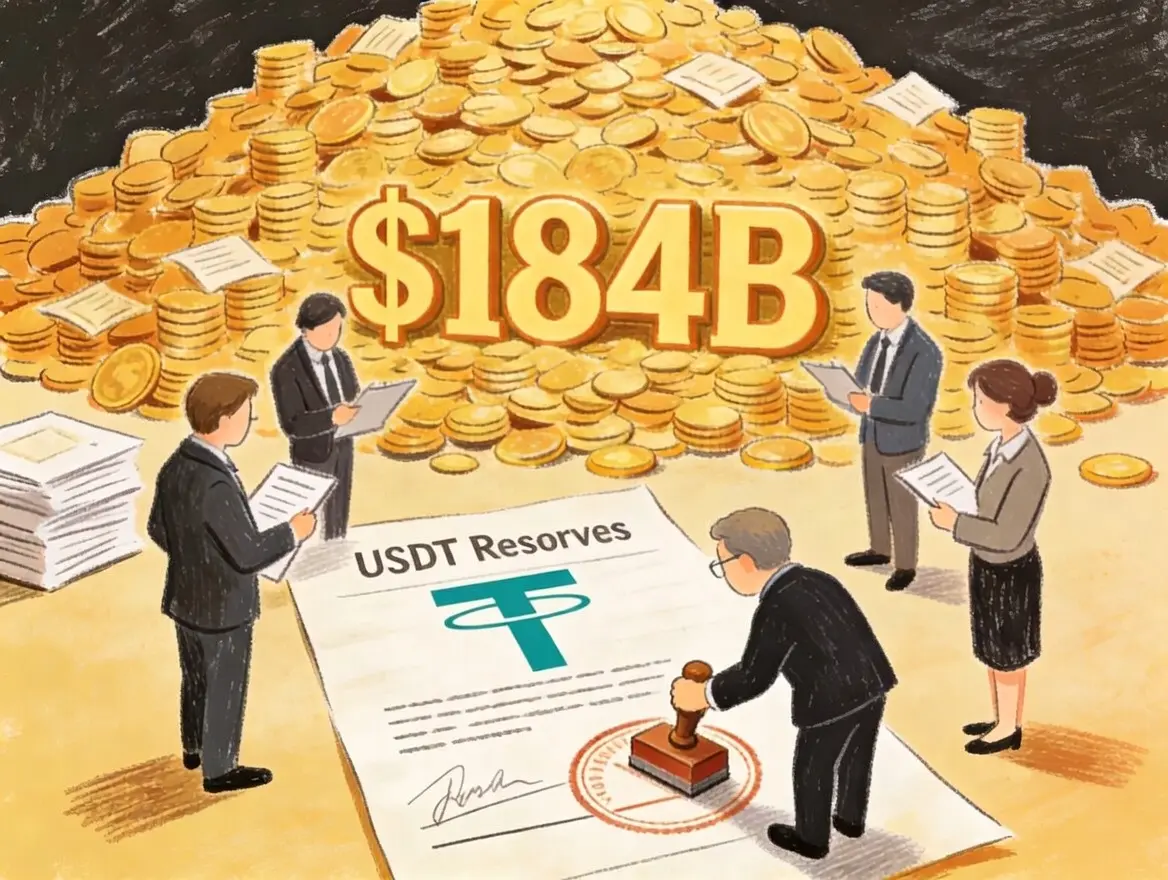
 Tether has engaged KPMG, one of the Big Four accounting firms, to conduct its first full independent financial statement audit of USDT reserves, according to a March 27, 2026, report from the Financial Times, while also hiring PwC to strengthen internal systems ahead of the review.
The world’s largest stablecoin issuer, with USDT’s market capitalization exceeding $184 billion, has previously relied on quarterly attestations from BDO Italia that confirmed reserves at specific points in time but did not examine internal controls, ongoing operations, or risk exposure over time. The audit marks a significant step toward meeting the highest standards of global finance as Tether pursues U.S. expansion under the GENIUS Act and considers potential capital raising.
Audit Engagement and Preparation
KPMG’s Role
KPMG has been engaged to conduct Tether’s first full financial statement audit, bringing Big Four scrutiny to the stablecoin issuer after years of relying on point-in-time attestations. The company did not name the firm in its March 24 announcement, stating only that it had “entered a formal engagement with a Big Four accounting firm.” The audit will examine assets, liabilities, internal controls, and risk exposure over time, moving beyond the limited scope of previous attestations.
PwC’s Role
Tether has also hired a second Big Four firm, PwC, to help prepare its internal systems for the audit. The preparation work reflects the complexity of auditing a company with Tether’s scale and the unique mix of digital assets, traditional reserves, and tokenized liabilities on its balance sheet.
Regulatory and Fundraising Context
Regulatory History
Tether has faced scrutiny over its reserves for years. In 2021, the Commodity Futures Trading Commission (CFTC) fined Tether $41 million for misleading statements about its dollar backing. An earlier audit attempt in 2018 collapsed after the auditor severed ties. The current audit effort addresses long-standing criticism that the company relied on attestations rather than full financial audits.
U.S. Expansion
The audit supports Tether’s broader ambitions in the United States. The company is pursuing expansion under the GENIUS Act, signed by President Donald Trump in July 2025, and has launched a U.S.-based stablecoin called USAT.
Fundraising Considerations
The Financial Times reported that Tether’s advisers had previously floated raising $15 billion to $20 billion at a $500 billion valuation, though potential investors flagged the high valuation and regulatory risks. The revised figure of $5 billion being discussed represents a 75% reduction from the high end of the original target.
CEO Statement and Industry Implications
CEO’s Statement
Tether CEO Paolo Ardoino stated on March 24: “Trust is built when institutions are willing to open themselves fully to scrutiny. This audit represents years of work to strengthen our systems so that Tether can meet the highest standards applied in global finance.”
KPMG’s Financial Services Practice
KPMG holds a significant market share in auditing financial services companies. Tether also hired a digital assets specialist from KPMG’s Canadian business as head of internal audit last year, signaling a longer-term effort to strengthen internal controls.
Frequently Asked Questions
Why is Tether conducting a full audit now?
Tether has faced years of criticism over its reliance on attestations rather than full financial audits. The move comes as the company pursues U.S. expansion under the GENIUS Act, seeks to strengthen its regulatory standing, and considers potential capital raising. The audit represents an effort to meet the highest standards applied in global finance.
How does a full audit differ from Tether’s previous attestations?
Tether previously published quarterly attestations from BDO Italia confirming that USDT was backed by the assets the company claimed on specific dates. A full financial statement audit goes further, examining internal controls, ongoing operations, risk exposure, and financial reporting systems over time—the standard used by major financial institutions.
What does this mean for USDT users?
If completed successfully, the audit could reshape how regulators and institutions evaluate stablecoin transparency and reinforce confidence in USDT as a fully backed, liquid digital dollar. The results are not expected immediately, and the audit’s completion will be closely watched by market participants.
Disclaimer: The information on this page may come from third parties and does not represent the views or opinions of Gate. The content displayed on this page is for reference only and does not constitute any financial, investment, or legal advice. Gate does not guarantee the accuracy or completeness of the information and shall not be liable for any losses arising from the use of this information. Virtual asset investments carry high risks and are subject to significant price volatility. You may lose all of your invested principal. Please fully understand the relevant risks and make prudent decisions based on your own financial situation and risk tolerance. For details, please refer to
Disclaimer.


