Author: Koroush AK, Cryptocurrency Trader
Translated by: Felix, PANews
How can beginners advance to top-tier traders? Cryptocurrency trader Koroush AK recently published a post summarizing a practical advanced system that covers aspects such as characteristics, strategies, and mindset. Below are the details.
This is what I wished I had when I started trading 9 years ago… and it completely contradicts what most influencers teach you. I will provide you with a step-by-step roadmap that clearly outlines each stage of a trader. You will clearly see your current position, the reasons you are stuck at a bottleneck, and the problems you need to address first.
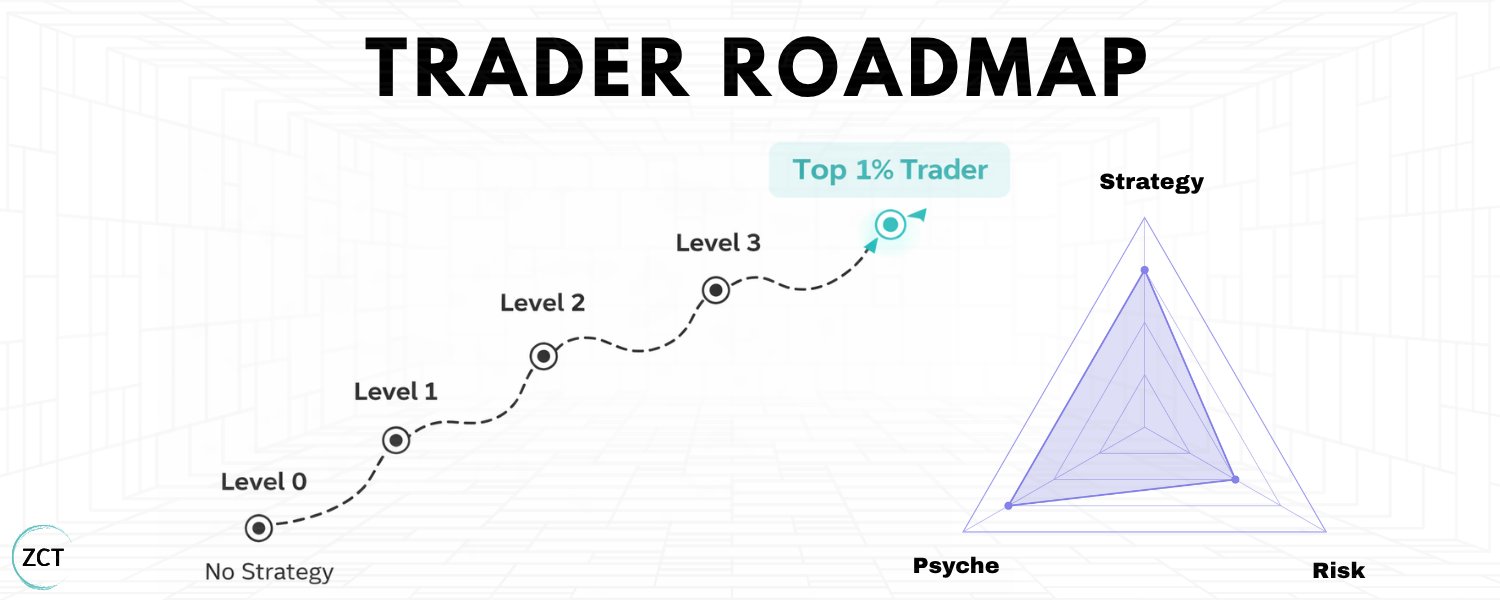
Three Perspectives
If you are not making a profit, you might be experiencing the following situations:
- A strategy that is not profitable
- A strategy you cannot consistently execute under pressure
- A strategy that cannot sustain profits
This is the core of my model.
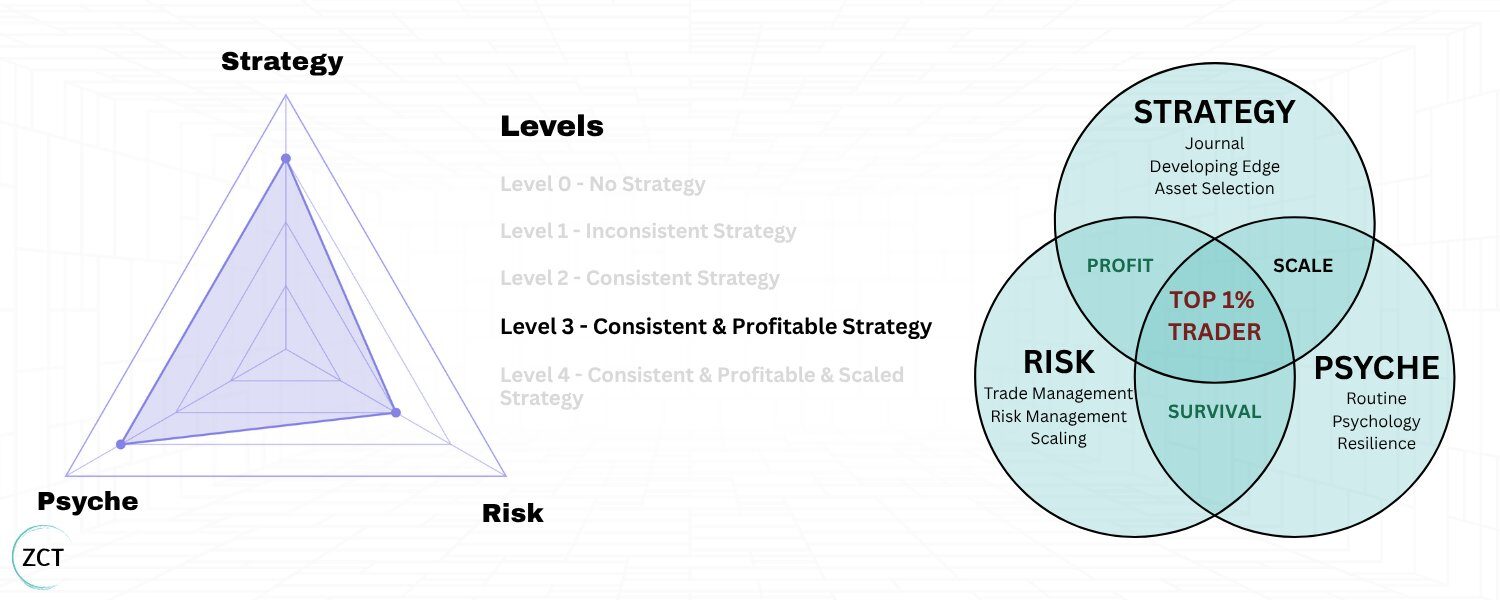
- Strategy: Your trading journal, advantage development, and asset selection
- Risk: Your position management, trade management, and scaling
- Mindset: Your psychology, daily habits, and discipline
When these three perspectives overlap in pairs, specific capabilities emerge:
- Strategy + Risk = Profitability
- Strategy + Mindset = Scaling
- Risk + Mindset = Survival
- All three combined = The top 1% of elite traders
At each level of the roadmap, one of these three perspectives will become a bottleneck. All issues will ultimately boil down to the same question: is it strategy, risk, or mindset?
Level 0: No Strategy
This is the starting stage for every trader, and it is also the stage where many people stay longer than they realize.
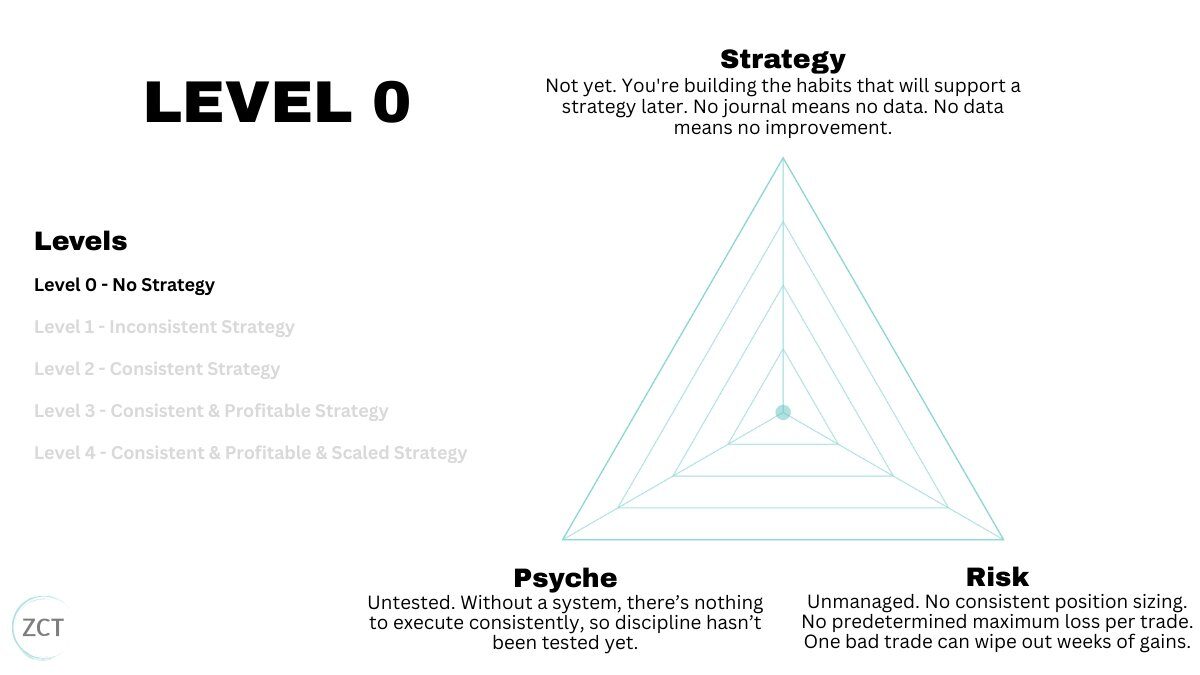
If you fit the following criteria, you are at Level 0:
- No strategy, only some small tricks and “intuition.”
- No clear written rules for entry, exit, or stop loss
- No trading journal, no screenshots, no data
- Wild fluctuations in position (1% today, 10% tomorrow)
- Profits feel like good luck, losses feel like bad luck
What needs to be done to move from Level 0 to Level 1:
The goal of Level 0 is not to find a strategy. Rather, it is to cultivate three habits: a regular trading process, a trading journal, and relentless resilience.
Strategy:
Start recording immediately after each trade, including entry, exit, trading screenshots, and emotional state.
Note: The trading journal is the most important tool for you as a trader at any stage. Without a trading journal, there is no data… and without data, you can never improve.
Mindset:
Set aside two hours each day for five days a week, and trade/learn to trade no matter what.
Ensure ample sleep, a healthy diet, and regular exercise.
Trading is one of the hardest games in the world. It will test your psychological fortitude before rewarding you financially. If you cannot sleep on time or eat three meals a day, your chances of success are zero.
Risk:
- Maximum portfolio size: $100.
Common mistake: believing you need to learn everything before starting. You do not need technical analysis, risk management, or trading strategies right now; what you need is a trading journal, a daily habit, and the willingness to persevere.
The first 30 trades are not about making money. They are about building a foundation for everything that follows.
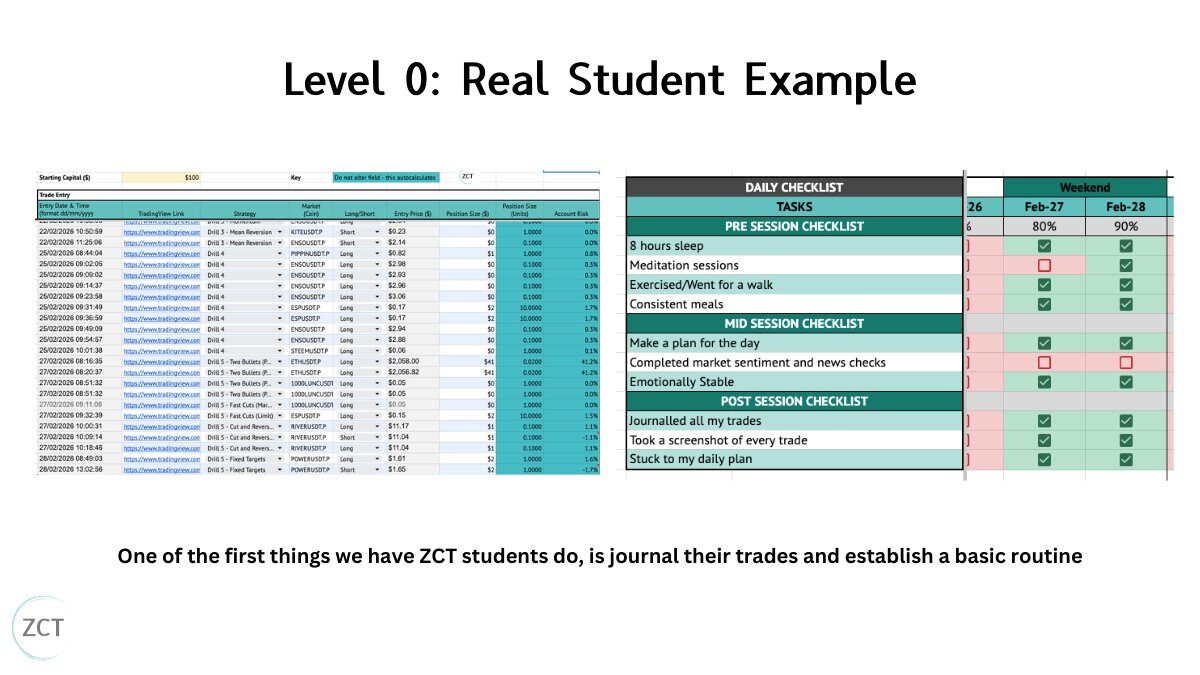
Level 0 Summary:
- Level 0 is not a strategy issue but a structural issue.
- If you do not have a fixed process, a trading journal, and trading stability, even if you are making money, you are gambling.
- The current goal is not to find an edge but to develop habits that allow you to continuously improve.
- The focus is on: trading consistently every day, recording every trade, and maintaining trading stability.
- Once you have recorded more than 30 trades, you can move to Level 1.
Level 1: Unstable Strategy
Now that you have laid the foundation, it is time to cultivate the skills that make up a trading strategy.
-
Technical analysis provides you with a framework to interpret prices.
-
Risk management provides you with a framework to protect your funds.
-
Learning trading tools provides you with the foundational structure for trading.
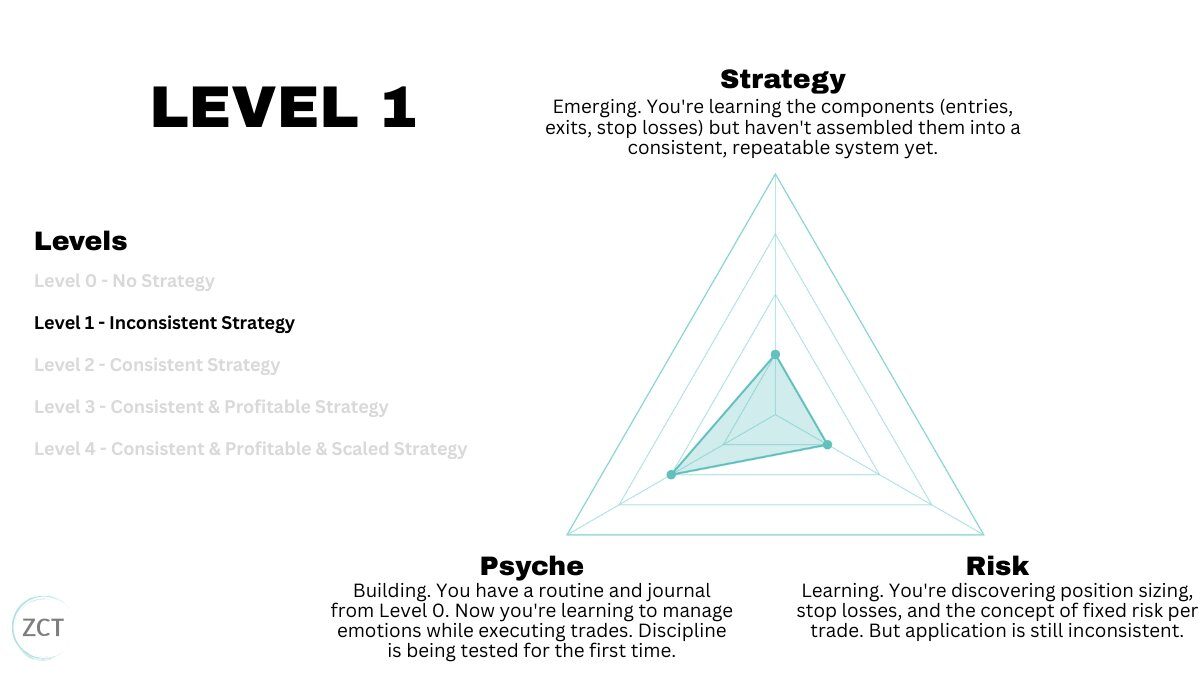
Typical characteristics of Level 1 stage:
-
Learning to read charts: support/resistance, candlestick patterns, market structure
-
Setting up your exchange account, understanding order types, ensuring fund safety
-
Starting to define entry triggers, stop loss levels, and profit-taking rules
-
The risk of each trade gradually stabilizes, but there is still volatility
-
The trading journal contains data, but execution still shows fluctuations
What needs to be done to move from Level 1 to Level 2:
Strategy:
- Learn price action, support/resistance levels, and volume. I have seen some traders earn over $10,000 a month just based on these.
- Learn to use your exchange (order types, leverage, trading settings)
- Develop a very basic breakout or reversal strategy. The strategy can be simple, such as “I will buy the breakout as long as a candlestick closes above the resistance level” (the current goal is consistency, not profitability).
Risk:
- Maximum portfolio size: $1,000.
There is no need for more capital until you can prove profitability. Set a fixed risk for each trade. 1% of the account is a good starting point. Calculate the position size before each trade: position size = maximum risk ÷ (entry price - stop loss price).
Mindset:
No new emphasis. Maintain the habits and trading journal developed from Level 0.
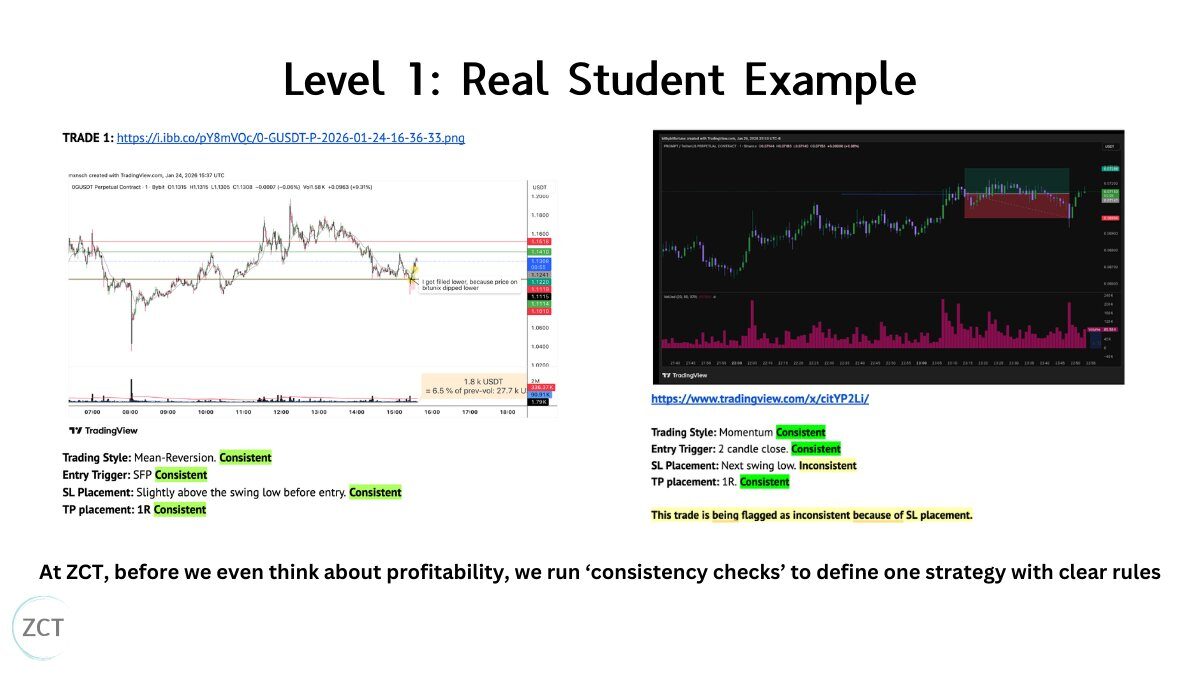
Level 1 Summary:
- Level 1 is the stage where you establish your first strategy, but at this point, the strategy is still not stable.
- Most traders get stuck here because they jump between different strategies rather than refining one.
- The goal is not to profit but to understand how the market moves and how your system operates.
- The focus: a single strategy, fixed risk, and stable execution.
- Once your rules are clear and repeatable, you can move to Level 2.
Level 2: Stable Strategy
You have established rules and strictly adhered to them. This is a stage that most traders can never reach. Now, you can start pursuing profitability.
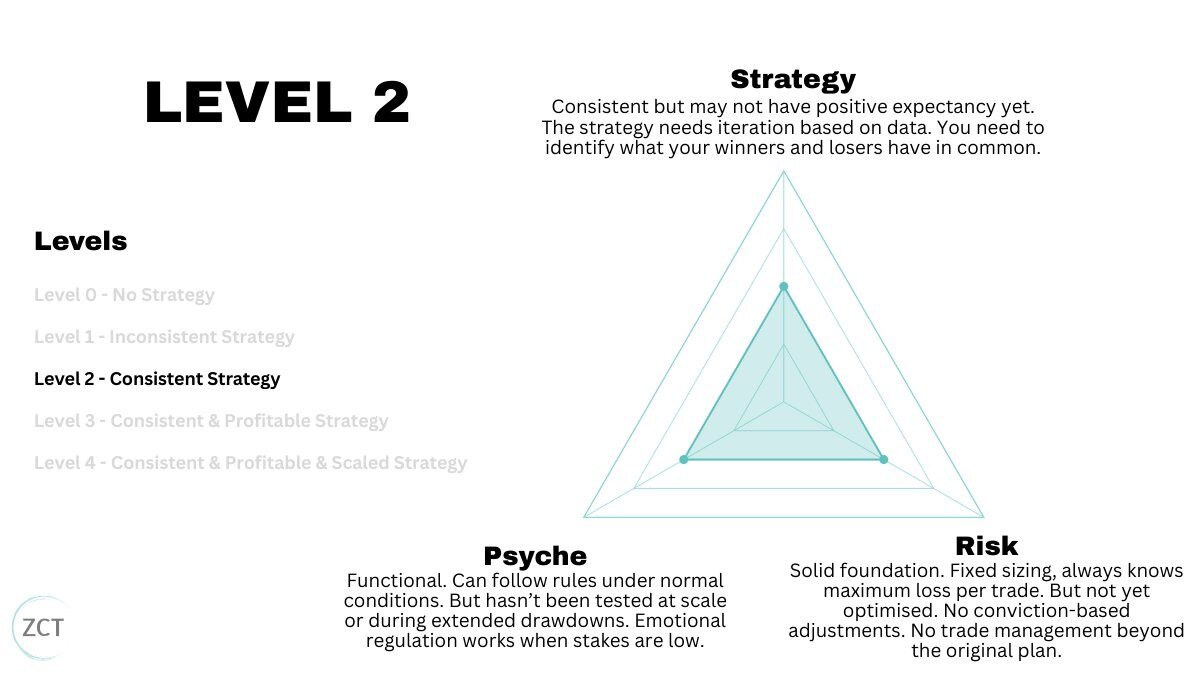
Typical features of Level 2:
- Over 90% of trades follow strategy rules
- Record every trade with screenshots and comments
- Have a workflow: checklist, scorecard, emotional self-assessment
- Data is clear and reliable
- Have not yet achieved consistent profitability: net worth curve may be flat or slightly negative
You need to transition from following rules to separating variables and improving rules. The improvement process is as follows:
- Losses: Improve ↓
- Reduced losses: Improve ↓
- Break-even: Improve ↓
- Slightly profitable: Improve ↓
- Increasing profits
What needs to be done to move from Level 2 to Level 3:
Strategy:
- Improve asset selection ability. This is the most leveraged improvement you can make. If your asset selection ability improves by 10%, you can simultaneously optimize your entry points, stop loss points, and target prices. Improving entry point ability by 10% only optimizes entry points.
- Cultivate the ability to recognize market conditions. Understand which market conditions are favorable for your strategy (hint: moving averages are very useful in this regard).
- Understand expected value: (win rate × average profit) - (loss rate × average loss)
- Learn to analyze trading journal data. Filter trades into profitable and unprofitable. Open all profitable screenshots in one tab and all losing screenshots in another tab, looking for patterns (hint: change only one variable at a time). Test over 30 trades and measure the impact, then repeat this process.
Risk:
No new emphasis. Just remember to keep the maximum portfolio size at $1,000.
Mindset:
Continue maintaining daily habits.
Common mistake: changing too many variables at once. Or pursuing a perfect entry point while the impact of asset selection is greater. Prioritize changes that yield the highest returns.
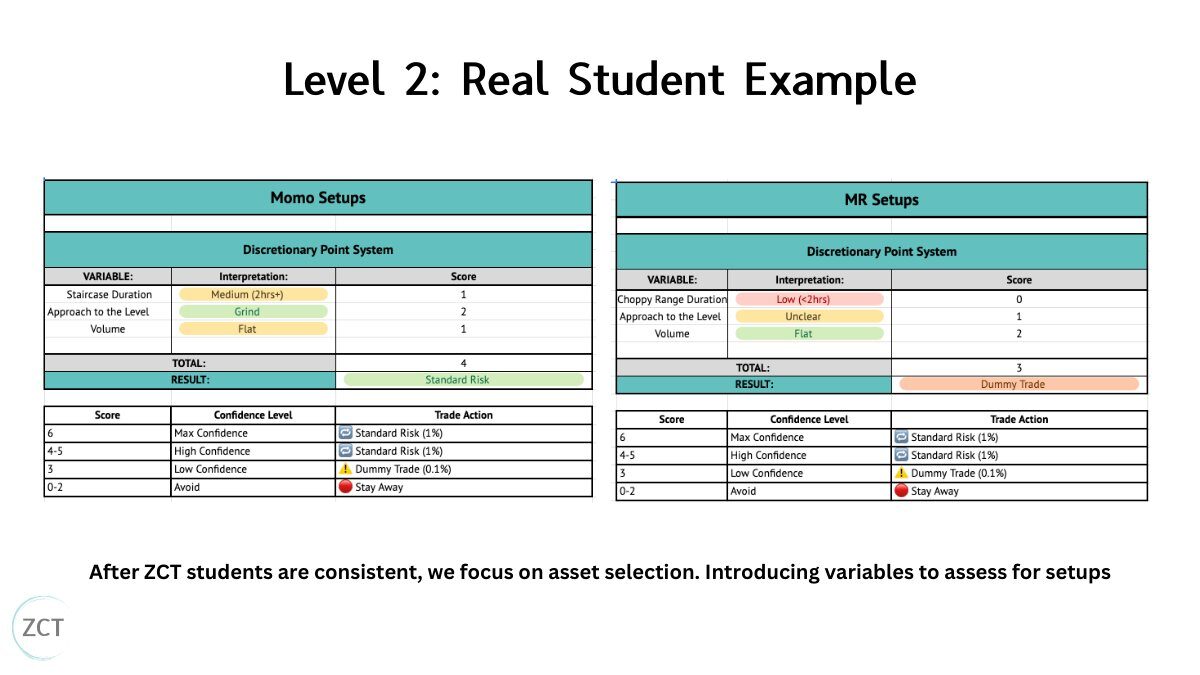
Level 2 Summary:
- The key to Level 2 is: continuous improvement leads to clear data; and clear data leads to progress.
- Most traders stagnate because they change too many variables at once.
- The goal is to iterate your strategy from break-even to profitability.
- The focus: analyze your trading journal, test one variable at a time, and improve asset selection.
- Once your expected returns are positive, you can move to Level 3.
Level 3: Stable Profitable Strategy
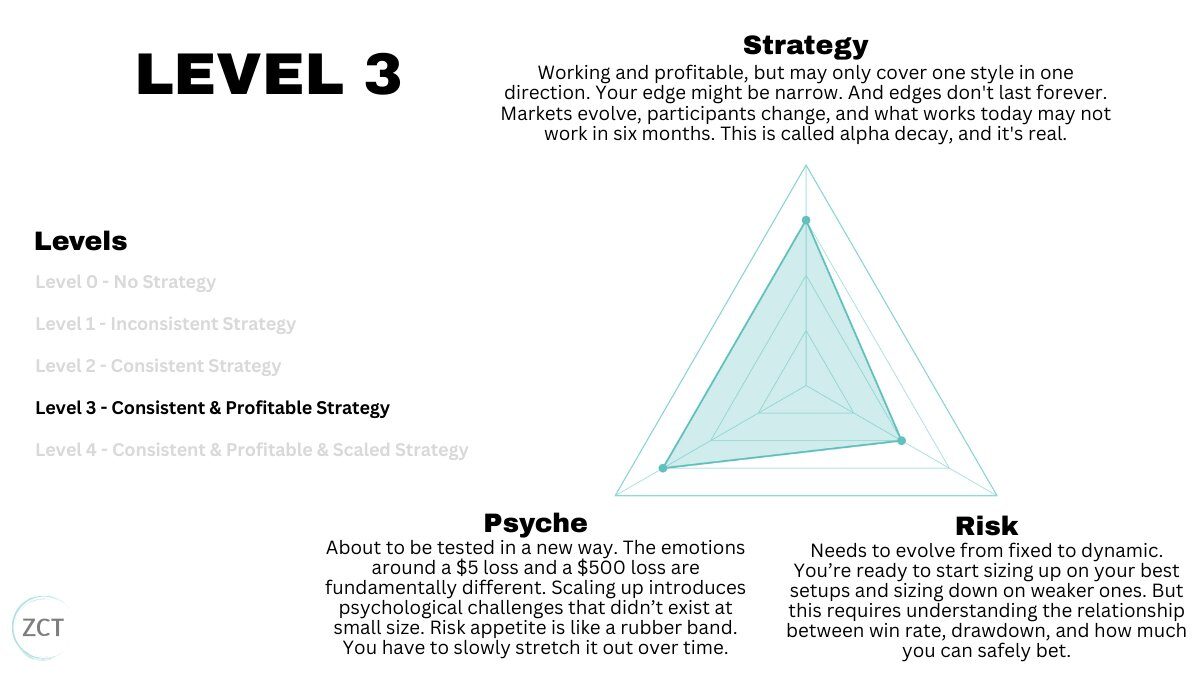
Congratulations, you are consistently profitable and in the top 5%. This is a real milestone. Everything you have built in terms of strategy is effective, but only for small-scale portfolios. The current question is: can you scale without ruining the strategy?
At Level 2, you learned how to trade. At Level 3, you learn how to deepen your edge and actively manage your trades.
Typical features of Level 3:
- Expected returns are positive for over 30 trades
- The capital curve is trending upward
- Able to distinguish between good trading opportunities and excellent trading opportunities
- Starting to introduce autonomous decision-making based on data
- Currently profitable, but scale has not reached a considerable level
Why are you stuck?
You need two things to move forward:
- Proactive trade management (protecting profits, smarter stop losses)
- Continuous enhancement of your edge (evolving your strategy as the market changes). An edge is not permanent; diminishing returns are real.
What needs to be done to move from Level 3 to Level 4:
Strategy:
Expand your strategy. If you have been trading breakouts, then learn to trade breakdowns. Then explore reversals. Each new trading style provides you with tools to respond to different situations and reduces your holding time.
Risk:
Introduce proactive trade management. Start by recording the candlestick that caused you to lose confidence and write down why. Cultivate identification skills before implementing actions.
Establish confidence-based position management. Not all trade setups are the same. Score each setup based on key variables. Your best setups can handle higher risks. Your worst setups can handle lower risks.
Mindset:
Prepare for the psychological shift during the scaling process. Losing $5 and losing $500 bring fundamentally different emotional experiences. Scaling introduces challenges that do not exist with small capital. Risk tolerance is like a rubber band; stretch it slowly. The psychological challenges of scaling are the hardest part of trading.
Level 3 Summary:
- Level 3 means you can be profitable, but the trading scale is small.
- Most traders stagnate because they do not enhance their edge or actively manage their trades.
- The goal is to strengthen your edge and prepare for scaling.
- The focus: actively manage trades, expand strategies, and establish belief-based trading scale.
- Once the system can withstand pressure, you can move to Level 4.
Level 4: Stable, Profitable, and Scalable
Now, whether trading full-time or part-time, you can achieve substantial income.
At Level 4, you are no longer building a trading machine but maintaining it, upgrading it, and ensuring it runs at full capacity.
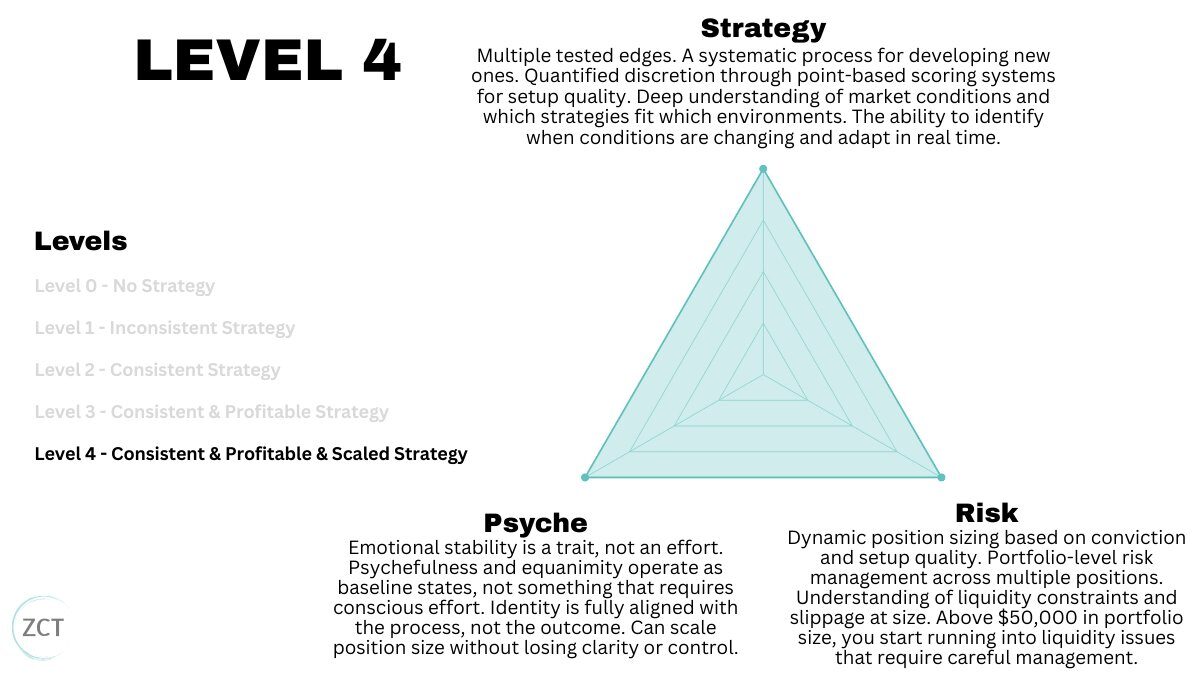
Typical features of Level 4:
- Consistently earning four-figure or even five-figure income monthly
- Scaling to achieve considerable portfolio size
- Applying multiple strategies in different market environments
- Execution is smooth and highly automated
- Maintaining emotional stability under large positions
- Continuously enhancing your edge, treating it as a habit rather than a project
The psychological development at each stage varies.
- In Level 0, cultivate habits.
- In Level 1, manage emotions for the first time in live trading.
- In Level 2, follow rules under moderate pressure.
- In Level 3, combine system and judgment while staying calm.
- In Level 4, execution becomes incredibly smooth.
Continuous Challenges:
The market is ever-changing. A strategy that works now may not always be effective. The true edge lies in your trading process itself.
Cultivating the skill of developing an edge is more valuable than any single advantage you currently possess.
Focus areas for Level 4 traders:
- Psychological mastery: daily meditation, lifestyle optimization, structured emotional self-assessment
- Systematic scaling: $1,000 → $2,000 → $5,000 → over $10,000, upgrade after completing at least 30 trades at each level
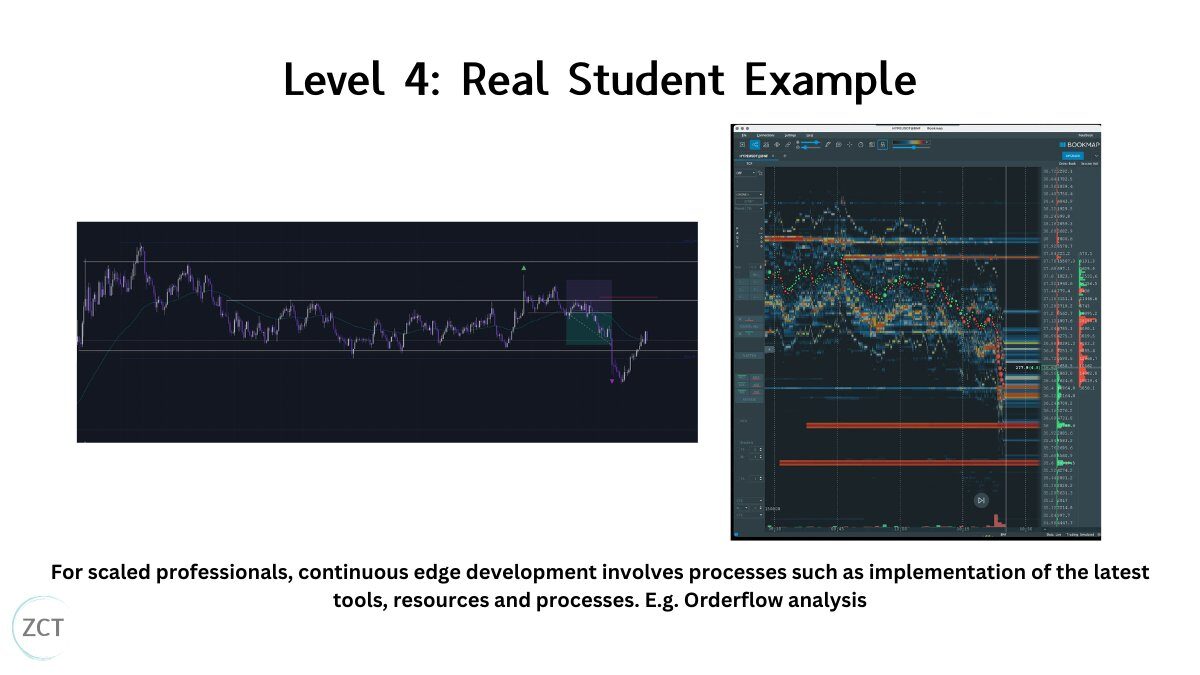
- Continuously enhance your edge through structured testing
- Seek new advantages
- Conduct portfolio-level risk management across multiple strategies
- Address liquidity constraints as scale grows
Level 4 Summary:
- At Level 4, trading becomes a scalable source of income, but challenges are endless.
- Most traders fail at this stage because they cannot adapt to market changes.
- The goal is to maintain and enhance your edge.
- The focus: continuous testing, disciplined scaling, and portfolio-level risk management.
- The true edge is your ability to continuously develop new advantages.
Disclaimer: The information on this page may come from third parties and does not represent the views or opinions of Gate. The content displayed on this page is for reference only and does not constitute any financial, investment, or legal advice. Gate does not guarantee the accuracy or completeness of the information and shall not be liable for any losses arising from the use of this information. Virtual asset investments carry high risks and are subject to significant price volatility. You may lose all of your invested principal. Please fully understand the relevant risks and make prudent decisions based on your own financial situation and risk tolerance. For details, please refer to
Disclaimer.


