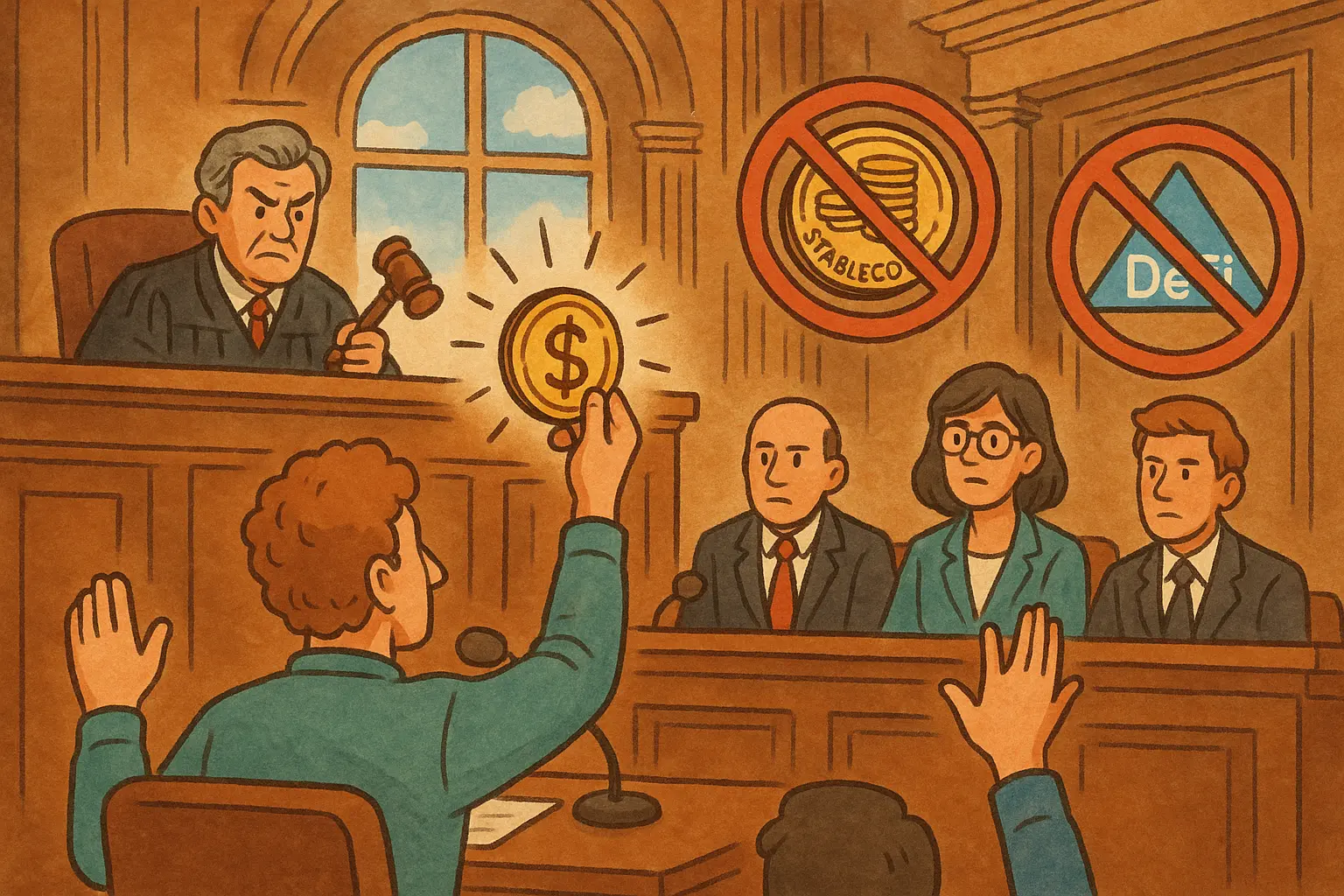
The U.S. Senate is preparing to hold a committee hearing on the Digital Asset Market Transparency Act (the CLARITY Act), and lawmakers plan to officially kick off the process in the latter half of April. Recently, Senator Cynthia Lummis said that the final legislative text could be released within days. In terms of the bill’s substance, the crypto industry is giving ground on the stablecoin yield function in exchange for clear legal protection at the policy level for decentralized finance (DeFi) developers.
The Biggest Concession: A Complete Ban on Stablecoin Passive Yield
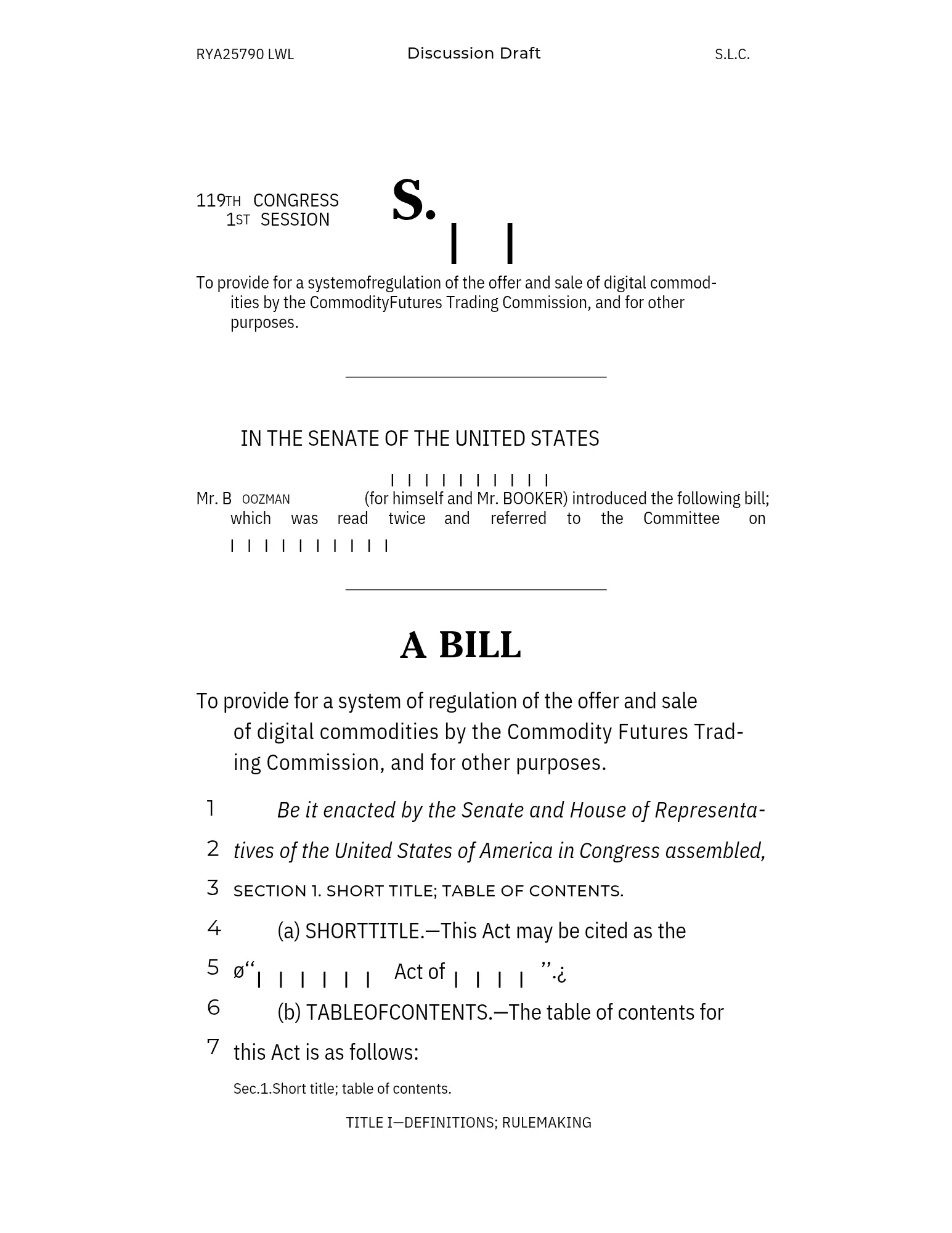 (Source: U.S. Congress)
Over the past month, lawmakers have focused on tackling the most controversial core issue in the negotiations—whether stablecoin yield should be defined and qualified. The final compromise adopted banks’ position: in practice, a comprehensive ban on stablecoin balances’ passive yield mechanisms, meaning that users holding stablecoins would no longer be able to automatically earn interest-like deposit payments.
As compensation, the bill is expected to allow limited-scope activity-based incentives directly tied to payment activity or actual platform usage. This means stablecoins can be rewarded based on user behavior, but they cannot be used as a passive income tool. Crypto companies previously actively defended the yield function, viewing it as a core incentive mechanism for improving user stickiness, but in exchange for bipartisan support to push the bill through, that stance has essentially been forced to be abandoned.
The Bill’s Core Framework: Stronger DeFi Protections, Clear Division of CFTC and SEC Jurisdiction
As the quid pro quo for yielding on stablecoin passive yield, the updated CLARITY Act has achieved the long-awaited breakthrough on DeFi protection provisions that the industry has been hoping for. At the level of the main structure, the bill’s key provisions are as follows:
DeFi Developer Exemption: Explicitly states that developers and non-custodial agreements are not to be considered financial intermediary institutions, eliminating regulatory risk that early drafts could have imposed bank-like compliance obligations on software developers
CFTC Jurisdiction: Formally establishes the Commodity Futures Trading Commission (CFTC) as the regulator of digital commodities, providing legal confirmation of the commodity nature of mainstream digital assets such as Bitcoin
SEC Jurisdiction: Maintains the Securities and Exchange Commission’s (SEC) authority over investment contract assets, ensuring that digital assets with investment characteristics remain protected under the existing securities law framework
In early drafts, whether “software developers should be treated as financial intermediary institutions” was the industry’s biggest compliance concern. The updated version resolves this threat directly through clear exclusion clauses, marking a key step in securing formal legal protection for the DeFi ecosystem within the U.S. regulatory framework.
Political Deadline Pressure: If Not Passed by May, or It Stalls Until After the Election
Politically, the bill faces a clear deadline pressure. Senator Bernie Moreno warned that if the CLARITY Act cannot pass by May, broader digital asset legislation may stall until after the midterm election in mid-2026, at which point it could be restarted.
This warning means that the committee hearing in April is not merely a procedural formality, but a crucial window that will determine whether the entire crypto regulatory framework can be implemented within this congressional term. Lawmakers are currently making difficult trade-offs between “pushing the pace” and “compromising across the board”—any withdrawal by one side could cause years of legislative efforts to come to nothing.
Frequently Asked Questions
Why is the CLARITY Act important for the crypto market?
The CLARITY Act is intended to formally establish the U.S. digital asset regulatory framework and clearly delineate the jurisdictional boundaries between the CFTC and the SEC. The current state of regulatory ambiguity has left crypto companies facing long-term compliance uncertainty. Once the bill is passed, it will provide clear guidance on the legal characterization of mainstream assets such as Bitcoin and Ethereum—making it legislation with systematic significance in U.S. crypto regulation history.
What impact will a ban on stablecoin passive yield have on the crypto market?
Crypto platforms that offer stablecoin yield services (including certain DeFi protocols) will need to redesign their yield models and shift toward conditional incentive mechanisms based on activity. In the short term, platforms that market stablecoin yield as their core selling point may face pressure from user outflows. In the long term, this change will help narrow the role of stablecoins from “like a deposit instrument” back to the fundamental nature of “a payment medium.”
What do the DeFi developer protection provisions mean in practical terms?
The bill explicitly excludes developers and non-custodial agreements from being classified as financial intermediary institutions. This means that developers who write smart contracts or build decentralized protocols do not need to apply for financial licenses or comply with anti-money laundering (AML) requirements the way banks do. This creates a more predictable compliance environment for DeFi innovation, and it is uncommon in U.S. crypto legislation to provide formal legal protection for decentralized developer ecosystems.
Disclaimer: The information on this page may come from third parties and does not represent the views or opinions of Gate. The content displayed on this page is for reference only and does not constitute any financial, investment, or legal advice. Gate does not guarantee the accuracy or completeness of the information and shall not be liable for any losses arising from the use of this information. Virtual asset investments carry high risks and are subject to significant price volatility. You may lose all of your invested principal. Please fully understand the relevant risks and make prudent decisions based on your own financial situation and risk tolerance. For details, please refer to
Disclaimer.


