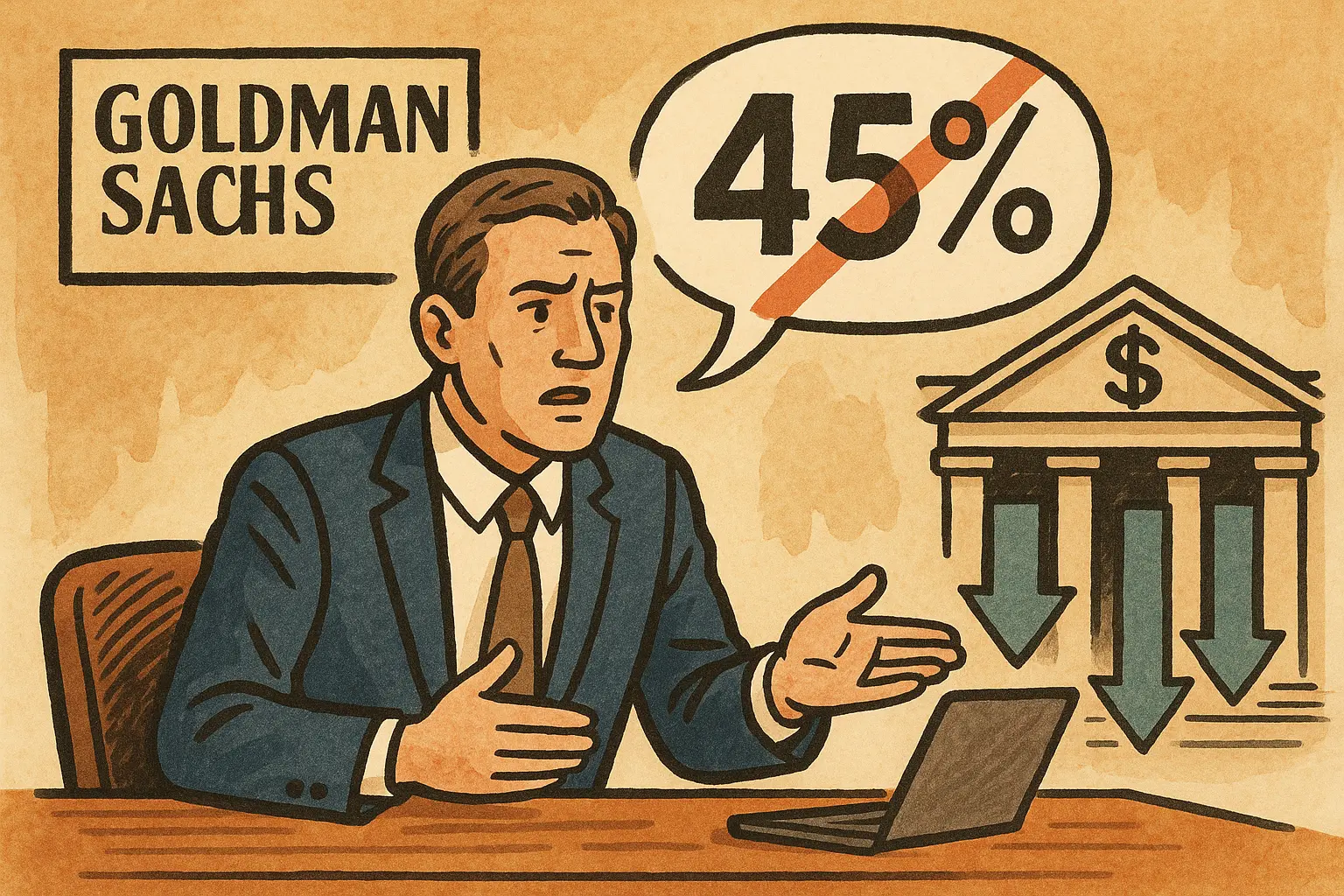
On April 2, Goldman Sachs analyst Manuel Abecassis said in a latest report that the market has currently priced in about a 45% probability of the Federal Reserve (Fed) raising rates in 2026, which clearly overestimates the likelihood that an oil price shock would translate into monetary tightening. Before the outbreak of the Iran conflict, this probability was only 12%, and it rose sharply in the short term. Goldman Sachs kept its benchmark forecast for two rate cuts within the year unchanged.
Goldman Sachs’ Four Main Arguments: Why an Oil Price Shock Won’t Trigger Fed Rate Hikes
Goldman Sachs believes the market’s concerns about rate hikes are based on an excessive extrapolation of the nature of the current energy shock. Its four rebuttal points are as follows:
Limited Size of the Oil Shock: This supply shock is “relatively smaller in scale and narrower in scope,” and it is not comparable to the 1970s oil crisis or the 2021 to 2022 supply-chain crisis. The dependence of the contemporary U.S. economy on oil is significantly lower than in the 1970s, and the transmission efficiency of a supply-chain disruption is also far lower than it was then
Labor Market Provides a Buffer: Before the war broke out, the U.S. labor market had already been showing signs of weakening, wage growth was below the level consistent with 2% inflation, and inflation expectations remained stable. Goldman Sachs believes these initial conditions make it unlikely that core inflation would spill over on a large scale
Policy Rates Already Above the Neutral Level: The federal funds rate is currently 50 to 75 basis points above the neutral rate that the Fed itself estimates. Policy is already effectively tightening in real terms, which reduces the need for additional rate hikes relatively
Historical Data Doesn’t Support a Link Between Oil Prices and Rate Hikes: Goldman Sachs’ historical data analysis shows there is no significant statistical correlation between volatility in oil prices and the Fed’s tightening policies. Using oil price increases as a basis for rate hikes has not been supported by sufficient evidence in history
Market Pricing Bias: Rapid Repricing from 12% to 45%
Since the outbreak of the Iran conflict, a surge in international oil prices has triggered widespread concerns in the market about inflation accelerating again. Traders quickly raised the probability of a 2026 rate hike from 12% before the conflict to about 45%. Behind this rapid repricing is the market’s excessive application of a linear historical narrative: “oil price shock → inflation runs out of control → rate hikes in response.”
Abecassis believes the “45% rate-hike probability clearly overestimates the risk that an increase in oil prices would lead the Fed to tighten monetary policy,” and he points out that under the current macro initial conditions, the effectiveness of historical analogies is constrained by multiple structural factors. In the report, he states explicitly: “Our probability-weighted Fed policy forecasts still clearly lean toward a more accommodative policy, far beyond what the market expects.”
The Core Logic Behind Goldman Sachs’ Benchmark Scenario
Goldman Sachs maintains its benchmark forecast of two rate cuts in 2026. Its core argument is that the current macro environment lacks the premise that has historically led the Fed to shift toward tightening in response to an energy shock. With inflation expectations anchored firmly, the labor market already having a buffer, policy rates themselves already being relatively tight, and the actual transmission efficiency of the current energy supply disruption being lower than what market fears suggest—these four factors together support Goldman Sachs’ judgment of a policy path leaning toward accommodation.
Common Questions
Why does Goldman Sachs think the market is pricing Fed rate hikes too high?
Goldman Sachs believes the 45% rate-hike probability mainly stems from the market’s excessive concern about “oil-price-driven inflation running out of control.” But given the limited scale of the current oil price shock, a weakening labor market, and stable inflation expectations, these initial conditions significantly lower the probability of second-round inflation passing through, which is inherently different from the environment that has truly driven the Fed to tighten in the past.
What does it mean when the Fed’s policy rate is above the neutral level?
When the federal funds rate is 50 to 75 basis points above the neutral level, it means monetary policy itself already has real tightening effects. Under this condition, even in the face of an external oil price shock, the marginal need for the Fed to raise rates further is relatively lower, and preserving room for rate cuts is actually more consistent with its policy flexibility needs.
Is there downside risk to Goldman Sachs’ rate-cut forecast?
Abecassis’ report uses a probability-weighted framework, and overall it still clearly leans toward accommodation. However, if the Iran conflict expands further, oil prices remain elevated, and that creates an off-anchoring effect on inflation expectations, Goldman Sachs’ benchmark forecast could be revised upward. But Goldman Sachs currently views this as a non-base scenario. The analysis above reflects assessments by institutions and does not constitute investment advice.
Disclaimer: The information on this page may come from third parties and does not represent the views or opinions of Gate. The content displayed on this page is for reference only and does not constitute any financial, investment, or legal advice. Gate does not guarantee the accuracy or completeness of the information and shall not be liable for any losses arising from the use of this information. Virtual asset investments carry high risks and are subject to significant price volatility. You may lose all of your invested principal. Please fully understand the relevant risks and make prudent decisions based on your own financial situation and risk tolerance. For details, please refer to
Disclaimer.


