From Claude to Doubao, from Grok to Qwen, every AI model name behind it hides a story.
(Previously: OpenRouter analyzed 100 trillion token research reports: what humans really use AI for, the rise of Chinese models, and the secret to user retention)
(Background: the full text of Huang Renxun’s GTC2026 keynote: AI demand reaches tens of billions of dollars, compute power leaps 350x, and OpenClaw lets every company become AaaS).
Have you ever wondered why Anthropic’s AI is called “Claude” instead of “Bob”? Why did Musk pick the English word “Grok,” one that almost nobody had heard of? Why does the AI that ByteDance uses go by the name “Doubao”?
AI model naming is never random; each name reveals the values of its founding team.
U.S. AI models
GPT (OpenAI): The full name is Generative Pre-trained Transformer (Generative Pre-trained Transformer). The three words each describe the model’s core technology. “Chat” GPT is the version with the added “chat” feature. The technical term is directly used as the product name. OpenAI’s style is very pragmatic—like Sora, which means “sky” in Japanese.
Claude (Anthropic): A tribute to “the father of information theory,” Claude Shannon. Shannon’s “A Mathematical Theory of Communication,” published in 1948, laid the foundation for the entire digital age and has been cited more than 160,000 times. Naming an AI after him is Anthropic’s tribute to the foundations of computer science.
Gemini (Google): Means “twins” in Latin. The twins refer to Google’s combined Brain team and DeepMind team that jointly developed this model. It also echoes NASA’s Gemini program (Project Gemini). Google’s early internal codename was actually “Titan” (the largest moon of Saturn), and only later was it changed to the current name.
Grok (xAI): Comes from science-fiction writer Robert Heinlein’s 1961 novel Stranger in a Strange Land. In the book, grok is a word from Martian language, meaning “understanding so deep it merges with the thing itself.” Musk picked this word—probably because he thinks his AI doesn’t just “know” the answers, but truly “understands.”
Llama (Meta): The full name is Large Language Model Meta AI; the initials conveniently spell Llama (llama). As revealed by Jerry Liu, founder of LlamaIndex, at the time a few friends were brainstorming cute animal names—they found that “llama” contains the three letters LLM, making it both adorable and easy to remember.
Copilot (GitHub / Microsoft): A direct translation is “co-pilot,” deliberately emphasizing that it plays an assistant role. The product naming specially avoids “Autopilot,” meaning the AI is your partner, not something meant to replace you.
Cursor (Anysphere): Comes from the Latin word cursor, meaning “runner.” In a code editor, the cursor is that constantly blinking pointer. An AI code editor uses this name—simple and intuitive.
Cline: The full name is an abbreviation of “CLI aNd Editor.” Its original name was Claude Dev. After the rename, it highlights that it supports both a command-line interface (CLI) and an editor.
Kilo Code: Derived from Cline’s branch, Roo Code. The CEO explains the naming logic: in the AI era, code is no longer a handcrafted piece—it’s something produced in batches by weight, so it’s called “Kilo,” like “code sold by the kilo.”
OpenClaw: It was originally called Clawdbot, then changed to Moltbot, and ultimately named OpenClaw. “Claw (claw)” in this ecosystem represents an AI agent that can autonomously grab things and execute tasks—an AI with “hands” that can do work. Huang Renxun calls it “the next ChatGPT.”
Chinese AI models
Qwen (Alibaba): The Chinese name “通义千问” means “finding the principles through a thousand questions”; some also translate it as “truth gained through a thousand questions.” The English name Qwen is an abbreviation of Qianwen (Qianwen), making it convenient for international use.
DeepSeek (深度求索): “Deep” corresponds to deep learning (Deep Learning), while “Seek” comes from “路漫漫其修远兮,吾将上下而求索” in Qu Yuan’s Li Sao. The name simultaneously contains a technical roadmap and the romance of classic Chinese literature.
Kimi / Moonshot AI (月之暗面): The company name “Moonshot AI” comes from Pink Floyd’s classic album The Dark Side of the Moon. It is the founder Yang Zhilin’s favorite record, and Kimi is Yang Zhilin’s own English nickname.
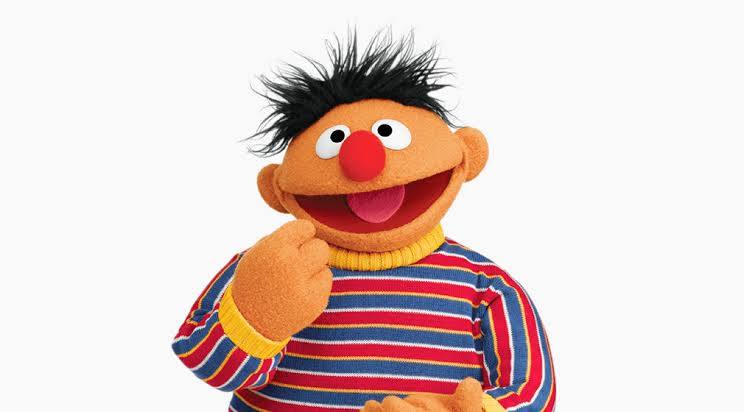
ERNIE (文心一言): The Chinese name “文心一言” means “one sentence that gets to the core of an article,” from the classic Chinese literature theory work Wenxin Diaolong. The English name ERNIE is an abbreviation of Enhanced Representation through Knowledge Integration, and it is also the name of the character Ernie from Sesame Street—echoing Google’s BERT.
Doubao (豆包 / 字节****跳动): No metaphor, no allusion—just the literal meaning “red bean bun.” Among a bunch of “highbrow” names like “Qwen” and “ERNIE,” ByteDance picked a snack name that any Chinese person would know, and it ends up being the easiest to remember. The overseas version is called Cici.
Every name is like a small window, letting us glimpse how these AI teams view what they’re building. Some pay tribute to history, some use names to explain the technology, and some feel like they’re joking. But no matter what it’s called, in the end it still comes down to product capability.
Disclaimer: The information on this page may come from third parties and does not represent the views or opinions of Gate. The content displayed on this page is for reference only and does not constitute any financial, investment, or legal advice. Gate does not guarantee the accuracy or completeness of the information and shall not be liable for any losses arising from the use of this information. Virtual asset investments carry high risks and are subject to significant price volatility. You may lose all of your invested principal. Please fully understand the relevant risks and make prudent decisions based on your own financial situation and risk tolerance. For details, please refer to
Disclaimer.


