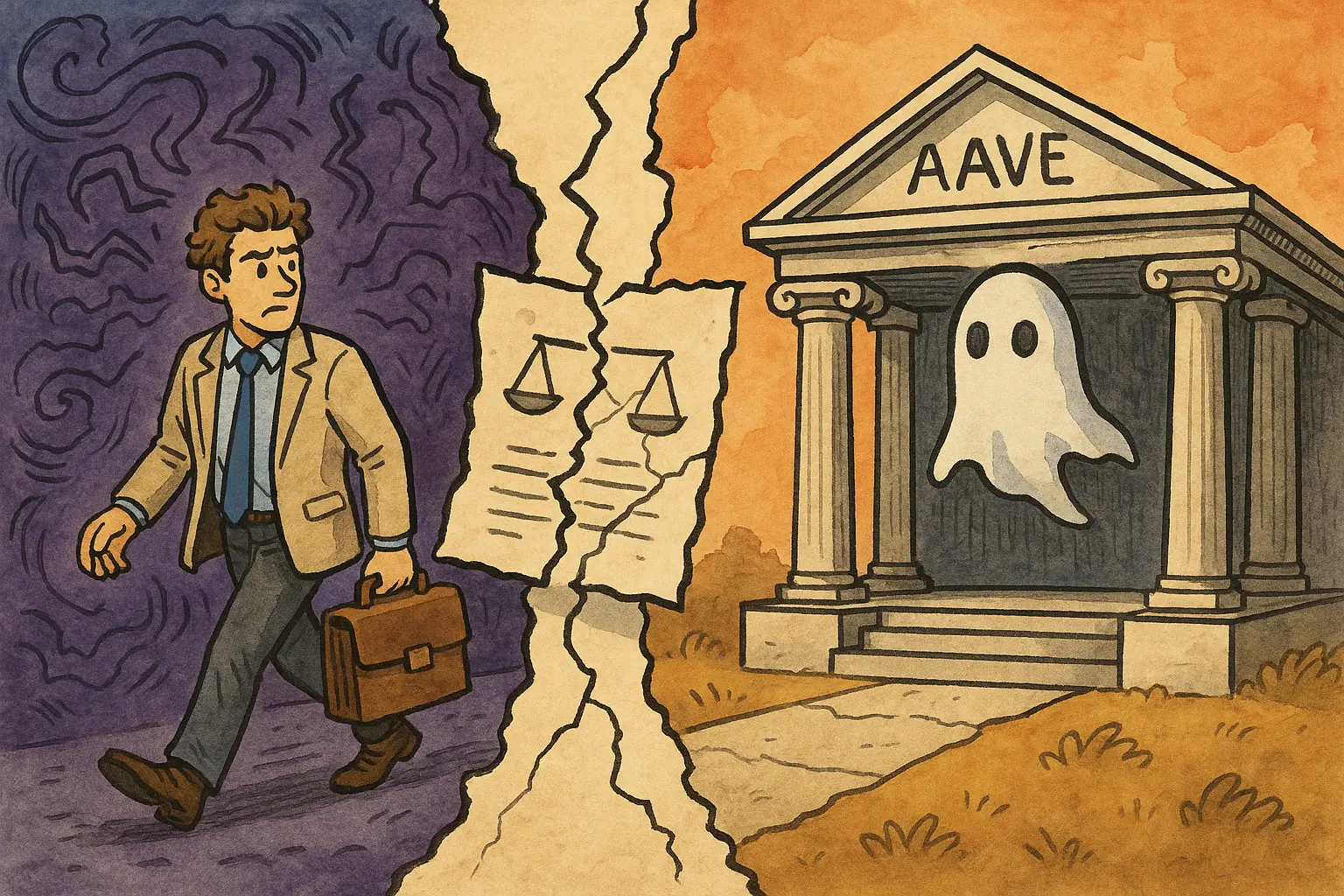
Risk management firm Chaos Labs announced it is terminating its three-year cooperation licensing agreement with DeFi’s largest lending protocol, Aave, citing a “fundamental disagreement” in how the two sides manage risk. Chaos Labs also warned that DeFi risk management professionals currently lack any clear regulatory safe harbor or accountability framework when making governance-level decisions that could instantly move tens of millions of dollars.
Chaos Labs Exit Statement: Why the Three-Year Partnership Is Coming to an End
Chaos Labs has been responsible since late 2022 for pricing all loans on the Aave platform, and for managing the risk parameters across all markets and networks under Aave V2 and V3—making it one of the core risk decision implementers for Aave.
In a statement on Monday, the core point was direct: “Our understanding of risk management no longer aligns with how our cooperation is carried out.” Chaos Labs did not specify the exact nature of the disagreement, but the legal warnings released alongside it reveal deeper concerns: in a DeFi ecosystem that lacks a clear regulatory framework, if a decision goes wrong, risk management professionals will face liability exposure without legal protection—neither a safe harbor to rely on nor a clearly defined accountability system.
Oracle Incident: A $27.0 Million Incorrect Liquidation Reveals a Legal Gray Area
The immediate trigger for Chaos Labs’ exit was a mistake in oracle configuration in March 2025.
Key Event Details
Accident Cause: CAPO risk agent report had a price ratio that was too low; multiple accounts’ health factors fell below liquidation thresholds
Liquidation Scale: About $26.9 million to $27.0 million in Ether staked positions were forcibly liquidated incorrectly
Scope of Impact: At least 34 highly leveraged positions were affected
Root Cause: Wrapped Staked ETH was undervalued by about 2.85%; only after artificial parameter adjustments were made did the issue get resolved
Chaos Labs and Aave both confirmed that no bad debts resulted after the fact, and affected users will be compensated. However, the legal issues this event exposes go far beyond financial losses: risk management professionals make governance-level decisions that can affect tens of millions of dollars within seconds, but under the current regulatory environment, if a decision is wrong, responsibility falls entirely into a legal void.
Aave Governance Crisis: Three Major Core Contributors Depart in Succession, and the DAO Enters a Vacuum Period
 (Source: Chaos Labs)
Chaos Labs’ exit is not an isolated case, but the latest chapter in the recent wave of departures across the Aave ecosystem. Marc Zeller, founder of the governance entity Aave Chan Initiative (ACI), described his own departure as the result of a long-running power struggle, and warned that a recent vote granted Aave Labs the “largest budget in DAO history,” raising concerns about concentrated governance power. The core technical team at BGD Labs also told token holders, “We will no longer seek contract renewals, and after the contract expires we will stop contributing to Aave.”
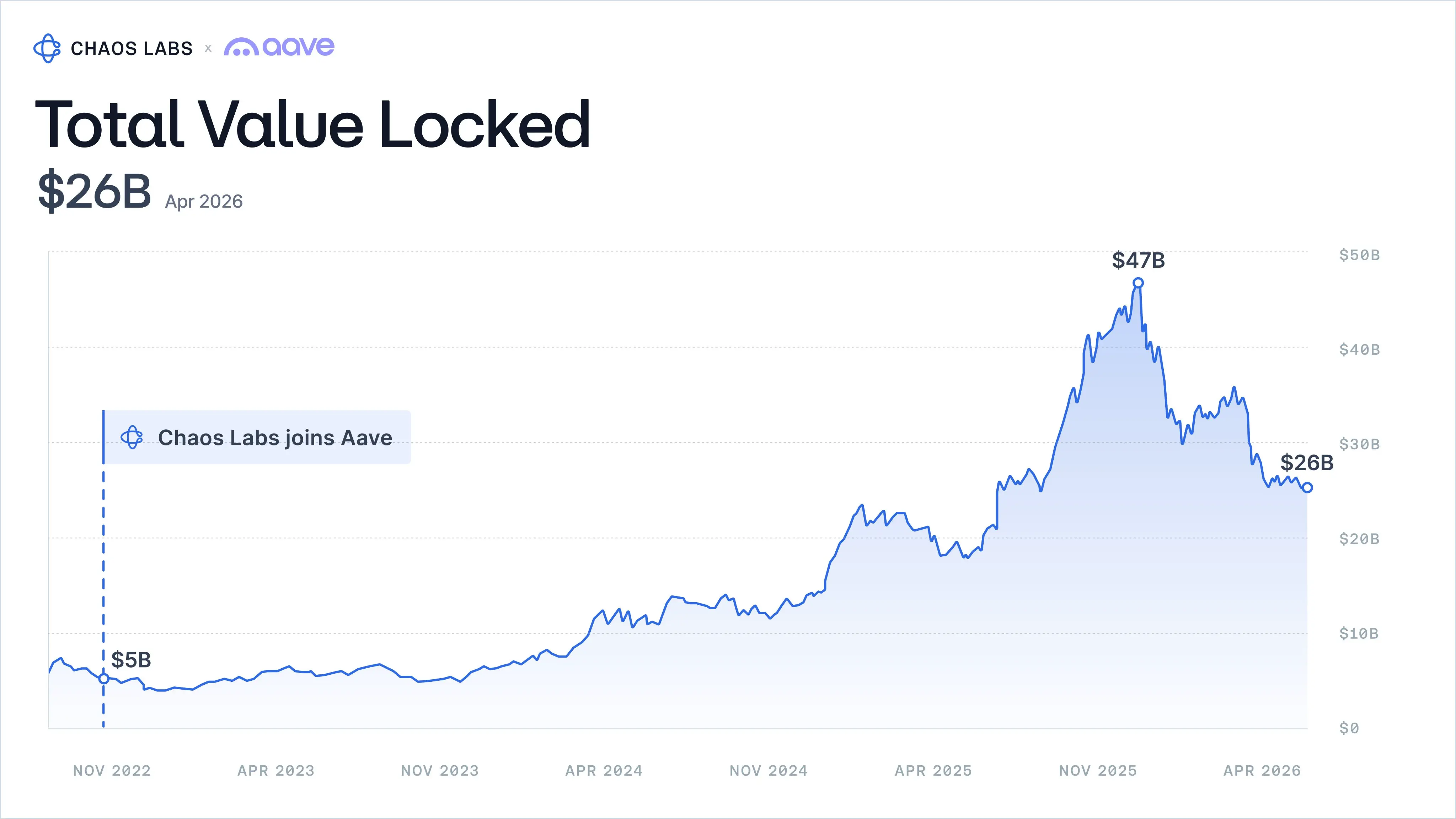
The background against which the turmoil occurred is especially worth noting: Aave currently still holds roughly 30% to 40% of the DeFi lending market, and its total value locked (TVL) recently surpassed $50 billion; over the past several quarters it has grown by more than 50%, with growth outpacing the broader DeFi market. At this scale, the simultaneous departure of the three major core contributors places the Aave DAO at a critical governance-node for pushing forward the next-generation V4 architecture, facing a severe shortage of governance talent—and it also implies a sharp question that still has no answer: when a decentralized risk system fails at a scale where it is systemically important, who should bear legal responsibility?
Frequently Asked Questions
Why is Chaos Labs so critical to Aave?
Chaos Labs has been responsible since late 2022 for pricing all loans on the Aave platform, and for managing the risk parameters across all markets for Aave V2 and V3; it is the core implementing party in Aave’s risk management architecture. Its exit means Aave must rebuild its core risk management capabilities during the sensitive period of a V4 upgrade.
How exactly did the $27.0 million oracle incident happen?
In March 2025, the CAPO risk agent report configured by Chaos Labs produced an incorrect price ratio, causing the wrapped staked Ether to be undervalued by about 2.85%. This triggered forced liquidations of at least 34 highly leveraged positions, with a liquidation scale of about $27.0 million. After the fact, it was confirmed there were no bad debts, and affected users have been compensated.
With three major core contributors exiting one after another, what specific impact does it have on the protocol?
The successive departures of Chaos Labs, ACI, and BGD Labs leave the Aave DAO facing a governance talent gap at a key moment as it pushes the V4 architecture upgrade. This has raised market concerns about whether the largest DeFi lending protocol can maintain coherent risk management and governance stability, and it also highlights the governance tension that decentralized protocols face once they reach a scale of system importance.
Disclaimer: The information on this page may come from third parties and does not represent the views or opinions of Gate. The content displayed on this page is for reference only and does not constitute any financial, investment, or legal advice. Gate does not guarantee the accuracy or completeness of the information and shall not be liable for any losses arising from the use of this information. Virtual asset investments carry high risks and are subject to significant price volatility. You may lose all of your invested principal. Please fully understand the relevant risks and make prudent decisions based on your own financial situation and risk tolerance. For details, please refer to
Disclaimer.


