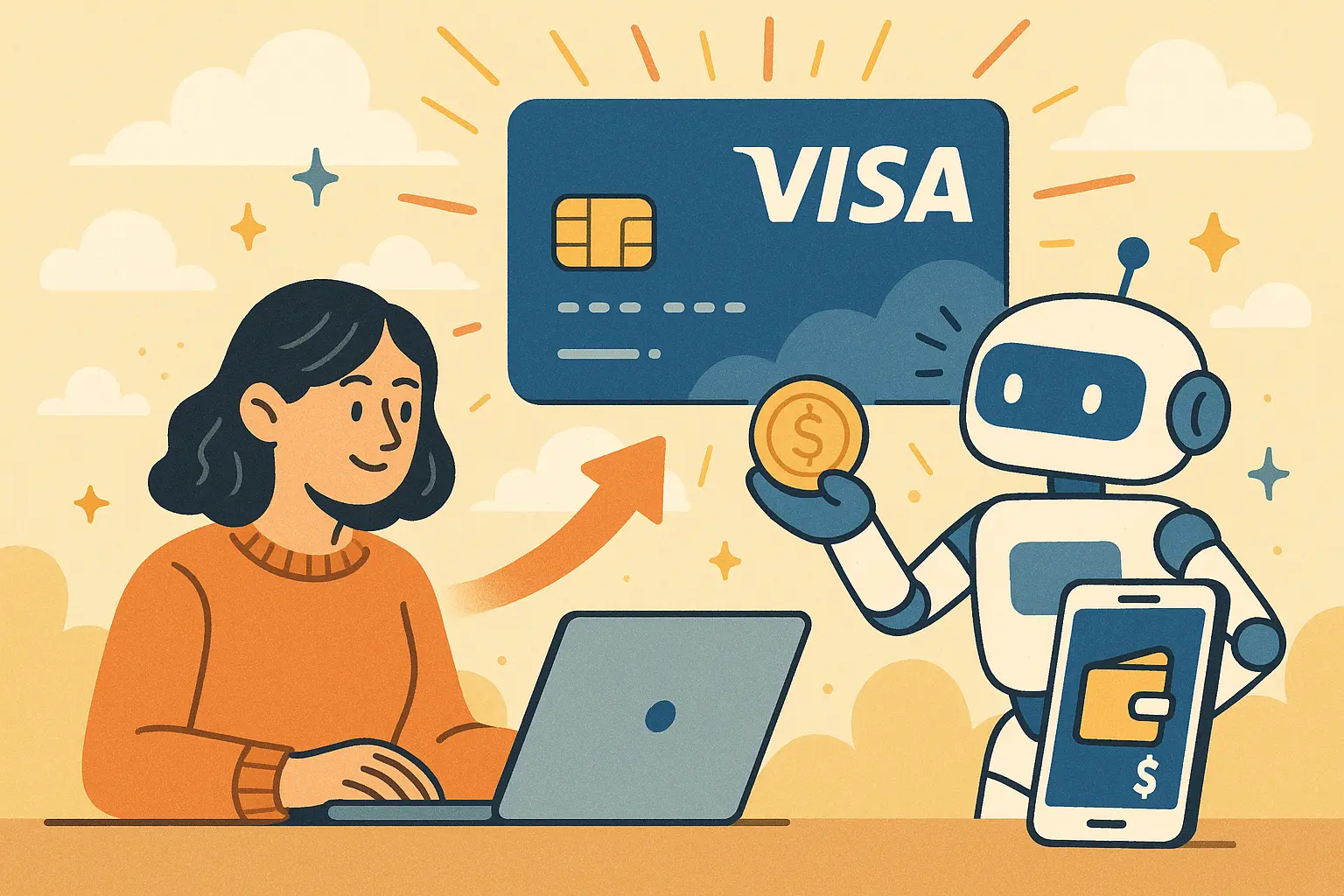
Visa launched its “Intelligent Commerce Connect” platform on April 9, officially entering a new era in which AI agents replace consumers to complete shopping. The platform allows AI agents to complete payments across multiple card networks (not limited to Visa). Merchants can directly expose their product catalogs to the agents. At present, the platform has already moved into pilot operations in multiple locations and is expected to fully roll out in June.
Intelligent Commerce Connect: Function Architecture and Market Background
Visa’s platform provides an integrated API architecture covering four major modules: tokenization (Tokenization), identity verification, payment instructions, and transaction signals—enabling AI agents to securely complete transactions on behalf of users. Merchants can connect directly to the product catalog visibility of AI agents, allowing agents to complete the entire flow—from comparison, to decision-making, to checkout—without manual intervention.
The background for this launch is the market reality revealed in Visa’s “Business-to-AI” (B2AI) report published one week earlier:
Key Data from the B2AI Report
· 53% of U.S. business leaders are willing to allow AI agents to directly negotiate prices or terms with other AI agents on their behalf
· 71% of enterprises say they are willing to optimize products, discounts, and experiences specifically for AI agents
· 77% of enterprises are already using or trialing AI in operations
· 40% of U.S. consumers say they bought goods they otherwise would not have considered because they used AI agents
These data show that AI agents are evolving from “passive search tools” into active market participants that shape demand.
Multi-Location Pilots and Key Partnership Cases
Visa’s AI agent payment framework has been piloted across multiple regions. Pilot projects in the Asia-Pacific and Europe are scheduled to begin in early 2026, and preparations in Latin America and the Caribbean are also underway. In the Middle East, Visa is partnering with real estate developer Aldar to let customers in the UAE use AI agents to pay recurring fees such as real estate services, validating the feasibility of AI agent payments in high-ticket scenarios.
The platform’s core security mechanism is the “Trusted Agent Protocol”—an open framework launched in October 2025—that helps merchants distinguish malicious bots from AI agents acting legitimately on behalf of consumers, addressing security concerns around automated purchasing entry points.
A Three-Way Race for AI Payment Standards: Traditional Card Networks vs. Crypto Protocols
Visa’s entry comes at a time when the standards battle for AI agent payment channels is heating up. There are currently two competing routes: one is the crypto-native camp, including Coinbase’s x402 standard (which has been handed over to the Linux Foundation for management and is supported by Google and Stripe) and Stripe’s machine payment protocol (MPP) for its Tempo blockchain; the other is the traditional card networks represented by Visa and Mastercard, building a trust layer on top of existing credit card infrastructure.
It is worth noting that Visa adopted a hedging strategy—its Visa Crypto Labs launched a command-line payment interface (CLI) in March, allowing AI agents to make payments without API keys or pre-funded accounts, directly targeting core application scenarios within crypto protocols. In parallel, the company also expanded its partnership with Bridge for stablecoins and plans to promote stablecoin-linked cards to more than 100 countries.
Visa’s Chief Marketing Officer Frank Cooper III explains the company’s vision as a shift from “market-to-people” to “market-to-machines”—with AI agents representing people to evaluate, negotiate, and transact, becoming the core behavioral entity of modern commerce.
Frequently Asked Questions
What is Visa’s Intelligent Commerce Connect, and when will it be fully launched?
Visa’s “Intelligent Commerce Connect” is a platform that allows AI agents to shop and make payments on behalf of consumers across multiple card networks. It is currently in the pilot stage and is expected to fully launch in June 2026.
How does Visa’s AI agent payment platform ensure security?
The platform’s core security mechanism is the “Trusted Agent Protocol,” which helps merchants distinguish between malicious bots and legitimate AI agents. It also combines tokenization (Tokenization) and identity verification technologies to safeguard transaction security, and the complete framework was launched in October 2025.
What major competition does Visa face in the AI agent payment space?
Competition mainly comes from two camps: crypto-native protocols (Coinbase x402 standard and Stripe Tempo’s machine payment protocol MPP) and traditional card organizations such as Mastercard. Visa is pursuing a dual-track hedging strategy, simultaneously advancing traditional payment frameworks and Visa Crypto Labs’ crypto payment tools.
Disclaimer: The information on this page may come from third parties and does not represent the views or opinions of Gate. The content displayed on this page is for reference only and does not constitute any financial, investment, or legal advice. Gate does not guarantee the accuracy or completeness of the information and shall not be liable for any losses arising from the use of this information. Virtual asset investments carry high risks and are subject to significant price volatility. You may lose all of your invested principal. Please fully understand the relevant risks and make prudent decisions based on your own financial situation and risk tolerance. For details, please refer to
Disclaimer.


