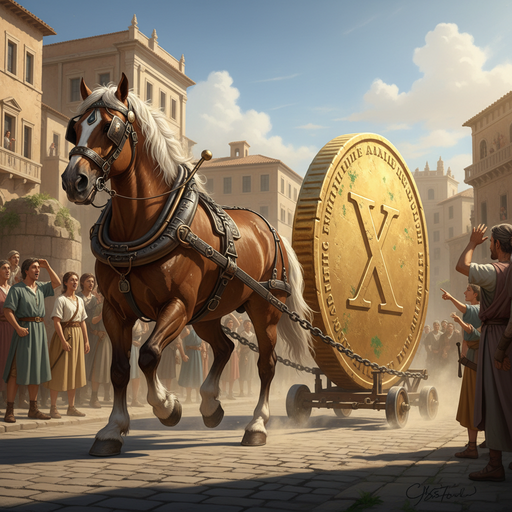
In this circle, the truly valuable thing is never a certain coin, but what you have in your mind.
Think about it, why can some people quickly judge the authenticity of a project, while others are always getting caught? The key lies in the level of cognition.
Those slang terms we hear every day—DYOR (Do Your Own Research), HODL (Hold On for Dear Life), RWA (Real World Asset on-chain)—these are not just for sounding professional, but are the common language within the community. Mastering them allows you to:
**Understand project whitepapers without confusion** → **Identify market cycle signals** → **Communicate smoothly with the global community** → **And ultimately make smarter investment decisions**.
There's also a particularly interesting phenomenon—when a newcomer first understands the concept of "Airdrop," they receive not just a vocabulary definition, but a pass into this new world. From academic terminology, to project understanding, to grasping the core value of blockchain decentralization, this process deepens layer by layer.
Some say the ultimate dream of blockchain is to build a fairer, more transparent global system. It sounds grand, but in fact, every community and every participant’s concrete actions are turning this vision into reality brick by brick. We are both learners and builders.
So instead of spending time chasing quick gains and losses, it’s better to invest some effort in continuously upgrading your cognition—this is the true moat for long-term profitability.
View Original
This page may contain third-party content, which is provided for information purposes only (not representations/warranties) and should not be considered as an endorsement of its views by Gate, nor as financial or professional advice. See Disclaimer for details.
18 Likes
Reward
18
5
Repost
Share
Comment
0/400
HodlVeteran
· 6h ago
Really, I had nothing in my head back then, and only after going all-in three times did I realize this truth.
Cognitive upgrade costs more than holding coins, but it's much cheaper—blood, sweat, and tears lessons.
I wrote the three words DYOR with blood, and only now do I truly understand.
That said, there are still many people who would rather believe the coins mentioned by big V influencers than read the white paper themselves, which is ridiculous.
After experiencing several bear markets, I found that the most stable way to make money is actually those retail investors who keep learning, not the all-in gamblers.
View OriginalReply0
GrayscaleArbitrageur
· 2025-12-30 15:54
Well said, that's the point—knowledge is the most valuable asset. No matter how high the coin price is, it's useless.
Really, being able to see through project scams and avoid getting caught in pump-and-dump schemes comes down to this thin barrier. Once broken, it's a whole different world.
This round, instead of constantly watching the market and chasing highs and lows, it's better to settle down and improve your knowledge. In the long run, cognitive upgrades are the real moat.
View OriginalReply0
WagmiAnon
· 2025-12-30 15:50
That's right, cognition is the moat. This principle applies everywhere.
However, I found a problem—people who DYOR usually get cut once or twice, while those who haven't been cut at all are often the ones who don't know these terms at all, just having fun and running away after making a profit.
The stuff in your head is indeed valuable, but the prerequisite is that you have the opportunity to put it in, not get wiped out.
In this market cycle, those who persist in upgrading their cognition indeed survive longer.
Can't compromise—why insist on choosing a "long-term moat"? Isn't short-term happiness appealing?
I agree, but true learners always live quite hard, constantly questioning their choices.
Cognition upgrade is correct, just don't understand why it's written so motivationally; the reality in the circle is so cruel.
View OriginalReply0
GasGuru
· 2025-12-30 15:39
Well said, cognition is the biggest gold mine. Those who only look at K-line charts will eventually have to pay tuition fees.
Terminology is not showing off; it is indeed the key to opening a new world. Mastering the DYOR logic can significantly reduce the risk of being exploited.
Instead of researching the next 100x coin, it's better to deeply understand things like RWA. Only then can you truly bottom fish.
The moment a beginner learns about airdrops, they are truly entering the circle. Making money afterward becomes a natural thing.
The term "moat" is excellent. Upgrading your cognition is much safer than chasing hot topics, and long-term returns are more stable.
I actually think many people underestimate the role of jargon. Understanding these can help see through the true intentions of project teams.
View OriginalReply0
RektButSmiling
· 2025-12-30 15:35
Basically, you still need to read more whitepapers and watch less of the coin price fluctuations.
Overthinking cognitive bias can be tiring, but it's definitely more reliable than chasing pumps and dumps.
DYOR—doing your own research—sounds simple, but actually doing it is really hard.
Really, one word can divide people into two worlds: those who understand and make money, and those who don't and keep getting cut.
The metaphor of a moat is brilliant; everything else is just clouds.
Forget it, let's just look at the market. Cognition is too虚 (vague/illusory), I just want to make money.
Stuff in my head? Right now, all I have are shadows of losses.
I agree with this logic, but the reality is most people simply can't stick to it.
Every new concept is a trap; talking about a "pass," isn't it just a new tactic to cut leeks?
In this circle, the truly valuable thing is never a certain coin, but what you have in your mind.
Think about it, why can some people quickly judge the authenticity of a project, while others are always getting caught? The key lies in the level of cognition.
Those slang terms we hear every day—DYOR (Do Your Own Research), HODL (Hold On for Dear Life), RWA (Real World Asset on-chain)—these are not just for sounding professional, but are the common language within the community. Mastering them allows you to:
**Understand project whitepapers without confusion** → **Identify market cycle signals** → **Communicate smoothly with the global community** → **And ultimately make smarter investment decisions**.
There's also a particularly interesting phenomenon—when a newcomer first understands the concept of "Airdrop," they receive not just a vocabulary definition, but a pass into this new world. From academic terminology, to project understanding, to grasping the core value of blockchain decentralization, this process deepens layer by layer.
Some say the ultimate dream of blockchain is to build a fairer, more transparent global system. It sounds grand, but in fact, every community and every participant’s concrete actions are turning this vision into reality brick by brick. We are both learners and builders.
So instead of spending time chasing quick gains and losses, it’s better to invest some effort in continuously upgrading your cognition—this is the true moat for long-term profitability.