

Trade
Basic
Futures
Futures
Hundreds of contracts settled in USDT or BTC
Options
HOT
Trade European-style vanilla options
Unified Account
Maximize your capital efficiency
Demo Trading
Futures Kickoff
Get prepared for your futures trading
Futures Events
Participate in events to win generous rewards
Demo Trading
Use virtual funds to experience risk-free trading
Earn
Launch
CandyDrop
Collect candies to earn airdrops
Launchpool
Quick staking, earn potential new tokens
HODLer Airdrop
Hold GT and get massive airdrops for free
Launchpad
Be early to the next big token project
Alpha Points
NEW
Trade on-chain assets and enjoy airdrop rewards!
Futures Points
NEW
Earn futures points and claim airdrop rewards
Investment
Simple Earn
Earn interests with idle tokens
Auto-Invest
Auto-invest on a regular basis
Dual Investment
Buy low and sell high to take profits from price fluctuations
Soft Staking
Earn rewards with flexible staking
Crypto Loan
0 Fees
Pledge one crypto to borrow another
Lending Center
One-stop lending hub
VIP Wealth Hub
Customized wealth management empowers your assets growth
Private Wealth Management
Customized asset management to grow your digital assets
Quant Fund
Top asset management team helps you profit without hassle
Staking
Stake cryptos to earn in PoS products
Smart Leverage
NEW
No forced liquidation before maturity, worry-free leveraged gains
GUSD Minting
Use USDT/USDC to mint GUSD for treasury-level yields

More


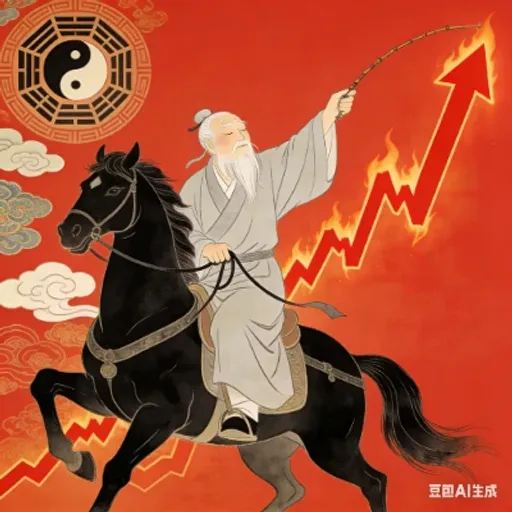



The Federal Reserve's rate cut has been implemented, risk assets are rallying, the dollar hits a new low, and precious metals continue to shine brightly.
On December 11th early morning, the Federal Reserve’s policy meeting concluded, and the market welcomed the long-anticipated rate cut decision. The federal funds rate was lowered by 25 basis points to a range of 3.50%-3.75%, in line with expectations. This marks the third consecutive rate cut, bringing the total reduction for the year to 75 basis points, but divisions within the decision-making body have become increasingly apparent — out of 12 voting members, Kansas City Fed President Esther George and Chicago Fed President Austan Goolsbee voted against the cut, advocating to hold steady; Fed Governor Michelle Bowman supported a more aggressive 50 basis point cut. This is the first time in six years that three dissenting votes have appeared, reflecting internal tensions within the Fed over policy direction.
Powell signaled a dovish stance at the post-meeting press conference, explicitly ruling out the possibility of rate hikes next year, and announced that over the next 30 days, the Fed will purchase $40 billion in Treasury bonds. He stated that the U.S. economy is in a “very favorable position” to patiently wait for further data developments. This language marks a clear shift from previous hawkish tones toward a more dovish stance, prompting market reactions.
Forex, Commodities Dance, Dollar Falls Below 99
Following the rate cut announcement, the dollar index plummeted, breaking below the 99.0 level for the first time in a month and a half, hitting a new low of 98.63, down 0.61%. In a weak dollar environment, commodity prices surged collectively. Gold surpassed $4,220 again, closing up 0.5% at $4,227 per ounce; silver performed even better, reaching a new all-time high of $61.9 per ounce, becoming a star asset among precious metals.
The 10-year U.S. Treasury yield ended its four-day rising streak, falling to 4.15%, down 4 basis points from the previous trading day. USD/JPY declined by 0.56%, while EUR/USD rose by 0.6%, reflecting a rebalancing of global capital flows.
U.S. Stocks Rebound Broadly, Tech Sector Diverges
The Fed’s rate cut decision boosted investor sentiment, with all three major U.S. stock indices rising. Dow Jones increased by 1.05%, S&P 500 by 0.68%, and Nasdaq by 0.33%. The Russell 2000 small-cap index hit a new high, rising 1.3% in a single day. Chinese-related indices also responded, with the Golden Dragon China Index up 0.64%.
Among large tech stocks, mixed performances were observed. Microsoft fell 2.74%, Meta declined 1.04%, Nvidia dropped 0.64%, but Apple rose 0.58%, Alphabet Class A shares increased 0.99%, Tesla gained 1.41%, Amazon rose 1.69%, showing divergence. European markets were mixed: FTSE 100 up 0.14%, CAC 40 down 0.37%, DAX 30 down 0.13%.
Cryptocurrency markets responded similarly. Bitcoin (BTC) was at $92,630, down 0.43% over 24 hours; Ethereum (ETH) was at $3,336.7, up 0.6%. In Hong Kong stocks, the Hang Seng Index futures closed at 25,602 points, up 66 points, 61 points higher than yesterday’s close.
Fed Policy Divisions Widen, Stagflation Risks Emerge
The dot plot revealed deeper divisions within the Fed. Policymakers expect only one more rate cut in 2026, another in 2027, with rates returning to a long-term equilibrium of 3%. However, internal tensions are evident — 7 officials favor holding rates steady in 2026, while 8 support at least two more cuts.
In contrast, the CME FedWatch tool indicates the futures market expects at least two rate cuts next year, highlighting a gap between market expectations and Fed projections.
On economic outlook, the Fed raised its 2026 GDP growth forecast by 0.5 percentage points to 2.3%. However, inflation expectations were revised downward — the committee still expects inflation to return below 2% only by 2028, with the unemployment rate forecast at 4.4% at year-end.
Nick Timiraos, a Fed spokesperson, recently wrote that Fed officials face a dilemma unlike any in decades — persistent price pressures coexist with a cooling labor market, characteristic of stagflation. He noted that during the stagflation of the 1970s, the Fed’s stop-and-go approach ultimately entrenched high inflation. UBS Chief US Economist Jonathan Pingle warned that as rates approach neutral levels, each rate cut will lose more support from participants.
Global Central Bank Divergence, Outlook Uncertain
The Bank of Canada maintained its rate at 2.25% after the meeting, in line with market expectations. The bank noted that Canada’s Q3 GDP growth was unexpectedly strong, with signs of labor market improvement. Despite tariffs causing disruptions, the overall economy remains resilient, with moderate GDP growth expected next year and inflation close to the 2% target.
ECB President Lagarde sent optimistic signals, indicating that at next week’s meeting, the ECB might further raise eurozone growth forecasts. The ECB previously raised its 2023 GDP forecast from 0.9% to 1.2% in September, marking the first upward revision since March 2024.
Tech Giants Compete in Space Data Centers, SpaceX Valuation Soars
Another major tech news is SpaceX’s IPO plan. Reports suggest Elon Musk’s space exploration company plans to go public as early as mid-next year, with a potential valuation of $1.5 trillion. If successful, Musk’s personal wealth could jump from approximately $460.6 billion to $952 billion, paving a clear path to becoming the world’s first “trillionaire.” Musk currently owns about 42% of SpaceX; at a $1.5 trillion valuation, his stake would be worth over $625 billion. SpaceX is expected to list between mid and late next year, with IPO proceeds possibly exceeding $30 billion, making it the largest IPO in history.
More intriguingly, Musk and Amazon founder Jeff Bezos are competing to bring the data center boom into space. According to the Wall Street Journal, Bezos’s Blue Origin has a team that has spent over a year researching orbital AI data center technology. Meanwhile, SpaceX plans to use upgraded Starlink satellites to host AI computing loads, and this technology may be part of stock offerings, potentially valuing the company at $800 billion.
AI Competition Heats Up, Meta Adjusts Strategy to Embrace Closed Source
In AI, Meta is significantly shifting its development strategy. Bloomberg reports that the social media giant is moving toward closed-source models, using models like Alibaba’s Tongyi Qianwen for optimization. Following this news, Meta’s stock fell 1.3% on Wednesday, while Alibaba’s ADR rose as much as 3.1%.
Meta is developing a model codenamed “Avocado,” expected to adopt a paid model and launch as early as spring next year. Mark Zuckerberg is personally leading the team called TBD Lab, which trains using third-party models like Google’s Gemma and OpenAI’s GPT-4. This marks a shift away from Meta’s long-standing open-source approach toward developing profitable products to recover massive AI investments and compete with Google and OpenAI.
Geopolitical Developments: Trump Confirms Seizure of Venezuela Oil Tanker
U.S. President Trump confirmed that the U.S. seized an oil tanker near Venezuela, citing sufficient reasons. The operation, led by the U.S. Coast Guard, has attracted attention, but the Venezuelan government has yet to respond. This move could impact the global energy landscape.
Market Close and Outlook
Overall, while the Fed’s rate cut aligned with expectations, internal divisions reached a six-year high, implying uncertainty about future policy directions. The strong performance of precious metals reflects market confidence in a weak dollar environment, while the divergence in tech stocks indicates changing investor sentiment across sectors.
Mona Mahajan, Chief Investment Strategist at Edward Jones, commented that when central banks are in a rate-cutting cycle and the economy shows no signs of recession, markets tend to be optimistic. However, the current challenge lies in the Fed’s difficult balancing act between persistent inflation pressures and a cooling labor market — a combination unseen in decades, raising concerns about stagflation.
WTI crude oil rose 0.98% to $58.9 per barrel, indicating a mild response from the energy sector to the overall policy environment. As more central bank decisions are announced, investors should closely monitor upcoming data and policy signals to prepare for potential new market volatility.
Today’s key events to watch: Australia November seasonally adjusted unemployment rate, Swiss National Bank rate decision, IEA monthly oil report, Bank of England Governor Bailey speech, U.S. initial jobless claims, U.S. trade balance data, etc.