

Trade
Basic
Futures
Futures
Hundreds of contracts settled in USDT or BTC
Options
HOT
Trade European-style vanilla options
Unified Account
Maximize your capital efficiency
Demo Trading
Futures Kickoff
Get prepared for your futures trading
Futures Events
Futures Mall
Participate in events to win generous rewards
Demo Trading
Use virtual funds to experience risk-free trading
Earn
Launch
CandyDrop
Collect candies to earn airdrops
Launchpool
Quick staking, earn potential new tokens
HODLer Airdrop
Hold GT and get massive airdrops for free
Launchpad
Be early to the next big token project
Alpha Points
NEW
Trade on-chain assets and enjoy airdrop rewards!
Futures Points
NEW
Earn futures points and claim airdrop rewards
Investment
Simple Earn
Earn interests with idle tokens
Auto-Invest
Auto-invest on a regular basis
Dual Investment
Buy low and sell high to take profits from price fluctuations
Soft Staking
Earn rewards with flexible staking
Crypto Loan
0 Fees
Pledge one crypto to borrow another
Lending Center
One-stop lending hub
VIP Wealth Hub
Customized wealth management empowers your assets growth
Private Wealth Management
Customized asset management to grow your digital assets
Quant Fund
Top asset management team helps you profit without hassle
Staking
Stake cryptos to earn in PoS products
Smart Leverage
NEW
No forced liquidation before maturity, worry-free leveraged gains
GUSD Minting
Use USDT/USDC to mint GUSD for treasury-level yields

More





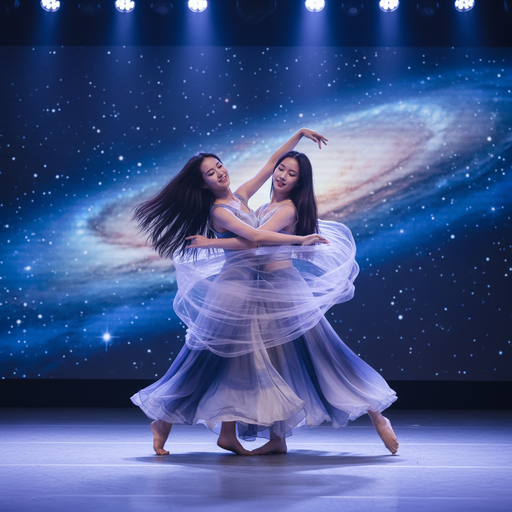
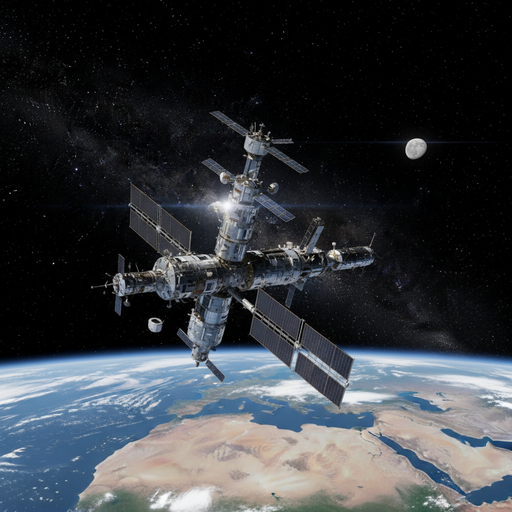
A single truth repeatedly pointed to by different wisdom systems. I gradually realize one thing: psychology, physics, philosophy, Taoism, and Buddhism are not speaking different words, but describing the same underlying laws in different languages. This high degree of overlap cannot be a coincidence; it is more like the projection of universal truth in different dimensions. After peeling back these layers, they can be summarized into three core principles.
1. The external world is fundamentally an internal reflection. All systems repeatedly emphasize the same point: psychology calls it projection, physics discusses the observer effect, Buddhism says the realm arises from the mind, Taoism speaks of everything created by the mind. You are not “seeing” the world, but “manifesting” the world. How you understand the world, the world responds to you accordingly. The world is not neutral; it is an echo chamber of your inner structure.
2. The more attached, the less you get; true gain comes from letting go. An astonishing consistency appears here as well: psychology states that the deeper the obsession, the more distorted the behavior; physics notes that excess potential energy makes the system unstable; Buddhism teaches that suffering stems from attachment, and liberation from letting go; Taoism advocates that forcing things leads to failure, and going with the flow creates success. Letting go does not mean giving up control, but stopping the wrong control. When the ego no longer desperately grips the steering wheel, greater order can intervene. Zen has a saying that cuts to the core: “When you forget the moon, you have the moon.” Taoism offers a four-character answer: Wu Wei (non-action).
3. True power comes from “alignment.” The strongest state of a person is not through effort, but through consistency. Psychology calls it self-coherence, Buddhism calls it right mindfulness, Taoism calls it going with the flow, physics refers to frequency alignment, Wang Yangming called it the unity of knowledge and action. When your thoughts, emotions, body, and actions are on the same line, you don’t need to force it; things will happen naturally. That feeling is like fate gently pushing you from behind; you no longer rely on linear willpower to struggle through life, but enter a state of being carried by the “flow.”
Conclusion: You are not a pawn, but the source. When these clues are pieced together, the conclusion becomes extraordinarily clear: all wisdom systems are telling us the same thing: you are not a pawn of fate; you are—the starting point of consciousness, the source of energy, the emitter of choices. When you align yourself, the world naturally aligns with you.