

Trade
Basic
Futures
Futures
Hundreds of contracts settled in USDT or BTC
TradFi
Gold
Trade global traditional assets with USDT in one place
Options
Hot
Trade European-style vanilla options
Unified Account
Maximize your capital efficiency
Demo Trading
Futures Kickoff
Get prepared for your futures trading
Futures Events
Participate in events to win generous rewards
Demo Trading
Use virtual funds to experience risk-free trading
Earn
Launch
CandyDrop
Collect candies to earn airdrops
Launchpool
Quick staking, earn potential new tokens
HODLer Airdrop
Hold GT and get massive airdrops for free
Launchpad
Be early to the next big token project
Alpha Points
Trade on-chain assets and enjoy airdrop rewards!
Futures Points
Earn futures points and claim airdrop rewards
Investment
Simple Earn
Earn interests with idle tokens
Auto-Invest
Auto-invest on a regular basis
Dual Investment
Buy low and sell high to take profits from price fluctuations
Soft Staking
Earn rewards with flexible staking
Crypto Loan
0 Fees
Pledge one crypto to borrow another
Lending Center
One-stop lending hub
VIP Wealth Hub
Customized wealth management empowers your assets growth
Private Wealth Management
Customized asset management to grow your digital assets
Quant Fund
Top asset management team helps you profit without hassle
Staking
Stake cryptos to earn in PoS products
Smart Leverage
New
No forced liquidation before maturity, worry-free leveraged gains
GUSD Minting
Use USDT/USDC to mint GUSD for treasury-level yields

More



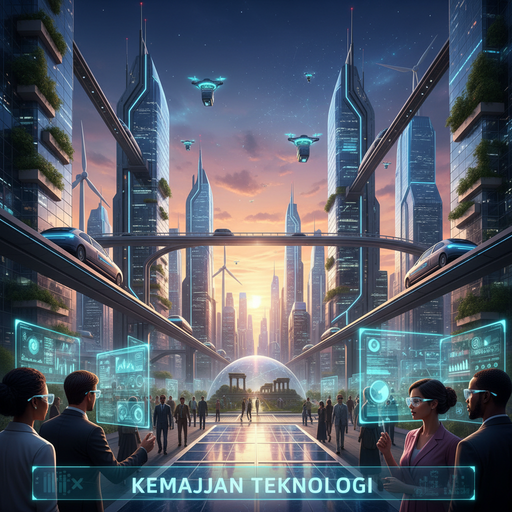
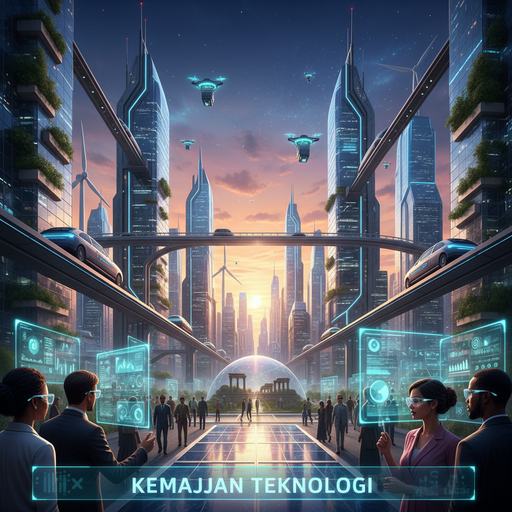

The New Order Unveiled by Smart Contracts — An Era Where Geopolitics and Ethereum Intersect
David Hoffman, founder of Bankless, recently shared deep reflections on the relationship between changes in the international order and blockchain technology. At this year’s Davos Forum, prominent figures from the cryptocurrency industry such as Brian Armstrong, CZ, and Larry Fink gathered in one place. However, the most noteworthy aspect was the fundamental shift in the global order hinted at by the Trump administration.
During the forum, the U.S. Secretary of Commerce pointed out that “globalization has reached its limits,” and Canada’s Prime Minister responded that “the rule-based international system is experiencing a fundamental rupture.” These statements are not merely policy discussions; they question the very international cooperation system built since World War II.
Crisis of the International Order: From Traditional Rule-Based Systems to Decentralized Protocols
After the war, the international community maintained order based on mutual “rules.” The United Nations was its symbol, regarded as an organization that all nations nominally respected. However, these rules were actually fragile “shared illusions.”
The rise of the Trump administration signified the destruction of this illusion. The United States, possessing the strongest military power, made it clear that it no longer intended to uphold this system. It was because the system functioned only because the U.S. guaranteed the “rules.” Once that guarantee disappears, the international order automatically reverts to the “law of force.”
Notably, historically, countries like Russia and Iran have exploited the weakening of this international order to expand their influence. They pretended to respect the “rules” but in reality pursued dominance through force. In other words, the efforts of the international community have never truly been effective from the start.
In this crisis, decentralized protocols gain new significance.
The True Significance of Bitcoin and Ethereum
Brian Armstrong’s conversation with the President of the French Central Bank at Davos is highly insightful. The central bank governor made a typical mistake many central bank leaders make: underestimating and misunderstanding Bitcoin.
Armstrong’s response was clear: “Bitcoin has no issuer. It is a fully decentralized protocol,” and he added an even more important point: “Bitcoin is the most powerful accountability mechanism regarding deficit spending.”
This statement suggests that Bitcoin is not merely a speculative asset but also functions to enforce fiscal discipline on nations. Ethereum further universalizes this principle.
Can Smart Contracts Become the Foundation for New International Cooperation?
The essence of smart contracts lies in “if-then” conditional automatic execution mechanisms. This logic is fundamentally similar to “rule-based order.”
Traditional international order depended on “trust” and “common agreement” between nations. However, if these conflict with national interests, the system collapses instantly. Smart contracts are different. They do not rely on human trust or goodwill but enforce rules of transactions and cooperation purely through code logic.
The advent of Ethereum expanded the potential of smart contracts. It is no longer limited to a single value exchange (Bitcoin’s purpose) but can program complex transactions and cooperation mechanisms of all kinds.
In an era where the current cryptocurrency industry is filled with pessimism, an important realization is that the true potential of smart contracts remains largely undeveloped.
Turning Point for a New Order — The Future Hidden in Ethereum
As the unified world order collapses and transitions into regional dominance, the role of global decentralized protocols like Ethereum will increase.
These protocols do not replace nation-states nor provide a legal framework protecting everyone. However, they can serve as a “neutral layer of coordination” to fill the trust gap between countries. As autonomous systems not controlled by any region or sovereignty.
Attempts at international cooperation through the United Nations ultimately failed. But what if a “rule-based order” emerges from a completely different place?
It might originate from protocols like Ethereum. Not through human political compromises, but built purely on code logic as a new foundation for international cooperation. The significance of the new order brought by smart contracts is only beginning to be questioned now.