

Trade
Basic
Futures
Futures
Hundreds of contracts settled in USDT or BTC
TradFi
Gold
Trade global traditional assets with USDT in one place
Options
Hot
Trade European-style vanilla options
Unified Account
Maximize your capital efficiency
Demo Trading
Futures Kickoff
Get prepared for your futures trading
Futures Events
Participate in events to win generous rewards
Demo Trading
Use virtual funds to experience risk-free trading
Earn
Launch
CandyDrop
Collect candies to earn airdrops
Launchpool
Quick staking, earn potential new tokens
HODLer Airdrop
Hold GT and get massive airdrops for free
Launchpad
Be early to the next big token project
Alpha Points
Trade on-chain assets and enjoy airdrop rewards!
Futures Points
Earn futures points and claim airdrop rewards
Investment
Simple Earn
Earn interests with idle tokens
Auto-Invest
Auto-invest on a regular basis
Dual Investment
Buy low and sell high to take profits from price fluctuations
Soft Staking
Earn rewards with flexible staking
Crypto Loan
0 Fees
Pledge one crypto to borrow another
Lending Center
One-stop lending hub
VIP Wealth Hub
Customized wealth management empowers your assets growth
Private Wealth Management
Customized asset management to grow your digital assets
Quant Fund
Top asset management team helps you profit without hassle
Staking
Stake cryptos to earn in PoS products
Smart Leverage
New
No forced liquidation before maturity, worry-free leveraged gains
GUSD Minting
Use USDT/USDC to mint GUSD for treasury-level yields

More



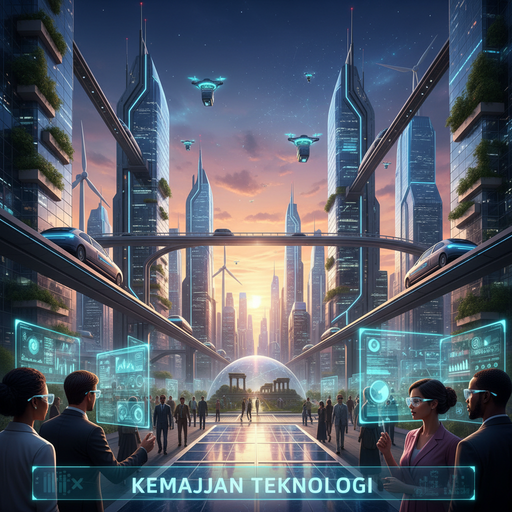
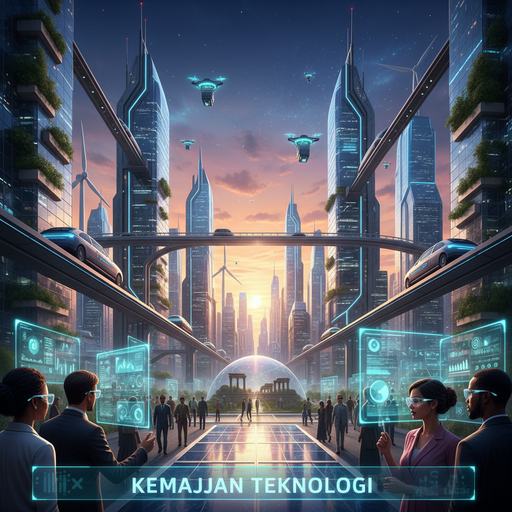


The Flywheel Effect of 2026: The Moment When $16 Trillion of Idle Capital Awakens Through Three Technologies
Since the beginning of the year, a common understanding has been forming within the blockchain and financial technology industries. It is that 2026 will be a turning point in history. The scenario is that an unutilized capital of $16 trillion will suddenly become active as three elements—asset tokenization, stablecoins, and AI agents—mature simultaneously. At the core of this process is the “flywheel effect” advocated by economics—a self-reinforcing cycle that accelerates once it starts spinning.
A veteran of the financial industry, who has been a pioneer in blockchain policy in Wyoming, has repeatedly shared a single insight over the past decade: “The biggest problem in the financial system is not risk, but friction.” This perspective is not merely a proposal for technical optimization but fundamentally questions the very structure of the economy.
The Structural Problem of Financial Friction
Anyone with decades of experience on Wall Street understands one thing for sure: the highest cost in finance is not risk, but friction.
People who have experienced buying real estate will vividly feel this pain. After inspections, signing countless documents, and packing household goods into boxes, they find themselves sitting on a folding chair in an empty living room for three days because “funds are unsettled” or “the contract is unregistered.” This patience-demanding state is actually occurring daily on a scale of trillions of dollars in the global economy.
Pending settlement funds, reserves held in foreign banks for cross-border transfers, the 48-hour margin call system—all these indicate liquidity “lock-up.” Currently, the global financial system manages about $300 trillion in assets but still operates at speeds reminiscent of the dial-up era.
When the U.S. changed its settlement cycle from T+2 to T+1 in 2024, collateral needs worth $3 billion were freed up just within the settlement companies. This was merely removing one day’s friction from a single market. If all asset classes worldwide could settle at T+0 and do so 24/7, it would not be a gradual improvement but a phase transition.
2026: Three Technologies Graduate from Testing to Large-Scale Implementation
Why is 2026 considered a “turning point”? The reason is clear: three technological innovations will simultaneously break out of testing phases and move into large-scale deployment.
The first is “asset tokenization.” This involves representing traditional securities, real estate, and even government debt as digital assets on the blockchain. Morgan Stanley’s platform has already demonstrated that tokenized repo transactions can be scalable.
The second is “programmable stablecoins.” These are not just price-stable mechanisms but currencies that can automatically execute payments through code.
The third is “autonomous AI agents.” This is critically important. While tokenized assets and stablecoins exist, the current system still relies on human traders clicking buttons. However, in a T+0 world, humans become a new bottleneck. Monitoring collateral across ten time zones and executing margin calls within 40 seconds is impossible for humans. AI agents, on the other hand, can perform these automatically.
By 2026, the shift from “high-level human oversight” to “automated execution systems” will become a reality. Even while CFOs sleep, AI will continuously optimize capital allocation in response to rapidly changing market conditions.
The Flywheel Effect: A Self-Reinforcing Accelerating Mechanism
When these three elements start functioning together, a powerful cycle will emerge in the economy. This is the “flywheel effect.”
The mechanism is as follows: as more assets are tokenized, on-chain settlement demand surges. This increased demand boosts the use of stablecoins, which in turn further promotes the tokenization of government debt that underpins stablecoins. This is not merely a technological shift but a self-reinforcing flywheel.
Once this cycle begins to spin, each element accelerates the growth of the others. More institutions entering tokenization increases trust in the stablecoin ecosystem, attracting even more participants. In this way, the flywheel effect enables exponential growth beyond incremental improvements.
From a classical economic perspective, this transition is a rare achievement. From Irving Fisher’s “Equation of Exchange” (MV=PY), tokenization is the ultimate upgrade of financial infrastructure, directly increasing the velocity of money (V) and translating into real economic production.
What about the “liquidity trap” feared by John Maynard Keynes—where fear causes people to hoard funds and liquidity stalls? AI agents serve as a remedy. Unlike humans, AI has no emotions or psychological biases. It is programmed to maintain maximum capital efficiency.
When this flywheel effect combines with AI-driven automatic execution, the unlocking of $16 trillion will become a new engine for global GDP growth.
Interoperability: The Biggest Challenge to Unlocking $16 Trillion
However, even with optimistic prospects, there is a serious obstacle: the “interoperability barrier.”
Currently, we are building “liquidity silos.” Morgan Stanley maintains its own ledger, Goldman Sachs manages a separate integrated ledger, and public networks like Ethereum operate on entirely different systems.
The harsh reality is that if tokenized government bonds on private bank ledgers cannot immediately “interact” with stablecoins on public protocols, we are not eliminating friction but merely moving it into digital islands.
Solving this interoperability challenge is the most critical technical task for 2026. Without a unified messaging standard, “liberation” will remain in isolated pools, and true global liquidity will not be achieved. Breaking through the interoperability barrier faced by the blockchain industry is an essential condition for activating the $16 trillion flywheel effect.
Transition to Economic Growth: Benefits Without Inflation
The economic impact of the flywheel effect is a fundamental shift beyond monetary value.
In a high-interest environment, trapped capital itself signifies debt. This reality creates a self-reinforcing cycle. The form of economic growth will change. Considering Milton Friedman’s principle that “inflation is always and everywhere a monetary phenomenon, occurring only when the growth of the money supply exceeds the growth of output,” accelerating the efficiency and velocity of existing capital allows the global economic engine to upgrade without printing a single additional dollar.
The $16 trillion release is not a speculative bet on cryptocurrencies but a structural inevitability. It is the very process of capital shifting from “paper process speed” to “information speed.”
As we reach 2026, the vision foreseen by industry pioneers ten years ago is finally materializing. Technology is beginning to solve the fundamental problem of “frictional debt.” The only remaining question is: Are you preparing now for this liberation, or will you observe this transformation from outside the traditional system?