


Futures
Access hundreds of perpetual contracts
TradFi
Gold
One platform for global traditional assets
Options
Hot
Trade European-style vanilla options
Unified Account
Maximize your capital efficiency
Demo Trading
Introduction to Futures Trading
Learn the basics of futures trading
Futures Events
Join events to earn rewards
Demo Trading
Use virtual funds to practice risk-free trading
Launch
CandyDrop
Collect candies to earn airdrops
Launchpool
Quick staking, earn potential new tokens
HODLer Airdrop
Hold GT and get massive airdrops for free
Launchpad
Be early to the next big token project
Alpha Points
Trade on-chain assets and earn airdrops
Futures Points
Earn futures points and claim airdrop rewards


More





The Great AAVE Swap Debacle: A $50M Lesson in DeFi Slippage, Governance, and Market Reality
#AAVETokenSwapControversy
🎯 Introduction: When a Swap Goes Horribly Wrong
The cryptocurrency market is no stranger to volatility, but sometimes, the biggest risks aren't from the market itself—they're from the mechanisms we use to trade. The recent has sent shockwaves through the DeFi community, serving as a stark reminder of the perils of liquidity fragmentation, Maximum Extractable Value (MEV) bots, and the critical importance of governance in protocol design.
As AAVE trades in the $107–$110 range, this incident has ignited a firestorm of debate on tokenomics, user experience, and the very nature of decentralized control. Let's dissect what happened, why it matters, and what it means for the future of DeFi.
1️⃣ The Incident: A $50M Trade That Almost Vanished
At the heart of the controversy is a single, catastrophic trade. A trader attempted to swap a massive $50 million USDT for AAVE tokens**. Instead of receiving millions of dollars worth of AAVE, the transaction yielded a paltry **~327 AAVE, worth approximately $36,000.
How did this happen?
· Extreme Slippage Tolerance: The trader configured their slippage tolerance to near 99% . In essence, this was a "do-or-die" command, instructing the protocol to execute the trade at any price, no matter how unfavorable.
· Predatory MEV Bots: In the mempool, MEV bots saw this lucrative, unprotected transaction. They front-ran the order, artificially driving the price of AAVE up in the pool, and then sold it back immediately after the victim's trade executed, capturing the massive price discrepancy as profit.
· Illiquid Pools: The liquidity for AAVE against USDT was not deep enough to absorb a $50 million order. This shallow liquidity, combined with the MEV attack, turned a simple swap into a financial black hole.
The result was a near-total loss of capital. While the protocol team offered a goodwill refund of roughly $600,000 in fees, the core capital was gone—a brutal lesson in execution risk.
2️⃣ Beyond the Swap: The Governance and Design Flaws
This wasn't just a "user error." The controversy has peeled back the layers on deeper, systemic issues within the Aave protocol and DeFi at large.
· a. The Governance Dilemma: The incident has reignited fierce debates in Aave's governance forums. Who is responsible? Should the DAO intervene and socialize the loss? These questions highlight the tension between "code is law" and the human desire for fairness. Furthermore, ongoing discussions about fee and revenue routing—whether fees should flow to the DAO treasury or directly benefit stakers and token holders—have gained new urgency. A robust treasury could potentially act as a backstop in such crises, but that requires sound governance.
· b. Liquidity Fragmentation: The swap exposed a harsh truth: even top-tier DeFi protocols suffer from liquidity fragmentation. When liquidity is scattered across different pools and layers, executing large, single-asset swaps becomes a game of Russian roulette. It underscores the need for protocols to incentivize deeper, more unified liquidity to protect users and maintain market stability.
· c. The User Experience Paradox: DeFi prides itself on permissionless innovation, but this incident begs the question: At what cost? While the protocol executed exactly as programmed, the user interface failed to protect the user from themselves. This has sparked a critical conversation about the balance between decentralization and consumer protection. Should UIs implement hard-coded limits to prevent such catastrophic errors, even if it compromises the "any trade, any time" ethos?
3️⃣ Market Pulse: AAVE Price Action and Sentiment
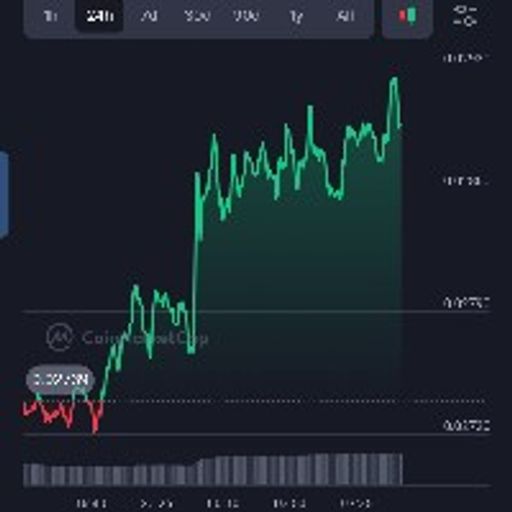
In the wake of the controversy, AAVE's price has found itself trading in the $107–$110 range, a zone that reflects a market caught between fear and fundamental value.
· Bearish Pressure: Headlines surrounding the swap execution risk and the subsequent governance drama have undoubtedly weighed on short-term sentiment. It adds a layer of uncertainty for institutional players considering large entries.
· Fundamental Strength: Despite the noise, AAVE remains a blue-chip DeFi asset. Its role as the dominant lending protocol, with billions in total value locked (TVL) and consistent borrowing activity, provides a strong floor. Investors are watching to see if the DAO can turn this crisis into an opportunity for protocol improvement.
· The Bigger Picture: This price action is a classic example of how on-chain events and governance debates directly influence market confidence. The token is currently trading based on the protocol's resilience, not just its revenue.
4️⃣ Key Takeaways for Traders and Users
This saga is a masterclass in what not to do in DeFi. Here are the critical lessons:
✅ Risk Management is Non-Negotiable: Never set slippage above 1-3% for large orders. If a trade can't execute within a reasonable range, it's a sign the liquidity isn't there to support it.
✅ Assess Liquidity Depth: Before hitting "swap," check the pool size. Use DEX aggregators that split orders across multiple pools to minimize price impact.
✅ Utilize Execution Tools: For trades of this magnitude, consider Over-the-Counter (OTC) desks or Time-Weighted Average Price (TWAP) tools that break the order into smaller chunks over time.
✅ Governance Literacy: Stay informed on protocol proposals. Decisions on fee structures and treasury management directly impact token value and protocol safety.
---
5️⃣ The Broader Implications for DeFi
The is more than a cautionary tale; it's a defining moment for the industry. It highlights the growing pains of a maturing financial system:
· The Governance-Execution Gap: On-chain voting is slow; markets are fast. Protocols must bridge the gap between idealistic governance and the pragmatic need for rapid, protective action.
· Balancing Freedom and Safety: DeFi must evolve to include better user safeguards without sacrificing its permissionless nature. This might mean smarter default settings, better risk warnings, or even protocol-level circuit breakers for anomalous trades.
· The Evolution of Liquidity: We are moving toward a future of aggregated, cross-chain liquidity. The protocol that can offer the deepest, most efficient liquidity will win the next wave of users.
💬 Conclusion
The AAVE swap controversy serves as a powerful reminder that in the world of decentralized finance, knowledge and caution are your greatest assets. While the technology offers unprecedented freedom, it also demands unprecedented responsibility from its users.
As the Aave community debates the path forward, one thing is clear: the lessons learned from this $50 million mistake will shape the design of DeFi protocols for years to come.
What are your thoughts on the incident? Should the protocol have done more to prevent this? Drop your comments below! 👇