


Futures
Access hundreds of perpetual contracts
TradFi
Gold
One platform for global traditional assets
Options
Hot
Trade European-style vanilla options
Unified Account
Maximize your capital efficiency
Demo Trading
Introduction to Futures Trading
Learn the basics of futures trading
Futures Events
Join events to earn rewards
Demo Trading
Use virtual funds to practice risk-free trading
Launch
CandyDrop
Collect candies to earn airdrops
Launchpool
Quick staking, earn potential new tokens
HODLer Airdrop
Hold GT and get massive airdrops for free
Launchpad
Be early to the next big token project
Alpha Points
Trade on-chain assets and earn airdrops
Futures Points
Earn futures points and claim airdrop rewards


More





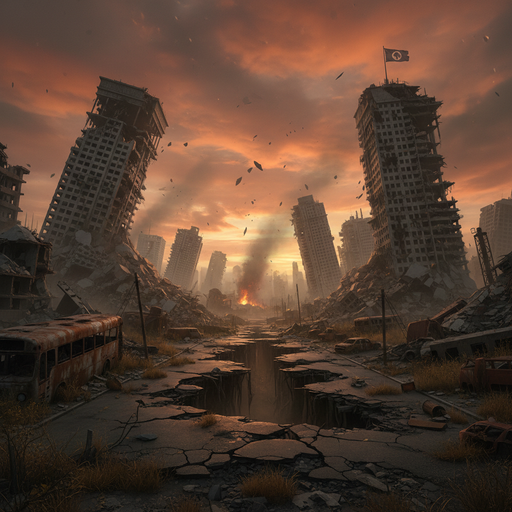
Global Supply Chain Crisis Amid Iran Conflict
I. Disconnection Between Optimism in the Stock Market and Market Reality
Since the outbreak of the Iran conflict, global financial markets have shown a clear split. Equity investors initially treated the regional conflict as a “buying opportunity.” In the early phase of the conflict, the S&P 500 Index only saw mild fluctuations—as if the war were merely a temporary administrative hurdle. However, that optimism completely collapsed in late March. The S&P 500 Index fell to a six-month low, and the Nasdaq Index officially entered a technical correction range, down more than 10% from its recent peak.
The bond and commodities markets, meanwhile, displayed a starkly different picture. Bond investors faced “cognitive dissonance”: the yield on the 10-year U.S. Treasury rose, but the break-even inflation rate remained relatively stable. This suggests that the market’s concern is not solely inflation—it is the risk of both bonds and stocks falling in tandem due to a supply shock. The yield on the UK’s 30-year government bonds climbed to 5.12%, leaving the Bank of England facing a double bind: an energy shock layered on slowing growth.
The “Trump Pressure Index,” developed by Deutsche Bank’s cross-asset strategy head, has become the new focus on Wall Street. The index combines the one-month change in Trump’s approval rating, one-year inflation expectations, the performance of the S&P 500, and U.S. Treasury yields. Its goal is to gauge the pressure a president faces regarding policy adjustments. An increase in the index implies that the administration may soften its strategy toward Iran. In late March, the president announced extending the final deadline for peace talks by 10 days to April 6. The move was interpreted by the market as a signal of a “TACO moment” (TACO, meaning “Trump Always Chickens Out”).
II. A Single-Point Failure in Key Commodities: A Supply Crisis Far Beyond Oil
Oil may be at the center of the conflict, but it is relatively substitutable. Brent crude prices have risen to around $110 per barrel, sharply higher than before the conflict. However, the genuinely fragile link in the global supply chain is in goods that cannot be replaced.
Qatar accounts for about 20% of global liquefied natural gas (LNG) exports. After its Ras Laffan facilities were hit by Iranian missile strikes, an estimated 17% of capacity will be unable to recover within the next 3 to 5 years. Qatar’s energy minister has announced force majeure for long-term contracts. The last batch of LNG cargo ships scheduled to arrive at their destinations before the conflict will be followed by a near-total disruption of global LNG flows.
Helium supply is facing a cliff as well. Roughly 30% of commercial helium worldwide depends on transport through the Strait of Hormuz, and most comes from Qatar’s natural gas byproducts. There are no substitutes for semiconductor manufacturing, MRI equipment, or high-tech cooling. With the strait blocked, helium prices have surged, and high-tech hubs in Asia and the United States will struggle to find replacement routes in the short term.
Fertilizer and aluminum trade have also been severely hit. About one-third of seaborne fertilizers and one-fourth of seaborne aluminum globally pass through the Strait of Hormuz. Prices for nitrogen-based fertilizers have spiked during the spring planting season, directly threatening food security. A UAE minister noted that Iran “holds the strait hostage, and every country pays a ransom at the grocery store.” The World Food Programme warns that if farmers in Asia and Africa cannot apply fertilizer, acute hunger levels in 2027 could reach record highs. Middle East aluminum output accounts for roughly 9–10% of the world total, and the seaborne trade share is even higher. Europe and the United States’ import dependence increases, intensifying supply shortages and putting further upward pressure on aluminum prices.
These single-point failures expose the fragility of modern supply chains. Diplomatic agreements cannot instantly repair liquefaction plants, mines, or transportation networks. In the short term, the world will enter a scarcity era.
III. Technical and Time Barriers to Restoring Oil Infrastructure
The Strait of Hormuz blockade has been in place for nearly a month. Oil-producing countries in the Gulf have been forced to shut down pumps, leaving storage tanks saturated. Closing wells is not as simple as pausing production: with crude oil left stagnant, waxification and separation occur, and pore blockage follows; groundwater seepage may permanently reduce capacity. Heavy mud or cement plugging requires painstaking drilling-out, and improper restart pressure control can permanently damage the oil fields. Experts estimate that a full recovery will require several months of precise operations.
From a naval standpoint, although the United States and Israel have bombed intensively, they have not substantially removed Iran’s control of the strait. The Pentagon has added 10,000 troops, including aims to seize missile-launch islands. Even if threats are cleared, psychological containment (suspected mine warfare) still calls for a long mine-clearing and escort operation. Oxford Economics forecasts that the earliest possible reopening of navigation through the strait is May.
On the logistics front, transport volumes have dropped by 97%. Insurance cancellations and crew reluctance to take risks mean that even if a peace agreement is signed, market normalization will still require weeks. Physical reality far exceeds the speed implied by Twitter announcements.
IV. The Long-Term Geoeconomic Impact of the Strait of Hormuz Blockade
The strait carries about 20 million barrels of oil per day and LNG, accounting for 20% of global oil consumption and 20% of LNG trade. Asian markets are hit by more than 84% of the flow shock. Iran claims sovereignty and charges a toll of $2 million per ship. If it continues, it will create a “global transit tax” running into hundreds of billions of dollars per year, partially offsetting losses in oil revenue.
The conflict has exposed the power of asymmetric warfare: cheap drones and missiles can hold the global economy hostage. Even if the United States eases sanctions on Iran and Russia to mitigate the supply shock, it still shows that market sensitivity is higher than the presence of military bases.
V. Energy Vulnerability in the Modern Economy Driven by AI
After the oil crisis of the 1970s, global oil intensity has been cut in half, but energy vulnerability has shifted to the power grid. The marginal pricing mechanism for gas-fired electricity makes an LNG disruption directly push up electricity prices. AI data centers have become a new risk point.
The latest forecast from the International Energy Agency shows that by 2030, global data-center electricity demand will double to 945 terawatt-hours—equivalent to Japan’s current total electricity consumption. The United States will contribute half of the growth. AI server demand will increase by 30% per year. These massive facilities require stable baseload power, and an energy shock will directly impact hundreds of billions of dollars in AI infrastructure investment and economic growth expectations.
VI. Winners and Losers Amid Conflict: Assessing Relative Strategic Advantage
While Iran has suffered heavy damage, survival itself is a strategic victory. It has proven that its asymmetric tools can effectively cripple global supply chains. The United States has been forced to pause some sanctions, highlighting that energy security takes priority over diplomatic goals.
Russia receives a double boost: a surge in oil and gas prices eases budget pressure, while the U.S. lifting its sanctions on its oil tankers provides funding for the Ukraine battlefield—and also contributes to division within the U.S. Congress.
China’s energy self-sufficiency is about 85% (coal and renewables). But the oil shock instead accelerates exports of its solar, batteries, and electric vehicle technologies. Europe faces a second energy crisis: stored gas is only 30%, electricity costs surge by 30%, and the risk of deindustrialization in heavy industry rises. The UK is hit by the worst stagflation shock in 50 years, and many mortgage product listings are pulled from the market.
Israel’s tactical success masks a strategic predicament: the missile threat expands, and nuclear facilities remain—while the cost of domestic support rises in the United States. The U.S. appears energy independent on the surface, but embedded energy (Asia-made imported goods) drives inflation transmission, and agriculture’s reliance on fertilizer further raises food prices. The Federal Reserve’s policy faces dramatic adjustments.
VII. Global Energy Rationing, Social Division, and Long-Term Fallout
Dubai has shifted from a luxurious oasis to a ghost city. With more than 90% of its expatriate population leaving, stability becomes the core product. Thai civil servants are ordered to use stairs; the Philippines implements a four-day workweek; and Japan’s potato chip factories shut down due to a shortage of oil. Poor countries take the heaviest blow: universities in Bangladesh close; in Pakistan and India, families receive only half a can of cooking gas.
Even if subsidies in wealthy countries cushion domestic prices, they distort global price signals and worsen scarcities in poor countries. Energy security has replaced ideology and become the central currency of geopolitics.
VIII. Conclusion: Physical Reality Surpasses Market Optimism
Although markets may rebound temporarily due to negotiations before the April 6 deadline, the pace of recovery is determined by physical constraints—restarting oil wells, clearing mines in the strait, and repairing factories. The conflict strengthens two trends: the effectiveness of asymmetric disruption improves, and illusions of a safe distance collapse (Iran’s missile range reaches 4,000 kilometers, covering all of Europe).
The global economy is moving toward a fragmented supply era. Stock traders buy “peace,” but ships, pipelines, and turbine systems follow their own timetables. In the long run, this crisis may accelerate the energy transition and diversification of supply chains—yet it also reveals systemic risks in the current system. Decision-makers need to go beyond short-term announcements and focus on infrastructure resilience and international coordination to mitigate the next round of shocks.