
Futures
Access hundreds of perpetual contracts
TradFi
Gold
One platform for global traditional assets
Options
Hot
Trade European-style vanilla options
Unified Account
Maximize your capital efficiency
Demo Trading
Introduction to Futures Trading
Learn the basics of futures trading
Futures Events
Join events to earn rewards
Demo Trading
Use virtual funds to practice risk-free trading
Launch
CandyDrop
Collect candies to earn airdrops
Launchpool
Quick staking, earn potential new tokens
HODLer Airdrop
Hold GT and get massive airdrops for free
Launchpad
Be early to the next big token project
Alpha Points
Trade on-chain assets and earn airdrops
Futures Points
Earn futures points and claim airdrop rewards


More




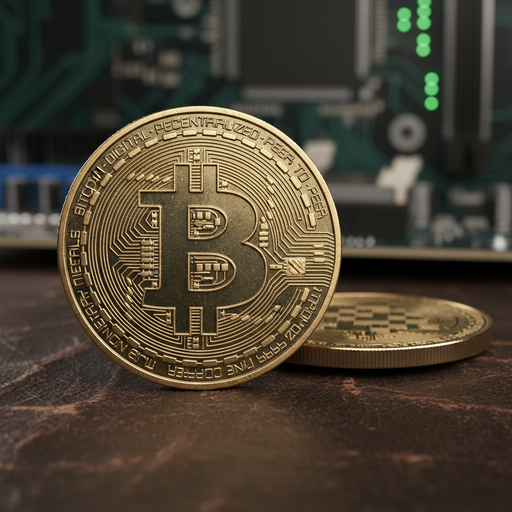

#BitcoinMiningIndustryUpdates is The Bitcoin mining industry is entering a new phase one that feels more competitive, more strategic, and honestly, more mature than ever before. What used to be a space dominated by small miners and hobby setups has now evolved into a full-scale global industry where efficiency, energy strategy, and long-term vision decide who survives and who gets pushed out.
From my perspective, one of the biggest shifts happening right now is the increasing focus on energy optimization. Mining is no longer just about having powerful hardware—it’s about having access to cheap, sustainable electricity. Large mining firms are actively relocating operations to regions with surplus energy, hydroelectric power, or even renewable sources like solar and wind. This isn’t just about cost-cutting; it’s also about staying relevant in a world where environmental concerns are becoming impossible to ignore.
At the same time, the impact of the latest Bitcoin halving is still being felt across the industry. With block rewards reduced, miners are under more pressure to maintain profitability. This creates a natural selection effect—only the most efficient operations can sustain themselves. Smaller or less optimized miners may struggle, while larger players with better infrastructure and capital reserves gain more dominance.
• Post-Halving Pressure
Reduced rewards are forcing miners to rethink strategies and cut inefficiencies.
• Rise of Industrial Mining
Large-scale operations are expanding, increasing competition and raising entry barriers.
• Energy as a Competitive Edge
Access to low-cost and renewable energy is becoming the key differentiator.
Another trend I’m noticing is the growing integration of mining with broader financial strategies. Mining companies are no longer just producing Bitcoin—they’re managing it as an asset. Some hold their mined BTC as long-term investments, while others use it for liquidity, hedging, or even collateral in financial markets. This shift shows how mining is becoming more connected to the overall crypto ecosystem rather than operating in isolation.
What’s also interesting is how mining is starting to play a role in stabilizing energy grids. In some regions, miners act as flexible energy consumers—they can reduce or increase their usage depending on grid demand. This creates a unique relationship between the crypto industry and traditional infrastructure, turning mining into more than just a digital activity.
• Grid Balancing Role
Miners can help stabilize energy supply by adjusting consumption dynamically.
• Financialization of Mining
BTC holdings, hedging strategies, and institutional involvement are increasing.
• Technological Advancements
New-generation mining hardware is improving efficiency and reducing costs.
From a market perspective, Bitcoin mining health is closely tied to price action. When BTC prices rise, mining becomes more profitable, attracting more participants. When prices fall, weaker players exit, reducing network competition. This constant cycle keeps the network resilient and self-adjusting.
In my opinion, this is one of Bitcoin’s strongest features—the way its mining ecosystem naturally adapts to changing conditions. It’s not static; it evolves. And right now, it’s evolving toward a more professional, energy-conscious, and financially integrated industry.
Looking ahead, I believe the future of Bitcoin mining will be shaped by three major forces:
• Regulation – Governments may introduce clearer policies, impacting where and how mining operates.
• Energy Innovation – Renewable and alternative energy sources will play a bigger role.
• Institutional Expansion – More large-scale players entering the space will increase competition but also bring stability.
In conclusion, the Bitcoin mining industry is no longer just about solving complex algorithms—it’s about strategy, efficiency, and adaptation. The landscape is changing fast, and only those who evolve with it will thrive. For investors and traders, keeping an eye on mining trends is crucial because it often provides early signals about Bitcoin’s long-term strength.