
Futures
Access hundreds of perpetual contracts
TradFi
Gold
One platform for global traditional assets
Options
Hot
Trade European-style vanilla options
Unified Account
Maximize your capital efficiency
Demo Trading
Introduction to Futures Trading
Learn the basics of futures trading
Futures Events
Join events to earn rewards
Demo Trading
Use virtual funds to practice risk-free trading
Launch
CandyDrop
Collect candies to earn airdrops
Launchpool
Quick staking, earn potential new tokens
HODLer Airdrop
Hold GT and get massive airdrops for free
Pre-IPOs
Unlock full access to global stock IPOs
Alpha Points
Trade on-chain assets and earn airdrops
Futures Points
Earn futures points and claim airdrop rewards


More


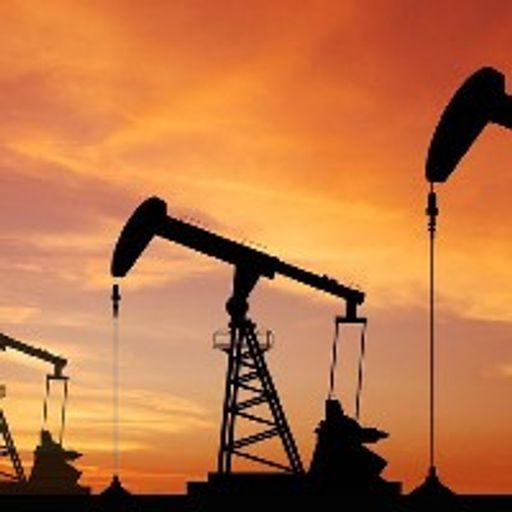


The Impact of Geopolitical Upheavals on the Global Economy and Crypto Assets (2022–2026)
The new geopolitical era that began with the Russia-Ukraine War in 2022 has profoundly affected not only regional security balances but also the global economic structure, energy supply, food chains, and financial asset classes. This process, followed by the Israeli-Palestinian conflict and finally the US-Iran tension, has created a multi-layered global stress environment.
This analysis evaluates the impact of these developments on cryptocurrency markets, inflation dynamics, and the global macroeconomy from the perspective of a crypto investor.
1. The Russia-Ukraine War: The Beginning of a New Financial Era
1.1 Energy and Commodity Shock
Due to Russia's central role in energy exports, the initial impact of the war manifested as a sharp increase in oil and natural gas prices. Europe's energy supply security crisis:
Increased production costs
Suppressed industrial production
Triggered global inflation
This situation directly affected food prices, in particular. Ukraine and Russia's share in wheat and fertilizer exports created a disruption in the global supply chain.
1.2 Financial System and the Shift Towards Crypto
The SWIFT sanctions imposed on Russia during the war questioned trust in the centralized financial system. At this point:
Cryptocurrencies emerged as an alternative means of payment
Stablecoin usage increased
The reflex to protect individual assets strengthened
However, this rise was not permanent; because during the same period, global central banks began aggressive interest rate hikes to combat inflation.
2. Inflation, Interest Rates, and Crypto Markets
In the period 2022–2024, in developed economies, primarily the US:
High inflation
Tight monetary policy
Liquidity contraction
was observed.
From the perspective of crypto markets, this situation resulted in:
Exit from risky assets
Loss of value in Bitcoin and altcoins
Temporary decrease in institutional investor interest
However, an important distinction emerged here:
Crypto assets oscillated between two different identities:
Risky technology asset
Digital “safe haven”
As geopolitical crises increased, the second role began to strengthen.
3. Israel-Palestine Conflict: Uncertainty and the Search for a Safe Haven
The escalating Israel-Palestine conflict after 2023 created:
Sudden risk-off
Rise in gold and oil
Limited but noticeable inflow into crypto
these consequences were felt in the markets. 3.1 Crypto Perspective
During this period, Bitcoin:
Experienced volatile movements in the short term
However, long-term investor interest increased
Especially in developing countries:
Fear of capital controls
Distrust in the banking system
supported cryptocurrency use.
4. US-Iran Tension: Energy and Global Risk Pricing
The escalating US-Iran tension in the final stage created a new vulnerability in the global economy.
4.1 Inflationary Pressure Through Energy
Iran's geographical location:
Iran is a critical point for the global oil flow through the Strait of Hormuz
A potential conflict would rapidly drive up oil prices
This situation:
Increases transportation costs
Pushes food prices upwards again
Could make inflation permanent
4.2 Impact on Crypto
At this stage, crypto markets are exhibiting different behavior:
As geopolitical risk increases, Bitcoin has begun to be perceived as an “alternative reserve asset.”
Institutional players have begun to reposition themselves.
The market has become deeper and more resilient due to the ETF effect.
5. Food Inflation and Socioeconomic Effects
The least discussed but most critical effect of geopolitical crises has been food inflation.
5.1 Basic Dynamics
Fertilizer prices (Russia effect)
Grain supply (Ukraine effect)
Energy costs (Middle East effect)
This triple structure has permanently pushed global food prices upwards.
5.2 Connection with Crypto
There is an indirect relationship between food inflation and crypto:
Real income decrease → investment capacity decreases
However, high inflation → the search for alternative assets increases
Therefore, crypto demand is divided into:
Speculative in developed countries
Hedging in developing countries
and so on.
6. General Assessment: The New Financial Paradigm
The 2022–2026 period has shown us three fundamental realities:
6.1 Geopolitical Risk is Persistent
The global economy is now affected not by a single crisis, but by multiple simultaneous crises.
6.2 Crypto Assets are Evolving
The crypto market:
Is transforming from a speculative tool
to a macroeconomic hedge tool.
6.3 Inflation is the New Normal
Structural inflation stemming from energy and food:
Has narrowed the control space of central banks
Has increased interest in alternative financial systems
Conclusion
This process, which began with the Russia-Ukraine war, deepened with the Israel-Palestine conflict, and expanded with the US-Iran tension, has transformed the global economy into a multipolar, high-risk, and inflationary structure.
For cryptocurrency investors, this new order means:
Volatility in the short term
Opportunity in the medium term
Structural transformation in the long term.
In this context, crypto assets are no longer just a technology investment, but also a financial reflex against geopolitical risks.
#USIranCeasefireTalksFaceSetbacks
#CryptoMarketRecovery
#OilEdgesHigher
#GateSquareAprilPostingChallenge
$BTC $XAUUSD $XTIUSD