Ilya Polosukhin, co-founder of NEAR Protocol, presented a thesis on April 16, 2026, at the Buidl Asia 2026 conference in Seoul that digital assets will expand beyond their current role as investment vehicles to become core transaction infrastructure in an artificial intelligence-driven economy, according to his presentation at the conference. Polosukhin emphasized that while AI continues to evolve as an interface connecting humans and computing, the critical shift will be the emergence of autonomous agents that act on behalf of users — requiring fundamental redesign of blockchain infrastructure to support confidential transactions and privacy protection.
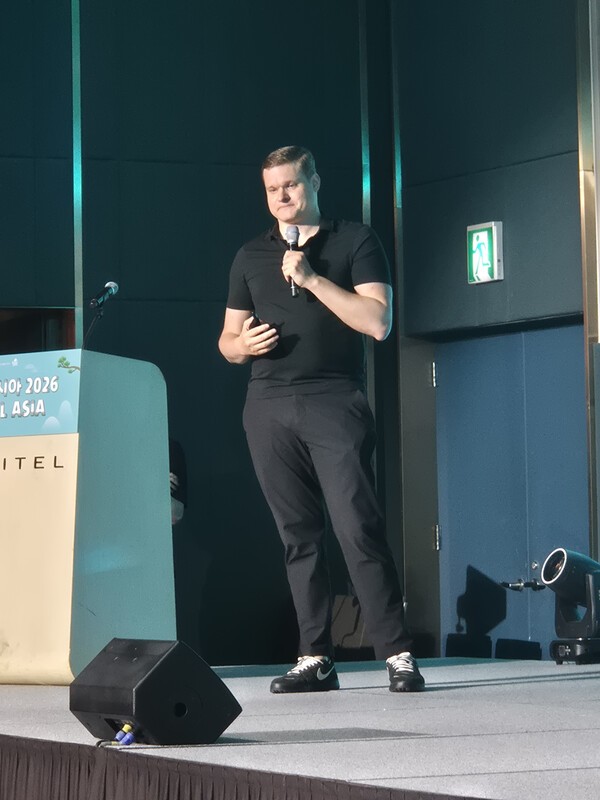
Polosukhin presented the analysis at the Buidl Asia 2026 conference held at Sofitel Ambassador Seoul Hotel in the Jamsil district on April 16, 2026.
AI Agent Evolution and the Shift to Autonomous Financial Management
Polosukhin outlined the progression of AI development through distinct stages, according to his conference presentation. The first stage encompasses search and recommendation systems that provide information to users. The second stage involves conversational AI that engages in dialogue with users. The third stage, which Polosukhin identified as the current inflection point, features action-performing agents that execute actual transactions and tasks on behalf of users — including asset transfers, decentralized finance (DeFi) investments, and position management, per his framework presented at the conference.
Polosukhin noted that NEAR Protocol originated as an AI project, with blockchain infrastructure subsequently developed to facilitate data collection and participant compensation in AI model training, according to his remarks at Buidl Asia 2026. This origin shaped the protocol’s approach to supporting agent-based economic activity.
Current Blockchain Infrastructure Limitations for Agent-Driven Finance
Polosukhin identified a critical mismatch between current blockchain design and the requirements of AI-agent-managed personal finance. Existing blockchain systems are architected for complete transaction transparency — all wallet activity and transaction history are publicly visible on the ledger, according to his analysis presented at the conference. This transparency-by-design approach, while beneficial for certain use cases, creates security and privacy vulnerabilities when AI agents manage financial activity on behalf of individual users, per Polosukhin’s assessment.
He emphasized that in an environment where agents execute transactions on behalf of users, exposing wallet activity and transaction details to public view creates unacceptable risks for both security and financial privacy, according to his presentation. Polosukhin argued that users require assurance that their financial activities are not subject to monitoring or surveillance by third parties.
Confidentiality as the Core Infrastructure Requirement
Polosukhin proposed confidentiality-based blockchain infrastructure as the solution to enable AI agents to manage personal finances securely, according to his remarks at Buidl Asia 2026. This approach would allow transactions to be processed and settled while concealing asset amounts, transaction details, and wallet identities from public view, per his framework.
Polosukhin characterized confidentiality as an essential element for the mass adoption of digital assets in everyday financial activity, according to his conference presentation. He stated that while digital assets are currently utilized primarily as investment instruments, providing users with confidence that their financial activities are not subject to external monitoring is fundamental to expanding their utility. Confidentiality enables the transition from investment-only use cases to everyday payment and service infrastructure, per his analysis.
Polosukhin also noted that confidentiality-based infrastructure must balance privacy with regulatory compliance — organizations require environments in which both asset protection and regulatory adherence are guaranteed, according to his presentation at the conference.
Future Transaction Models: From User Direction to Agent Optimization
Polosukhin outlined a vision for future digital asset infrastructure in which users specify desired outcomes and AI agents autonomously execute transactions and identify optimal conditions for completion, according to his remarks at Buidl Asia 2026. In this model, users would not need to understand blockchain architecture or transaction mechanics; agents would handle all execution details, per his framework.
Polosukhin extended this vision to agent-to-agent transaction models, according to his presentation. He described a potential “agent marketplace” structure in which specific tasks are assigned, multiple agents compete to execute them, and rewards are distributed based on results. AI systems could also perform verification and dispute resolution in this framework, per his analysis presented at the conference.
Long-Term Implications: Digital Assets as AI-Commerce Infrastructure
Polosukhin projected that business-to-business commerce structures could eventually transition to direct AI-to-AI transactions, according to his remarks at Buidl Asia 2026. In this scenario, digital assets would function as the core payment and settlement mechanism for AI-driven commerce, per his long-term vision presented at the conference.
Polosukhin emphasized that confidentiality is not merely a privacy feature but a foundational requirement for digital asset infrastructure to support the full range of AI-driven economic activity — from individual financial management to inter-agent commerce and enterprise transactions, according to his presentation at Buidl Asia 2026.
Frequently Asked Questions
Q: What are the stages of AI agent development that Polosukhin identified?
According to Polosukhin’s presentation at Buidl Asia 2026, AI development progresses through three stages: search-and-recommendation systems, conversational AI, and action-performing agents that execute actual transactions and tasks on behalf of users. The third stage — autonomous agents managing financial activity — represents the current inflection point in AI evolution.
Q: Why does current blockchain infrastructure create problems for AI-managed personal finance?
Current blockchain systems are designed for complete transaction transparency, with all wallet activity and transaction details publicly visible on the ledger, according to Polosukhin’s analysis at the conference. This transparency creates security and privacy risks when AI agents manage personal finances on behalf of users, as it exposes sensitive financial information to public monitoring.
Q: What is Polosukhin’s proposed solution, and how does it enable mass adoption of digital assets?
Polosukhin proposed confidentiality-based blockchain infrastructure that would allow transactions to be processed while concealing asset amounts, transaction details, and wallet identities from public view, per his presentation at Buidl Asia 2026. He characterized confidentiality as essential for expanding digital asset utility from investment-only use cases to everyday payment and service infrastructure, while also ensuring regulatory compliance.
Disclaimer: The information on this page may come from third parties and does not represent the views or opinions of Gate. The content displayed on this page is for reference only and does not constitute any financial, investment, or legal advice. Gate does not guarantee the accuracy or completeness of the information and shall not be liable for any losses arising from the use of this information. Virtual asset investments carry high risks and are subject to significant price volatility. You may lose all of your invested principal. Please fully understand the relevant risks and make prudent decisions based on your own financial situation and risk tolerance. For details, please refer to
Disclaimer.


