M谋ngYueZen

vip
Peak Tier 0
Airdrop Hunter
Market Analyst
No content yet
  • Reward
  • Comment
  • Repost
  • Share
yes ✅
User_anyvip
#PredictToWin1000GT
My Prediction Market Proposal for Gate:
Event: Will Bitcoin (BTC) reach $100,000 before December 31, 2026?
Options: Yes / No 🤔
Logic: BTC is trading in the $65,000–$68,000 zone now. With massive spot ETF inflows, institutional and corporate treasury adoption, post-halving bull cycle momentum, and potential macro tailwinds (rate cuts + pro-crypto policies), a move to $100,000 by end of 2026 looks very achievable in the next leg up.
Key Milestones: Record-breaking ETF inflows, nation-state/corporate Bitcoin accumulation, regulatory clarity improvements, and broader crypto market recovery.
O think YESSS🔥🔥🔥
$BTC
repost-content-media
  • Reward
  • Comment
  • Repost
  • Share
CryptoSelfvip
#MarketsRepriceFedRateHikes
Markets Are Repricing the Federal Reserve’s Interest Rate Path
Federal Reserve monetary policy expectations have always triggered profound reactions in financial markets when they shift abruptly. What we are witnessing today exemplifies this dynamic perfectly: under the hashtag #MarketsRepriceFedRateHikes, investors and analysts are rapidly revising their assumptions about the central bank’s future rate trajectory. Just a few weeks ago, markets were pricing in multiple rate cuts throughout 2026. Now, with strengthening inflationary pressures, discussions have turned toward the possibility of rate hikes or a prolonged pause. This repricing is far more than a technical adjustment; it represents a strategic repositioning shaped at the intersection of the global economy, energy markets, and geopolitical developments.
At the Federal Open Market Committee (FOMC) meeting held in March 2026, policymakers decided to keep the federal funds rate unchanged in the 3.50%–3.75% target range. This outcome was widely anticipated. However, the post meeting Summary of Economic Projections (SEP) and the updated “dot plot” revealed a more nuanced picture. According to the median projection in the dot plot, FOMC participants expect the federal funds rate to end 2026 at 3.4%, implying only one 25 basis point cut for the remainder of the year. This maintains the cautious stance seen in prior projections but reflects a tighter consensus among members. Many participants anticipate that the return of inflation to the 2% target will proceed more gradually, while economic growth is expected to remain relatively resilient. The longer-run neutral rate projection was also revised slightly higher, signaling that policy rates may need to stay restrictive for an extended period.
Market repricing has gone even further than the official FOMC projections. Futures contracts tied to the federal funds rate have pushed the probability of at least one rate hike by the end of 2026 up to around 52% crossing the 50% threshold for the first time in this cycle. Markets that recently assigned over 90% odds to multiple cuts have now begun pricing in potential hikes at the September and December meetings. Some forecasts now place the chance of no cuts at all in 2026 near 40%, while the likelihood of a net hike has settled around 25%. This shift is not merely speculative; it stems from a data driven recalibration of expectations.
The primary catalyst for this repricing has been the sharp rise in energy prices. Global benchmark oil prices have surged past the $110 per barrel level, reigniting inflation concerns. When combined with supply side geopolitical tensions, this development heightens the risk of persistent cost pressures across goods and services. An economy that was previously contending with disinflationary forces now faces renewed cost shocks from the supply side. Recent inflation readings have also proven more stubborn than expected, with core inflation measures remaining above the Fed’s target. The relatively balanced labor market characterized by steady job gains and stable unemployment reduces the urgency for immediate policy easing. Policymakers have repeatedly emphasized their “data dependent” approach, which becomes even more critical amid heightened uncertainty.
This evolution in rate expectations has left clear marks on bond markets. Rising short term yields have contributed to flattening in certain segments of the yield curve while pushing up longer-term borrowing costs. In this environment, investors are balancing their risk appetite: demand for inflation hedging instruments is increasing, even as more cautious positioning gains traction. On a global scale, these developments are supporting the U.S. dollar and influencing cross border capital flows. Emerging market economies, in particular, are preparing for a scenario in which the Fed maintains a higher for longer policy stance for an extended time.
From a historical perspective, the Fed’s practice of adjusting policy based on incoming data is nothing new. Yet the 2026 context is distinctive, coinciding with post-pandemic recovery, supply chain normalization, and the ongoing energy transition. The path back to 2% inflation now appears likely to stretch into 2027 and 2028, reinforcing the potential for a “higher for longer” policy posture. Divergent views persist within the FOMC: some members project zero cuts, while a minority favors more aggressive easing. This dispersion underscores growing uncertainty and a narrower margin for policy maneuver.
In summary, the #MarketsRepriceFedRateHikes phenomenon demonstrates how financial markets are proactively internalizing potential shifts in the Fed’s future actions. This repricing is not just a short-term reaction; it reflects a structural adjustment driven by the prolonged interplay of inflation dynamics, energy prices, and global risks. For investors, it highlights the need for greater portfolio flexibility and vigilant, data-focused monitoring. Data releases ahead of the Fed’s upcoming meetings particularly on inflation, employment, and growth could reshape these expectations once again. For now, markets are navigating a balanced path between cautious optimism and realistic risk assessment. This episode once more underscores the complexity of central banking and the unpredictable power of economic data: every decision creates wide-ranging ripple effects, and the policy path in the coming months will continue to evolve in line with today’s repricing.
#PredictToWin1000GT
  • Reward
  • Comment
  • Repost
  • Share
User_anyvip
🔑Web3 Security Guide🔒
As security once again takes center stage in the crypto ecosystem, it's clear that by 2026, one of the industry's most critical breaking points will no longer be technology, but security architecture. The surge in attacks, billions of dollars in losses, and sophisticated hacking methods in recent months reveal that the risk surface is expanding in parallel with Web3's growth rate.
Security Crisis: What Do the Numbers Say?
Recent data clearly shows the scale of the problem:
Throughout 2025, over $2 billion in assets were lost to hacks and exploits in the Web3 ecosystem.
In the first quarter of 2026, this figure has already reached hundreds of millions of dollars.
The biggest losses stem from DeFi protocols, bridge systems, and smart contract vulnerabilities.
This picture shows that the industry is growing technically, but not maturing at the same pace on the security side.
The Biggest Vulnerability: People or Code?
While Web3 security often brings to mind smart contract vulnerabilities, recent attacks reveal a different reality:
👉 The weakest link is still the human factor.
Phishing attacks
Fake airdrop and mint sites
Abuse of wallet permissions
Social engineering techniques
are causing billions of dollars in losses, particularly targeting individual investors.
In addition, errors in multisig wallets, vulnerabilities in private key management, and projects that appear decentralized but actually have weak governance structures also pose significant risks.
Next Generation Threats: Smarter, Faster
By 2026, the nature of attacks has also changed. Beyond simple code vulnerabilities, the following are now prominent:
Flash loan-based attacks
Oracle manipulations
Cross-chain exploits
AI-powered phishing campaigns
are emerging.
These attacks can occur in seconds and often lead to irreversible losses.
Defense Line: What Does the Web3 Security Guide Say?
The next-generation security approach highlighted in the #Web3SecurityGuide relies on a multi-layered security model instead of a single solution:
1. Smart Contract Security
Independent audits are now a necessity.
Formal verification and bug bounty programs are becoming widespread.
2. User Security
Use of hardware wallets.
Token approvals tracking.
Avoiding suspicious links and applications.
3. Infrastructure Security
New security standards in Rollup and Layer 2 systems.
Redesigning bridge mechanisms.
4. Enterprise Solutions
Insurance protocols.
Real-time threat monitoring systems.
On-chain analysis and anomaly detection.
Paradigm Shift: “Code is Law” Is Not Enough
The fundamental motto of Web3, “code is law,” is now being questioned. Because:
Coding errors create irreversible losses.
Legal protection mechanisms are still limited.
Users are often responsible for their own security.
Therefore, the sector has begun to discuss legal and operational security layers in addition to technical security.
The Relationship Between Institutional Capital and Security
For large funds and institutional investors, security is no longer a choice, but a prerequisite. Especially in a period of increasing regulation:
Insecure protocols cannot receive investment.
Projects that do not pass audits cannot get listed.
Transparency and security directly affect valuation.
This creates a new area of competition for Web3 projects:
👉 The most secure wins.
Conclusion: The Future of Web3 Depends on Security.
This new era, shaped under the #Web3SecurityGuide hashtag, is one of the most critical stages in the maturation process of the crypto market.
The issue is no longer simply:
Faster transactions
Lower fees
More users
...
The real question is:
👉 How secure is this system?
In the coming period, the winners in Web3 will not be the most innovative, but those who can build the most resilient, transparent, and secure infrastructure.
repost-content-media
  • Reward
  • Comment
  • Repost
  • Share
User_anyvip
Global Markets on Alert:
$BTC $XTIUSD $XBRUSD ‌Energy Shock, Crypto Decline, and a New Risk Cycle
Global markets are experiencing one of the sharpest turning points of 2026. Bitcoin's fall below $66,000 and oil prices climbing above $110 appear to be two separate market movements on the surface, but are actually different reflections of a single macro story: a deepening geopolitical crisis and an energy supply shock.
At the heart of these recent developments is the announcement by Iranian-backed Houthi forces that they have officially entered the conflict. This move by the Houthi movement represents not only a regional tension but also a direct threat to the Bab el-Mandab Strait, one of the most critical arteries of global energy trade. This narrow passage, a route through which approximately 10% of the world's oil supply is transported, while not as critical as the Strait of Hormuz, has an extremely high capacity to create systemic risk.
Parallel to this development, a move from Qatar has extended the energy crisis to a much wider area. Qatar's declaration of force majeure on its LNG contracts until May 2026, and its suspension of obligations with major importers, primarily Italy, Belgium, South Korea, and China, has triggered a supply shock not only in oil but also in natural gas. The withdrawal of a player providing approximately 20% of global LNG supply on this scale suggests that upward pressure on energy prices may be permanent.
The picture that emerges when these two developments are combined is clear: supply security in the energy market has been severely undermined. While OPEC+ maintains production discipline in the oil sector, the limited availability of alternative supply channels is rapidly driving prices upwards. Brent crude exceeding the $110 level is a result not only of the physical supply loss but also of the aggressive pricing of the "risk premium."
However, the real turning point lies in the macroeconomic chain reaction of this energy shock. The increase in energy prices directly pushes inflation expectations higher. This strengthens the possibility that central banks, especially the Federal Reserve, may postpone interest rate cuts. The "liquidity easing" scenario, which markets have long priced in, is thus postponed, while dollar liquidity in the financial system is once again tightening.
This is precisely where the sell-off in the crypto market gains significance. Bitcoin's fall below $66,000 is not a signal of structural weakness, contrary to what many investors believe; it's a classic "risk-off" pricing. When global uncertainty increases, investors move away from the most volatile assets towards cash and safe havens. In this process, crypto assets, by their nature, are among the first areas to experience selling pressure.
What is noteworthy here is the capital behavior behind the price movement. While panic selling is accelerating among retail investors, there are strong signals that large funds and institutional players are viewing these declines as gradual buying opportunities. This segment, which the market calls "smart money," generally prefers to take positions when liquidity is tight and fear is at its peak.
In short, what is happening today is not simply a crypto downturn or an oil rally. This could be the beginning of a new macroeconomic cycle triggered by the energy crisis:
Energy shock → Increased inflation → Delayed interest rate cuts → Liquidity squeeze → Selling off risky assets.
How far this chain will go depends entirely on geopolitical developments. If risks over the Bab el-Mandab Strait and the Strait of Hormuz continue to increase, new peaks in energy prices and, consequently, deeper fluctuations in financial markets may be inevitable.
In conclusion, the message the markets are currently sending is quite clear: This is not an asset-based story, but a liquidity story.
And perhaps the most critical question still remains:
Are you watching the market, or the direction of money?
#BitcoinWeakens
#OilPricesResumeUptrend
#CreatorLeaderboard
repost-content-media
  • Reward
  • Comment
  • 1
  • Share
User_anyvip
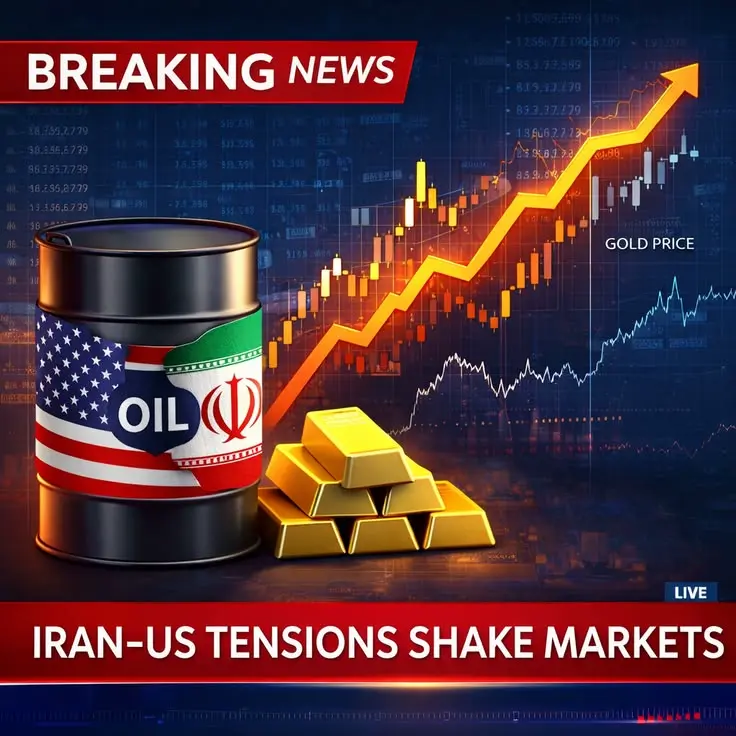
Iran's tightening of control over the Strait of Hormuz and its refusal to allow a Chinese oil tanker to pass has shaken the already fragile balance in global energy markets. This development, highlighted under the hashtag #OilPricesResumeUptrend, is not merely a momentary price jump; rather, it is seen as a concrete reflection of the multifaceted and increasingly deepening risks driving oil prices upward.
The importance of the Strait of Hormuz is a critical point here. This narrow waterway, through which approximately one-fifth of the world's oil supply passes, is one of the most sensitive straits in global energy trade. Iran's de facto restriction of this route creates a "fear of supply disruption" far greater than any physical supply disruption. Because it's not just about a tanker or a country; it's a clear indication of how dependent the entire flow of trade has become on political and military tensions.
The first and strongest factor pushing oil prices higher is the uncertainty premium created by such geopolitical risks. In energy markets, prices are determined not only by the current supply-demand balance but also by the expectation of future risks. Iran's move has triggered the question in investors' minds: "Could the strait be completely closed?", rapidly increasing the risk premium. This is causing prices to rise sharply even before a real supply disruption occurs.
The second important factor is the structural vulnerabilities on the global supply side. The slowdown in drilling activity in the US, the continuation of production cuts by OPEC+ countries, and the avoidance of aggressive production increases by energy companies are further narrowing the already limited supply flexibility in the market. This amplifies the impact of any geopolitical shock on prices.
Thirdly, the resilience on the demand side is noteworthy. Although global economic growth has slowed, energy demand remains strong, especially in large consumers like China and India. This causes supply-side risks to be reflected in prices more quickly and sharply. In other words, the market is experiencing these shocks not in a weak demand environment, but on a still vibrant consumption base.
The fourth factor is the behavior of financial markets. Oil is no longer just a physical commodity; It is also an asset heavily traded by large funds, hedging mechanisms, and speculative capital. When geopolitical tensions rise, these actors quickly update their positions upwards, amplifying price movements. This leads to a widening gap between “real risk” and “priced risk.”
Iran’s refusal to allow passage to a Chinese tanker also carries an important signal in terms of diplomatic balances. China is one of the largest buyers of Iranian oil. Such an obstruction raises the possibility of new tensions not only with the West but also with Eastern blocs. This causes uncertainty in the energy market to expand not only regionally but also globally.
When all these factors come together, the picture that emerges is clear: the rise in oil prices is no longer due to a single cause. Geopolitical tensions, supply constraints, strong demand, and financial speculation have created a self-reinforcing cycle. As long as this cycle remains unbroken, a sustained downward movement in prices seems quite difficult.
In conclusion, this latest development in the Strait of Hormuz once again highlights the delicate balance of energy markets. If similar actions continue and restrictions in the strait expand, new and sharper waves of price increases in oil may be inevitable. However, if diplomatic channels are activated, these sharp movements seen today could be replaced by a rapid normalization. For now, the message from the markets is clear: risk is increasing, and prices have already begun to price in that risk.
#OilPricesResumeUptrend
$XTIUSD $XBRUSD
repost-content-media
  • Reward
  • Comment
  • Repost
  • Share
  • Reward
  • Comment
  • Repost
  • Share
Gold Rush Phase 2: Invite Friends to Trade $1 for a Chance to Win 1 oz of Gold With a 100% Win Rate https://www.gate.com/campaigns/4354?ch=1549&ref=VQVCUFSMVG&ref_type=132&utm_cmp=x9qCUCgp
post-image
  • Reward
  • Comment
  • Repost
  • Share
User_anyvip
#USIranWarMayEscalateToGroundWar
Ground War is on the Horizon: Because War Isn't Damaging the Economy, the Economy Is Waking Up War
The five-week-long US-Iran war has now gone beyond being a "tension limited to airstrikes." The Pentagon is planning weeks of ground operations. The USS Tripoli has landed in the region with 3,500 Marines. Officials speaking to the Washington Post say that Special Forces and infantry units are preparing to raid the Strait of Hormuz and Harg Island, through which 90% of Iranian oil flows.
Tehran's response is clear: "If American soldiers set foot on land, we will unleash fire upon them." Parliament Speaker Ghalibaf accuses the US of "publicly discussing, secretly planning an invasion." Twelve American soldiers have already been wounded in Saudi Arabia when an E-3 Sentry spy plane was shot down.
And we are still talking about "war affecting the economy."
Wrong. The economy isn't affecting war, the economy is calling for war.
The Math of the Strait of Hormuz
One-fifth of the world's oil passes through the Strait of Hormuz. The strait is effectively closed, tankers cannot pass through, and the Riyadh-Washington line is on edge. By allowing 20 Pakistani-flagged ships "two passages per day," Iran is essentially saying: I'm holding the valve.
The first point of the US's 15-point "ceasefire plan" is the opening of the strait. This is no coincidence. Because the issue is not the nuclear program, the issue is the flow of gas. Seizing Harg Island is described as "cutting off Iran's economic lifeline." In other words, the target is not the regime, but the income.
Trump is threatening to strike Iranian energy infrastructure if the strait is not opened. Tehran, on the other hand, says it will "boldly strike" US bases in the Gulf. Two missiles that hit the Ras Laffan gas facility in Qatar caused "limited damage" but created a shockwave in the markets. The message was received: If the next missile hits the desalination plant, the Gulf will run out of water.
The Price of the “Final Blow”
The White House is marketing the ground operation as the “final blow.” Not a full-scale invasion, but “just raids lasting weeks.” How wonderful. Iraq and Afghanistan also started as “weeks,” and as the Turkish Foreign Ministry reminded us, the result was “more radicalization and terrorism.”
The Pentagon says it has to “offer the commander-in-chief maximum options.” Translation: There’s a war on the table, and we’re preparing the menu. Rubio says “we’re not currently deployed for a ground operation,” but adds in the same sentence, “objectives can be achieved without them.” So the door is ajar.
Meanwhile, 13 US soldiers have been killed and more than 300 wounded in the last month. Trump was saying as early as March 20th, “I’m not sending troops, it’s a waste of time.” He changed his mind when Iran rejected the offers. So what was considered a “waste of time” was actually a “bargaining chip.”
The Real Front: The Balance Sheets
Iran says it will make US soldiers “food for sharks in the Persian Gulf.” Ghalibaf shouts, “Our missiles are in place, our resolve has increased.” This isn’t rhetoric, it’s insurance. Because Tehran knows: the US’s concern isn’t exporting democracy, but supply security.
War ruins the economy, yes. The stock market experienced its “worst day” of the war on March 27th. But let’s be more honest: war comes because the economy is ruined. Inflation, energy prices, the election cycle… An “external enemy” is always the cleanest way to make the domestic price be paid.
And the most painful part is this: Egypt, Pakistan, Saudi Arabia, and Turkey are talking about peace in Islamabad. Neither the US nor Iran is at the table. Because both sides actually want Harg Island, not the table. One to cut it off, the other to protect it.
The possibility of a ground war is no longer a “threat,” but an “option.” And this option is triggered not by ideology, but by a valve.
repost-content-media
  • Reward
  • Comment
  • Repost
  • Share
  • Reward
  • Comment
  • Repost
  • Share
  • Reward
  • Comment
  • Repost
  • Share
  • Reward
  • Comment
  • Repost
  • Share
User_anyvip
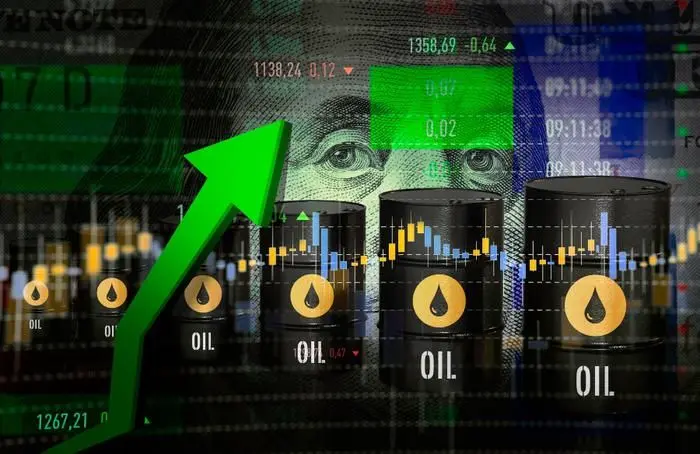
Brent at $110: Alarm Bells Ringing, Markets Pricing in "War Risk"
The "Brent $110" figure appearing on market screens is no ordinary price update; it's an alarm ringing in the energy market, the main artery of the global economy. This jump of over 6% in just one day shows that prices are no longer determined by the supply-demand balance, but directly by a "geopolitical fear premium." Markets are pricing in the worst-case scenario as they await the next move in the Middle East. This is the first and clearest signal of a shift from uncertainty to panic. The Three-Layered Truth Behind the Price Explosion.
To understand this sharp rise, we need to delve deeper than today's trigger:
The Immediate Trigger: Rising Tensions in the Strait of Hormuz
The spark behind today's 6% surge was news that Iran had launched a sudden military exercise in the Strait of Hormuz and slowed down some commercial tanker passages under the pretext of "security checks." This development in the world's most critical bottleneck for oil directly signaled to the market that "a supply disruption is approaching." What triggered the buy orders was not so much the oil itself, but the fear that the oil might not be transportable.
Fragile Ground: A Zero-Tolerance Market
Why did this news have such a huge impact? Because the market was already on a knife edge. Due to insufficient investment, there is almost no "reserve production capacity" left in the global system. OPEC+ countries do not have the power to immediately compensate for a possible disruption. This "zero-tolerance" structure causes even the slightest geopolitical news to lead to a disproportionate jump in prices. The market has no buffer left to absorb shocks.
Financial Accelerator: Algorithms and "Short Squeeze"
In modern markets, such movements are amplified by financial mechanics rather than fundamental analysis. Trading algorithms that reacted instantly to keywords like "Hormuz," "Iran," and "attack" fueled the initial surge. In addition, a "short squeeze" occurred as investors who had taken short positions on falling prices quickly bought to cut their losses in the face of rising prices. This turned the surge into an avalanche effect.
Prices Now Determined in Washington and Tehran
Brent reaching $110 shows us that we have entered a new era where oil prices are no longer determined by production data from Riyadh or Texas, but by the tensions between Washington and Tehran.
What Awaits the Markets? The direction of prices will no longer be determined by technical levels, but by diplomatic and military headlines. Volatility will be our new normal. While levels below $100 are now seen as a "bottom," the $120-$150 range has become an easily achievable target with the next step in escalating tensions.
What will the economic impact be? If these levels persist, a wave of global inflation is inevitable, and central banks' dreams of interest rate cuts will completely disappear. The risk of a global recession is no longer a possibility, but the main scenario.
In short, the market is currently waiting for the next step. A diplomatic softening could quickly pull prices back, but a wrong move or a harsh statement could show us that $110 is just the beginning.
repost-content-media
  • Reward
  • 2
  • Repost
  • Share
User_anyvip:
LFG 🔥
View More
User_anyvip
Global Markets on Alert:
$BTC $XTIUSD $XBRUSD ‌Energy Shock, Crypto Decline, and a New Risk Cycle
Global markets are experiencing one of the sharpest turning points of 2026. Bitcoin's fall below $66,000 and oil prices climbing above $110 appear to be two separate market movements on the surface, but are actually different reflections of a single macro story: a deepening geopolitical crisis and an energy supply shock.
At the heart of these recent developments is the announcement by Iranian-backed Houthi forces that they have officially entered the conflict. This move by the Houthi movement represents not only a regional tension but also a direct threat to the Bab el-Mandab Strait, one of the most critical arteries of global energy trade. This narrow passage, a route through which approximately 10% of the world's oil supply is transported, while not as critical as the Strait of Hormuz, has an extremely high capacity to create systemic risk.
Parallel to this development, a move from Qatar has extended the energy crisis to a much wider area. Qatar's declaration of force majeure on its LNG contracts until May 2026, and its suspension of obligations with major importers, primarily Italy, Belgium, South Korea, and China, has triggered a supply shock not only in oil but also in natural gas. The withdrawal of a player providing approximately 20% of global LNG supply on this scale suggests that upward pressure on energy prices may be permanent.
The picture that emerges when these two developments are combined is clear: supply security in the energy market has been severely undermined. While OPEC+ maintains production discipline in the oil sector, the limited availability of alternative supply channels is rapidly driving prices upwards. Brent crude exceeding the $110 level is a result not only of the physical supply loss but also of the aggressive pricing of the "risk premium."
However, the real turning point lies in the macroeconomic chain reaction of this energy shock. The increase in energy prices directly pushes inflation expectations higher. This strengthens the possibility that central banks, especially the Federal Reserve, may postpone interest rate cuts. The "liquidity easing" scenario, which markets have long priced in, is thus postponed, while dollar liquidity in the financial system is once again tightening.
This is precisely where the sell-off in the crypto market gains significance. Bitcoin's fall below $66,000 is not a signal of structural weakness, contrary to what many investors believe; it's a classic "risk-off" pricing. When global uncertainty increases, investors move away from the most volatile assets towards cash and safe havens. In this process, crypto assets, by their nature, are among the first areas to experience selling pressure.
What is noteworthy here is the capital behavior behind the price movement. While panic selling is accelerating among retail investors, there are strong signals that large funds and institutional players are viewing these declines as gradual buying opportunities. This segment, which the market calls "smart money," generally prefers to take positions when liquidity is tight and fear is at its peak.
In short, what is happening today is not simply a crypto downturn or an oil rally. This could be the beginning of a new macroeconomic cycle triggered by the energy crisis:
Energy shock → Increased inflation → Delayed interest rate cuts → Liquidity squeeze → Selling off risky assets.
How far this chain will go depends entirely on geopolitical developments. If risks over the Bab el-Mandab Strait and the Strait of Hormuz continue to increase, new peaks in energy prices and, consequently, deeper fluctuations in financial markets may be inevitable.
In conclusion, the message the markets are currently sending is quite clear: This is not an asset-based story, but a liquidity story.
And perhaps the most critical question still remains:
Are you watching the market, or the direction of money?
#BitcoinWeakens
#OilPricesResumeUptrend
#CreatorLeaderboard
repost-content-media
  • Reward
  • 2
  • Repost
  • Share
User_anyvip:
2026 GOGOGO 👊
View More
User_anyvip
The war with Iran, which began with joint US and Israeli attacks on Iran in late February, is profoundly shaking the global economy. The de facto closure of the Strait of Hormuz by Iran has disrupted approximately 20% of the world's oil and LNG supply. Brent crude oil surged from pre-war levels of $72 to the $100-120 range and is currently trading around $100-106. This energy shock has hit Asian economies, which are heavily dependent on oil imports, the hardest, triggering a risk of stagflation. Foreign investors withdrew a net $52 billion from Asian excluding China stocks in March; this was the largest monthly outflow since 2008 and surpassed records set during Covid and the Ukraine war.
⛽ Oil and Energy Crisis
The most direct impact of the war has been the explosion in energy prices. Brent oil has increased by up to 50% due to the halt of oil and LNG shipments through the Strait of Hormuz. Asian countries (excluding China) are heavily reliant on energy from the Middle East, leading to rapidly rising import bills in economies such as Taiwan, South Korea, India, and Japan. In Europe, LNG prices have increased by 50% and are expected to remain high until 2027. This has the potential to push global inflation up by 0.8 percentage points, narrowing the room for central banks to cut interest rates.
👀 Record Capital Outflow from Asian Markets
Foreign investors lost risk appetite and exited Asia at a record pace. In March:
- Taiwan: $25 billion (the largest outflow in 18 years)
- South Korea: $13.5 billion
- India: $10 billion
A total of $52 billion in sales negatively impacted emerging markets outside of Asia as well. The Nikkei 225 experienced daily declines of up to 11%, and the Kospi up to 12%, triggering circuit breakers. Technology-heavy stock markets remained under stagflationary pressure due to rising oil costs. Analysts are describing this move as the "widest risk-off" ever.
🕵️ Global Growth and Inflation Risks
As the war drags on, global growth forecasts are being revised downwards. Experts say:
- In the short-term scenario (if the conflict eases within 1-2 months), oil will fall to the $75-90 range and growth will take a slight hit.
- In the long-term scenario (more than 3 months), oil will remain in the $100-150 range; Asia and Europe will face recession risks while growth in the US will slow.
Currencies in emerging markets are depreciating against the dollar. Gold has risen as a safe haven, but bond yields have also increased. Airline stocks have fallen by 5-6%, while defense and energy companies have seen partial support.
🤔 Regional and Sectoral Implications
In Asia, governments have closed schools to conserve fuel, called on employees to work from home, and taken measures against rising food and transportation prices. Thailand's rice exports and India's banana and rice exports to the Middle East have stalled; farmers are selling at a loss in local markets. Transportation costs have risen, and insurance premiums have skyrocketed. As the energy crisis deepens in Europe, food inflation and monetary policy pressures intensify in developing countries.
The Iran conflict has created a global energy crisis that hit Asia hardest, following the oil shock. A record $52 billion in capital outflows, stock market crashes, and inflationary pressures marked the first quarter of 2026. Despite Trump's ceasefire efforts, the situation in the Strait of Hormuz remains uncertain. Markets could recover if the conflict is resolved quickly; however, a prolonged conflict makes an Asian recession and global stagflation seem inevitable. Economists emphasize that the worst-case scenario is currently priced in, but the risks remain high.
#FedRateHikeExpectationsResurface
#USIranClashOverCeasefireTalks
#CreatorLeaderboard
repost-content-media
  • Reward
  • Comment
  • Repost
  • Share
User_anyvip
#RangeTradingStrategy
A volatile market trading strategy offers investors disciplined risk management and the opportunity to quickly seize opportunities during periods of high volatility. A range trading strategy, on the other hand, aims to achieve stable returns by buying and selling during consolidation phases where prices are squeezed between specific support and resistance levels. According to current data, as of March 27, 2026, the VIX index has reached 31.05, showing a 13.16% increase in the last day. This figure is approaching its highest levels since the tariff tensions in April 2025 and reflects the geopolitical risk premium created by the Iran war and the sharp rise in oil prices.
A volatile market trading strategy is particularly prominent in environments where the VIX index is above 30, utilizing elements such as stop-loss orders, hedging techniques, and reducing position sizes. Investors can rotate sectors using this approach, focusing on defense sectors or low-volatility stocks, while also employing options strategies such as Iron Condor and Straddle. For example, during the growth anxiety period of 2025, the low volatility factor index outperformed the overall market, and stocks like Berkshire Hathaway and Coca-Cola remained remarkably resilient. The strategy also supports scalping and swing trading to profit from short-term price fluctuations, but sudden breaks are prevented by setting stop levels with the average true range indicator in each trade.
The range trading strategy, even with high volatility, creates repeatable returns by buying at support levels and selling at resistance levels during short-term range formations. While this approach is most effective in low-volatility consolidations, it can be adapted to the current geopolitical environment by determining dynamic ranges with the ATR indicator. For example, in assets like gold, a 3.7:1 reward-risk ratio was achieved per trade when buying at support and selling at resistance in a three-week range of $187 to $190, similar to January 2024. The strategy uses volatility-sensitive tools like Keltner channels or Donchian channels to automatically update ranges, and positions are protected by the ATR multiplier. Range trading can be applied even on short-term 30-minute charts during periods of high volatility, but positions should not be opened without breakout confirmation.
Both strategies should be applied with greater caution when combined with the oil shock stemming from the Iran war in March 2026 and record capital outflows from Asian markets. While the volatile market trading strategy minimizes risk, the range trading strategy provides stable profits from sideways market movements. Investors can combine these methods to diversify their portfolios, maintain tight stop-loss orders, and optimize position sizes by monitoring average true range data. The current market conditions, with the VIX index hovering around 31, indicate that both strategies have high potential in the short term.
#VolatileMarketTradingStrategy
repost-content-media
  • Reward
  • 2
  • Repost
  • Share
User_anyvip:
LFG 🔥
View More
User_anyvip
Iran War Leads to Record Rise in Geopolitical Risk Premium, Current Level 31.05
The CBOE Volatility Index (VIX) reached 31.05 at the close of March 27, 2026, showing a 13.16% increase in the last 24 hours, rising 3.61 points from 27.44. This movement tested an intraday high of 31.65 while the low was 27.54. The VIX index has thus climbed approximately 40% since the start of the Iran war in late February, yielding a return of over 132% from its December 2025 low of 13.38.
Geopolitical Triggers and Oil Shock
The main driver of the VIX rise was the Iran war putting 20% ​​of the world's oil supply at risk via the Strait of Hormuz. Brent oil rising to the $100 range fueled fears of stagflation and rapidly increased the implied 30-day volatility in S&P 500 options. Analysts argue that the VIX remains "low" due to the Iran conflict; institutions like Slatestone Wealth comment that "the VIX should rise to the 40-50 range," while fears of supply disruptions caused by tanker attacks have unsettled the markets.
Historical Comparison and Recent Trends
- March 26, 2026: 27.44
- March 25, 2026: 25.33
- March 24, 2026: 26.95
- Average at the beginning of March: 24-26 range
The VIX has achieved a 58.45% monthly return in the last month, while rising 109.02% since the beginning of the year. While these levels don't approach the peaks of the 2022 Ukraine war and the 2020 Covid surge, they represent a sharp divergence from the low volatility period of 2025 (range 13-18). According to FRED data, the index, which was trading at 27.44 as of March 26th, reached a three-month high with the jump the following day.
Technical and Term Structure Assessment
The VIX exceeding the psychological threshold of 30 signals a "high volatility regime." The RSI is in a strong buying zone at 67.67 over the 14-day period, but also carries an overbought warning. It is noted that the contango structure in VIX futures contracts is narrowing, and backwardation signs are seen in places; this indicates that short-term fear is higher than long-term expectations. Market participants are adjusting their hedging strategies by monitoring the VIX futures curve.
Market Impacts and Investor Strategies
The rise of the VIX to 31 parallels the record capital outflow of $52 billion from Asia and deepens the risk-off environment. Analysts recommend a rotation towards the defense and energy sectors in this environment, emphasizing that option strategies like Iron Condor or Straddle become more attractive at VIX levels above 30. However, prolonged uncertainty regarding Iran maintains the potential for the VIX to rise to the 40+ band; short-term ceasefire news could lead to rapid pullbacks.
The VIX index reflects the peak of the geopolitical risk premium at 31.05 as of March 28, 2026. The disruption of oil supply and increased concerns about global growth due to the Iran conflict have structurally driven volatility upwards. In the short term, traffic in the Strait of Hormuz and Trump's ceasefire negotiations are the main catalysts, while in the long term, a drop in oil prices below $90 could pull the VIX down to the 20-25 band. Investors should keep stop-loss levels tight with the ATR indicator and review their portfolio hedges at VIX levels above 35. Current data shows that the fear index has not yet peaked, but each new geopolitical news item could create a 3-5 point movement.
#RangeTradingStrategy
repost-content-media
  • Reward
  • 2
  • Repost
  • Share
User_anyvip:
LFG 🔥
View More
User_anyvip
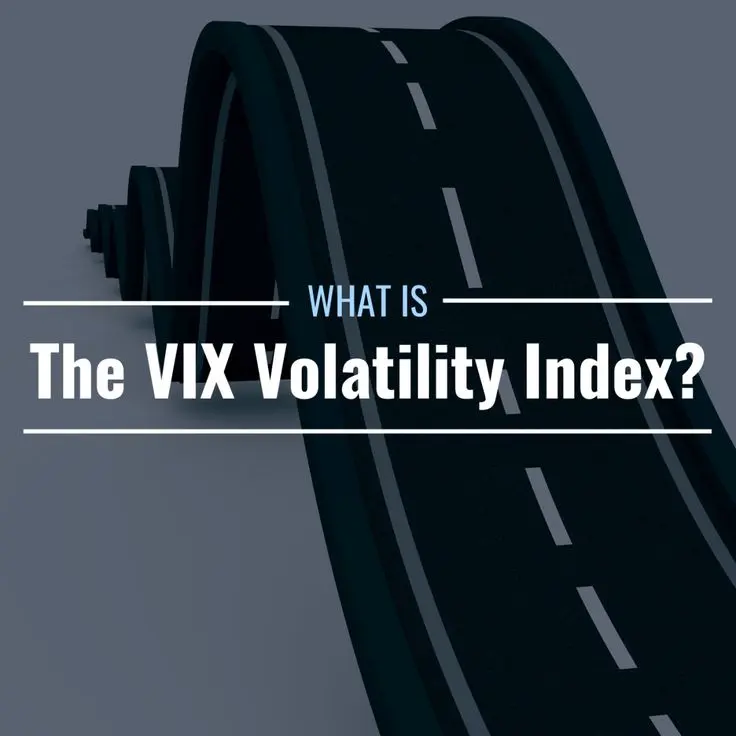
The VIX Volatility Index, also known as the fear index in the financial world, is a key indicator used to measure uncertainty in the markets and investors' risk perception. Originally created by the Chicago Board Options Exchange, this index has become one of the most closely watched barometers of global markets over time.
The VIX index essentially calculates the expected volatility over the next thirty days by analyzing the prices of options written on the S&P 500 indices. In other words, it measures how much volatility investors expect in the market. If the VIX rises, it indicates increased fear and uncertainty in the market. Conversely, a decrease in the VIX suggests that investors perceive a calmer and safer environment.
One of the most important functions of this index is to help understand investor behavior. In financial markets, prices depend not only on economic data but also on psychology. The VIX quantifies this psychological state. For example, during periods of economic crisis or increased geopolitical risk, the VIX rises rapidly. This indicates that investors are avoiding risk and seeking safe havens.
The VIX also plays a critical role in portfolio management. Professional investors and fund managers use this index to balance their risks. When the VIX rises, expectations of a decline in equity markets generally increase, and investors readjust their positions accordingly. Therefore, the VIX is not just an indicator but also a strategic tool.
In conclusion, the VIX Volatility Index is a powerful measurement tool that reflects the pulse of modern finance. It guides investors by reflecting fears and expectations in the markets. Beyond economic data, it is an indispensable reference point for those who want to understand human behavior and collective psychology. In this respect, the VIX is not just a number but also a reflection of the market's mood.
#CreatorLeaderboard
repost-content-media
  • Reward
  • Comment
  • Repost
  • Share
  • Pin