Bitcoin Price Prediction Stalled At 100000 Psychological Level

Last Updated 2026-03-27 08:26:49
Reading Time: 1m
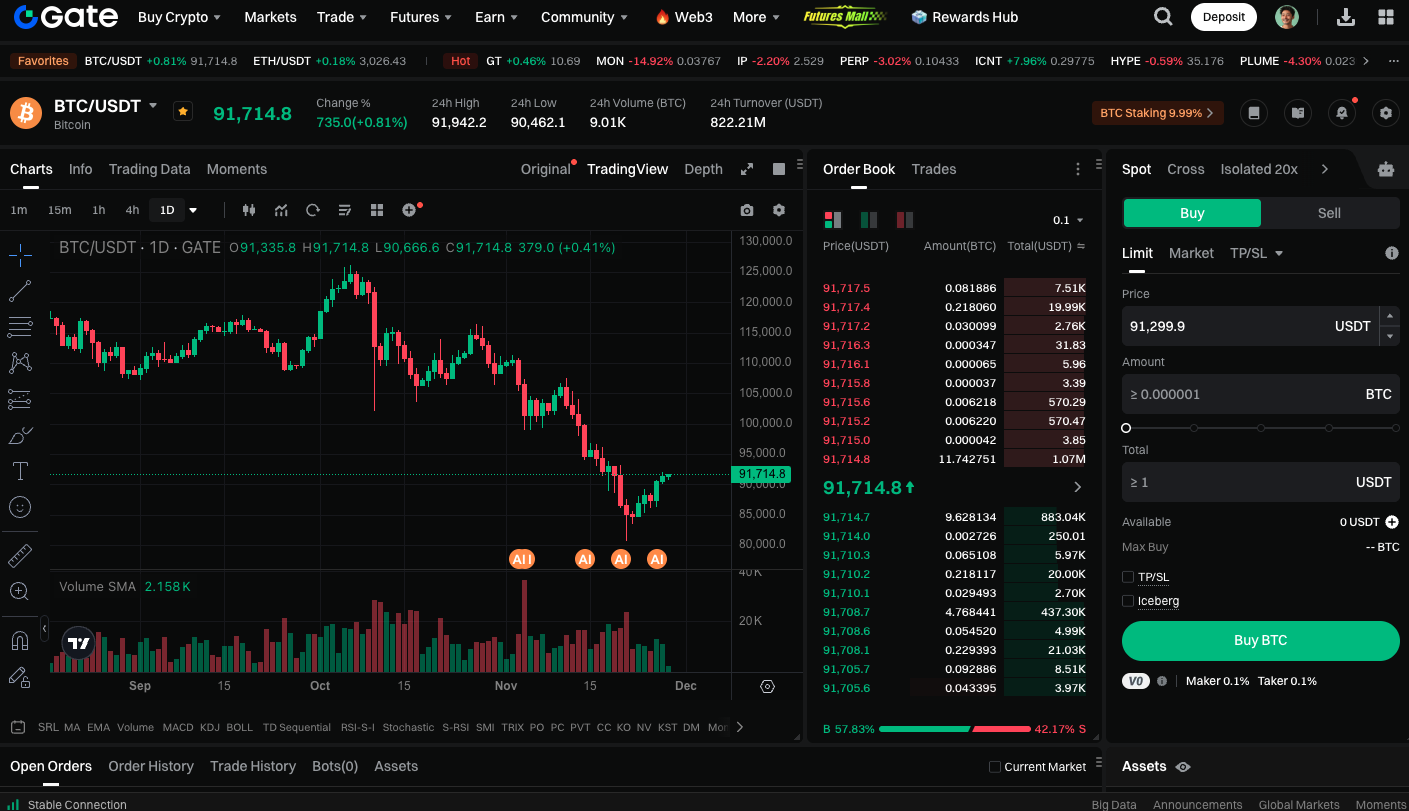
Bitcoin’s price has recently remained well below $100,000, indicating short-term market stagnation. The U.S. government shutdown has delayed ETF approvals, and concerns around the $100,000 psychological level have contributed to ongoing selling pressure and market consolidation.

Market Overview

Bitcoin has recently traded below $100,000, signaling a period of short-term stagnation. Traders are uncertain, analysts are divided, and investors are caught between hope and anxiety. According to Bitwise Chief Investment Officer Matt Hougan, this brief slowdown does not mean the bull market is over. In fact, it may represent a historic inflection point for Bitcoin.

Impact of Government Factors

The recent stall partly resulted from the temporary U.S. government shutdown, which delayed ETF approvals and document reviews. While ETFs for XRP, Litecoin, Solana, and Hedera have received technical approval, there’s been no progress on new filings. With government operations back on track, Hougan anticipates a wave of ETF approvals, new product launches, and increased institutional participation—all of which could drive significant momentum for the crypto market.

$100,000 Psychological Threshold

Despite a steady flow of positive news, Bitcoin repeatedly retreats after approaching $100,000. Hougan points out that this price level has become a psychological barrier. Many long-term holders are taking partial profits. Most of this selling pressure is being managed through options strategies rather than direct spot market selling. As a result, this trend has also tempered the market’s upward momentum.

Investor Sentiment and Market Cycles

Investors remain cautious following past market crashes—from FTX’s collapse to the downfall of meme coins—which has made them more prudent and determined to avoid another multi-year bear market. The lack of a clear altcoin bull run has further dampened market activity and trading enthusiasm.

Long-Term Outlook Remains Bullish

Although short-term momentum is limited, Hougan stays optimistic. He believes Bitcoin has not yet reached its peak, and the traditional four-year cycle model is losing relevance. The market is starting to respond to new fundamentals, such as increased institutional capital, clearer regulations, asset tokenization, and global access to ETFs.

For long-term investors, this period may present a significant opportunity. With market fundamentals still strong, once remaining selling pressure subsides and institutional demand emerges, Bitcoin could quickly enter a new phase of growth.

Start trading BTC spot now: https://www.gate.com/trade/BTC_USDT

Conclusion

Bitcoin’s short-term performance remains constrained by the $100,000 psychological threshold, but its long-term potential is strong. As ETF approvals accelerate and institutional inflows increase, the market is positioned for substantial growth. Investors are advised to remain patient, monitor key catalysts and the easing of selling pressure, and prepare for the next bull run.

Author: Allen
Disclaimer
* The information is not intended to be and does not constitute financial advice or any other recommendation of any sort offered or endorsed by Gate.
* This article may not be reproduced, transmitted or copied without referencing Gate. Contravention is an infringement of Copyright Act and may be subject to legal action.

Related Articles

AI-Native Settlement Layers: How United Stables Is Building the Next Financial Rail
Beginner

AI-Native Settlement Layers: How United Stables Is Building the Next Financial Rail

Stablecoins were originally designed as dollar substitutes within exchanges, primarily used for asset pricing and trade settlement. As on-chain financial ecosystems have matured, their role has expanded beyond simple payments to include collateral assets, cross-chain liquidity mediums, and unified settlement units. In particular, as AI systems and automated agents begin to participate directly in economic activity, demand has risen sharply for programmable value units capable of instant settlement. This shift is pushing stablecoins toward the role of foundational financial infrastructure.
2026-03-25 03:16:17
The ve(3,3) Flywheel Explained: How AERO Tokenomics Powers Aerodrome’s DeFi Economy
Beginner

The ve(3,3) Flywheel Explained: How AERO Tokenomics Powers Aerodrome’s DeFi Economy

In the competition for DeFi liquidity, high-inflation mining alone is no longer enough to build lasting advantages. Aerodrome applies the ve(3,3) economic model to redesign token emissions, voting mechanisms, and revenue distribution, creating a liquidity flywheel centered on governance and cash flow. This article examines AERO tokenomics, the veAERO locking mechanism, and protocol revenue models to explain how Aerodrome builds a sustainable DeFi economic system.
2026-03-25 06:41:58
Aerodrome Tokenomics: How ve(3,3) Powers Base's Most Profitable DEX
Beginner

Aerodrome Tokenomics: How ve(3,3) Powers Base's Most Profitable DEX

AERO is the native token of Aerodrome Finance, a core decentralized exchange and liquidity protocol in the Base ecosystem. It is primarily used for liquidity incentives and ecosystem operations. veAERO is a governance NFT that users receive by locking AERO, representing both voting power and the right to share protocol revenue. Through a dual track structure of AERO as a utility token and veAERO as a governance credential, Aerodrome separates liquidity usage value from long term governance power, allowing participants to act as liquidity providers, governance decision makers, and revenue sharers within the same system.
2026-03-25 06:40:31
DePIN Identity Network and Real World Applications: How Humanity Protocol Brings on-chain Identity Into the Physical World
Beginner

DePIN Identity Network and Real World Applications: How Humanity Protocol Brings on-chain Identity Into the Physical World

Most Web3 identity systems remain confined to on-chain environments and struggle to achieve meaningful adoption in real world settings. Through a DePIN architecture and physical verification hardware, Humanity Protocol aims to bring decentralized identity into access control systems, hospitality, public services, and offline events, allowing on-chain identity to function not just as a digital credential, but as foundational infrastructure for real world access.
2026-03-25 07:40:53
How is the price of PAXG determined? Pegging mechanism, trading depth, and influencing factors
Beginner

How is the price of PAXG determined? Pegging mechanism, trading depth, and influencing factors

PAXG (Pax Gold) is a tokenized asset backed by physical gold reserves, launched by fintech firm Paxos and issued as an ERC-20 token on the Ethereum blockchain. The core concept is to digitally represent real-world gold assets, allowing investors to hold and trade gold via the blockchain network. Because each PAXG token corresponds to a specific quantity of physical gold, its price is theoretically expected to closely track the global gold market.
2026-03-24 19:11:40
Aster vs Hyperliquid: Which Perp DEX Will Prevail?
Beginner

Aster vs Hyperliquid: Which Perp DEX Will Prevail?

Aster and Hyperliquid are the two representative protocols of the "purpose-built L1 path" within the current decentralized perpetual exchange (Perp DEX) sector. As a pioneer in the field, Hyperliquid has built a deep liquidity moat through its highly mature order book architecture and strong community consensus. Conversely, Aster, as a rising challenger, seeks to leapfrog the competition in high-performance trading through more aggressive multi-chain aggregation logic, private transaction modules, and an underlying execution environment optimized for 2026 market demands.
2026-03-24 11:58:33