À medida que o mercado de criptomoedas se institucionaliza, os volumes de negociação aumentam, com ordens individuais a alcançarem frequentemente milhões de dólares ou mais. Neste cenário, os métodos tradicionais de execução baseados no Livro de Ordens revelam limitações—particularmente em períodos de baixa liquidez ou elevada volatilidade, onde grandes negociações podem facilmente provocar variações de preço e incertezas na execução.
Para superar estes desafios, as instituições estão a adotar um modelo híbrido de execução que combina RFQ e negociação algorítmica. Esta abordagem não só torna a negociação mais eficiente, como está a transformar a estrutura do Mercado OTC. No setor, RFQ + Negociação Algorítmica consolidou-se como infraestrutura essencial para instituições que entram no mercado de criptomoedas e gerem capital em grande escala.
Principais desafios da negociação em bloco institucional
Para as instituições, o desafio central na negociação em bloco não é apenas “executar a ordem”—é garantir uma execução de elevada qualidade e controlo de risco. Derrapagem de preço, impacto no mercado e liquidez fragmentada são fatores críticos que exigem gestão simultânea.
A liquidez no mercado de criptomoedas é altamente fragmentada, com diferenças evidentes entre plataformas e criadores de mercado. Por isso, uma única fonte raramente satisfaz a procura institucional. Agregar liquidez em várias plataformas e executar de forma unificada tornou-se um desafio central.
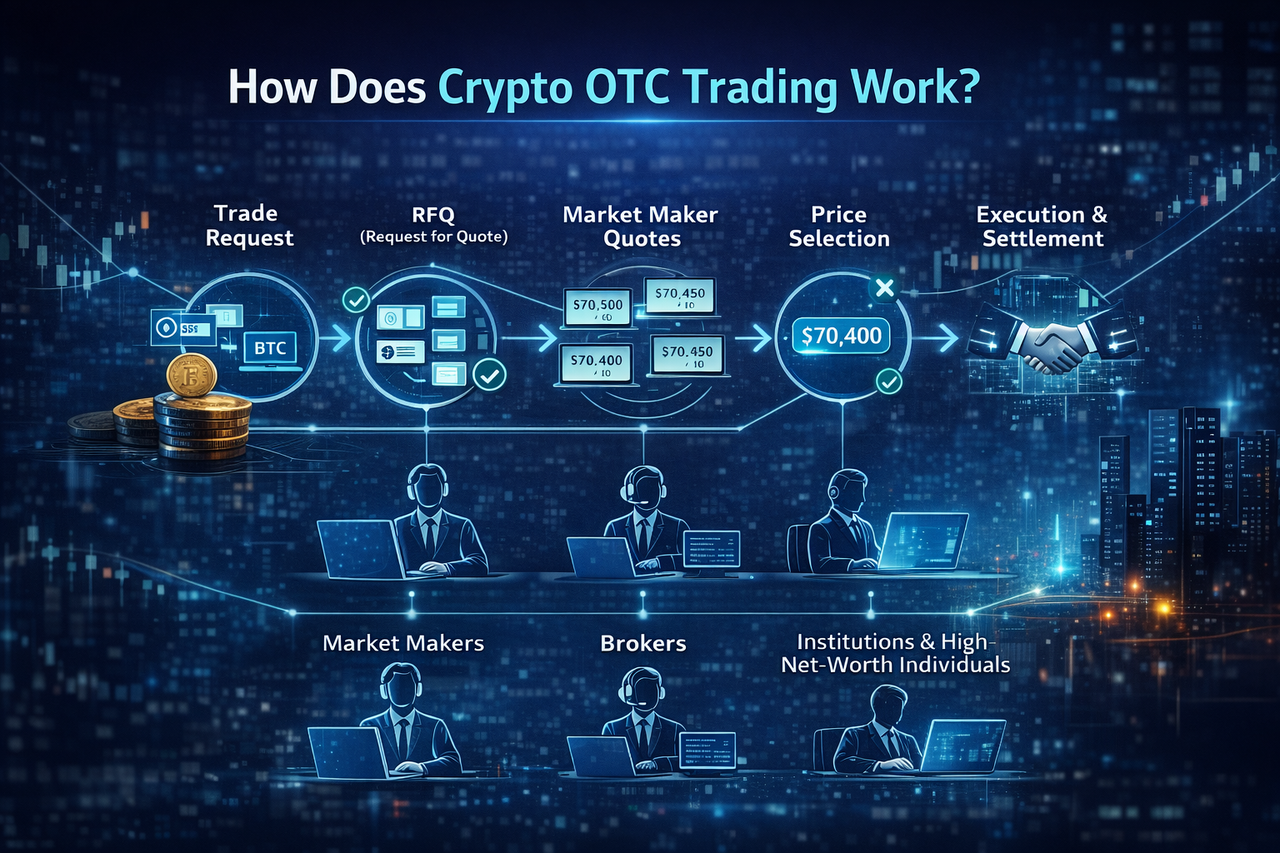
Na prática, o RFQ é geralmente o passo inicial na execução de uma negociação. As instituições enviam os seus requisitos a múltiplos criadores de mercado ou fornecedores de liquidez para recolher diferentes ofertas. Não se trata de um simples pedido de preço—é um processo competitivo de formação de preço.
Ao reunir ofertas de várias fontes em simultâneo, as instituições podem identificar o melhor preço sem expor as suas intenções ao mercado, evitando impacto no mercado público. Por isso, o RFQ é o “ponto de entrada de preço” mais relevante nas negociações em bloco.
Negociação algorítmica: motor central da execução otimizada
Se o RFQ responde à pergunta “de onde vem o preço”, a negociação algorítmica responde a “como executar da forma mais eficiente”. Nos sistemas OTC atuais, a negociação algorítmica está integrada no fluxo de trabalho do RFQ.
Os algoritmos distribuem automaticamente pedidos de RFQ por várias fontes de liquidez e analisam as ofertas recebidas em milissegundos. O sistema avalia preço, profundidade, tempo de resposta e outros fatores para selecionar o caminho de execução ideal. Os algoritmos ajustam estratégias em tempo real, garantindo otimização contínua.
Fluxo de execução RFQ + Negociação algorítmica
A nível institucional, estes dois componentes funcionam de forma integrada. O processo inicia-se com a introdução do requisito de negociação; o sistema gera automaticamente pedidos de RFQ e distribui-os por vários criadores de mercado. Os algoritmos filtram as ofertas recebidas e tomam decisões com base em dados de mercado em tempo real.
Depois de confirmada a melhor oferta, a negociação é executada de imediato e liquidada por sistemas de custódia ou compensação. O processo é altamente automatizado, aumentando a eficiência e assegurando qualidade na execução.
Tecnologias centrais: Smart Routing e agregação de liquidez
O Smart Order Routing e a agregação de liquidez são o núcleo deste sistema. Como a liquidez está fragmentada, um único criador de mercado raramente oferece simultaneamente o melhor preço e profundidade adequada; o sistema seleciona dinamicamente entre múltiplas fontes.
A agregação de liquidez permite às instituições aceder a múltiplos fluxos de ofertas em simultâneo, enquanto o smart routing garante a melhor correspondência possível. Este mecanismo está a transformar o Mercado OTC de “negociação ponto-a-ponto” para “sistema de liquidez em rede”.
Diferenças face à execução tradicional
Em comparação com a negociação OTC manual, a principal mudança com RFQ + Negociação Algorítmica é a automação e a execução baseada em dados. Processos antes dependentes de comunicação manual e avaliação subjetiva são agora geridos por sistemas, reduzindo custos de tempo e risco operacional.
Este modelo melhora substancialmente a consistência da execução, permitindo às instituições manter desempenho estável em diferentes condições de mercado.
Vantagens e riscos potenciais
A combinação de RFQ com negociação algorítmica oferece às instituições um caminho de execução eficiente. Permite realizar grandes negociações sem perturbar preços de mercado e aumenta a competitividade dos preços através de ofertas multi-parte.
No entanto, este modelo implica riscos. Depende de tecnologia robusta—qualquer falha pode afetar os resultados da execução. Continua a existir dependência dos fornecedores de liquidez e os modelos algorítmicos exigem atualização contínua para acompanhar o mercado.
Casos de utilização
Este modelo de execução é ideal para cenários de negociação em bloco como alocação de portfólio institucional, reequilíbrio de fundos e gestão de ativos do lado do projeto. Nestes casos, os volumes são elevados e tanto a estabilidade do preço como a certeza da execução são essenciais.
Para negociações de alta frequência ou de pequeno volume, os mecanismos tradicionais de matching em bolsa mantêm-se mais eficientes.
Resumo
A combinação de RFQ e negociação algorítmica está a redefinir a execução de negociações em bloco no mercado de criptomoedas. Ao separar e reintegrar a descoberta de preço e a otimização da execução, este modelo não só aumenta a eficiência, como reduz impacto no mercado e risco de derrapagem. À medida que o mercado evolui, esta estrutura de execução institucional vai afirmar-se como um pilar da infraestrutura financeira em criptomoedas.
Perguntas frequentes
É obrigatório utilizar sempre RFQ e negociação algorítmica em conjunto?
Não, mas normalmente são combinados na negociação institucional para execução otimizada.
A negociação algorítmica é totalmente automatizada?
Na maior parte dos casos, a execução é automatizada, mas a supervisão humana e os ajustes estratégicos mantêm-se essenciais.
Porque é que as instituições preferem este modelo?
Porque permite realizar grandes negociações sem afetar os preços de mercado.
Os investidores de retalho podem utilizar RFQ + Negociação Algorítmica?
Em teoria, sim, mas as barreiras à entrada são elevadas—este modelo destina-se sobretudo a utilizadores institucionais.
Este modelo vai tornar-se mainstream no futuro?
Com o amadurecimento do mercado e o avanço tecnológico, a sua relevância vai continuar a crescer.