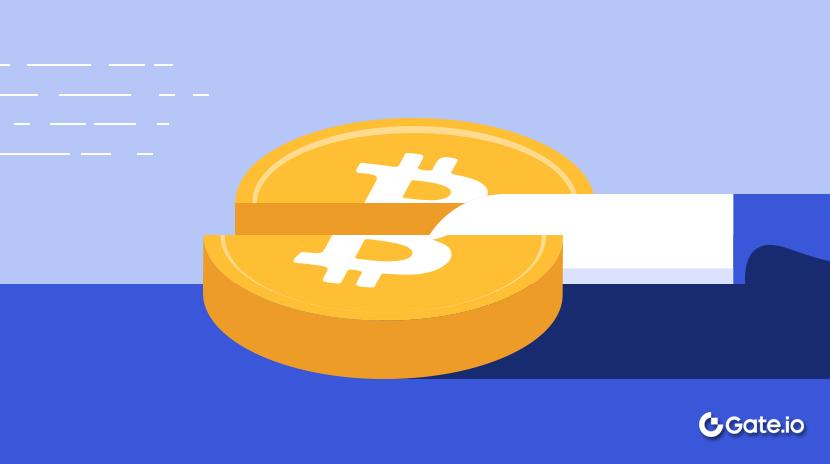
crypto halving

Crypto halving is a predetermined mechanism in blockchain networks where the block reward issued to miners or validators for successfully confirming transactions and generating new blocks is reduced by 50% upon reaching specific block heights. First implemented in Bitcoin, this mechanism controls token inflation and creates digital scarcity by establishing a predictable diminishing issuance schedule, ultimately capping the total supply at a predetermined maximum.
crypto halving

Crypto halving refers to a predetermined mechanism in specific blockchain networks where the block reward received by miners or validators for successfully confirming transactions and generating new blocks is reduced by half. This mechanism was first introduced by Bitcoin to control the token inflation rate and mimic the extraction process of scarce resources like gold, creating a predictable diminishing issuance schedule. Halving events typically have significant implications for cryptocurrency markets and are often viewed as potential price catalysts as they directly reduce the rate of new coin supply, which may lead to price appreciation if demand remains constant or increases.

Background: The Origin of Crypto Halving

The concept of crypto halving originates from the inflation control mechanism designed by Satoshi Nakamoto in the Bitcoin whitepaper. In the Bitcoin network, halving events occur approximately every four years (or precisely every 210,000 blocks) and serve as the key mechanism ensuring Bitcoin's total supply will be forever limited to 21 million coins.

The first Bitcoin halving occurred on November 28, 2012, reducing the block reward from 50 BTC to 25 BTC. Subsequent halvings happened in 2016 (25 BTC to 12.5 BTC) and 2020 (12.5 BTC to 6.25 BTC). Each halving has marked a significant milestone in cryptocurrency history, influencing not only Bitcoin's price dynamics but also overall market sentiment.

Many subsequent cryptocurrency projects have adopted similar halving mechanisms, such as Litecoin and Bitcoin Cash, although their specific parameters (like halving intervals and initial block rewards) may differ. This mechanism has become the standard approach for controlling inflation and creating scarcity in cryptocurrency design.

Work Mechanism: How Crypto Halving Works

The working mechanism of crypto halving is relatively simple on a technical level, but its economic implications are profound:

  1. Pre-programmed mechanism: Halving events are directly coded into the blockchain protocol and trigger automatically when the network reaches a specific block height, requiring no human intervention.

  2. Reward structure: When halving occurs, miners who successfully mine (or validate) blocks receive 50% fewer newly minted tokens as rewards, while the transaction fee portion remains unaffected.

  3. Supply impact: Halving events immediately reduce the issuance rate of new tokens by half, causing a sudden decrease in the number of new coins entering the market.

  4. Mining economics: After halving, miners' revenue structure changes, potentially causing less efficient miners to exit the network, thereby affecting network hash rate and security.

  5. Long-term deflationary design: Through periodic halvings, the token's inflation rate continuously decreases, eventually approaching zero, creating a digital asset model with finite supply.

This mechanism design ensures predictability in cryptocurrency supply and creates artificial scarcity, contrasting sharply with traditional fiat currencies' unlimited issuance policies. As block rewards gradually diminish, miners' income is expected to increasingly depend on transaction fees, an important consideration for long-term network sustainability.

Future Outlook: What's Next for Crypto Halving

The future development of crypto halving mechanisms faces several key trends and challenges:

  1. Economic model evolution: As block rewards continue to decrease, blockchain-based networks may need to reassess their economic models, particularly how transaction fee structures support network security.

  2. Miner behavior changes: Future halving events may lead to more pronounced miner consolidation and specialization, with smaller miners facing greater survival pressure and potentially more concentrated network hash rate distribution.

  3. Market reaction patterns: As markets mature, investor reactions to halving events may become more rational, weakening the simple correlation between "halving and price surges."

  4. Alternative mechanism exploration: Some emerging projects are beginning to explore alternative inflation control mechanisms to halving, such as dynamically adjusted block rewards or burn-based deflationary models.

  5. Regulatory attention: As cryptocurrency markets grow in size, regulators may pay more attention to market volatility triggered by halving events and their implications for investor protection.

Technically, future halving events will continue to occur as specified in protocols, but their market impact and ecosystem response may qualitatively change as the industry matures. For Bitcoin specifically, the network will face a major transition toward primarily relying on transaction fees to maintain security as block rewards approach zero.

Crypto halving mechanisms represent a prime example of algorithmic governance in blockchain technology, controlling monetary policy through code rather than human decisions, offering a novel value issuance model for the digital economy. The long-term sustainability and economic impact of this mechanism will remain an important topic of study in the cryptocurrency field.

A simple like goes a long way

Share

Related Glossaries
epoch
In Web3, "cycle" refers to recurring processes or windows within blockchain protocols or applications that occur at fixed time or block intervals. Examples include Bitcoin halving events, Ethereum consensus rounds, token vesting schedules, Layer 2 withdrawal challenge periods, funding rate and yield settlements, oracle updates, and governance voting periods. The duration, triggering conditions, and flexibility of these cycles vary across different systems. Understanding these cycles can help you manage liquidity, optimize the timing of your actions, and identify risk boundaries.
Degen
Extreme speculators are short-term participants in the crypto market characterized by high-speed trading, heavy position sizes, and amplified risk-reward profiles. They rely on trending topics and narrative shifts on social media, preferring highly volatile assets such as memecoins, NFTs, and anticipated airdrops. Leverage and derivatives are commonly used tools among this group. Most active during bull markets, they often face significant drawdowns and forced liquidations due to weak risk management practices.
BNB Chain
BNB Chain is a public blockchain ecosystem that uses BNB as its native token for transaction fees. Designed for high-frequency trading and large-scale applications, it is fully compatible with Ethereum tools and wallets. The BNB Chain architecture includes the execution layer BNB Smart Chain, the Layer 2 network opBNB, and the decentralized storage solution Greenfield. It supports a diverse range of use cases such as DeFi, gaming, and NFTs. With low transaction fees and fast block times, BNB Chain is well-suited for both users and developers.
Define Nonce
A nonce is a one-time-use number that ensures the uniqueness of operations and prevents replay attacks with old messages. In blockchain, an account’s nonce determines the order of transactions. In Bitcoin mining, the nonce is used to find a hash that meets the required difficulty. For login signatures, the nonce acts as a challenge value to enhance security. Nonces are fundamental across transactions, mining, and authentication processes.
Centralized
Centralization refers to an operational model where resources and decision-making power are concentrated within a small group of organizations or platforms. In the crypto industry, centralization is commonly seen in exchange custody, stablecoin issuance, node operation, and cross-chain bridge permissions. While centralization can enhance efficiency and user experience, it also introduces risks such as single points of failure, censorship, and insufficient transparency. Understanding the meaning of centralization is essential for choosing between CEX and DEX, evaluating project architectures, and developing effective risk management strategies.

Related Articles

The Future of Cross-Chain Bridges: Full-Chain Interoperability Becomes Inevitable, Liquidity Bridges Will Decline
Beginner

The Future of Cross-Chain Bridges: Full-Chain Interoperability Becomes Inevitable, Liquidity Bridges Will Decline

This article explores the development trends, applications, and prospects of cross-chain bridges.
2023-12-27 07:44:05
Solana Need L2s And Appchains?
Advanced

Solana Need L2s And Appchains?

Solana faces both opportunities and challenges in its development. Recently, severe network congestion has led to a high transaction failure rate and increased fees. Consequently, some have suggested using Layer 2 and appchain technologies to address this issue. This article explores the feasibility of this strategy.
2024-06-24 01:39:17
Sui: How are users leveraging its speed, security, & scalability?
Intermediate

Sui: How are users leveraging its speed, security, & scalability?

Sui is a PoS L1 blockchain with a novel architecture whose object-centric model enables parallelization of transactions through verifier level scaling. In this research paper the unique features of the Sui blockchain will be introduced, the economic prospects of SUI tokens will be presented, and it will be explained how investors can learn about which dApps are driving the use of the chain through the Sui application campaign.
2025-08-13 07:33:39