


Kyle Samani criticizes Multicoin and buys 40 million HYPE three days after leaving the company

Kyle Samani stepped down as co-founder of Multicoin Capital on February 5, and three days later publicly criticized Hyperliquid for “encouraging crime.” Ironically, on-chain data shows that Multicoin purchased over $40 million worth of HYPE tokens in January, sparking market speculation: Did investment disagreements lead to this Solana believer’s departure?
Kyle Samani publicly criticizes Hyperliquid 3 days after leaving
After nearly ten years as a co-founder of Multicoin Capital, Kyle Samani officially stepped down on February 5, 2026. This marked the end of one of the most prominent Solana supporters in the crypto space, concluding a long-term partnership with this leading crypto investment firm. Although Kyle Samani no longer holds operational roles, he stated he would continue to participate in crypto-related activities, especially within the Solana ecosystem.
However, just three days later, on February 8, Kyle Samani posted a strong critique of Hyperliquid on social media, clearly stating his stance. In a blog post, he wrote: “Hyperliquid embodies all the flaws of cryptocurrency in many ways. Its founders fled their homeland to create a public platform, which fosters crime and terrorism. Permissioned, closed-source cryptocurrencies violate the principles of decentralization.”
This sharply worded criticism immediately caused a stir in the crypto community. Kyle Samani accused Hyperliquid’s founders of “fleeing their homeland” and linked the platform to “crime and terrorism,” claims that are highly controversial and lack concrete evidence. He also criticized Hyperliquid’s use of closed-source code and permissioned validators, arguing that this runs counter to the core values of decentralization in crypto.
The timing of Kyle Samani’s public criticism is notable. Releasing such a pointed opinion so soon after his departure suggests it may be more than just a personal technical critique; it could be an eruption of long-standing internal disagreements. For a figure with significant influence in crypto investing, such public criticism can substantially impact market sentiment toward the criticized project.
Multicoin’s $40 million HYPE purchase—coincidence?
What further confuses the market is that Kyle Samani’s criticism appears to contradict Multicoin Capital’s actual investment behavior. Just days before his announcement, on-chain analyst MLM pointed out that wallets associated with Multicoin accumulated large amounts of Hyperliquid’s HYPE tokens in late January. They highlighted that these transactions totaled hundreds of millions of dollars, conservatively estimated over $40 million.
Further on-chain analysis shows that within days, large amounts of Ethereum flowed into HYPE via intermediary wallets. This pattern indicates institutional-level strategic buying rather than retail traders’ casual transactions. Multicoin employed multi-layer wallet transfer strategies to reduce market sensitivity to their large purchases—typical of big investment firms.
It’s important to note that there is no official confirmation that these transactions are directly related to Multicoin’s internal strategic decisions. Neither Multicoin Capital nor Kyle Samani have publicly stated that Hyperliquid or its portfolio allocations played a role in this personnel change. Nonetheless, the market finds the timing hard to ignore.
Key coincidences in the timeline
Late January: Wallets linked to Multicoin begin accumulating large amounts of HYPE (over $40 million)
February 5: Kyle Samani announces departure from Multicoin Capital
February 8: Kyle Samani publicly criticizes Hyperliquid
This sequence has sparked widespread market speculation. If Kyle Samani strongly opposed investing in Hyperliquid during his tenure, his presence might have hindered the company’s decision to pursue that investment. His departure could have allowed the firm to proceed with a delayed investment plan. Alternatively, the firm’s insistence on making this investment, contrary to his views, might have led to his decision to leave.
Strategic disagreements over Solana support and Hyperliquid speculation
Kyle Samani and Multicoin Capital gained prominence for their active support of Solana. In September 2025, the firm led a $1.65 billion private investment in Forward Industries, collaborating with Jump Crypto and Galaxy Digital to build what they called a “world-leading Solana asset management company.” Kyle Samani was appointed chairman of Forward Industries, highlighting his focus on Solana.
Their investment strategy centered on staking, DeFi protocols, and capital efficiency, aiming for transparent yields. Multicoin emphasized Solana’s infrastructure as more economically efficient than Bitcoin’s treasury model, citing a native yield of 8.05% as of September 2025. The firm also published research reports on Solana projects like Jito, noting that by March 2025, Jito’s custom block production tech powered over 94% of Solana’s stake.
Meanwhile, Hyperliquid represents a very different approach. It’s a decentralized perpetual futures exchange with its own Layer 1 blockchain. Hyperliquid has gained popularity for high leverage trading, ultra-low fees, and a smooth user experience, quickly becoming a leader in on-chain perpetual contracts.
However, Hyperliquid has also faced criticism for its centralized validator system, closed-source code, and potential regulatory risks. These features seem to conflict with the principles Kyle Samani advocates at Multicoin. While Solana itself has been criticized for some degree of centralization in its validator network, it at least maintains transparency through open-source code and community governance.
This strategic divide may reflect more than just technical disagreements; it could embody fundamental philosophical differences in crypto investing. Kyle Samani likely believes that Multicoin should focus on investing in infrastructure projects aligned with decentralization principles, rather than chasing short-term high-yield trading platforms that compromise those principles. Conversely, other partners at Multicoin might argue that in a competitive crypto market, flexibility and seizing opportunities—even if it involves some compromises—are necessary.
Community speculation: departure to lift investment restrictions?
As on-chain data and the timeline emerged, the crypto community began to speculate boldly: Did Kyle Samani’s departure aim to free Multicoin to invest in Hyperliquid? A user on social media wrote: “Does this mean that as long as Kyle is managing the fund, they can’t buy HYPE? So he leaves, and suddenly Multicoin buys a lot of HYPE?”
While this sounds like conspiracy theory, such scenarios are not unheard of in venture capital. When internal disagreements over an investment are significant, personnel changes are sometimes used to resolve deadlocks. If Kyle Samani, as a co-founder and key decision-maker, strongly opposed investing in Hyperliquid, then during his tenure, that investment might have been blocked.
From another perspective, his departure could also be because he couldn’t accept the firm’s decision to proceed with that investment. In VC firms, irreconcilable strategic disagreements among core partners often lead to someone leaving. These exits are often framed as “pursuing new opportunities” or “strategic realignment,” but are in fact the result of internal conflicts.
Kyle Samani has not responded immediately to media requests for comment, and Multicoin Capital remains silent. This silence itself can be telling. If the departure was just a normal career move, both sides would likely clarify and quell speculation. When internal disagreements are involved, both parties tend to stay silent to avoid further damage to their reputations.
Ideological clash: decentralization principles vs. performance efficiency
(Source: Trading View)
Some investors and traders strongly rebut Kyle Samani’s criticisms. They argue that Hyperliquid represents a return to crypto’s original principles, not a departure from them. Supporters point out that Hyperliquid’s decision to allocate revenue toward token buybacks and community incentives reflects a model that aims to more tightly align users and infrastructure than many venture-backed projects.
This disagreement highlights a deeper ideological split within the crypto market. One camp values transparency, decentralization, and community ownership as core principles, believing that projects compromising these are not worth supporting—even if they excel in technology or market appeal. The other emphasizes performance, liquidity depth, and institutional-grade infrastructure, even if that requires governance or architecture trade-offs.
Kyle Samani clearly belongs to the former camp. His criticism of Hyperliquid focuses on its closed-source code and centralized validators, features he sees as betrayals of core crypto values. Supporters of Hyperliquid counter that, given current technological constraints, fully decentralized high-performance trading platforms remain a technical challenge, and some degree of centralization is a necessary trade-off for excellent user experience.
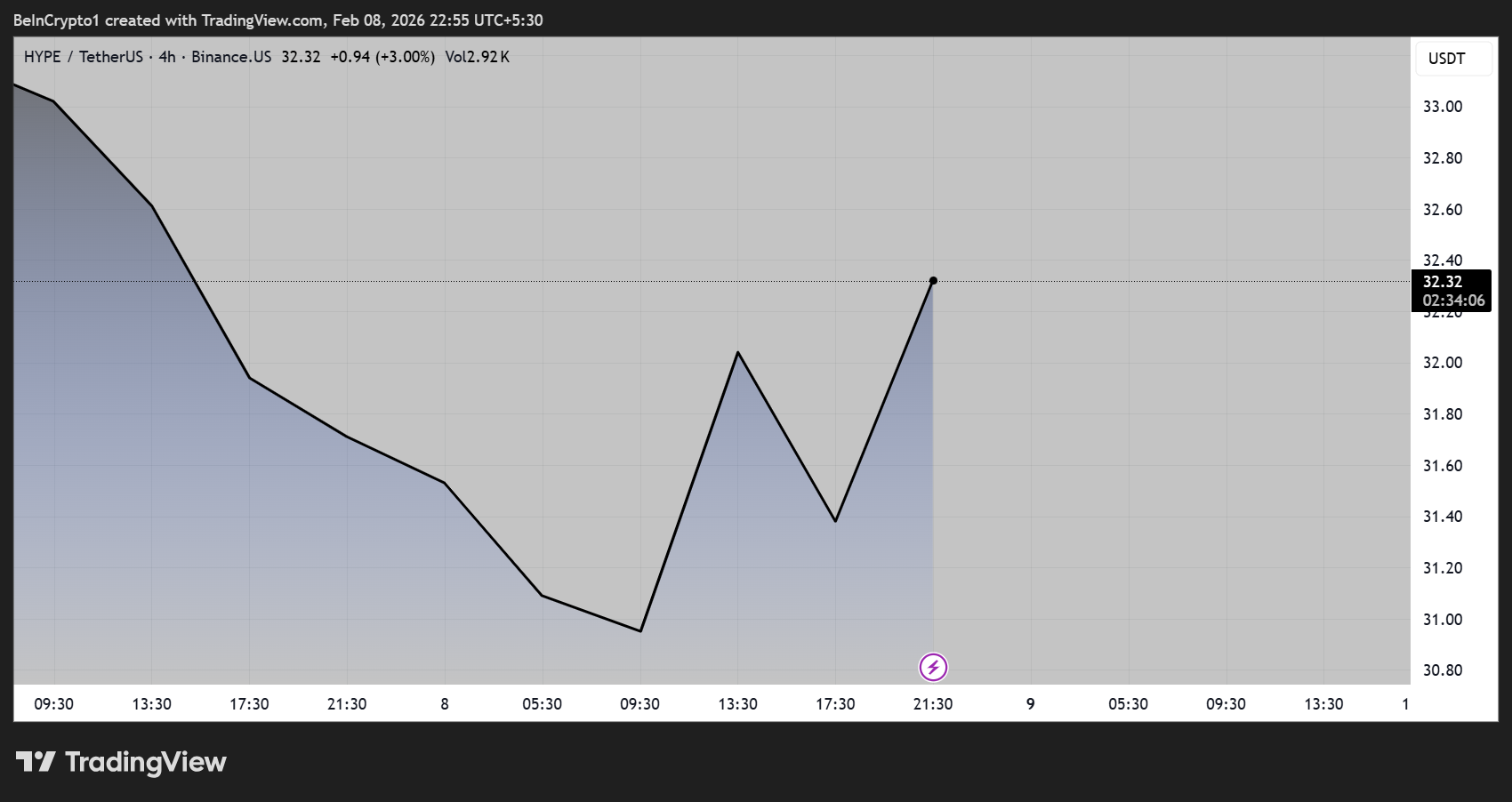
Meanwhile, HYPE tokens are recovering, with higher lows on the 4-hour chart, indicating that if buying momentum continues, a trend reversal could occur. The market does not seem to panic sell due to Kyle Samani’s critique—instead, sustained buying by institutions like Multicoin keeps the price relatively stable. This market reaction itself underscores a key point: in crypto, actual investment returns often outweigh ideological purity in driving capital flows.
Related Articles
Ethereum Could Accelerate Faster Than Expected — Vitalik Backs AI “Vibe Coding”
Vitalik Details Ethereum Block Building Overhaul Plan
Lido V3 Phase 3 is now live, and all stVaults can mint stETH permissionlessly.
The official website of OwlieToy, the world's first AI + trendy toy incubated by TrendX, is now online. The global release is expected in April 2026.
Vitalik Buterin launches the Big FOCIL plan to enhance Ethereum's resistance to centralization