


Futures
Access hundreds of perpetual contracts
TradFi
Gold
One platform for global traditional assets
Options
Hot
Trade European-style vanilla options
Unified Account
Maximize your capital efficiency
Demo Trading
Introduction to Futures Trading
Learn the basics of futures trading
Futures Events
Join events to earn rewards
Demo Trading
Use virtual funds to practice risk-free trading
Launch
CandyDrop
Collect candies to earn airdrops
Launchpool
Quick staking, earn potential new tokens
HODLer Airdrop
Hold GT and get massive airdrops for free
Launchpad
Be early to the next big token project
Alpha Points
Trade on-chain assets and earn airdrops
Futures Points
Earn futures points and claim airdrop rewards


More




Trump's battleground is not in the Middle East
The image belongs to AI generation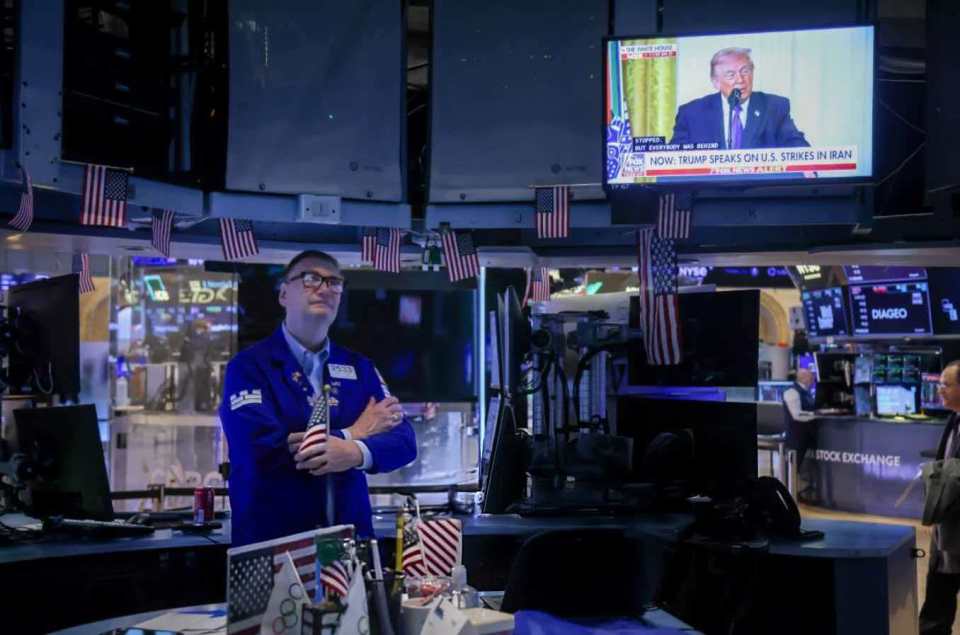
US stocks and bonds have already issued warning signals, with the S&P 500 index falling below 6475, and the yield on the 30-year US Treasury bond has touched the 5% warning line.
These signals are triggering passive selling by quantitative funds on Wall Street, with larger declines necessitating more selling. If no one steps in to hit the brakes, the financial market will spontaneously accelerate.
Everyone is waiting for a “ceasefire” signal.
Although no one has mentioned the liquidity shortage of the dollar, a liquidity crisis has already occurred.
In less than a year and a half since Trump took office, US Treasuries have faced collapse twice.
Last year, the total scale of US Treasuries was 36 trillion. A year later, the scale has reached 39 trillion, and with the continuation of the war, it is believed that the total scale of US Treasuries will reach 45 trillion next year, which should not be difficult.
This weekend, everyone betting on US stocks and AI is waiting to see how Trump will save the financial market on Monday night.
But even if Trump’s TACO can stabilize the financial market, for how long?
Amid the swings of policies and news, a trust crisis has emerged between Wall Street and the Trump administration, hoping that the Federal Reserve could continue to cut rates and print money to support the market before oil prices rose, but now the hope for rate cuts by the Fed is very slim.
The volatility threshold has fluctuated above 30%, and a negative feedback loop has formed.
This indicates that investors are no longer thinking about inflation but are trading “recession” and “stagflation.”
The US and Israel bombed Iranian nuclear and steel facilities, with missiles landing not only on Iranian territory but also on Wall Street.
This is not just a war between countries; oil and gas prices and US tech stocks are also in the competition.
The outcome of the war determines the price of dollar-denominated assets.
For the past two weeks, Wall Street believed that the US would win and that the war would end in the short term, but in the last two weeks, they have started trading on the expectation that oil prices will remain above 120 dollars for the long term.
They are already trading on America’s failure.
This is evident in the price of gold.
Previously, when the US-Iran war broke out, the US overwhelmingly achieved results, taking out several Iranian leaders in a single strike.
Wall Street was trading on the expectation that dollar hegemony would be consolidated, leading to a significant drop in gold prices.
However, Friday’s financial market was notably different; despite central banks selling gold, the price of gold remained strong, indicating that the funds buying gold are increasing.
Not only did they absorb the sell-off, but they are even willing to pay a premium to buy more gold. This not only reactivates gold’s safe-haven property but also reflects that people are reluctant to hold dollar assets, hastily selling US stocks and bonds, holding dollars to wait and see, or holding gold.
It can even be said without reservation that as the war continues, a new round of de-dollarization will begin. The price of gold will reach heights that many dare not imagine.
As for A-shares, the initial stock prices will be impacted by the dollar liquidity shortage and the bursting of the AI bubble, but later on, they will benefit from the effects of de-dollarization.
Especially in industries and hard assets where China has an overwhelming advantage, companies with cash flow will be revalued.
At that time, these heavyweight stocks will lead the Chinese stock market to climb to a new level.
Author’s statement: Personal opinions, for reference only.