
Futures
Access hundreds of perpetual contracts
TradFi
Gold
One platform for global traditional assets
Options
Hot
Trade European-style vanilla options
Unified Account
Maximize your capital efficiency
Demo Trading
Introduction to Futures Trading
Learn the basics of futures trading
Futures Events
Join events to earn rewards
Demo Trading
Use virtual funds to practice risk-free trading
Launch
CandyDrop
Collect candies to earn airdrops
Launchpool
Quick staking, earn potential new tokens
HODLer Airdrop
Hold GT and get massive airdrops for free
Launchpad
Be early to the next big token project
Alpha Points
Trade on-chain assets and earn airdrops
Futures Points
Earn futures points and claim airdrop rewards


More


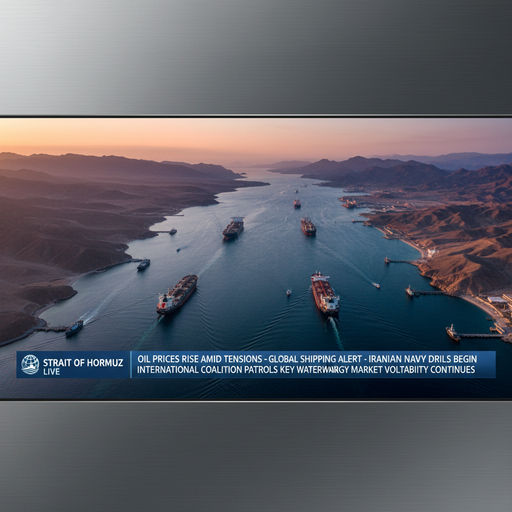
Iran has reached agreements with some countries, and the number of ships passing through the Strait of Hormuz has increased.
The U.S. and Iran military actions have been ongoing for more than a month. Under the impact of the fighting, one of the world’s most critical energy and shipping choke points—the Strait of Hormuz—has nearly come to a standstill. However, the latest reports indicate that after Iran reached agreements with some countries, the number of vessels transiting the Strait of Hormuz has risen over the past week.
据财联社消息,根据业内汇编的船只追踪数据显示,过去一周,经由霍尔木兹海峡的船只通行数量有所回升,截至周五的七天滚动平均通航船只数量达到了自2月底美伊战事爆发以来的最高水平。数据显示,自当地时间周五上午至周六晚间,共有13艘船只通过海峡,其中10艘驶出波斯湾,3艘从公海驶入。
Reports say that as countries coordinate with Iran to ensure the passage of their ships, more and more vessels are crossing the strait, including ships that do not have any clear link to Iran. On Friday, even a French container ship and a liquefied petroleum gas (LPG) vessel owned by a Japanese-related company were seen passing through the Strait of Hormuz, which appears to be the first occurrence of such traffic since the U.S.-Iran war caused this crucial waterway to be disrupted.
晚间当地时间2026年4月4日,伊朗武装部队哈塔姆安比亚中央总部发言人发表声明称,伊拉克不受伊朗在霍尔木兹海峡实施的任何限制措施,限制措施仅适用于“敌对国家”。与此同时,伊朗伊斯兰革命卫队海军司令部表示,伊朗的一架无人机击中了霍尔木兹海峡内一艘与以色列有关的船只,并引发大规模火灾。
Xinhua News Agency previously reported that the Strait of Hormuz is shaped like an arc, connecting the Persian Gulf and the Gulf of Oman, with the narrowest point at only about 33 kilometers. At the strait’s narrowest section, each shipping lane is roughly 3 kilometers wide, with a buffer zone of the same width in between. In such narrow waters, whether civilian ships or warships can easily become targets for attacks. The report cited comments from Ali Vaez, director of the Iran Project at the Belgium-based think tank International Crisis Group, saying that by leveraging the Strait of Hormuz’s unique geographic configuration, Iran only needs to deploy a small number of drones to “thwart” the passage of ships.
After the outbreak of the fighting, on April 2, the U.K., a NATO ally of the United States, held a meeting with dozens of countries including France, Germany, and Italy to jointly discuss ways to restore normal navigation in the Strait of Hormuz. The United States was not invited to attend. On April 1, Iran’s Office of the Supreme Leader reposted excerpts from the first remarks made by Supreme Leader Mujtaba Khamenei on social media, reaffirming that Iran will continue to use the blockade of the Strait of Hormuz as a countermeasure.
In response, on April 4, U.S. President Donald Trump posted on social media, calling on Iran to reach an agreement within 48 hours or open the Strait of Hormuz. Previously, Trump had issued threats to Iran multiple times, demanding that it open the Strait of Hormuz.
CCTV News reported that regarding the Strait of Hormuz, a series of comments Trump has made recently appear to contradict one another, highlighting the U.S. side’s passive position. According to reports, Trump sometimes claims that stopping Iran from controlling the Strait of Hormuz is a precondition for a ceasefire; at other times, he says that “in due course, the U.S. military will ‘clear’ the strait”; and at other times, he urges countries that need to obtain oil through shipping via the Strait of Hormuz to “take responsibility for maintaining this corridor themselves,” while encouraging them to go directly to the Strait of Hormuz to “seize oil,” or “buy oil from the United States.”
Recent assessments by the U.S. intelligence community believe that Iran views the Strait of Hormuz as an important “bargaining chip” for countering the United States and is unlikely, in the short term, to ease its control over this energy and shipping route. Reuters reported on April 3, citing three sources who did not want to be named, that Iran has “already tasted the benefits” from controlling the Strait of Hormuz and therefore will not give up this tactic anytime soon.
Analysts believe the United States is currently facing multiple predicaments. On the one hand, with its unparalleled geographic advantage, Iran controls the Strait of Hormuz, making it difficult for the U.S. to “open” the route through military force. On the other hand, Iran will continue to use the strait as a bargaining chip, making the outlook for U.S. negotiations difficult. At present, spillover effects from the fighting have already spread to many areas in the United States, including the domestic economy, people’s livelihoods, and politics, further worsening President Trump’s political liabilities.
(Source: JieMian News)