
Futures
Access hundreds of perpetual contracts
TradFi
Gold
One platform for global traditional assets
Options
Hot
Trade European-style vanilla options
Unified Account
Maximize your capital efficiency
Demo Trading
Introduction to Futures Trading
Learn the basics of futures trading
Futures Events
Join events to earn rewards
Demo Trading
Use virtual funds to practice risk-free trading
Launch
CandyDrop
Collect candies to earn airdrops
Launchpool
Quick staking, earn potential new tokens
HODLer Airdrop
Hold GT and get massive airdrops for free
Launchpad
Be early to the next big token project
Alpha Points
Trade on-chain assets and earn airdrops
Futures Points
Earn futures points and claim airdrop rewards


More





Ceasefire between the US and Iran! The precious metals sector soars, oil and gas stocks plummet, here’s the latest analysis
On April 8, the precious metals sector surged across the board. Western Gold hit the daily limit; Xiaocheng Technology, Shanjin International, Huaxi Nonferrous, Shengda Resources, Hunan Silver, Chifeng Gold, and others rose by more than 5%. Oil and gas stocks fell sharply. Blue Flame Holdings hit the daily limit down; Intercontinental Oil and Gas, Shouhua Gas, China Oilfield Services, Guanghui Energy, and others dropped by more than 8%.
On the news front, according to CCTV News, U.S. President Trump said on April 7 that he agreed to pause bombing and attacks on Iran within two weeks. Trump said, “We received Iran’s ten-point proposals and believe they form a viable basis for negotiations. The United States and Iran have almost reached consensus on every point of the past disputes, but the two weeks’ time will allow the agreement to be finalized and completed.”
CCTV News, citing a statement released in the early hours of April 8 local time by Iran’s Supreme National Security Council, reported that, based on the recommendations of the Supreme Leader and approved by the Supreme National Security Council, Iran accepted the ceasefire proposal put forward by Pakistan. A statement from the secretariat of Iran’s Supreme National Security Council said that negotiations with the United States will begin in Islamabad, the capital of Pakistan, on April 10 and will last for two weeks.
Also, according to Xinhua News Agency, in the early hours of April 8, Iran’s Foreign Minister Aragchi announced on behalf of Iran’s Supreme National Security Council that the Strait of Hormuz will achieve safe navigation within two weeks.
CITIC Securities Futures believes that as tensions between the U.S. and Iran ease and Trump agrees to a two-week ceasefire, market sentiment is significantly boosted; risk appetite rebounds and the factors suppressing precious metals are alleviated. And from a medium- to long-term perspective, the process of de-dollarization driven by ongoing restructuring of the global political and economic order, concerns about the sustainability of U.S. fiscal policy, and Trump’s interference with the independence of the Federal Reserve will continue to push global central banks to increase their holdings of gold reserves. The trend of the precious metals price center moving upward remains unchanged. Under resonance between industrial and financial attributes, commodities such as silver, platinum, and palladium may exhibit even greater volatility.
Southwest Futures also emphasized in its latest research report that the current global trade and finance environment is deeply intertwined and complex. In light of the big trend of “anti-globalization” and “de-dollarization,” it is favorable for the allocation value and safe-haven value of gold. Central banks’ gold-purchasing behavior in various countries also provides support for gold’s price trend. The medium- to long-term logic for precious metals remains solid. After precious metals surged sharply earlier, market pricing has been relatively well covered. The impact of uncertainty in the Iran situation is enormous. It is expected that market volatility will be significantly amplified, and for now investors should keep an eye on developments.
For the oil and gas sector, Haizheng Futures believes that even if the Strait of Hormuz reopens, it will take several months for oil transportation to fully resume. The firm estimates that the Middle East oil production cuts caused by the blockade of the strait will rise to 9.1 million barrels per day in April. The year-to-date average spot price of Brent crude oil may be around $96 per barrel, significantly higher than the previously forecast value of $78.84 per barrel.**
However, Haizheng Futures also reminds that currently global oil demand growth has been cut to 600,000 barrels per day, which is less than half of the earlier estimate. The weakness in demand is mainly concentrated in Asian regions that are highly dependent on Middle East supply.
CICC, from a macro perspective, holds that the stagflation shock triggered this time by geopolitical conflict will be clearly weaker in magnitude than during the Russia–Ukraine conflict period in 2022. Based on oil futures forward curves, it estimates that the U.S. inflation peak may reach around 4% sometime around June and then will decline again. Combined with pressure on economic growth and financial risks, the Federal Reserve may still have room to cut interest rates in the second half of the year; the middle-term easing trade could return, providing support for assets such as stocks, bonds, and gold—especially favoring the medium- to long-term performance of Chinese stocks. But in the short term (the next 1–2 months), the market faces triple uncertainties, so it is recommended to maintain a certain level of cash holdings. From the perspective of win probability, gold’s short-term allocation value is relatively superior compared with other non-cash assets.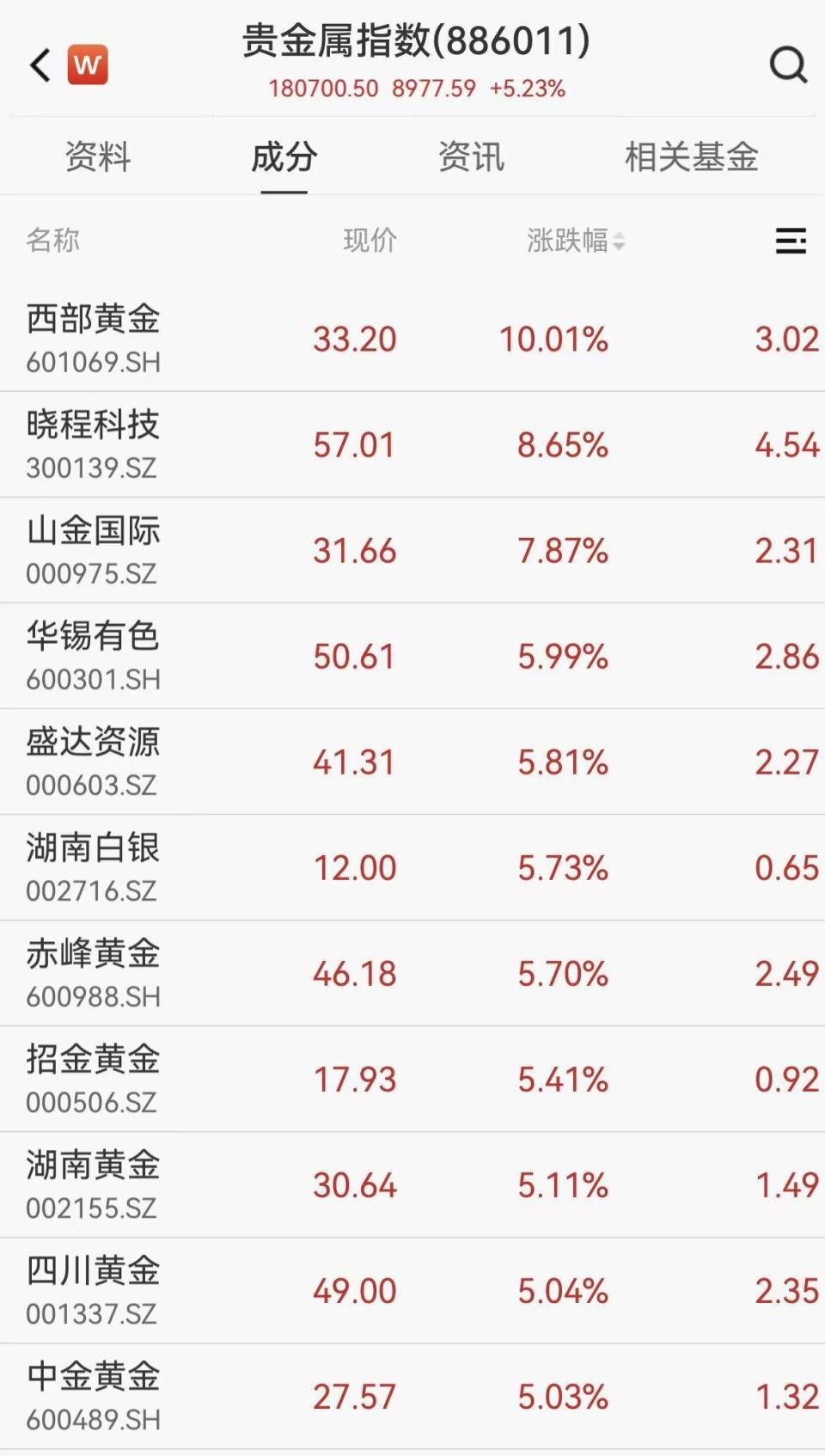
(Disclaimer: The contents of this article are for reference only and do not constitute investment advice. Investors act at their own risk.)