
Futures
Access hundreds of perpetual contracts
TradFi
Gold
One platform for global traditional assets
Options
Hot
Trade European-style vanilla options
Unified Account
Maximize your capital efficiency
Demo Trading
Introduction to Futures Trading
Learn the basics of futures trading
Futures Events
Join events to earn rewards
Demo Trading
Use virtual funds to practice risk-free trading
Launch
CandyDrop
Collect candies to earn airdrops
Launchpool
Quick staking, earn potential new tokens
HODLer Airdrop
Hold GT and get massive airdrops for free
Pre-IPOs
Unlock full access to global stock IPOs
Alpha Points
Trade on-chain assets and earn airdrops
Futures Points
Earn futures points and claim airdrop rewards


More




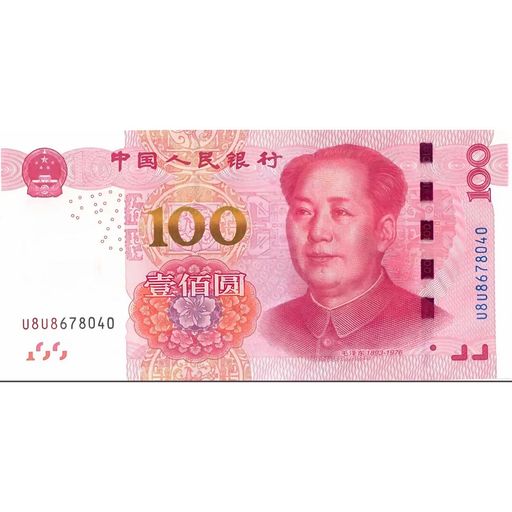

Due to refusing to pay property management fees, a homeowner in Changchun was sued.
In 2025, after receiving the keys to his home, Mr. Zhao, a property owner in a residential community in Kuancheng District, Changchun City, had his property remain for a long time without being renovated and without any actual occupancy. As a result, he never paid property management fees to the property company. Eventually, the property company filed a lawsuit against him in court. Before the trial, Mr. Zhao was resolute in his stance. He clearly stated that he had not enjoyed any property services, refused to perform his payment obligations, and even questioned, “You can go check the water and electricity meters—the numbers haven’t moved at all! I bought the home for investment purposes. Why would the property company charge me an ‘air management fee’?” That remark voiced a widespread confusion among owners of vacant units about paying property fees and set the stage for the start of this dispute mediation.
【Court Mediation】After the Property Mediation Room of the Filing Division of the Kuancheng District People’s Court in Changchun City took over the case, it did not simply determine right or wrong. Instead, based on the case characteristics, it formulated and implemented a “three-step” mediation strategy to patiently resolve the contradictions between both parties. Step 1: Listen and communicate to get to the facts. The mediator first put aside any preconceived notions. They patiently listened to Mr. Zhao’s demands and grievances, and carefully verified the vacant status of his unit, the length of time his fees had gone unpaid, and his core concerns. At the same time, they actively obtained the property company’s daily service records and confirmed one by one that basic property services—such as corridor cleaning, public lighting, security patrols, elevator maintenance, and the community’s landscaping/greening—were all continuing to run normally. It was clarified that the community’s overall management had not been interrupted due to the vacancy of an individual unit, nor had the service standards been lowered due to some owners’ failure to pay. Step 2: Give equal weight to reason, emotion, and law, and clarify rights and responsibilities. To correct Mr. Zhao’s misconceptions, the mediator brought along a complete set of property service records and relevant provisions from the Civil Code and held in-depth discussions with Mr. Zhao, breaking down the issues step by step. On the legal side, they clarified the provisions of Article 944 of the Civil Code, emphasizing that property services have distinctive overall and public attributes, and that owners’ payment obligations are statutory obligations, not conditions that can be waived based on whether an individual actually resides there or directly receives services. On the reasoning and empathy side, they guided Mr. Zhao to recognize that the preservation and appreciation of a home’s value is inseparable from the community’s overall environment and the quality of property services. “Even if you are temporarily not living there, the property’s daily management is still protecting your property, and you are still benefiting from the property’s asset maintenance value.” In real-world terms, they fully understood Mr. Zhao’s knowledge blind spot regarding the idea that “vacant units must pay fees,” used plain language to explain the public nature of property services, and dispelled his resistance. Step 3: Build bridges and promote consensus. Mediation is not about “taking sides,” but about finding a balance of interests between both parties. The mediator simultaneously communicated with the property company and accurately reported that Mr. Zhao was not maliciously withholding property fees; rather, he had misunderstood the scope of property services and his own payment obligations. They suggested that the property company strengthen its notices to owners of vacant units, proactively provide targeted special care, and help owners feel the “warmth” of property services. After three rounds of patient and meticulous communication and mediation, Mr. Zhao’s attitude gradually softened—from his initial “absolutely refusing to pay” to “willing to negotiate and resolve the matter,” and the misunderstandings and distance between both parties also gradually dissipated.
【Mediation Result】
Under the mediation hosted by the mediator, both parties ultimately reached an agreement: Mr. Zhao would pay all the overdue property fees in a single lump sum; in return, the property company promised that it would provide special services to Mr. Zhao’s vacant unit, such as regular door-and-window safety inspections, flood-prevention patrols during the rainy season, and reminders for pipeline maintenance, to effectively ensure the safety of the vacant unit. On the day the agreement was signed, Mr. Zhao promptly settled all outstanding amounts, and this “dispute over a vacant unit” came to a successful close.
◆Source: Kuancheng District Court
Editor: Sun Yici
Initial review: Liang Shuang
Second review: Cao Guangyu
Final review: Zang Li
【Source: Changchun Evening News】