#USPPIComesInBelowExpectations
The United States Producer Price Index, commonly referred to as PPI, is a critical economic indicator that measures the average change over time in the selling prices received by domestic producers for their output. When the PPI comes in below expectations, it signifies that inflationary pressures at the wholesale or producer level are easing more than anticipated by market analysts and economists. This development carries significant implications for financial markets, particularly for risk assets like cryptocurrencies.
Understanding the PPI Data
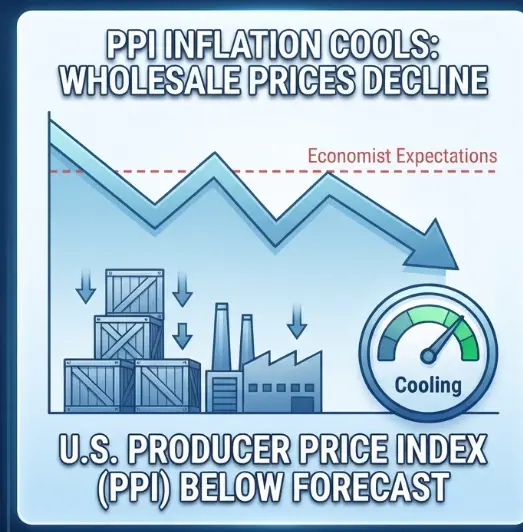
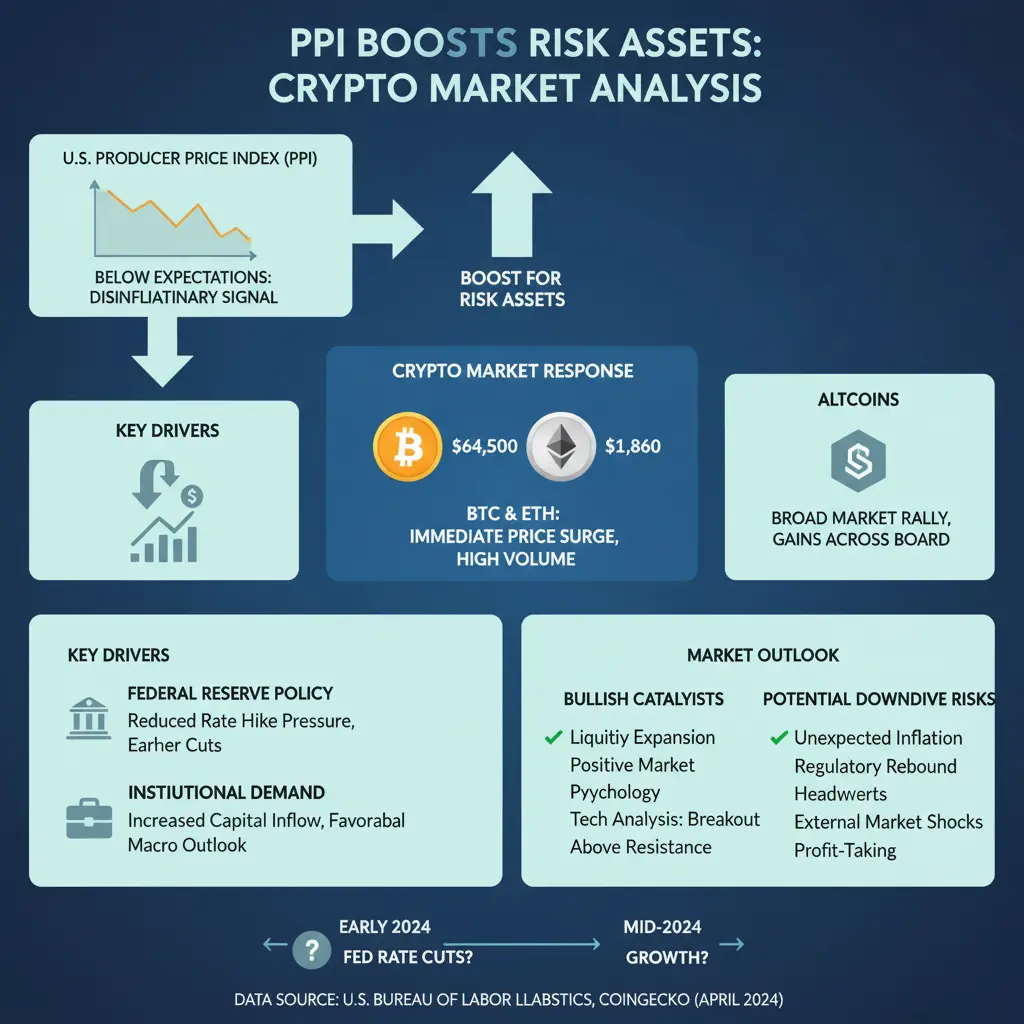
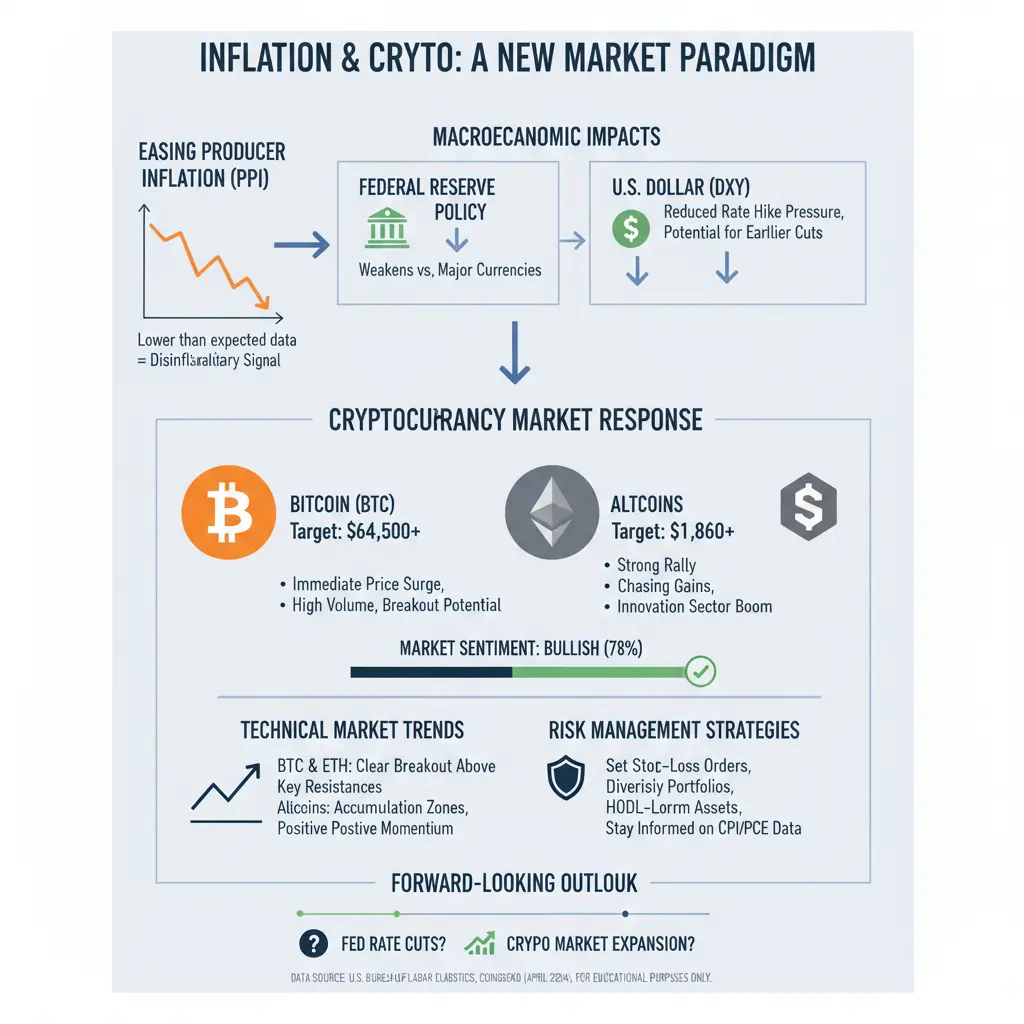
The Producer Price Index serves as a leading indicator of consumer inflation because changes in producer costs are typically passed down to consumers eventually. When PPI readings fall below consensus forecasts, it suggests that the pipeline inflation pressure is diminishing. In the most recent data release, the headline PPI registered at 5.5 percent year-over-year, which was notably lower than the market expectation of 6.2 percent. This represents a substantial deviation from anticipated levels and indicates that the Federal Reserve's monetary tightening measures may be achieving their intended effect of cooling inflation.
The monthly PPI figure showed a decline of 0.3 percent, marking the first monthly decrease since August 2025. This monthly contraction is particularly significant because it demonstrates that price pressures are not merely stabilizing but actually reversing direction. The core PPI, which excludes volatile food and energy components, also came in softer than expected at 4.7 percent versus the forecasted 5.2 percent. These figures collectively paint a picture of an economy where inflationary forces are being successfully contained.
Federal Reserve Policy Implications
The softer-than-expected PPI data has profound implications for Federal Reserve monetary policy. The Federal Reserve has been engaged in an aggressive rate-hiking cycle to combat elevated inflation levels that had reached multi-decade highs. When inflation data comes in below expectations, it reduces the urgency for the central bank to maintain restrictive monetary policy. Market participants immediately adjust their expectations regarding the trajectory of interest rates.
According to the CME FedWatch tool, which tracks market-implied probabilities of Federal Reserve policy actions, the odds of a rate hold increased significantly following the PPI release. The probability of the Fed maintaining current interest rates in the upcoming meeting rose to approximately 87.7 percent, while the probability of a rate hike dropped to just 12.3 percent. This shift in expectations is highly favorable for risk assets, including cryptocurrencies.
Lower interest rates reduce the opportunity cost of holding non-yielding assets like Bitcoin and Ethereum. When traditional fixed-income investments offer lower returns, investors become more willing to allocate capital toward alternative assets that have the potential for higher returns. Additionally, easier monetary conditions typically result in a weaker US dollar, which historically has been correlated with strength in cryptocurrency markets.
Bitcoin Price Reaction and Analysis
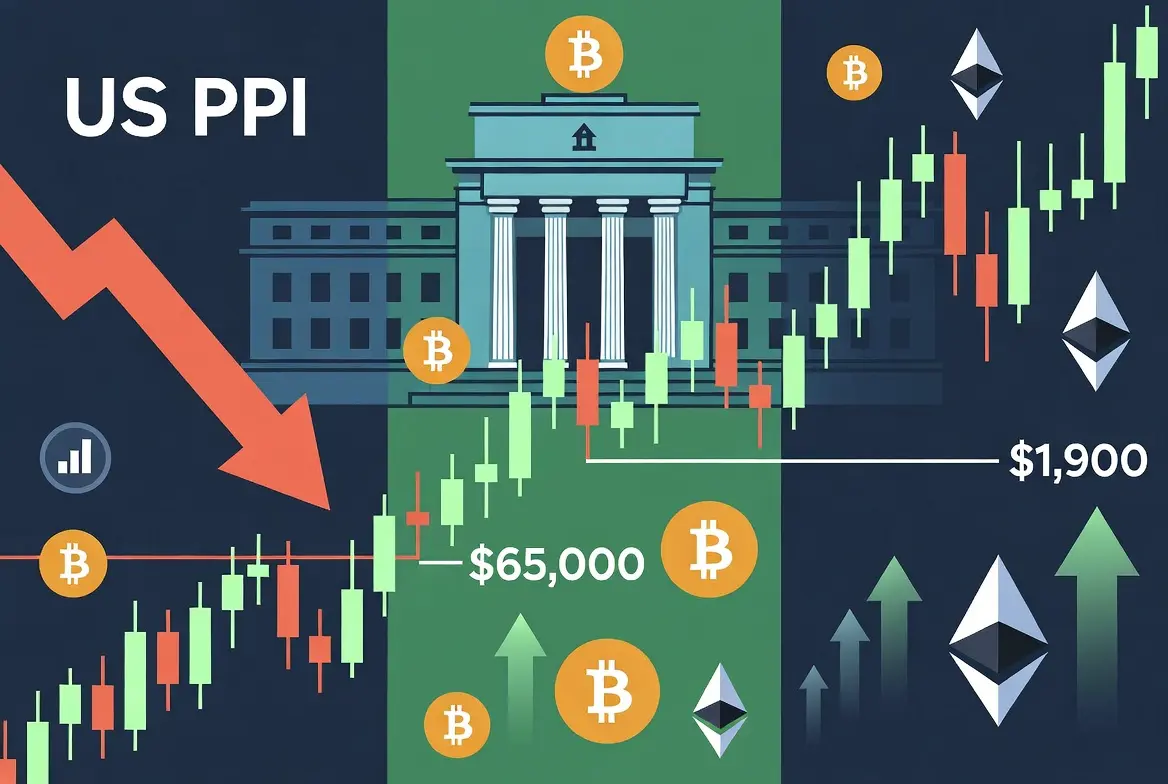
Bitcoin, the largest cryptocurrency by market capitalization, was trading around 64,750 dollars at the time of the PPI data release. The softer inflation print provided a tailwind for Bitcoin, enabling it to reclaim the 65,000 dollar psychological level in the immediate aftermath of the data announcement. This price action demonstrates the sensitivity of Bitcoin to macroeconomic developments and Federal Reserve policy expectations.
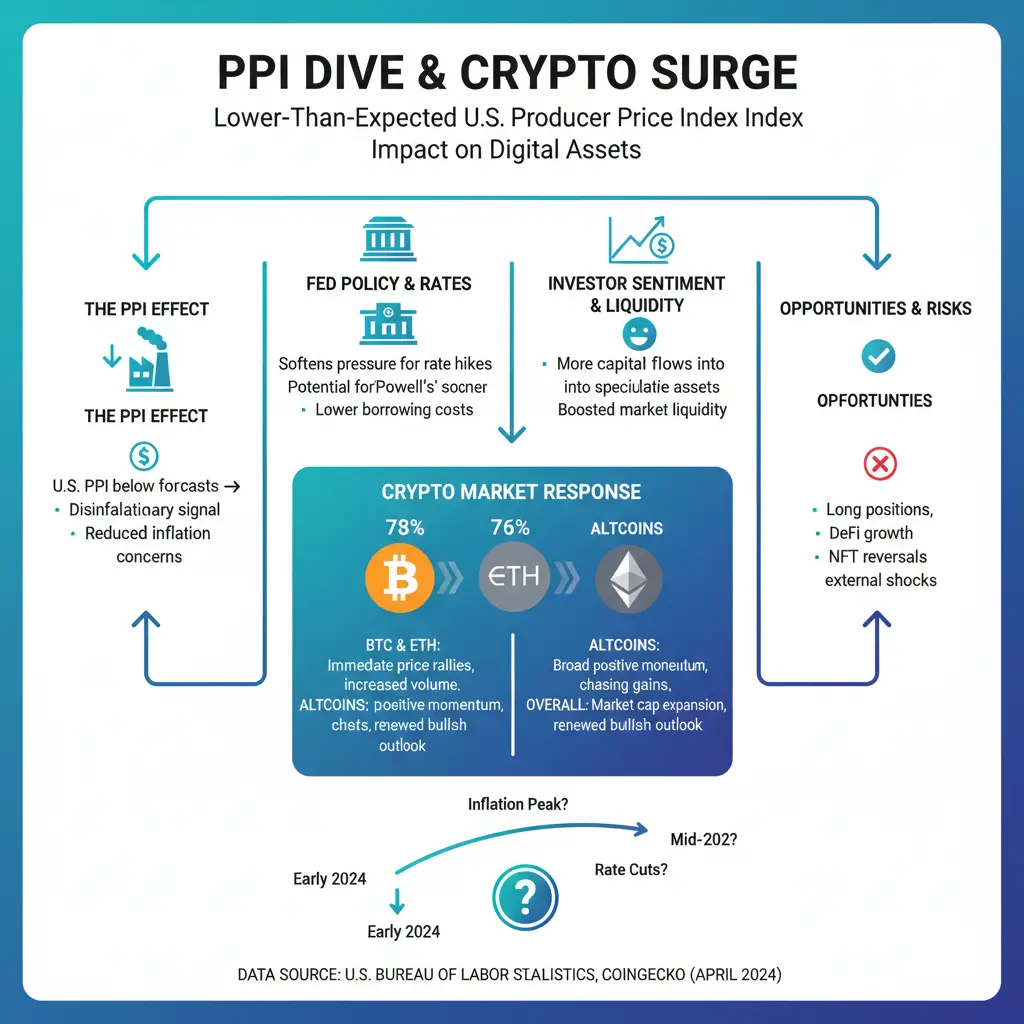
The impact of lower-than-expected PPI on Bitcoin can be understood through several transmission mechanisms. First, the reduced probability of additional rate hikes alleviates pressure on risk assets broadly. Bitcoin, being a high-beta asset, tends to outperform when monetary conditions are accommodative. Second, the weaker inflation data supports the narrative that the Federal Reserve may begin cutting interest rates in the coming months, which would be historically bullish for digital assets.
From a technical perspective, Bitcoin had been consolidating near key support levels prior to the PPI release. The positive macro catalyst provided the impetus for a breakout above resistance levels. The cryptocurrency managed to push past the 65,000 dollar threshold, representing a significant psychological victory for bulls. However, traders should remain cognizant that Bitcoin remains below its all-time high levels and faces resistance at higher price points.
The Relative Strength Index for Bitcoin indicated room for further upside, as it had not yet reached overbought territory. This technical setup suggests that the rally could extend further if macroeconomic conditions continue to improve. Open interest in Bitcoin futures markets remained elevated, indicating strong participation from institutional and retail traders alike.
Ethereum Price Reaction and Analysis
Ethereum, the second-largest cryptocurrency, demonstrated even stronger relative performance following the PPI data release. Trading around 1,880 dollars at the time of the report, Ethereum managed to surge past the 1,900 dollar level, marking its highest price in approximately 43 days. This outperformance relative to Bitcoin is noteworthy and suggests a potential rotation of capital within the cryptocurrency ecosystem.
Ethereum's strength can be attributed to multiple factors beyond the favorable macroeconomic backdrop. The Ethereum network continues to benefit from ongoing developments in decentralized finance, non-fungible tokens, and layer-two scaling solutions. Additionally, regulatory clarity regarding Ethereum's status, with recent statements from SEC officials suggesting ETH is not considered a security, has removed a significant overhang from the asset.
The ETH to BTC ratio, which measures Ethereum's performance relative to Bitcoin, has been trading within a descending channel for an extended period. The recent strength in Ethereum suggests that this ratio may be approaching a key inflection point. Historically, sustained strength in the ETH to BTC ratio has coincided with periods of altcoin market outperformance, often referred to as altseason.
Ethereum's dominance chart, which measures Ethereum's market share relative to the total cryptocurrency market, has pushed above key technical levels. This development signals that capital is rotating from Bitcoin into Ethereum and potentially the broader altcoin market. While this rotation can be bullish for Ethereum in the short term, extended periods of high dominance can also signal that traders should consider protecting profits rather than chasing strength.
Broader Cryptocurrency Market Impact
The positive reaction to the softer PPI data extended beyond Bitcoin and Ethereum to the broader cryptocurrency market. The total cryptocurrency market capitalization increased by nearly 2 percent, approaching the 3.80 trillion dollar mark. Major altcoins including Solana, Dogecoin, and others posted gains ranging from 5 to 7 percent, indicating broad-based risk appetite in the digital asset space.
The correlation between cryptocurrency prices and traditional risk assets, particularly technology stocks, has been well-documented. When macroeconomic data supports a dovish Federal Reserve outlook, both technology stocks and cryptocurrencies tend to benefit. The Nasdaq index showed positive momentum following the PPI release, and this risk-on sentiment spilled over into digital assets.
Institutional flows into cryptocurrency investment products also improved following the data. Bitcoin spot exchange-traded funds recorded positive inflows, continuing a trend that has been supportive of prices. The combination of favorable macro data and strong institutional demand creates a constructive backdrop for cryptocurrency prices.
Historical Context and Precedents
Historical analysis of cryptocurrency market reactions to inflation data reveals a consistent pattern. Periods of declining inflation expectations have typically coincided with strong performance in digital assets. The year 2026 has seen several instances where softer-than-expected inflation prints triggered rallies in Bitcoin and Ethereum.
July has historically been a strong month for cryptocurrency performance. Bitcoin has displayed a median return of 9.6 percent in July over historical periods, with a pattern of bouncing back significantly following weaker performances in June. The current price action appears consistent with this historical seasonal pattern, suggesting that the rally may have further room to run.
Risk Factors and Considerations
While the softer PPI data is undoubtedly positive for cryptocurrency markets, investors should remain aware of potential risks. First, a single data point does not establish a trend, and subsequent inflation reports could show reacceleration. The Federal Reserve has emphasized that it requires sustained evidence of inflation cooling before considering rate cuts.
Geopolitical developments and external shocks can quickly alter market dynamics. Recent tensions in the Middle East have demonstrated how quickly risk sentiment can shift. Additionally, regulatory developments in major jurisdictions continue to pose potential headwinds for the cryptocurrency industry.
Technical indicators for Ethereum are showing signs of stretched conditions, with the dominance chart reaching overbought territory on the Relative Strength Index. This suggests that while the near-term trend remains positive, a period of consolidation or pullback could be warranted to alleviate overbought conditions.
Conclusion
The US Producer Price Index coming in below expectations at 5.5 percent year-over-year represents a significant positive development for cryptocurrency markets. The data reduces the probability of additional Federal Reserve rate hikes and increases the likelihood of rate cuts in the coming months. This shift in monetary policy expectations has provided a tailwind for risk assets, with Bitcoin reclaiming the 65,000 dollar level and Ethereum surging past 1,900 dollars.
The transmission mechanism from softer PPI data to higher cryptocurrency prices operates through reduced opportunity costs for holding non-yielding assets, weaker US dollar expectations, and improved risk sentiment broadly. Both Bitcoin and Ethereum have responded positively to this macroeconomic catalyst, with Ethereum demonstrating particularly strong relative performance.
Investors should monitor upcoming economic data releases, particularly the Consumer Price Index and employment reports, for confirmation that inflationary pressures are indeed abating. While the current environment is supportive of cryptocurrency prices, maintaining awareness of technical indicators and potential macroeconomic risks remains essential for informed decision-making.
The cryptocurrency market appears well-positioned to benefit from a more accommodative Federal Reserve policy stance, should the inflation cooling trend continue. Bitcoin at 64,750 dollars and Ethereum at 1,880 dollars represent attractive entry points for investors seeking exposure to the digital asset class within a improving macroeconomic environment.@Gate_Square #SummerCreationCamp
The United States Producer Price Index, commonly referred to as PPI, is a critical economic indicator that measures the average change over time in the selling prices received by domestic producers for their output. When the PPI comes in below expectations, it signifies that inflationary pressures at the wholesale or producer level are easing more than anticipated by market analysts and economists. This development carries significant implications for financial markets, particularly for risk assets like cryptocurrencies.
Understanding the PPI Data
The Producer Price Index serves as a leading indicator of consumer inflation because changes in producer costs are typically passed down to consumers eventually. When PPI readings fall below consensus forecasts, it suggests that the pipeline inflation pressure is diminishing. In the most recent data release, the headline PPI registered at 5.5 percent year-over-year, which was notably lower than the market expectation of 6.2 percent. This represents a substantial deviation from anticipated levels and indicates that the Federal Reserve's monetary tightening measures may be achieving their intended effect of cooling inflation.
The monthly PPI figure showed a decline of 0.3 percent, marking the first monthly decrease since August 2025. This monthly contraction is particularly significant because it demonstrates that price pressures are not merely stabilizing but actually reversing direction. The core PPI, which excludes volatile food and energy components, also came in softer than expected at 4.7 percent versus the forecasted 5.2 percent. These figures collectively paint a picture of an economy where inflationary forces are being successfully contained.
Federal Reserve Policy Implications
The softer-than-expected PPI data has profound implications for Federal Reserve monetary policy. The Federal Reserve has been engaged in an aggressive rate-hiking cycle to combat elevated inflation levels that had reached multi-decade highs. When inflation data comes in below expectations, it reduces the urgency for the central bank to maintain restrictive monetary policy. Market participants immediately adjust their expectations regarding the trajectory of interest rates.
According to the CME FedWatch tool, which tracks market-implied probabilities of Federal Reserve policy actions, the odds of a rate hold increased significantly following the PPI release. The probability of the Fed maintaining current interest rates in the upcoming meeting rose to approximately 87.7 percent, while the probability of a rate hike dropped to just 12.3 percent. This shift in expectations is highly favorable for risk assets, including cryptocurrencies.
Lower interest rates reduce the opportunity cost of holding non-yielding assets like Bitcoin and Ethereum. When traditional fixed-income investments offer lower returns, investors become more willing to allocate capital toward alternative assets that have the potential for higher returns. Additionally, easier monetary conditions typically result in a weaker US dollar, which historically has been correlated with strength in cryptocurrency markets.
Bitcoin Price Reaction and Analysis
Bitcoin, the largest cryptocurrency by market capitalization, was trading around 64,750 dollars at the time of the PPI data release. The softer inflation print provided a tailwind for Bitcoin, enabling it to reclaim the 65,000 dollar psychological level in the immediate aftermath of the data announcement. This price action demonstrates the sensitivity of Bitcoin to macroeconomic developments and Federal Reserve policy expectations.
The impact of lower-than-expected PPI on Bitcoin can be understood through several transmission mechanisms. First, the reduced probability of additional rate hikes alleviates pressure on risk assets broadly. Bitcoin, being a high-beta asset, tends to outperform when monetary conditions are accommodative. Second, the weaker inflation data supports the narrative that the Federal Reserve may begin cutting interest rates in the coming months, which would be historically bullish for digital assets.
From a technical perspective, Bitcoin had been consolidating near key support levels prior to the PPI release. The positive macro catalyst provided the impetus for a breakout above resistance levels. The cryptocurrency managed to push past the 65,000 dollar threshold, representing a significant psychological victory for bulls. However, traders should remain cognizant that Bitcoin remains below its all-time high levels and faces resistance at higher price points.
The Relative Strength Index for Bitcoin indicated room for further upside, as it had not yet reached overbought territory. This technical setup suggests that the rally could extend further if macroeconomic conditions continue to improve. Open interest in Bitcoin futures markets remained elevated, indicating strong participation from institutional and retail traders alike.
Ethereum Price Reaction and Analysis
Ethereum, the second-largest cryptocurrency, demonstrated even stronger relative performance following the PPI data release. Trading around 1,880 dollars at the time of the report, Ethereum managed to surge past the 1,900 dollar level, marking its highest price in approximately 43 days. This outperformance relative to Bitcoin is noteworthy and suggests a potential rotation of capital within the cryptocurrency ecosystem.
Ethereum's strength can be attributed to multiple factors beyond the favorable macroeconomic backdrop. The Ethereum network continues to benefit from ongoing developments in decentralized finance, non-fungible tokens, and layer-two scaling solutions. Additionally, regulatory clarity regarding Ethereum's status, with recent statements from SEC officials suggesting ETH is not considered a security, has removed a significant overhang from the asset.
The ETH to BTC ratio, which measures Ethereum's performance relative to Bitcoin, has been trading within a descending channel for an extended period. The recent strength in Ethereum suggests that this ratio may be approaching a key inflection point. Historically, sustained strength in the ETH to BTC ratio has coincided with periods of altcoin market outperformance, often referred to as altseason.
Ethereum's dominance chart, which measures Ethereum's market share relative to the total cryptocurrency market, has pushed above key technical levels. This development signals that capital is rotating from Bitcoin into Ethereum and potentially the broader altcoin market. While this rotation can be bullish for Ethereum in the short term, extended periods of high dominance can also signal that traders should consider protecting profits rather than chasing strength.
Broader Cryptocurrency Market Impact
The positive reaction to the softer PPI data extended beyond Bitcoin and Ethereum to the broader cryptocurrency market. The total cryptocurrency market capitalization increased by nearly 2 percent, approaching the 3.80 trillion dollar mark. Major altcoins including Solana, Dogecoin, and others posted gains ranging from 5 to 7 percent, indicating broad-based risk appetite in the digital asset space.
The correlation between cryptocurrency prices and traditional risk assets, particularly technology stocks, has been well-documented. When macroeconomic data supports a dovish Federal Reserve outlook, both technology stocks and cryptocurrencies tend to benefit. The Nasdaq index showed positive momentum following the PPI release, and this risk-on sentiment spilled over into digital assets.
Institutional flows into cryptocurrency investment products also improved following the data. Bitcoin spot exchange-traded funds recorded positive inflows, continuing a trend that has been supportive of prices. The combination of favorable macro data and strong institutional demand creates a constructive backdrop for cryptocurrency prices.
Historical Context and Precedents
Historical analysis of cryptocurrency market reactions to inflation data reveals a consistent pattern. Periods of declining inflation expectations have typically coincided with strong performance in digital assets. The year 2026 has seen several instances where softer-than-expected inflation prints triggered rallies in Bitcoin and Ethereum.
July has historically been a strong month for cryptocurrency performance. Bitcoin has displayed a median return of 9.6 percent in July over historical periods, with a pattern of bouncing back significantly following weaker performances in June. The current price action appears consistent with this historical seasonal pattern, suggesting that the rally may have further room to run.
Risk Factors and Considerations
While the softer PPI data is undoubtedly positive for cryptocurrency markets, investors should remain aware of potential risks. First, a single data point does not establish a trend, and subsequent inflation reports could show reacceleration. The Federal Reserve has emphasized that it requires sustained evidence of inflation cooling before considering rate cuts.
Geopolitical developments and external shocks can quickly alter market dynamics. Recent tensions in the Middle East have demonstrated how quickly risk sentiment can shift. Additionally, regulatory developments in major jurisdictions continue to pose potential headwinds for the cryptocurrency industry.
Technical indicators for Ethereum are showing signs of stretched conditions, with the dominance chart reaching overbought territory on the Relative Strength Index. This suggests that while the near-term trend remains positive, a period of consolidation or pullback could be warranted to alleviate overbought conditions.
Conclusion
The US Producer Price Index coming in below expectations at 5.5 percent year-over-year represents a significant positive development for cryptocurrency markets. The data reduces the probability of additional Federal Reserve rate hikes and increases the likelihood of rate cuts in the coming months. This shift in monetary policy expectations has provided a tailwind for risk assets, with Bitcoin reclaiming the 65,000 dollar level and Ethereum surging past 1,900 dollars.
The transmission mechanism from softer PPI data to higher cryptocurrency prices operates through reduced opportunity costs for holding non-yielding assets, weaker US dollar expectations, and improved risk sentiment broadly. Both Bitcoin and Ethereum have responded positively to this macroeconomic catalyst, with Ethereum demonstrating particularly strong relative performance.
Investors should monitor upcoming economic data releases, particularly the Consumer Price Index and employment reports, for confirmation that inflationary pressures are indeed abating. While the current environment is supportive of cryptocurrency prices, maintaining awareness of technical indicators and potential macroeconomic risks remains essential for informed decision-making.
The cryptocurrency market appears well-positioned to benefit from a more accommodative Federal Reserve policy stance, should the inflation cooling trend continue. Bitcoin at 64,750 dollars and Ethereum at 1,880 dollars represent attractive entry points for investors seeking exposure to the digital asset class within a improving macroeconomic environment.@Gate_Square #SummerCreationCamp